

Where Creativity Meets Comfort: A Bespoke Music Room
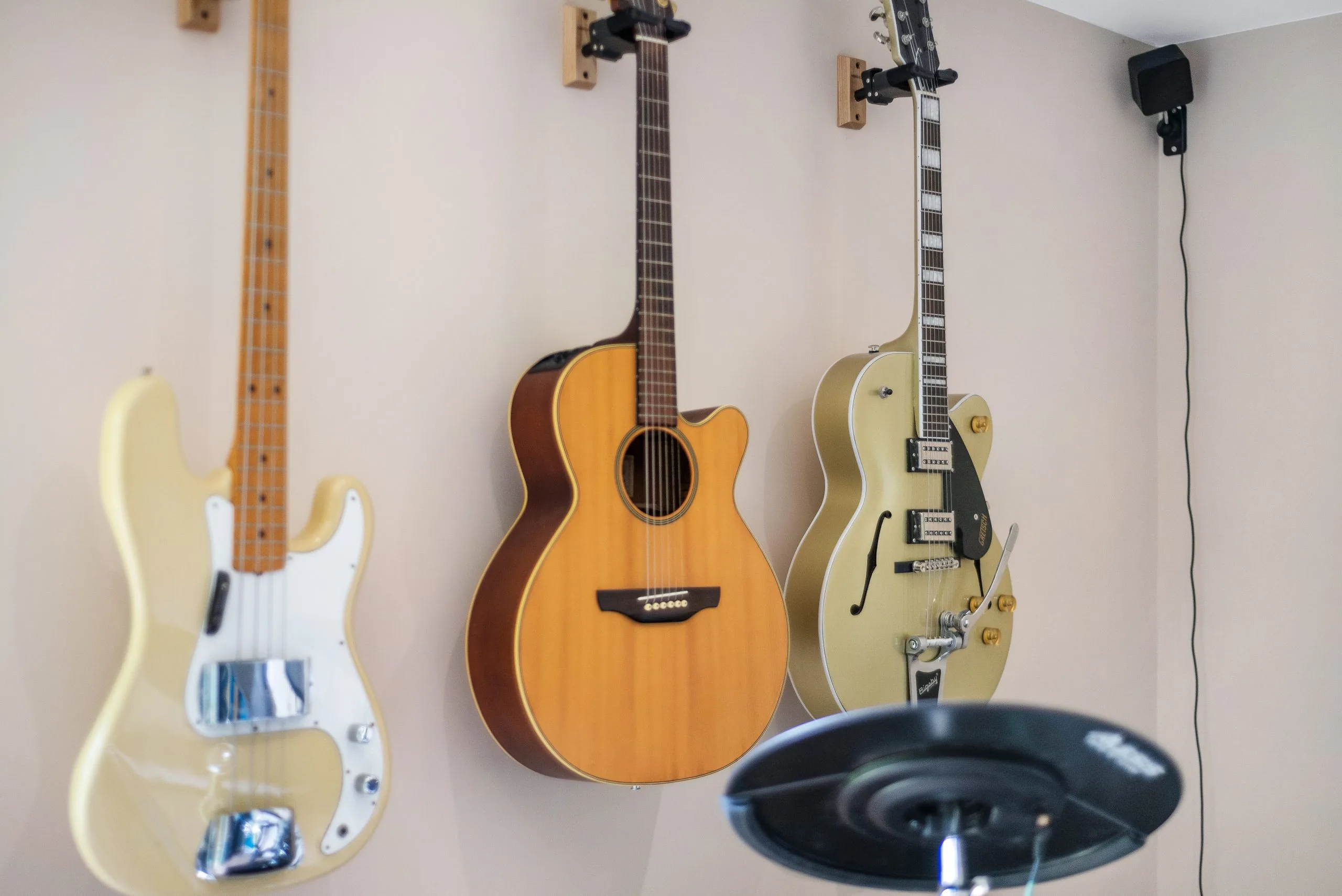
A dedicated garden music room showing how a bespoke building can create a comfortable, inspiring and practical space for creativity away from the main house.
View project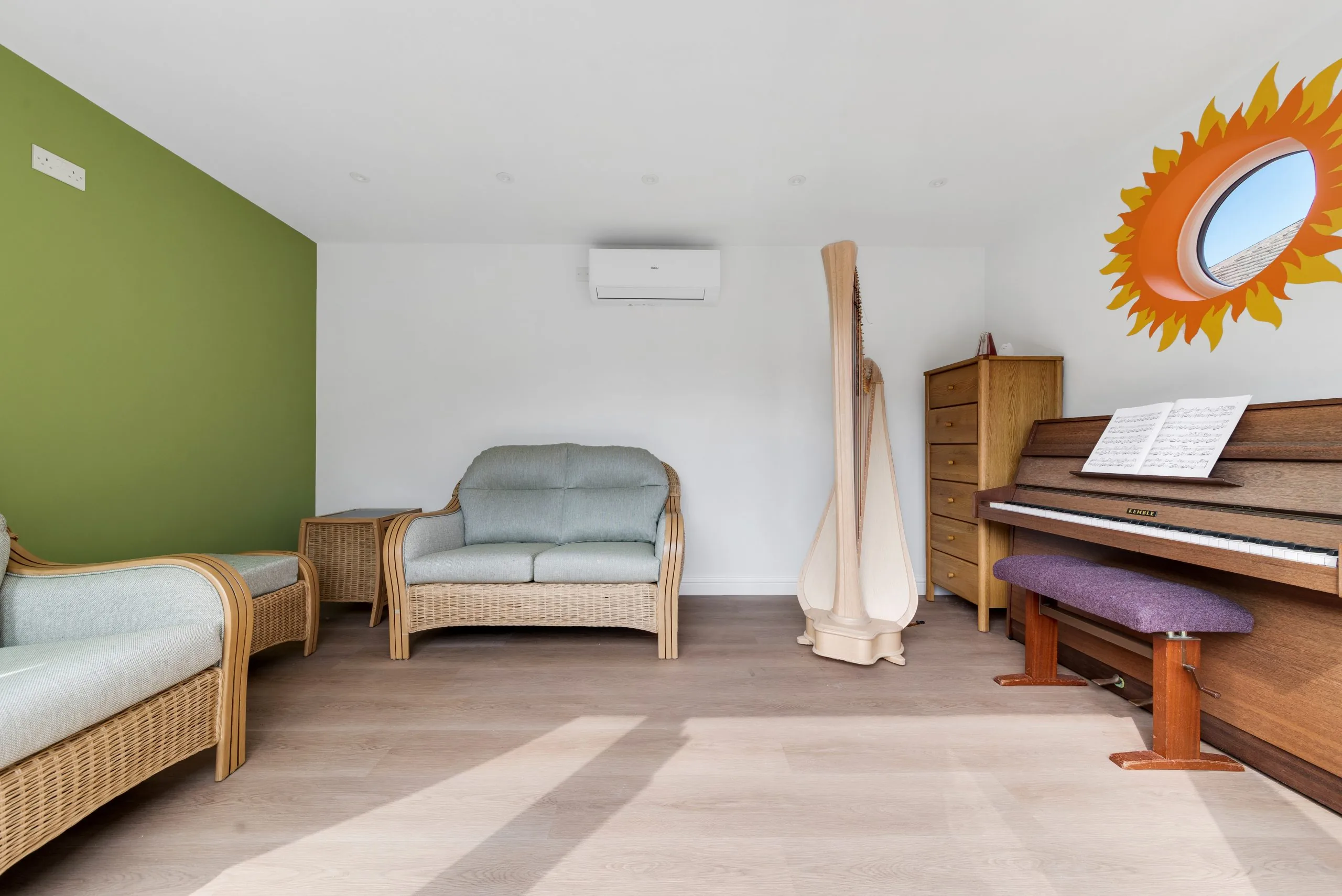
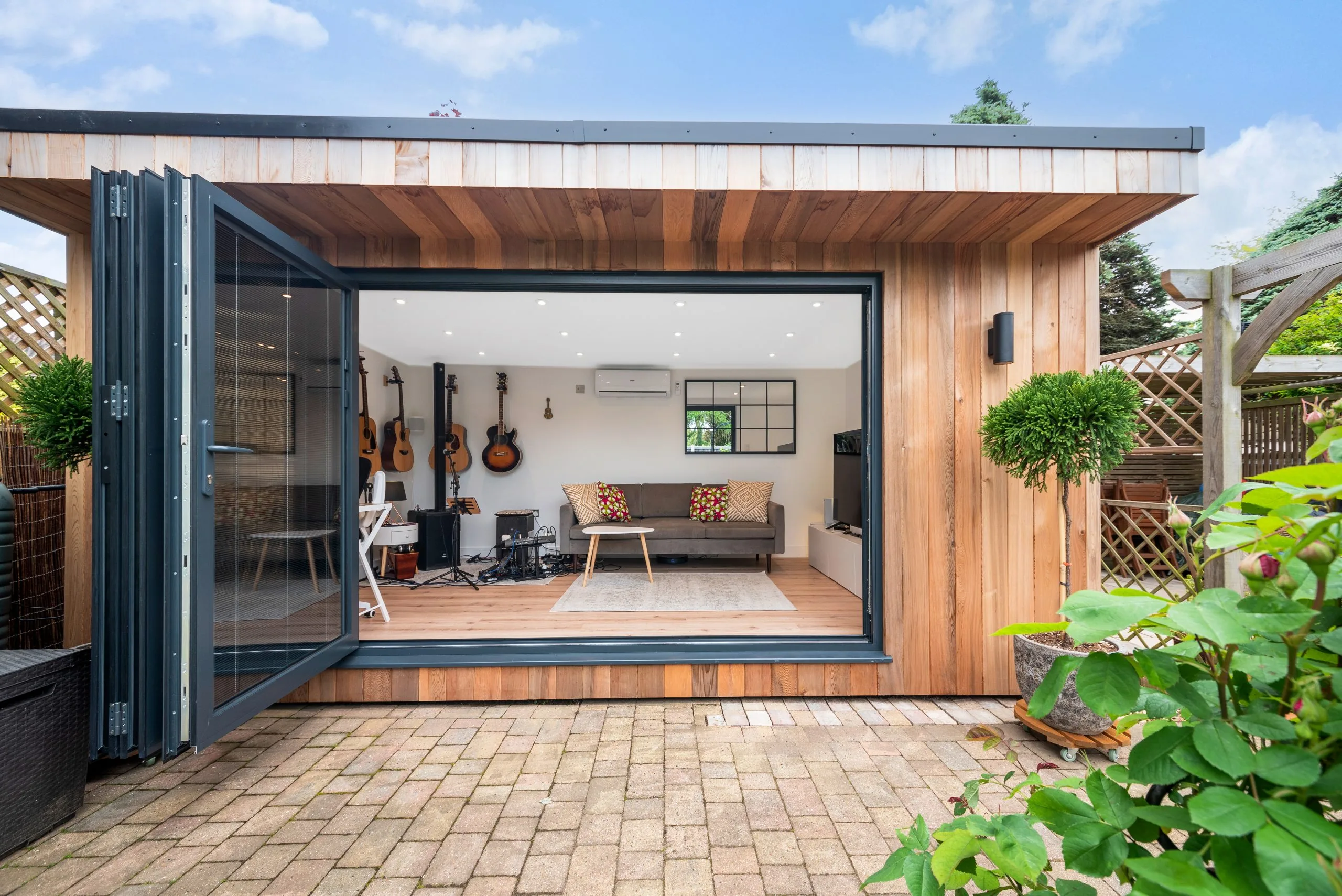
An acoustic music room in the garden is not simply a quiet room with a chair and a music stand.
For strings, voice, woodwind, piano, brass practice or acoustic recording, the space needs to feel calm, warm and responsive. Too hard and reflective, and the sound becomes tiring. Too heavily damped, and the instrument loses its character. Too little insulation, and practice becomes restricted by neighbours, family life or the time of day.
A bespoke Hawksbeck garden room gives you the opportunity to design the building around the way music is actually made: the position of the player, the natural movement of sound, comfortable year-round use, instrument storage, lighting, ventilation, sockets, furniture, and the right level of acoustic privacy. Whether you want a refined practice room for violin, cello, flute or singing, a small teaching studio, a piano room, or a garden building that combines music with work and relaxation, the specification can be shaped around you.
Most rooms in a house are designed for everyday living, not focused listening. Kitchens, bedrooms and spare rooms often have awkward reflections, domestic noise, limited privacy, or a layout that forces music into a corner. A purpose-designed acoustic garden music room can solve these issues because every part of the space can be considered before it is built.
For acoustic instruments, the goal is usually a warm, balanced and controlled sound rather than a completely dead studio environment. A violinist may want clarity without harshness. A singer may need enough natural response to practise projection. A cellist may want depth and resonance without boom. A woodwind player may need a room that feels open enough for tone development, while still being comfortable for longer practice sessions.
This is where a bespoke garden building becomes particularly valuable. The room can be designed with the right proportions, robust construction, insulation, heating, ventilation and interior finishes from the beginning, rather than trying to adapt a spare room that was never intended for music.
Two different jobsOne of the most important decisions is understanding the difference between keeping sound in and making the sound inside the room enjoyable.
Sound insulation is about reducing the amount of sound that travels out of the garden room and into the house, garden or neighbouring properties. This matters if you practise at unsociable times, teach pupils, sing regularly, play louder acoustic instruments, or want the freedom to use the room without feeling self-conscious.
The exact approach depends on the instrument, the distance to boundaries, the level of sound produced, and how sensitive the surrounding area is. A cello or classical guitar may need a very different specification from a soprano voice, saxophone or trumpet. The building fabric, doors, glazing, junctions, ventilation and floor structure all contribute to the result.
Room acoustics are about how the sound behaves inside the space. A well-designed acoustic music room should support the player. You should be able to hear tone, articulation, intonation and dynamics clearly without the room exaggerating certain frequencies or creating an unpleasant flutter echo.
For many acoustic musicians, the best result is a room that combines controlled reflections with warmth. This may involve careful placement of harder and softer surfaces, furniture, curtains, rugs, acoustic panels, shelving, timber finishes and ceiling treatment.
The aim is not to cover every wall in foam, but to create a natural environment that helps you listen properly.
Size matters, but bigger is not automatically better. A compact music room can work beautifully for solo practice, while a larger studio may be preferable for piano, teaching, small ensembles or recording. The proportions of the room are just as important as the floor area.
As a general guide:
Square rooms are often best avoided where possible because they can encourage uneven bass build-up and awkward reflections. A bespoke design allows the footprint, ceiling height, glazing and internal layout to be considered together, rather than forcing the music to fit into a standard box.
An acoustic music room should be comfortable enough to use daily. That means more than simply adding a heater. Musicians often spend long periods sitting or standing in one place, listening closely, repeating passages and working with fine physical control. A room that is too cold, too hot, stuffy, glaringly bright or acoustically fatiguing will quickly become a space you avoid.
Important comfort details include:
When the practical details are handled well, the room feels effortless. You can step outside, close the door, tune up, and begin without moving furniture, apologising for noise, or trying to work around the rest of the household.
A bespoke acoustic music room can be designed for one primary instrument, or for a wider range of uses. The brief should always begin with what you play, how often you play, whether you teach, and how much acoustic separation you need.
Violin, viola and cello players usually benefit from a room that provides clarity without excessive brightness. Reflections need to be controlled so the upper frequencies do not become sharp or tiring, while still allowing the instrument to bloom. Cello and double bass may need more attention at lower frequencies, particularly in smaller rooms.
Singers often need acoustic feedback from the room. A completely dead space can feel unnatural, while an overly live space can hide technical issues. A garden vocal room should support projection, diction and tone without being harsh. Privacy is also important, as singers usually perform better when they do not feel overheard.
Flute, clarinet, oboe, bassoon and saxophone each have different projection characteristics. A garden music room for woodwind should provide comfortable breath-focused practice, good ventilation and enough acoustic response to hear tone clearly. Reed storage, instrument stands and a small water-safe area may also be useful.
Guitar, mandolin, harp and other plucked instruments often suit a warm interior with a mix of reflective and absorbent surfaces. The room should reveal detail without sounding thin. For recording, low background noise and careful desk placement become more important.
A piano room needs to be planned around the size and type of instrument. Upright piano, digital piano and baby grand each place different demands on layout, floor loading, humidity stability and acoustic balance. A bespoke building allows the piano position to be considered before doors, glazing, sockets and furniture are finalised.
The interior finish has a major effect on how a music room feels. Large areas of plasterboard, glass and hard flooring can create strong reflections. Too many soft finishes can remove life from the instrument. The best approach is normally balanced and intentional.
Depending on the brief, this may include:
A music room should still look beautiful. Acoustic practicality does not have to mean a technical or clinical interior. With the right design, the space can feel like a refined garden retreat while performing as a serious practice environment.
Natural light is one of the pleasures of a garden music room, but glazing must be handled carefully. Large windows can make a practice space feel inspiring, but glass is reflective and can be a weak point acoustically if it is not specified appropriately. The solution is not necessarily to remove glazing, but to design it intelligently.
For an acoustic music room, glazing decisions may include:
A garden view can be very beneficial for creativity and focus. Many musicians find that separating practice from the main house helps them mentally switch into a more disciplined, peaceful mode. The feeling of going to a dedicated studio, even just a few steps away, can make practice more consistent.
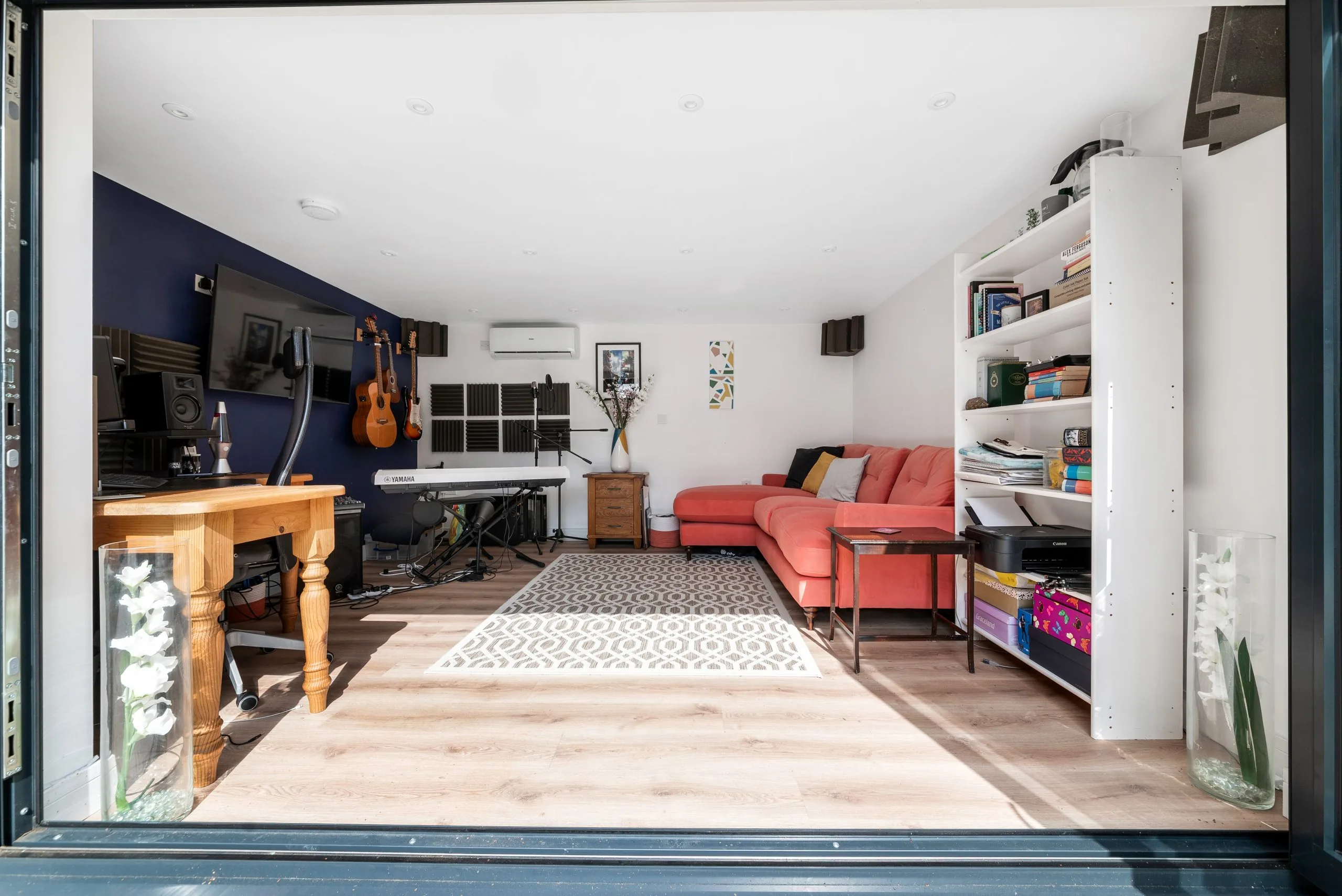
Yes, but it is worth deciding this early. A room used only for practice can be designed differently from one intended for regular recording. If you want to record voice, strings, woodwind or acoustic guitar, background noise, computer fan noise, microphone placement, cabling and desk position become more important.
Useful recording features might include:
If you want a practice room first and a recording room second, the design can remain elegant and domestic. If recording is central to the brief, the specification may become more studio-focused. Either way, the benefit of a bespoke garden room is that these priorities can be discussed before construction begins.
That one decision changes the ventilation, the cabling and where the desk goes, so it is worth settling with us before drawings begin.
One of the reasons acoustic music rooms work so well as garden buildings is that your use of the space can evolve. A room that begins as a violin practice space may later become a teaching room. A vocal room may become a podcast and recording space. A piano studio may double as a quiet writing room. A young musician’s practice room may eventually become a home office or creative studio.
If you are still exploring different possibilities, our main garden room ideas guide shows just how flexible a bespoke garden building can be.
A good acoustic music room brief goes beyond dimensions. It looks at how the space will be used on a normal day, what frustrates you about your current practice setup, and what would make the room a pleasure to return to.
| Primary use | Solo practice, teaching, recording, rehearsal, composing, listening or a combination of uses. |
| Instrument type | Voice, strings, piano, woodwind, brass, acoustic guitar or mixed instruments. |
| Sound control | How much sound needs to be reduced externally, and how refined the internal acoustic needs to be. |
| Comfort | Heating, ventilation, insulation, lighting, seating and year-round usability. |
| Storage | Instrument cases, stands, sheet music, speakers, recording equipment and teaching materials. |
| Future flexibility | Whether the room may later become a studio, office, hobby room or multi-use family space. |
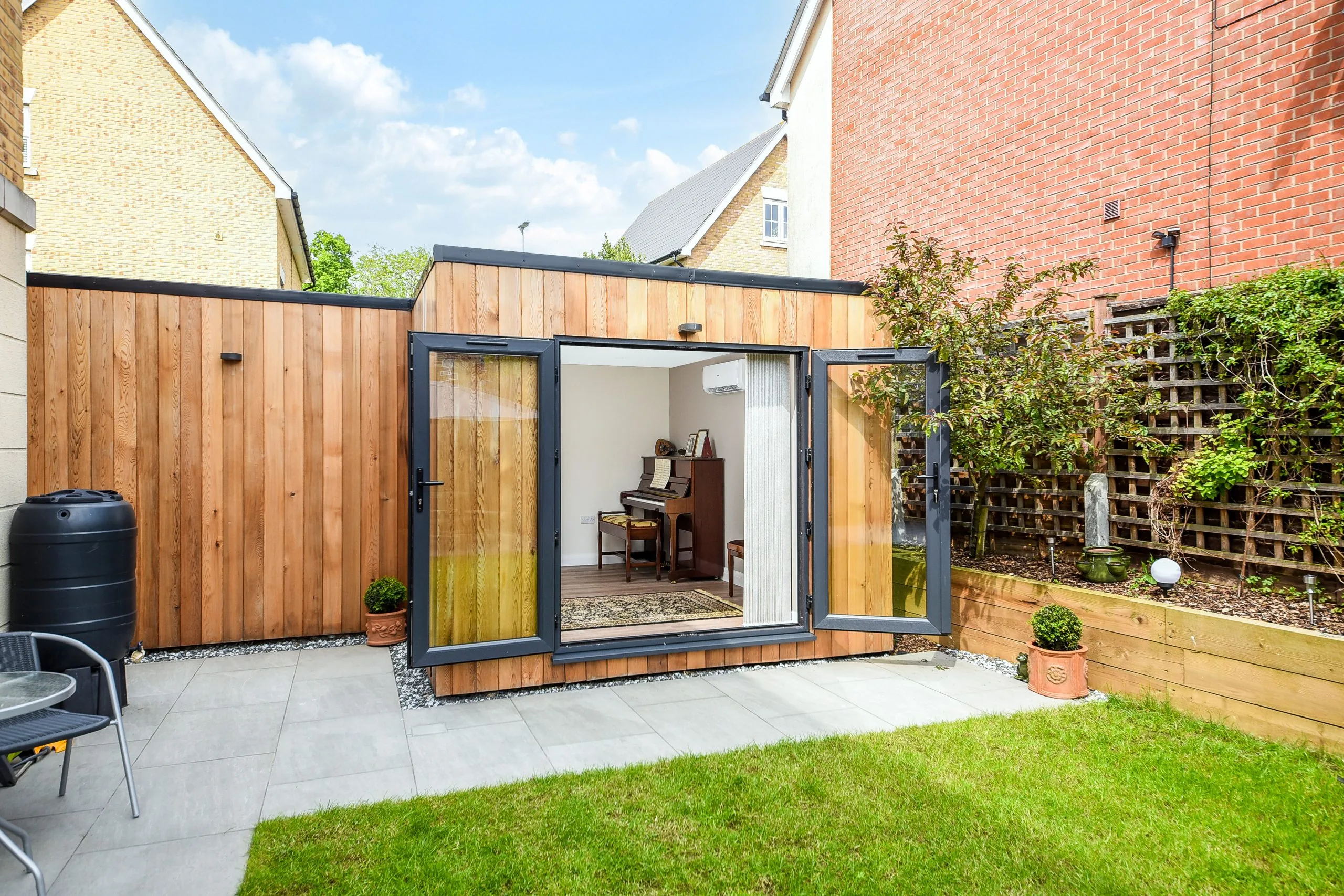
Many garden rooms can be created under permitted development, but this depends on the size, height, position, location and intended use of the building. A music room also deserves careful placement because sound, access and privacy all matter.
When considering where to position an acoustic music room, think about:
For teaching or more intensive use, planning considerations may be different from a private practice room. This is why the early conversation is so important. The more accurately the intended use is understood, the better the design and specification can be shaped.
The cost of a garden acoustic music room depends on size, specification, acoustic requirements, glazing, services, foundations, finishes and the complexity of the site. Because Hawksbeck garden rooms are bespoke, the most accurate price will always come from discussing your exact brief.
As a broad guide, a premium garden room suitable for music use will usually sit above the most basic garden office specification, because the building may need enhanced acoustic consideration, upgraded doors or glazing, careful ventilation, refined internal finishes and a more tailored layout.
Items that can influence the final price include acoustic upgrades, the quantity and type of glazing, heating and cooling choices, electrical specification, data cabling, fitted storage, interior finishes, decking, landscaping, and any site-specific groundwork. The best approach is to start with how you want the room to perform, then shape the investment around the features that matter most.
Acoustic musicians are sensitive to small differences. A slightly awkward layout, a reflective wall in the wrong place, a noisy heater, insufficient storage or poor lighting can affect how often the room is used. Off-the-shelf buildings often require compromise, especially when music is the focus.
A bespoke Hawksbeck garden room allows the building to be designed around the brief, rather than the other way round. That means you can consider:
The result should feel personal, not generic: a room that suits your instrument, your routine and the property it belongs to.
Not every music room needs to be single-purpose. Many clients want a garden building that supports music while also adding valuable flexible space to the home. With careful planning, an acoustic music room can combine beautifully with:
The key is to identify the non-negotiables. If acoustic performance is the priority, the secondary uses should support the room rather than compromise it. For example, shelving may double as storage and diffusion, curtains may improve comfort and acoustic control, and soft seating may make the room more inviting while reducing harsh reflections.
Before beginning a design, it is useful to think through a few practical questions. These help define the right size, acoustic specification and layout.
Clear answers to these questions make the design process much more precise. They also help avoid spending money on features that are not important while protecting the elements that will make the greatest difference to your enjoyment of the room.
Quick answersSound insulation limits how much sound travels out to the house, garden or neighbours. Room acoustics govern how the sound behaves inside, so you can hear tone, intonation and dynamics clearly. A good acoustic music room is planned for both.
A compact room can suit solo practice, while piano, teaching, small ensembles or recording usually call for more floor area. Proportions matter as much as size, and square rooms are best avoided where possible.
Many garden rooms can be created under permitted development, depending on size, height, position, location and intended use. Teaching or more intensive use can change the planning considerations, so it is worth raising early.
A compact solo practice room may start from the lower-to-mid tens of thousands, and a medium music studio commonly moves into the mid-to-higher tens of thousands. Larger or more specialist buildings vary with the level of design and specification.
A well-designed garden acoustic music room can change the way you practise. It gives you a dedicated place to focus, listen, repeat, teach, record and enjoy your instrument without the compromises of a spare room inside the house. With a bespoke approach, the building can be as refined, comfortable and technically considered as it needs to be.
If you are thinking about a warm, balanced practice space for strings, voice, woodwind, piano or other acoustic instruments, Hawksbeck can help you shape the brief, explore the specification and create a garden building that feels made for the way you play.
Those two answers shape the insulation, the glazing and the proportions of the room more than anything else.
Three garden music rooms we have built in Shenfield, Colchester and elsewhere in Essex.
A dedicated garden music room showing how a bespoke building can create a comfortable, inspiring and practical space for creativity away from the main house.
View project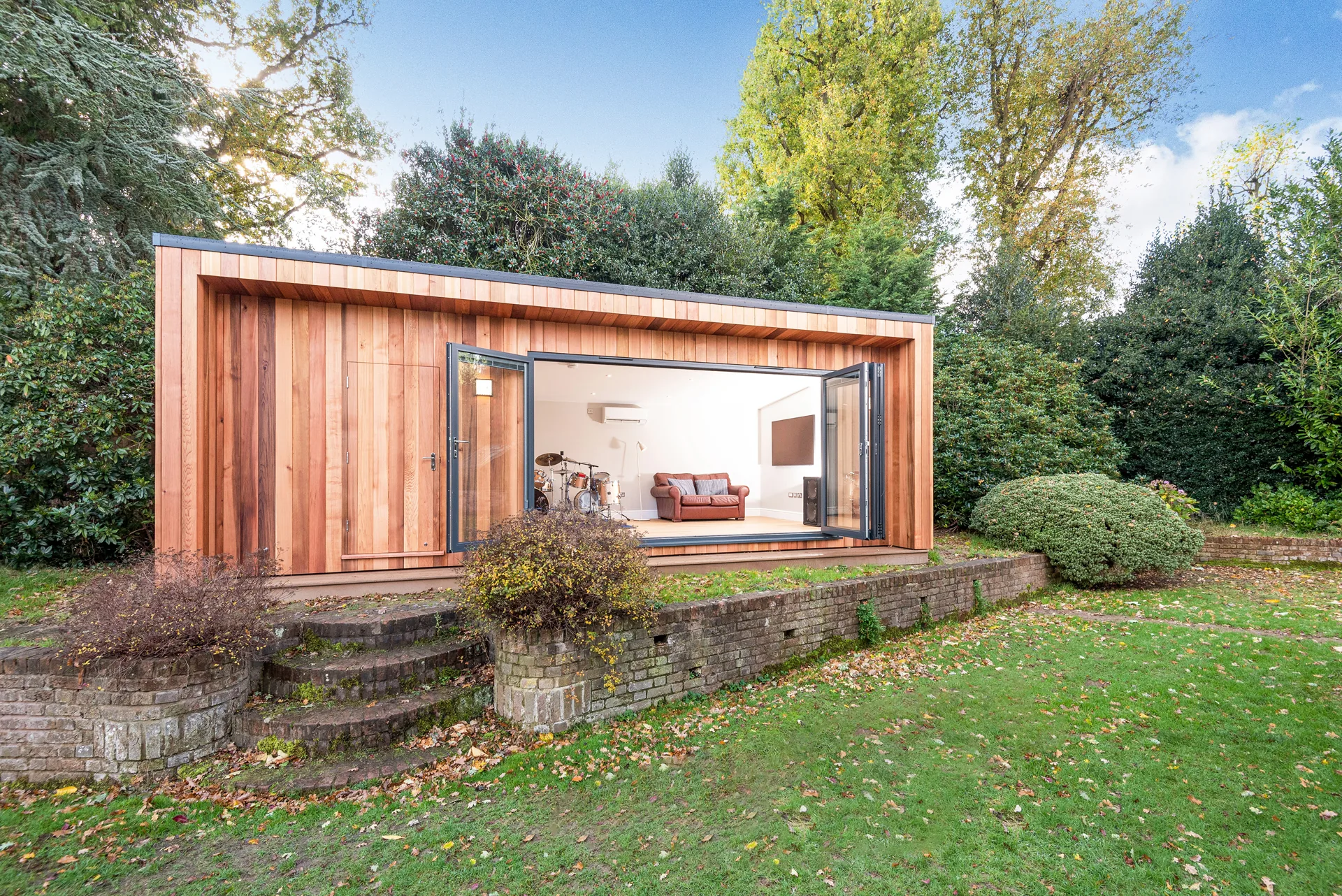
A premium garden music studio project demonstrating how a garden room can be tailored for serious music use while retaining the comfort and finish of a luxury living space.
View project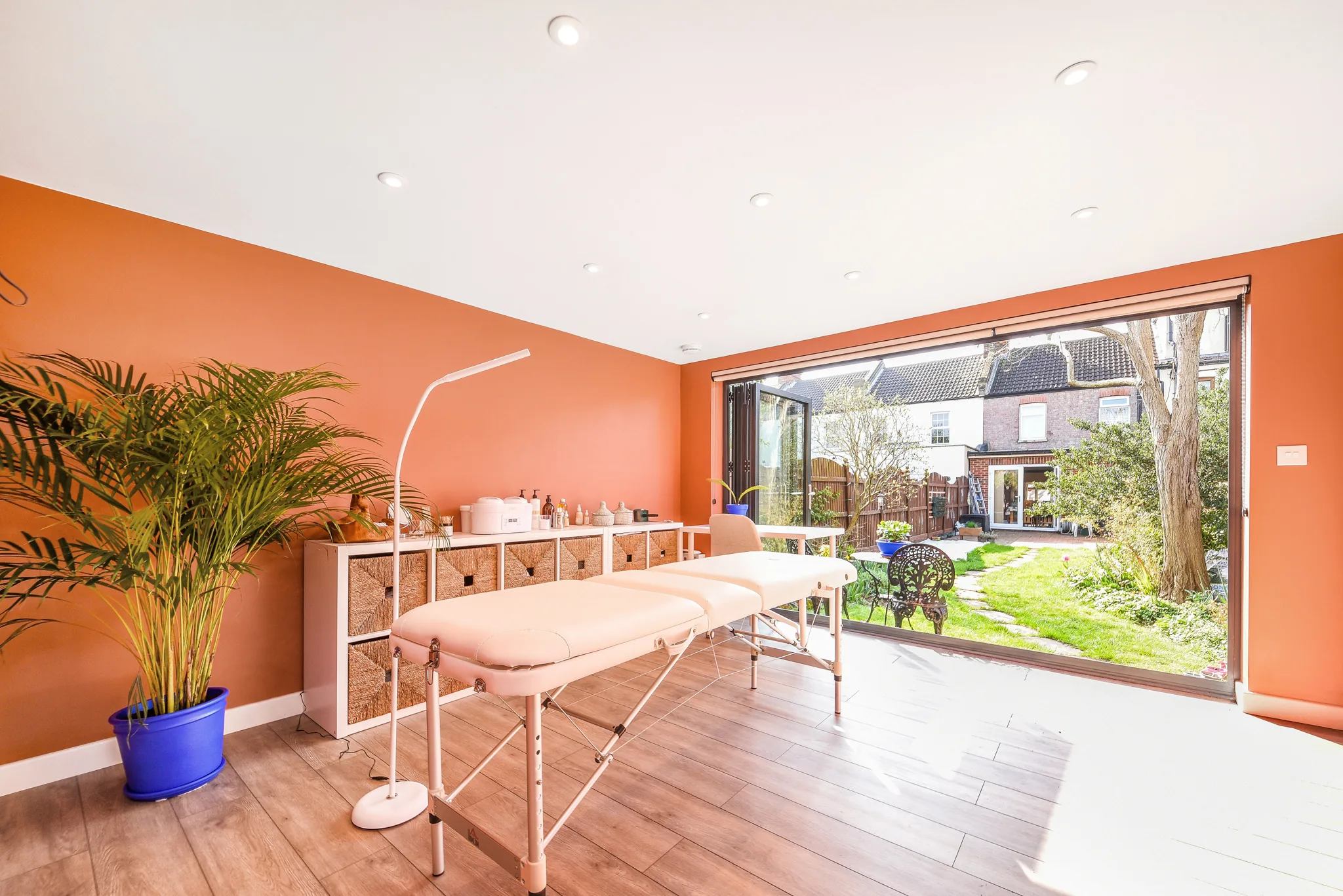
This music studio case study highlights the flexibility of a bespoke garden building for creating a private, practical and beautifully finished space for music at home.
View project