Garden Room Ideas: 86 Beautiful & Practical Ways to Use a Bespoke Garden Room
Garden room inspiration
A garden room can be far more than a spare room at the end of the garden. Designed well, it can become a quiet home office, a private gym, a music studio, a garden bar, a guest annexe, a creative workshop, a wellness retreat or a flexible living space that changes with your family over time.
At Hawksbeck, every garden room is designed around the way our clients want to live. Some people come to us needing a dedicated place to work. Others want a gym with a sauna, a self-contained annexe, a peaceful studio, a bar for entertaining or a multi-use room that combines several ideas in one beautiful building.
This guide brings together more than 86 garden room ideas, illustrated with real Hawksbeck projects, to help you decide what your own garden room could become.
Garden office ideas
A garden office is one of the most popular garden room ideas because it solves a problem that many homes were never designed for: focused, comfortable working space. A spare bedroom, kitchen table or corner of the living room can work temporarily, but a purpose-built garden room office creates a much clearer boundary between home life and work life.
1. A dedicated home office
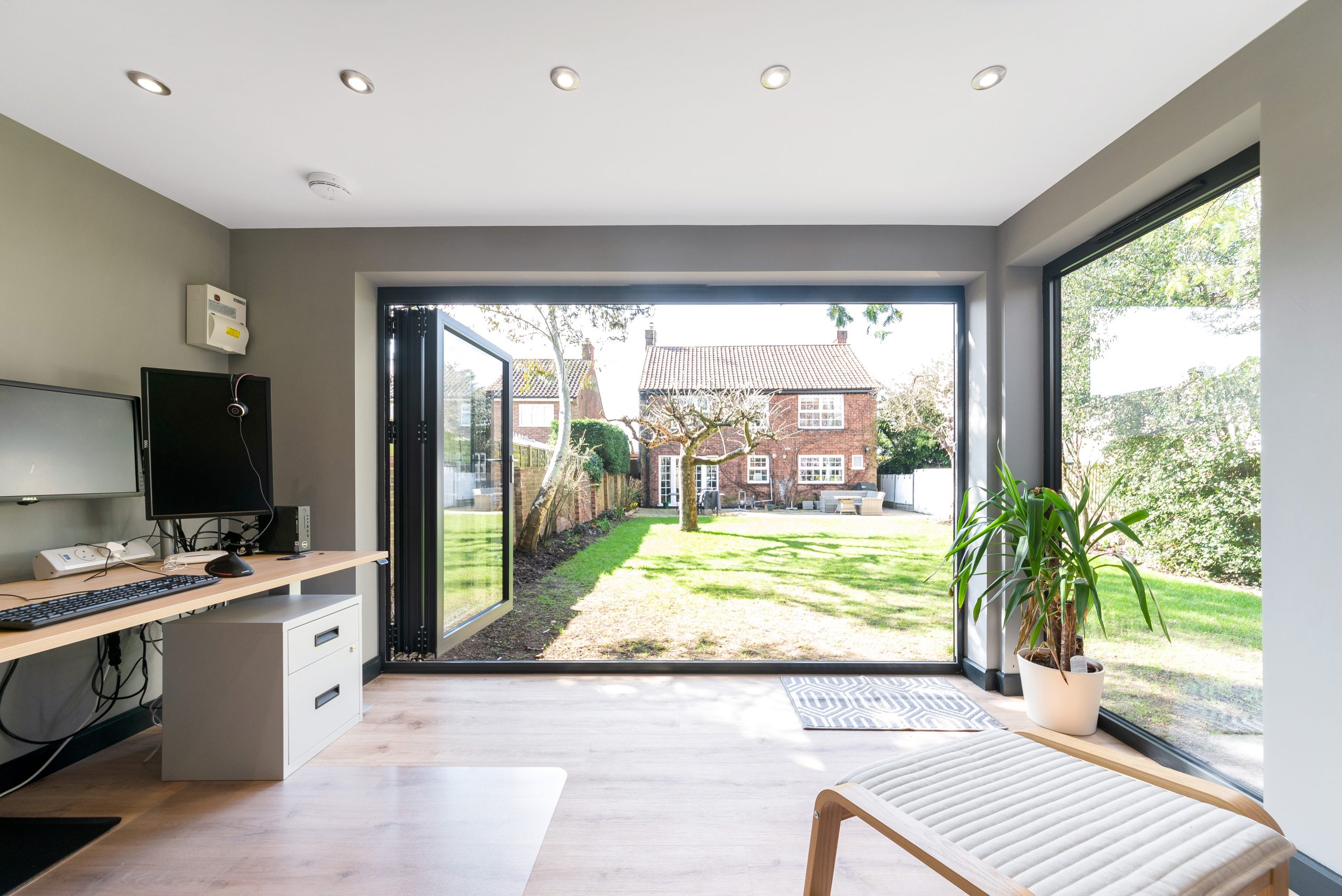
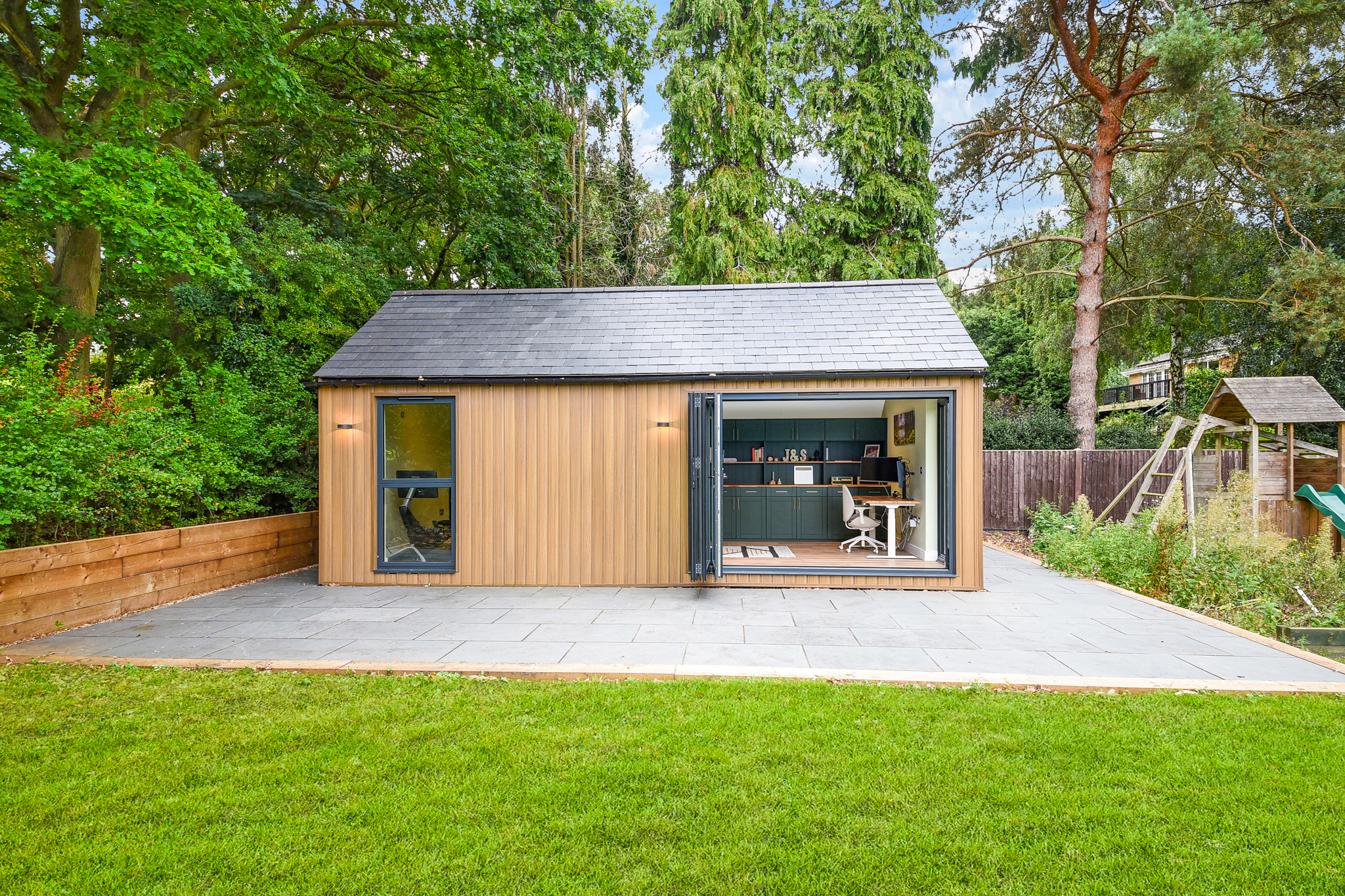
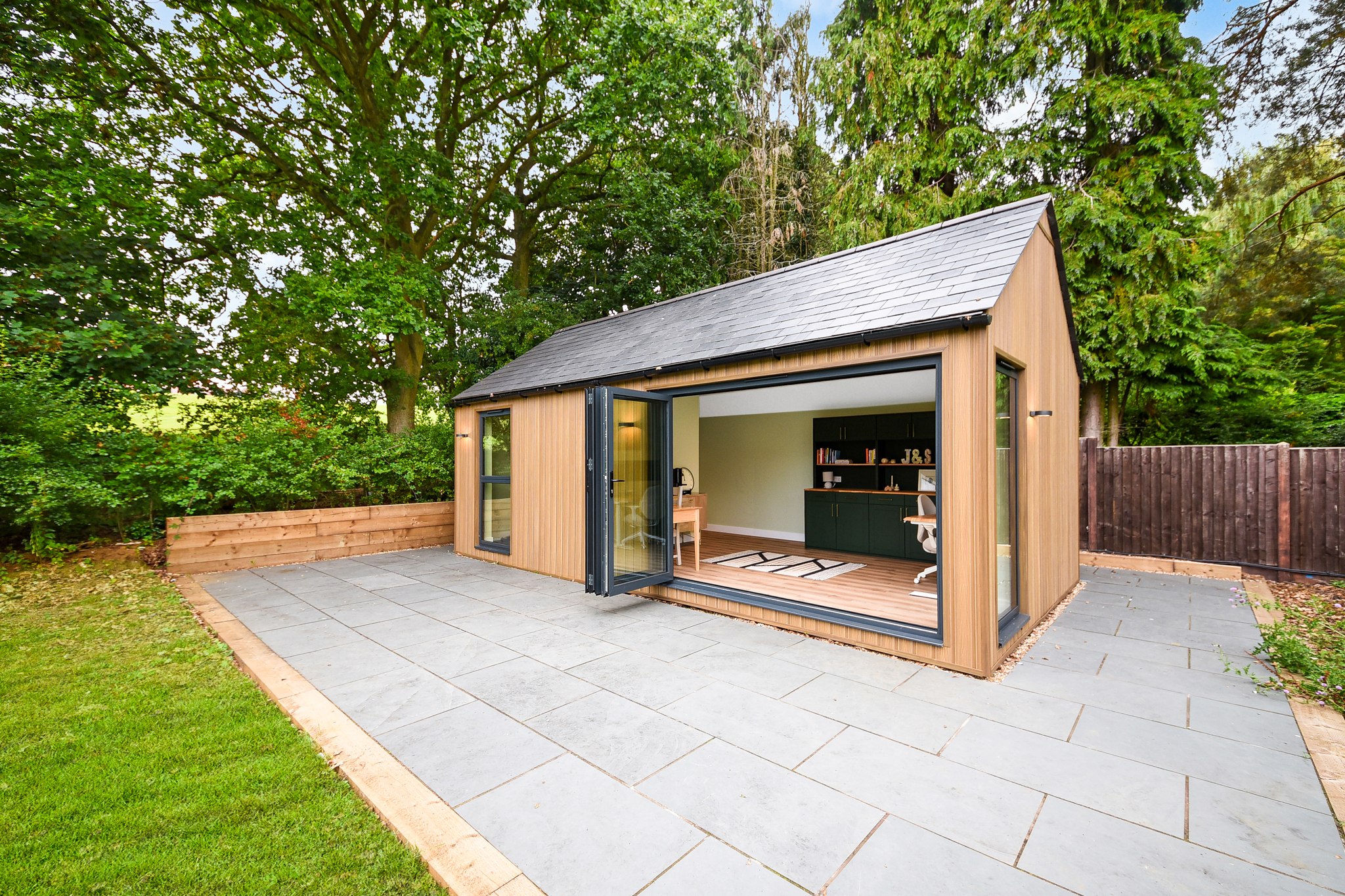
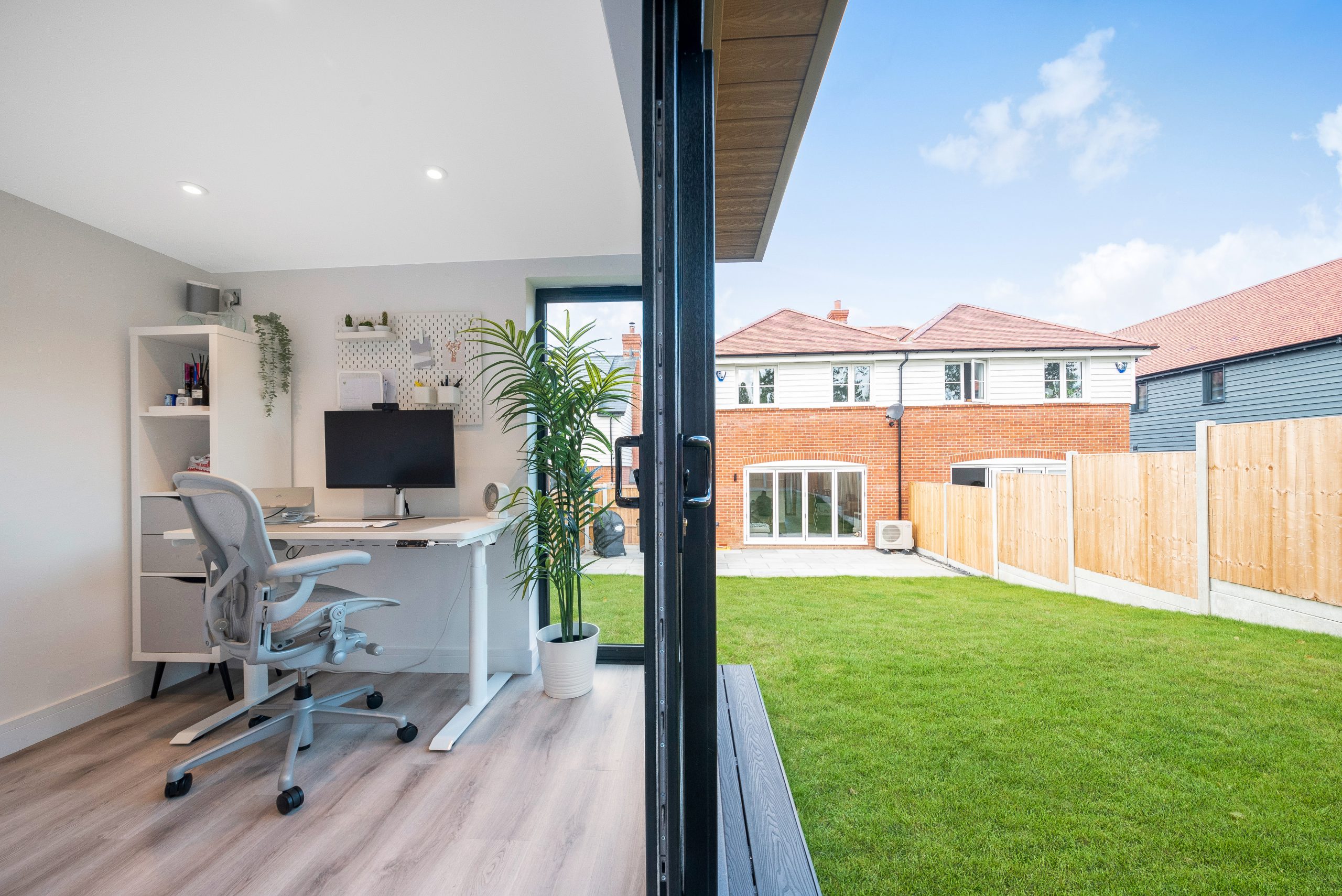
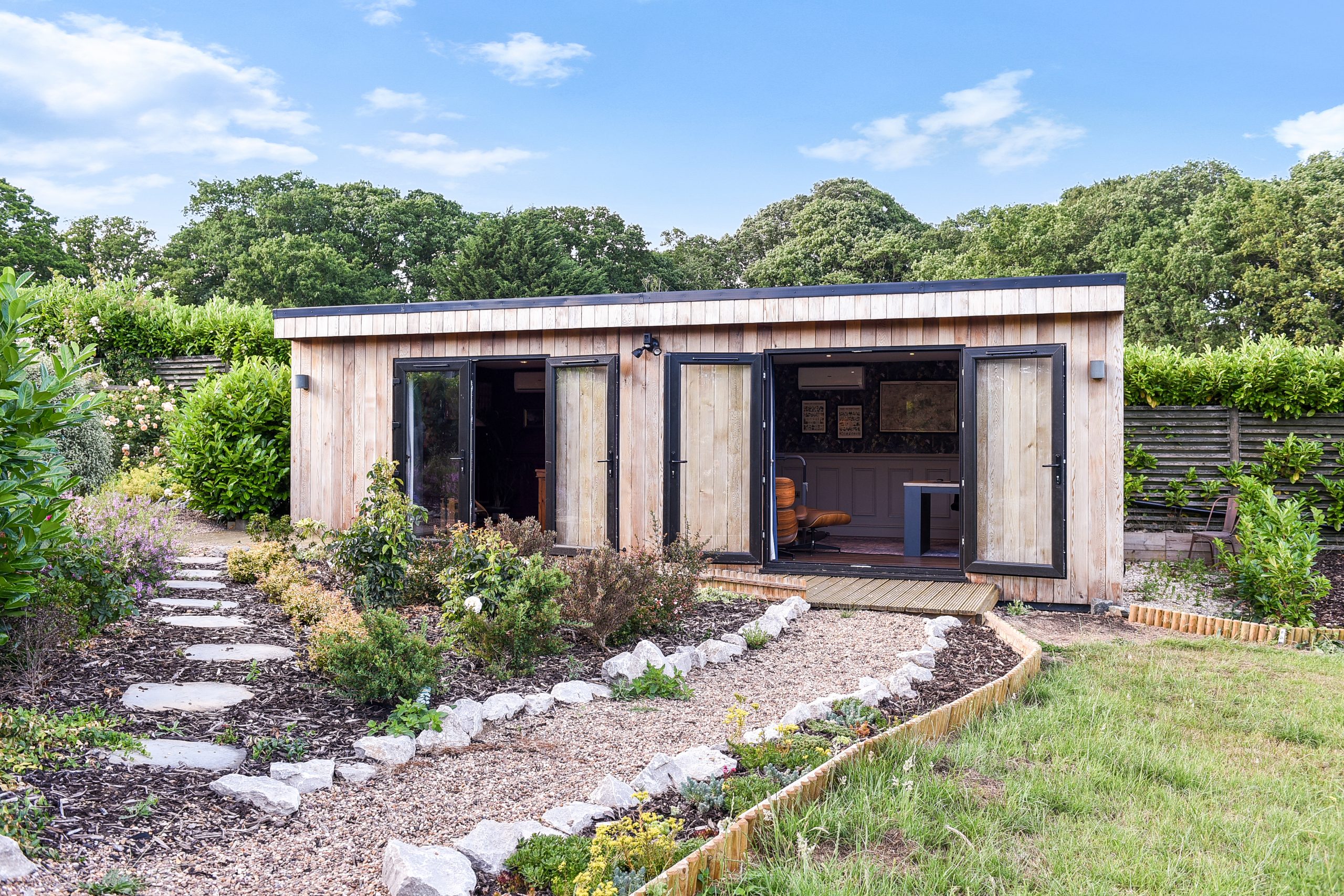
The simplest garden office idea is often the most effective: a calm, well-insulated room with a proper desk, comfortable chair, reliable internet, heating, cooling and storage. Position the desk so you can enjoy garden views without glare on your screen, and plan sockets before the build so laptops, monitors, printers and chargers all have a logical home.
2. A two-person garden office
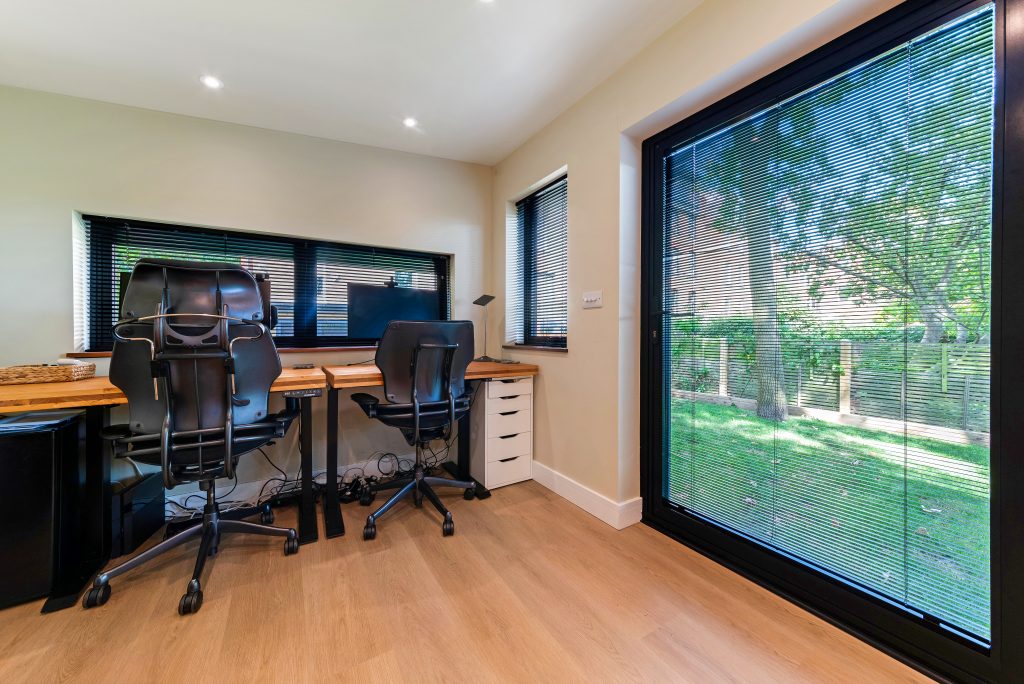
If two people work from home, a garden room can be designed with a double desk, two separate work zones or desks placed on opposite walls. This avoids the daily negotiation over who gets the quiet room inside the house. It also means both people can have proper lighting, storage and display space rather than trying to share one improvised setup.
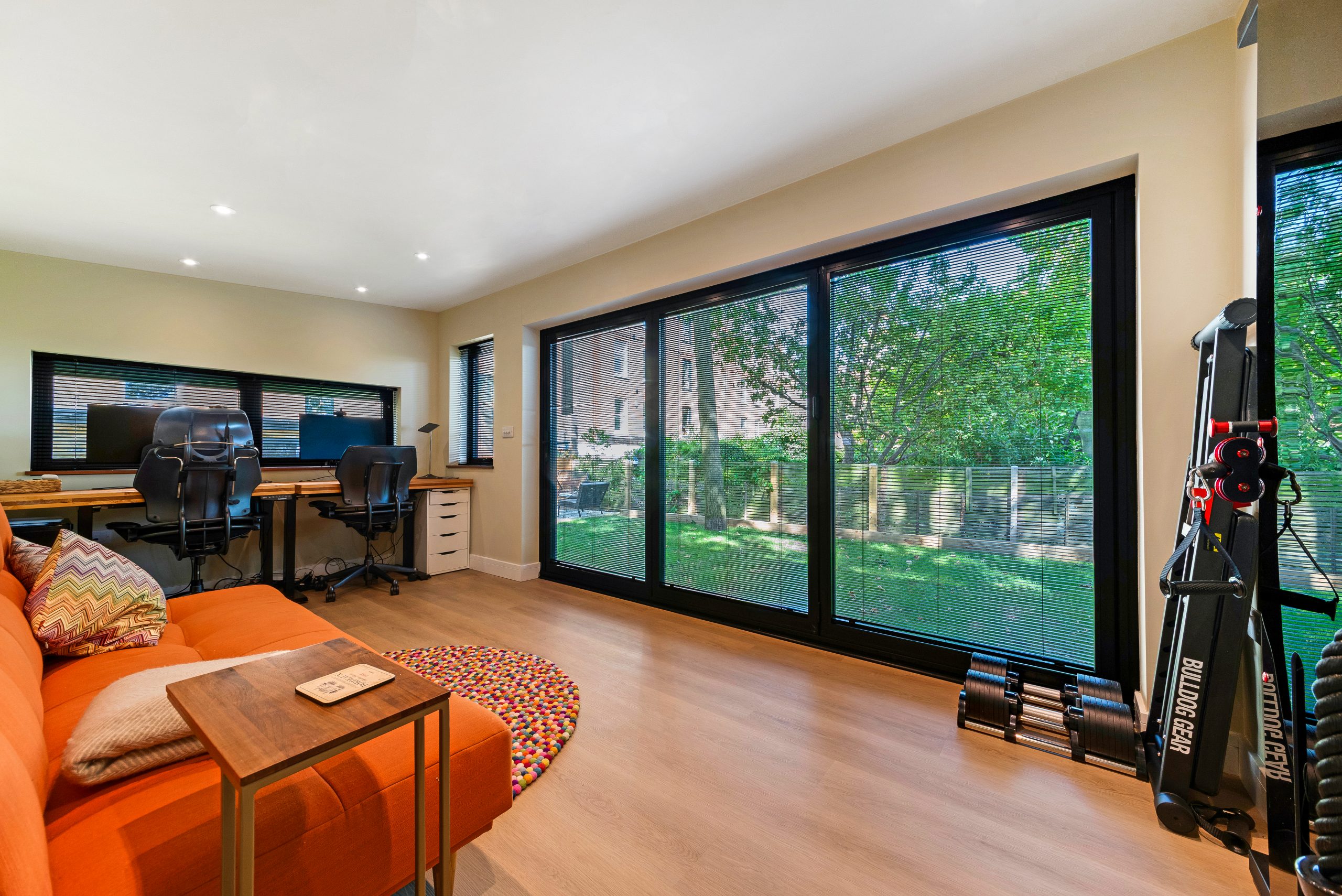
3. An office with a meeting area
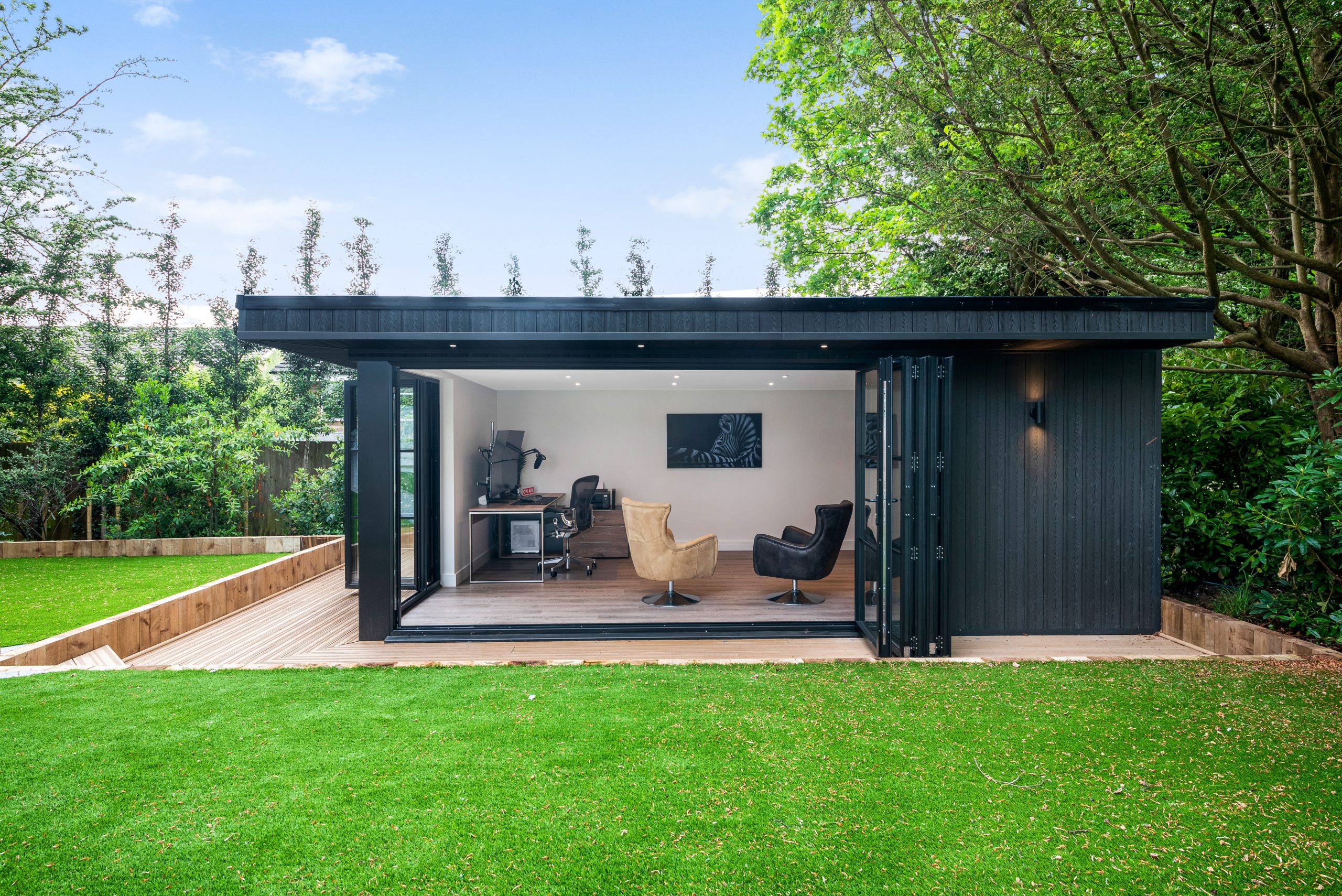
For business owners, consultants and client-facing professionals, consider adding a small sofa, round table or visitor chair area. This creates a more polished space for video calls, in-person conversations or reviewing documents. It also makes the room useful outside office hours, which is one of the big advantages of a bespoke garden room.
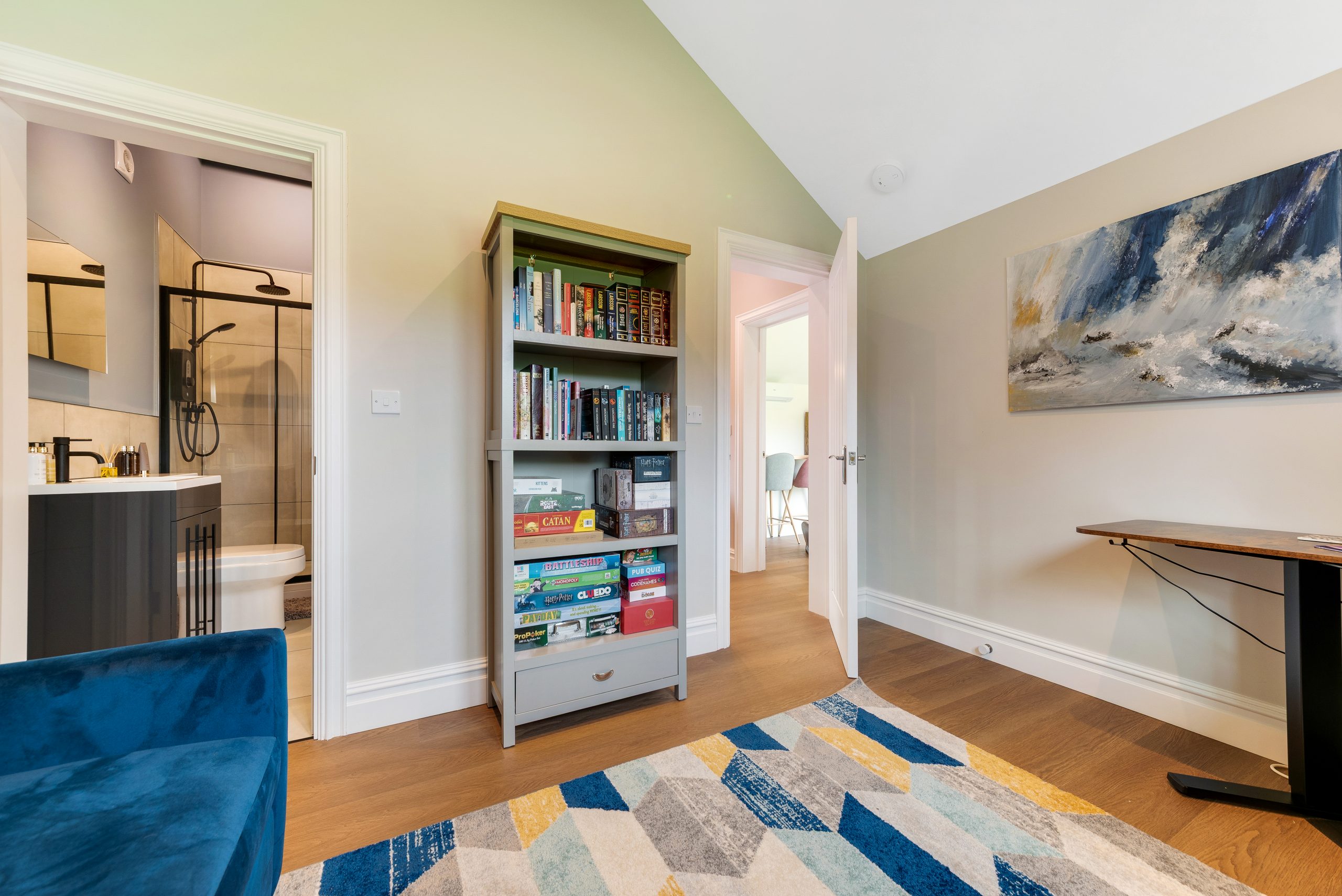
4. A garden office with hidden storage
Office storage is easy to underestimate. Files, stationery, samples, camera equipment, tools, printers and seasonal garden items can quickly make a beautiful room feel cluttered. A hidden storage section or built-in cupboard keeps the main room clear while giving you a practical place to keep the items you need close by.
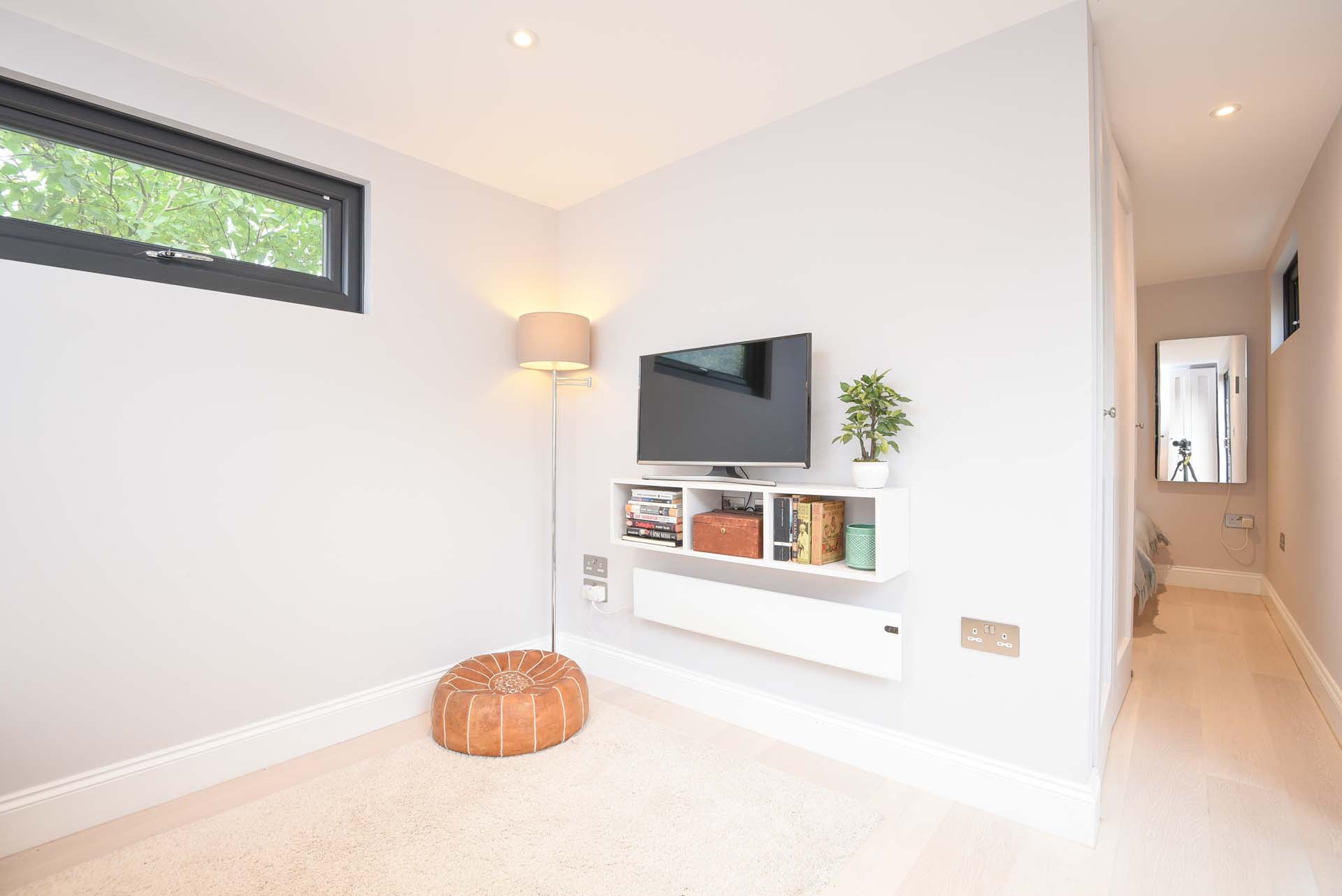
5. An office and lounge combination
A garden office does not need to feel corporate. Add a sofa, reading chair, side table or coffee station and the room becomes a place to pause between meetings, read, plan or unwind at the end of the day. This is especially useful if the room needs to feel inviting in the evening, not just functional during work hours.
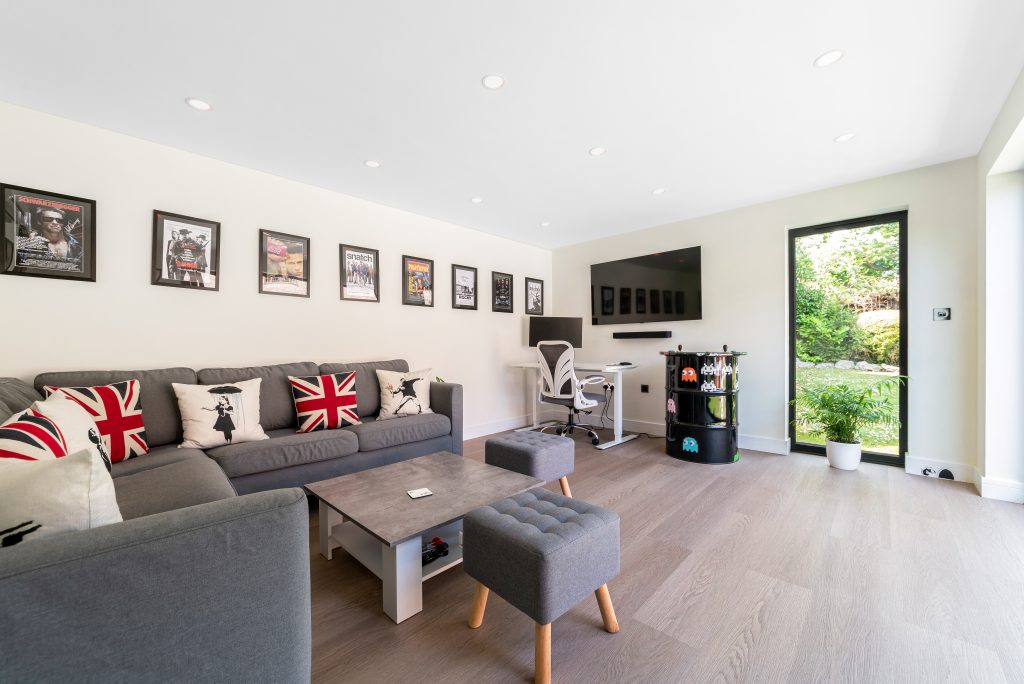
6. A garden office and gym in one
Combining work and fitness in one garden room is one of the most efficient ways to use the space. The key is zoning. Put the desk where it benefits from natural light and garden views, then keep gym equipment to a separate section with suitable flooring, ventilation and enough clearance for movement.
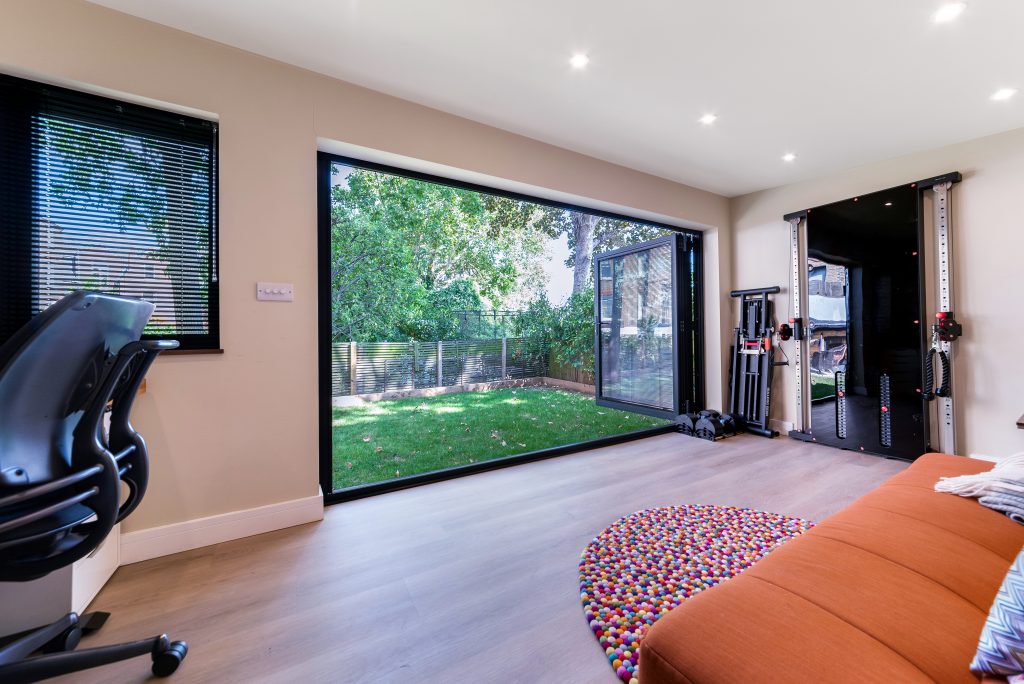
7. A garden office with garden-facing glazing
One of the pleasures of working from a garden room is the connection to the garden itself. Large windows, bifold doors or sliding doors bring in natural light and help the room feel restorative rather than boxed in. For screen work, think carefully about orientation, blinds and where the sun falls at different times of day.
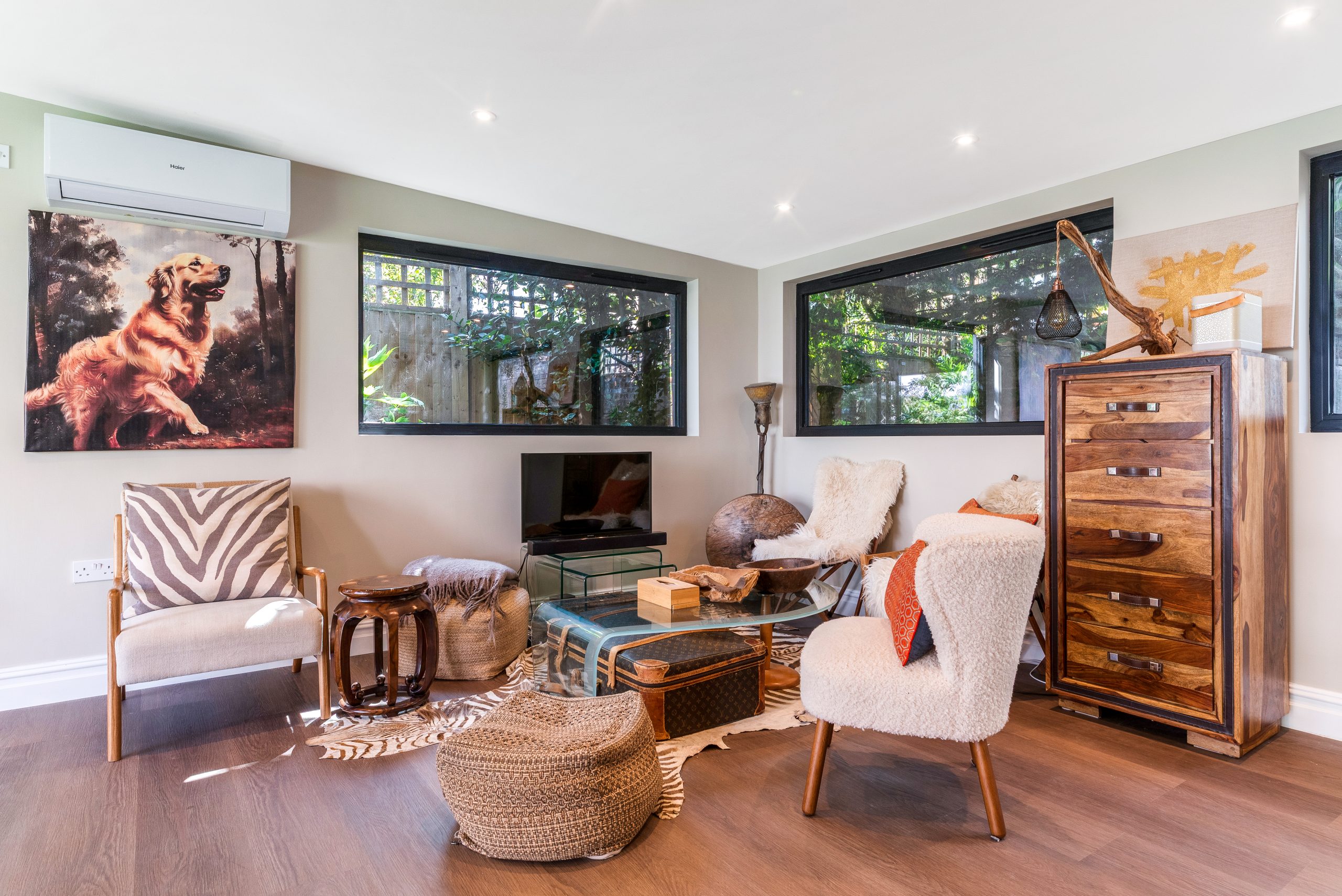
8. A private office for calls and deep work
For anyone who spends a lot of time on calls, recording videos, writing, designing or doing confidential work, a garden office can provide privacy that is difficult to achieve inside a busy family home. Good insulation, solid construction and thoughtful positioning can all help the room feel separate, calm and professional.
Garden gym and wellness ideas
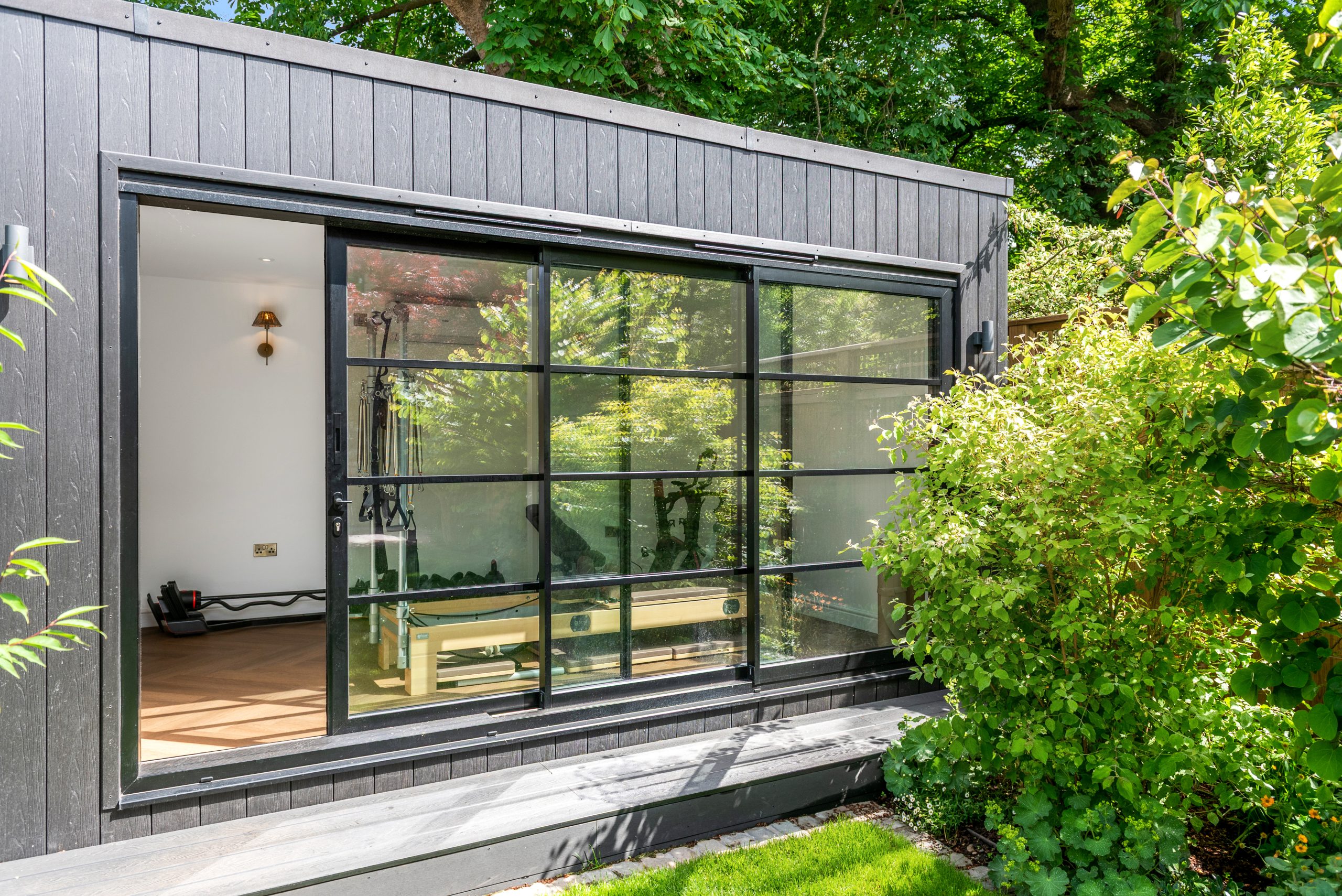
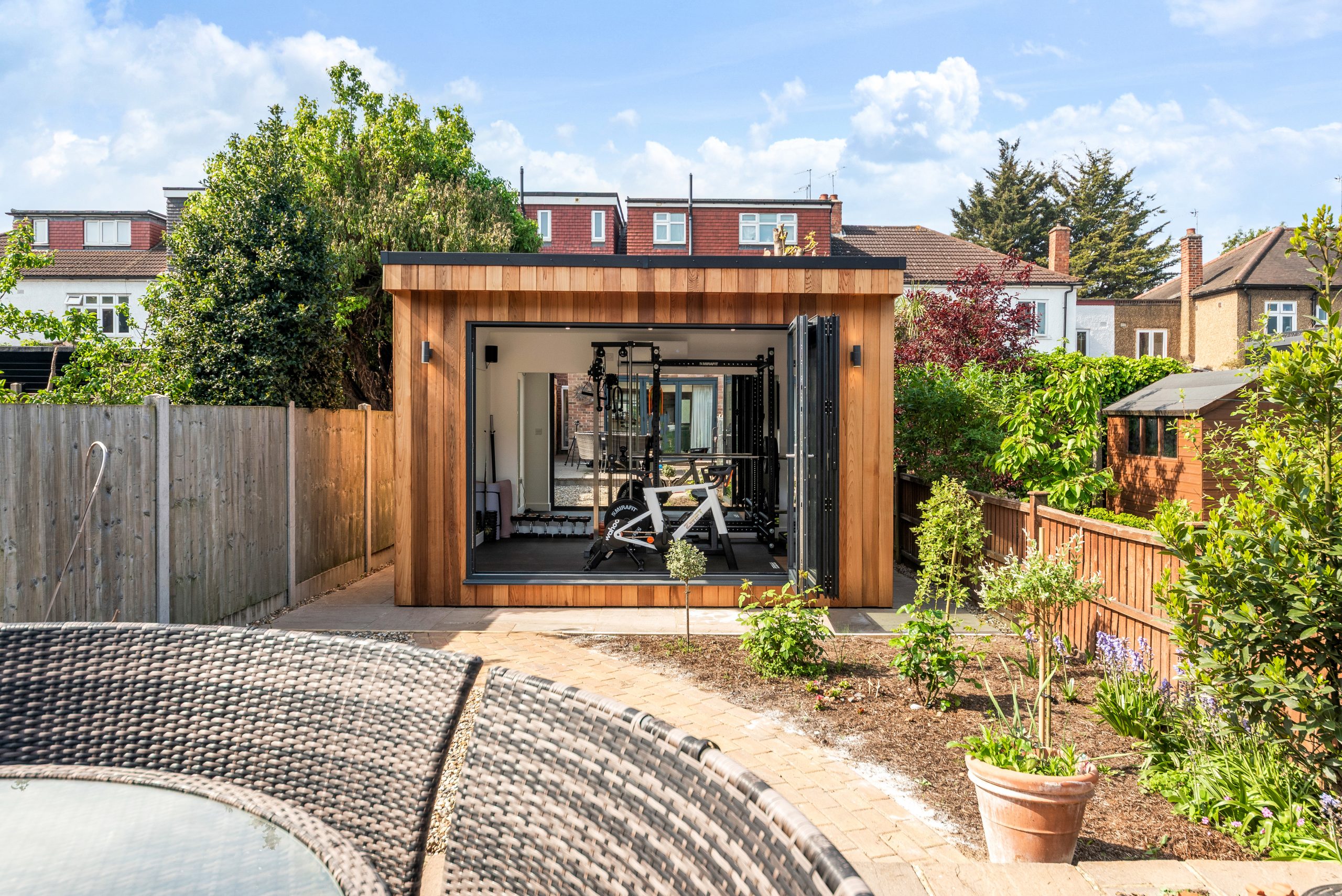
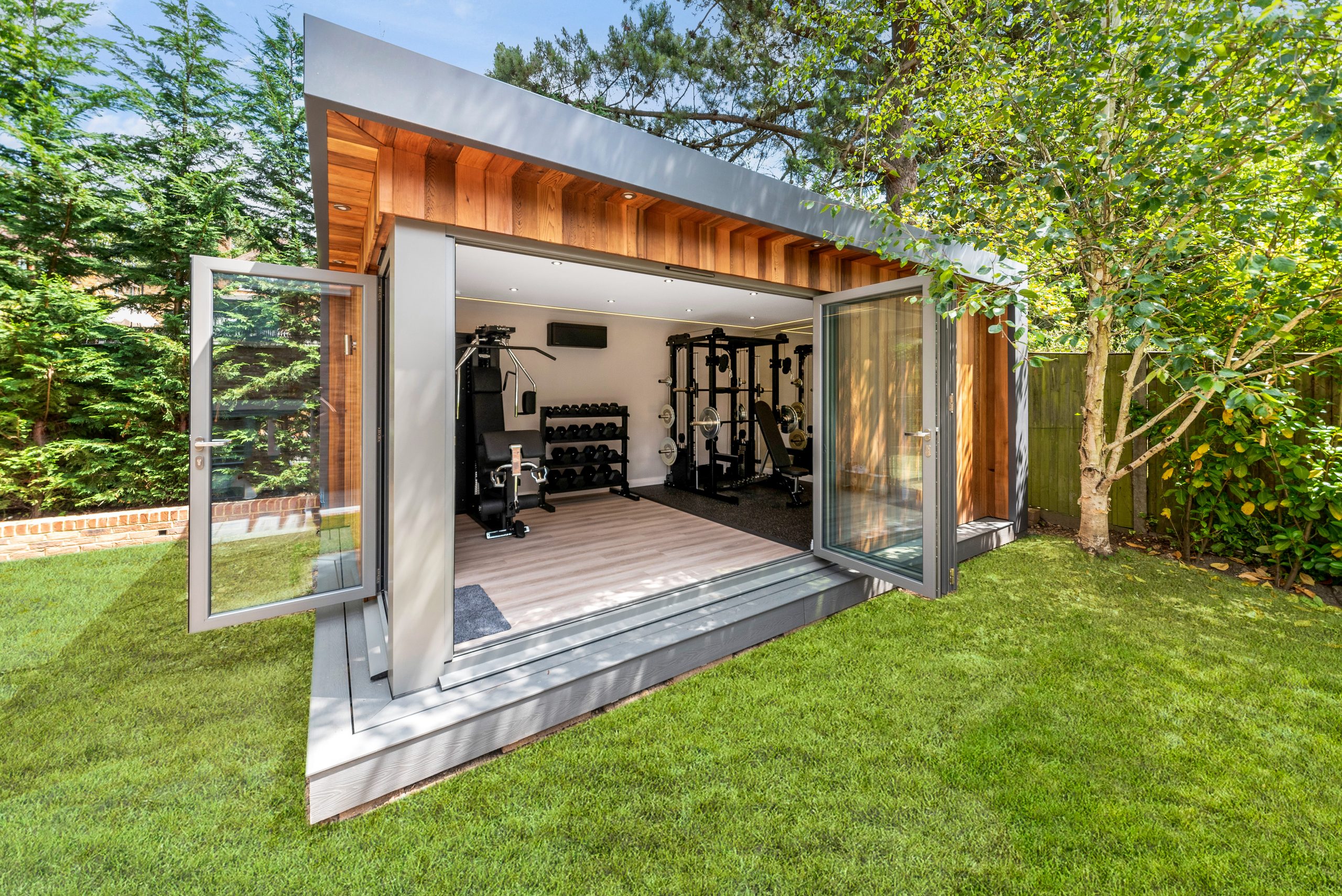
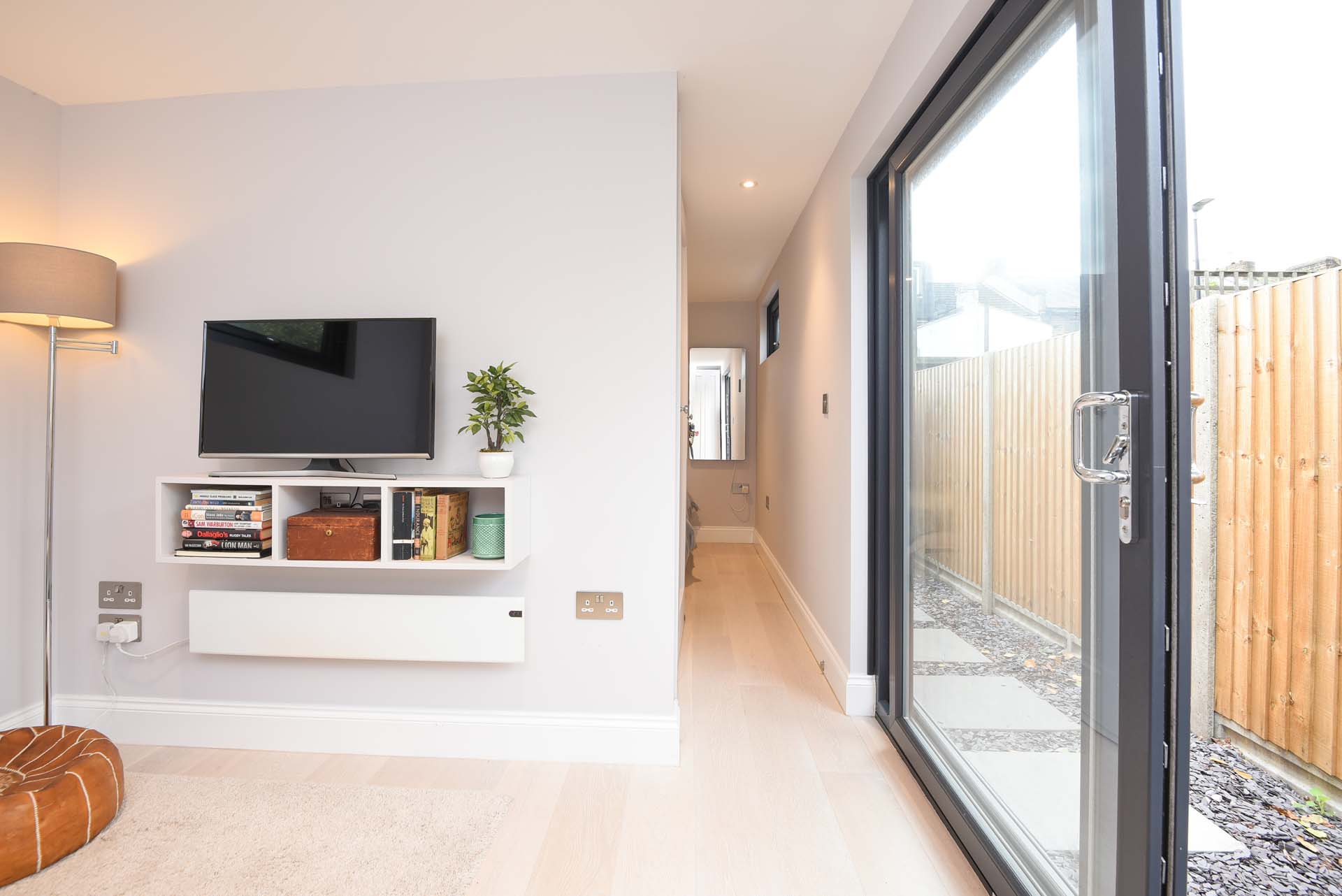
A garden room gym removes one of the biggest barriers to exercise: the need to travel. It can be designed around the exact way you train, from a compact cardio room to a fully equipped gym with a sauna, wet room and recovery space.
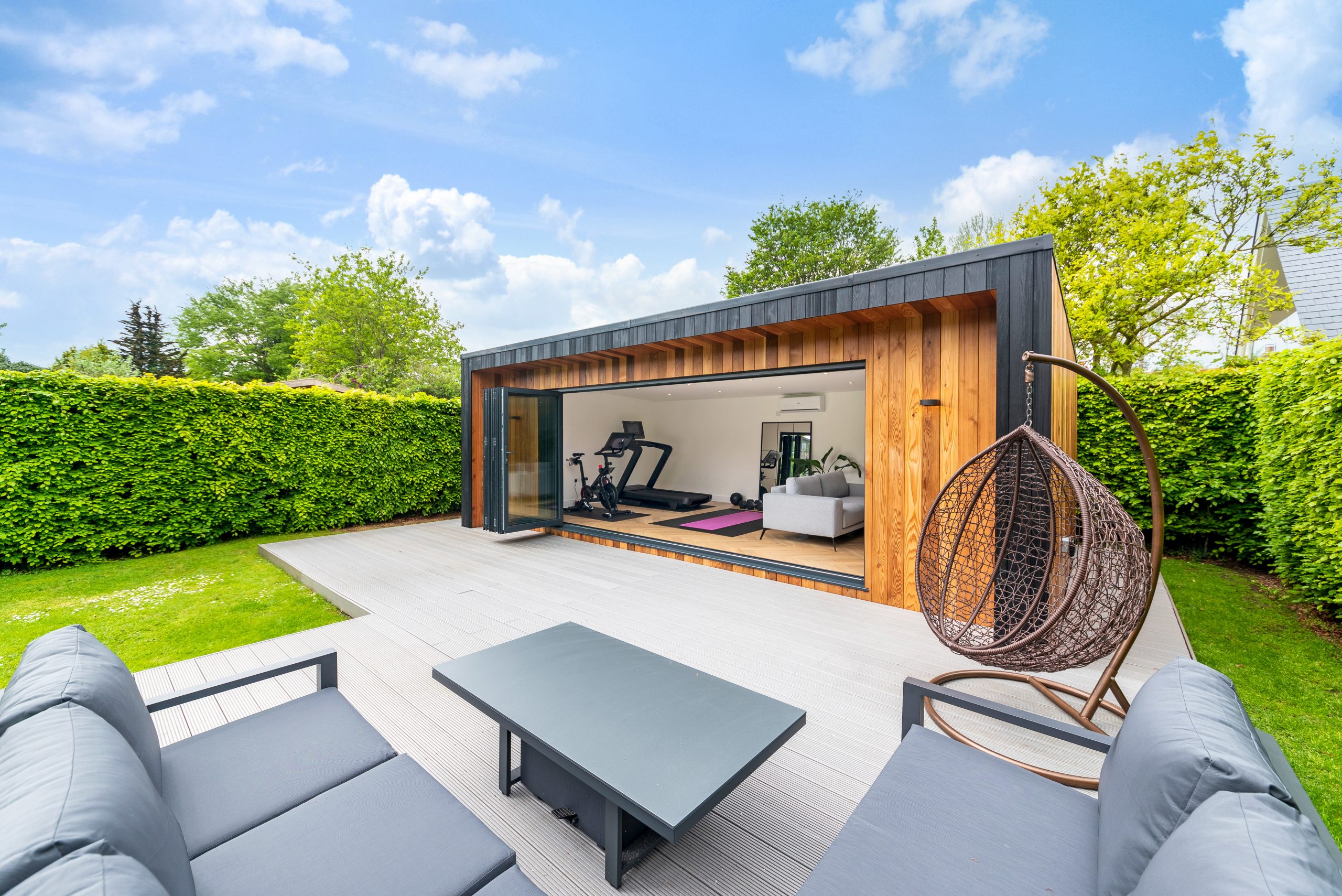
9. A fully equipped garden gym
For a proper gym, begin with the equipment rather than the floor plan. A treadmill, bike, rowing machine, cable machine, free weights, bench and mat area all need space around them, not just space underneath them. Think about ceiling height, wall reinforcement, mirror placement, ventilation and whether the room needs a harder-wearing floor than a standard office or lounge.
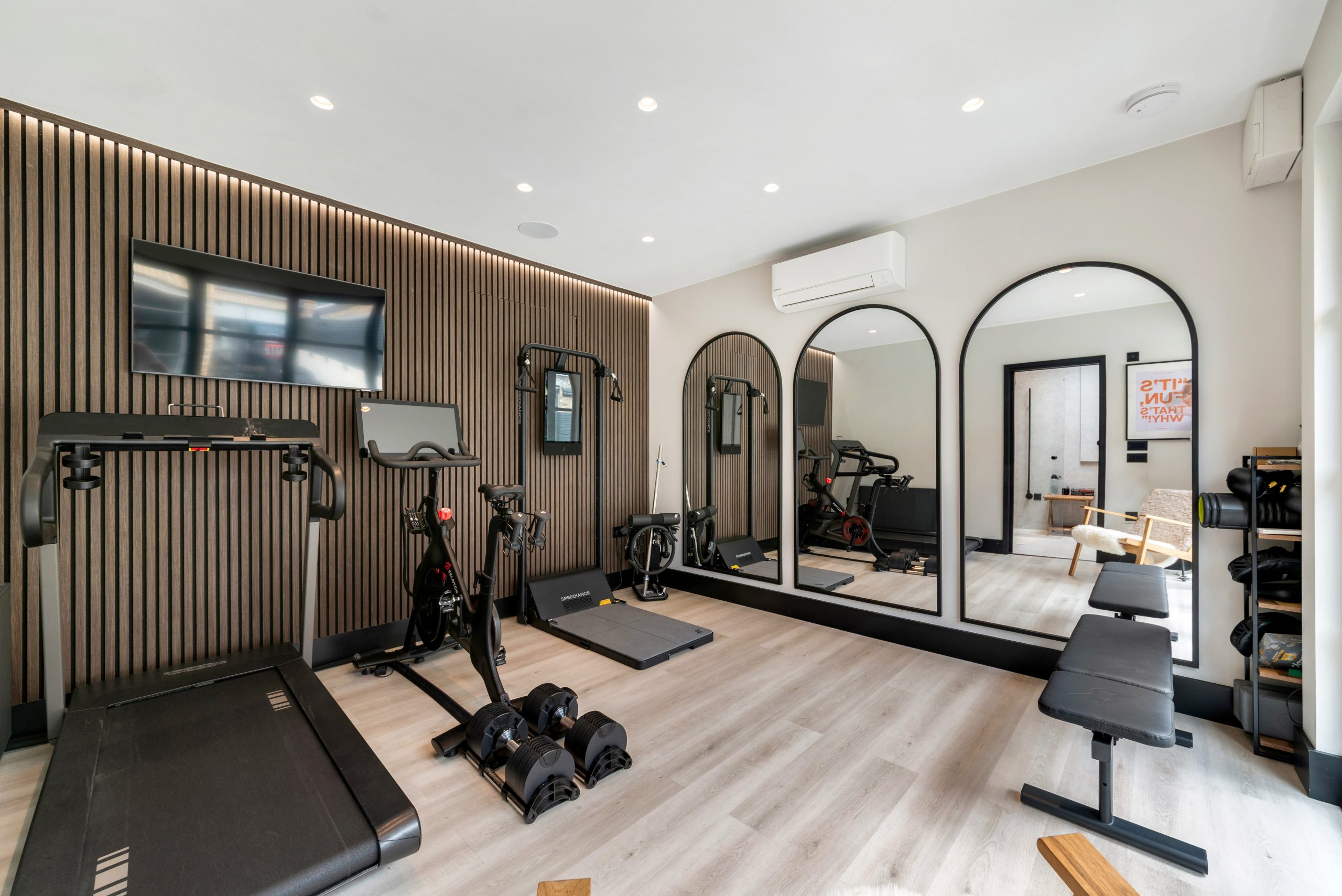
10. A strength-training room
If you mainly lift weights, design the room around safe movement and storage. Dumbbell racks, barbells, benches, plates and resistance equipment can quickly dominate a room, so built-in storage and careful zoning make a huge difference. Mirrors can help with form, while durable flooring helps protect both the room and equipment.
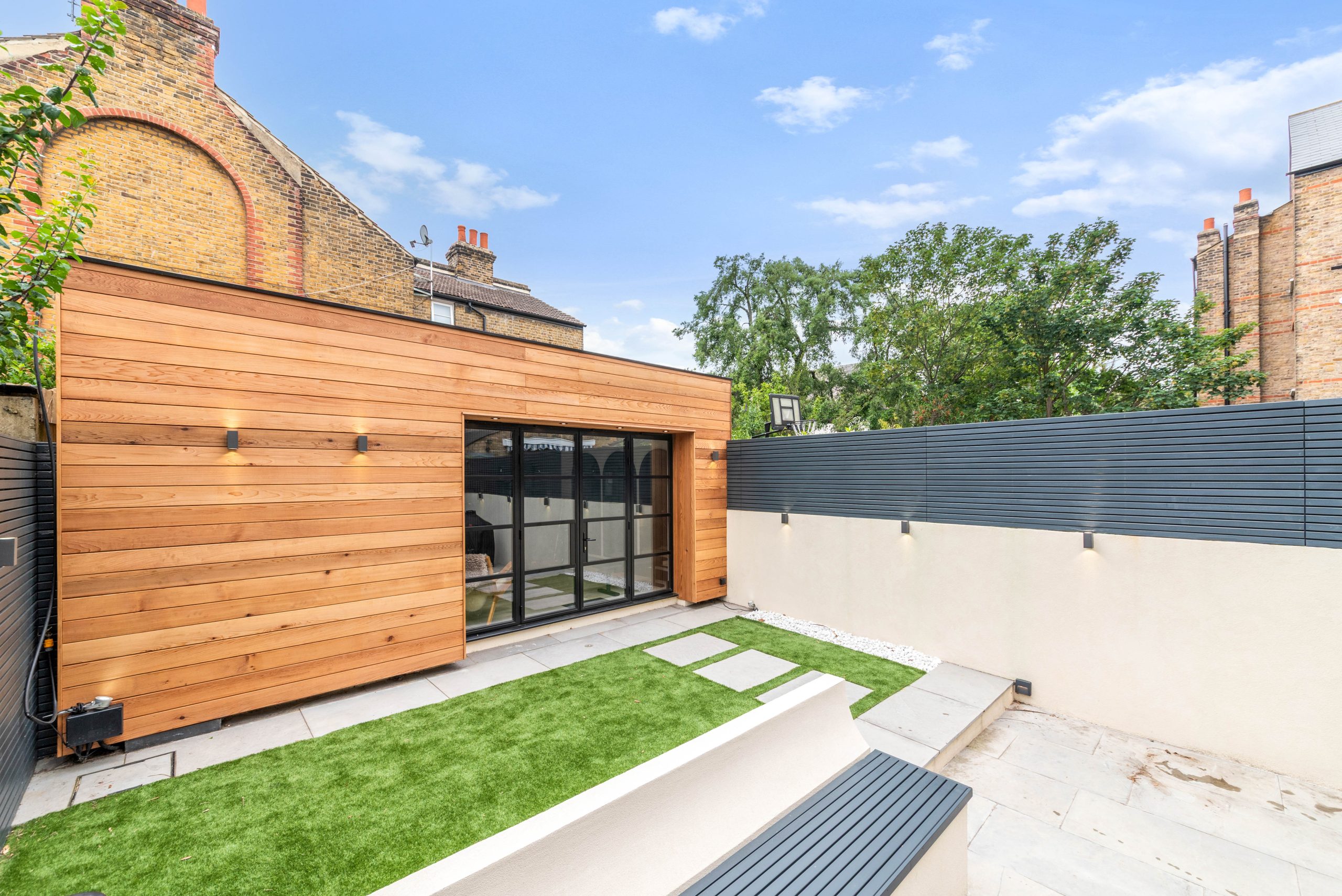
11. A cardio garden room
A cardio-focused room is ideal for treadmills, exercise bikes, cross trainers and rowing machines. Prioritise ventilation, cooling and a screen or media setup if you like to follow classes. Bifold doors or an opening window can help bring in fresh air during warmer months.
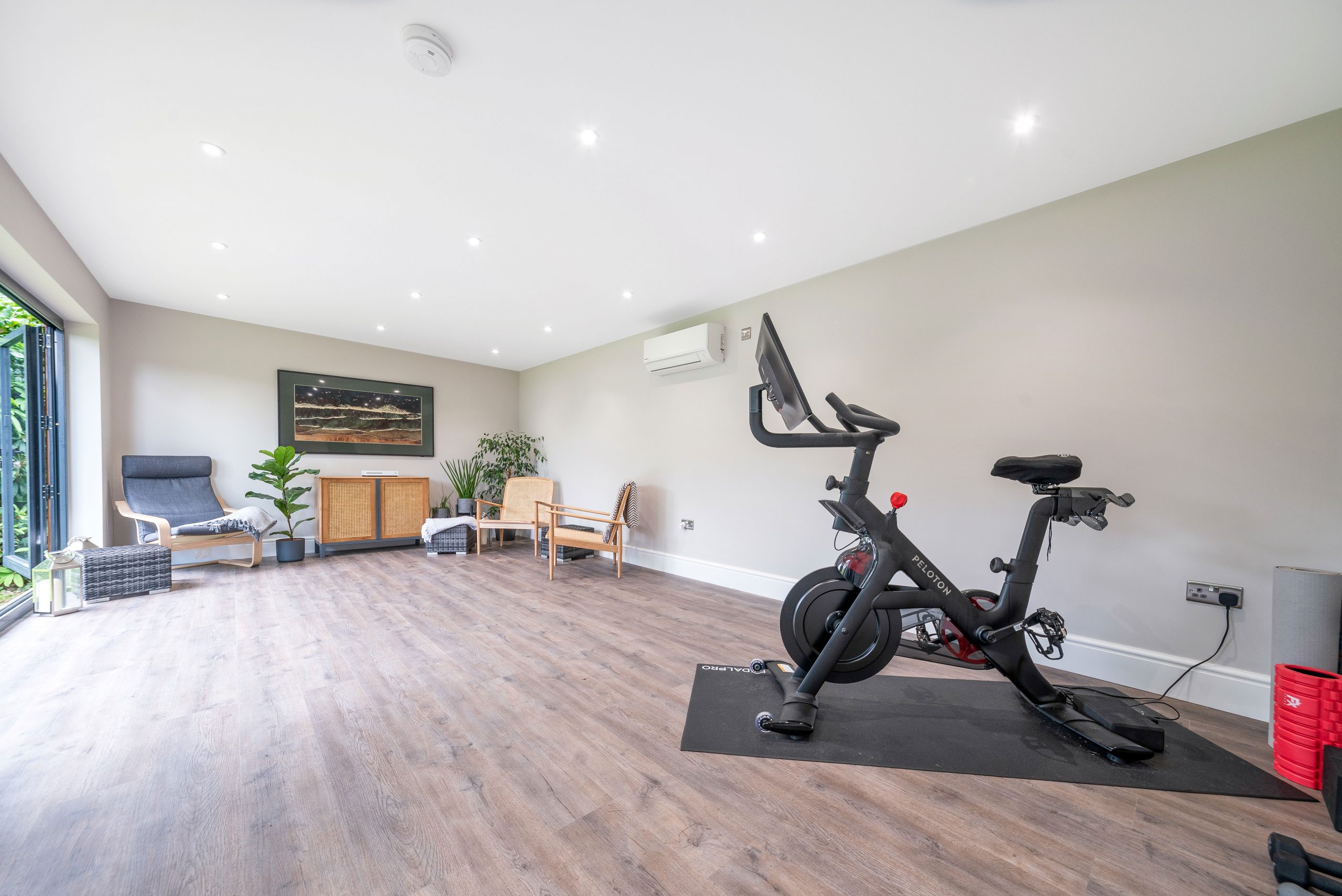
12. A garden gym with sauna
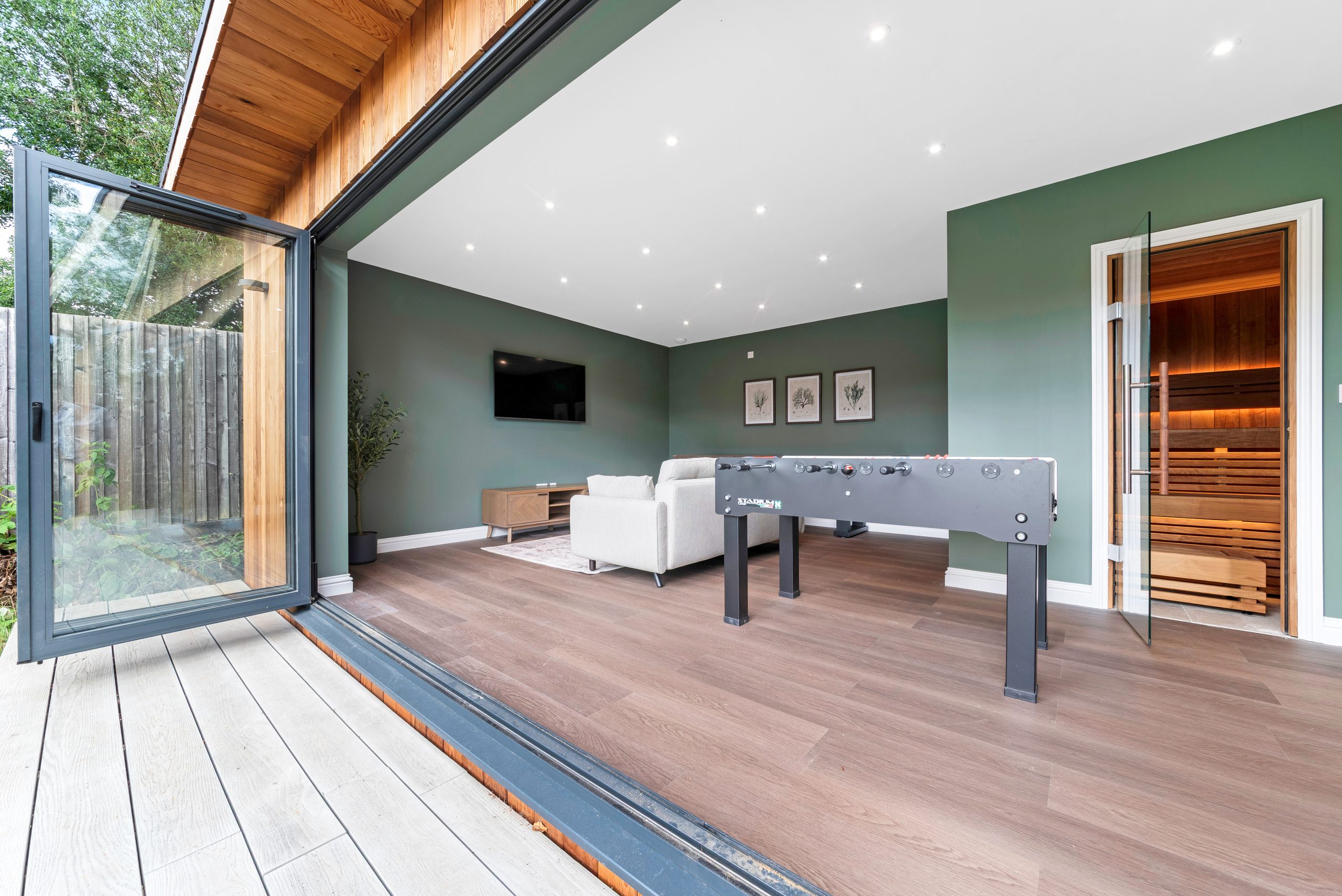
For a more luxurious wellness retreat, add a sauna to your garden gym. This creates a complete training and recovery space, particularly if the room also includes a wet room or shower. A gym and sauna combination needs to be designed carefully from the start so ventilation, services, moisture management and layout all work together.
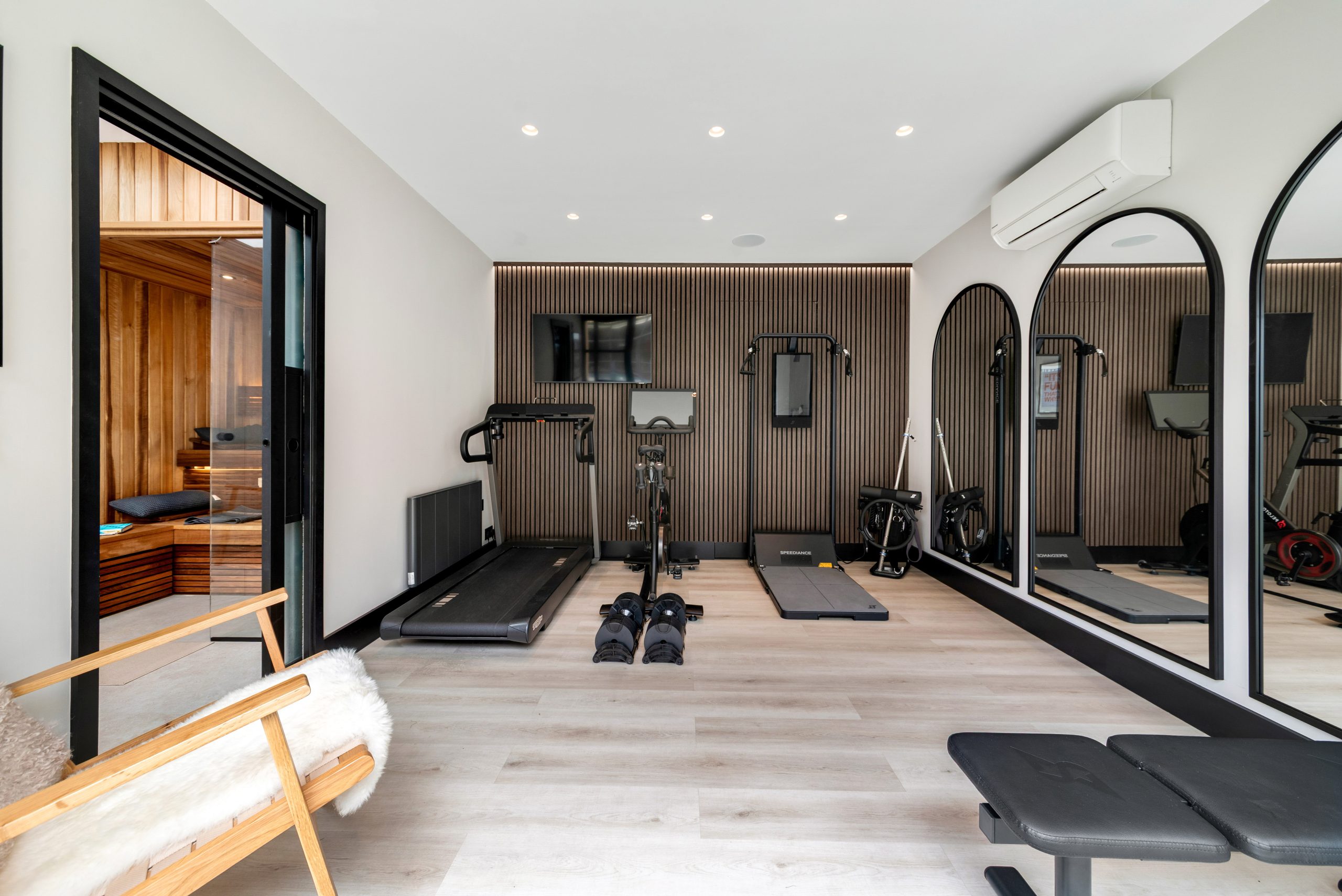
13. A gym with shower or wet room
A shower room makes a garden gym far more practical, especially if the room is used daily or by several members of the family. It means you can exercise, shower and return to the house without crossing the garden in gym clothes. Plumbing, drainage and ventilation should be planned early, not added as an afterthought.
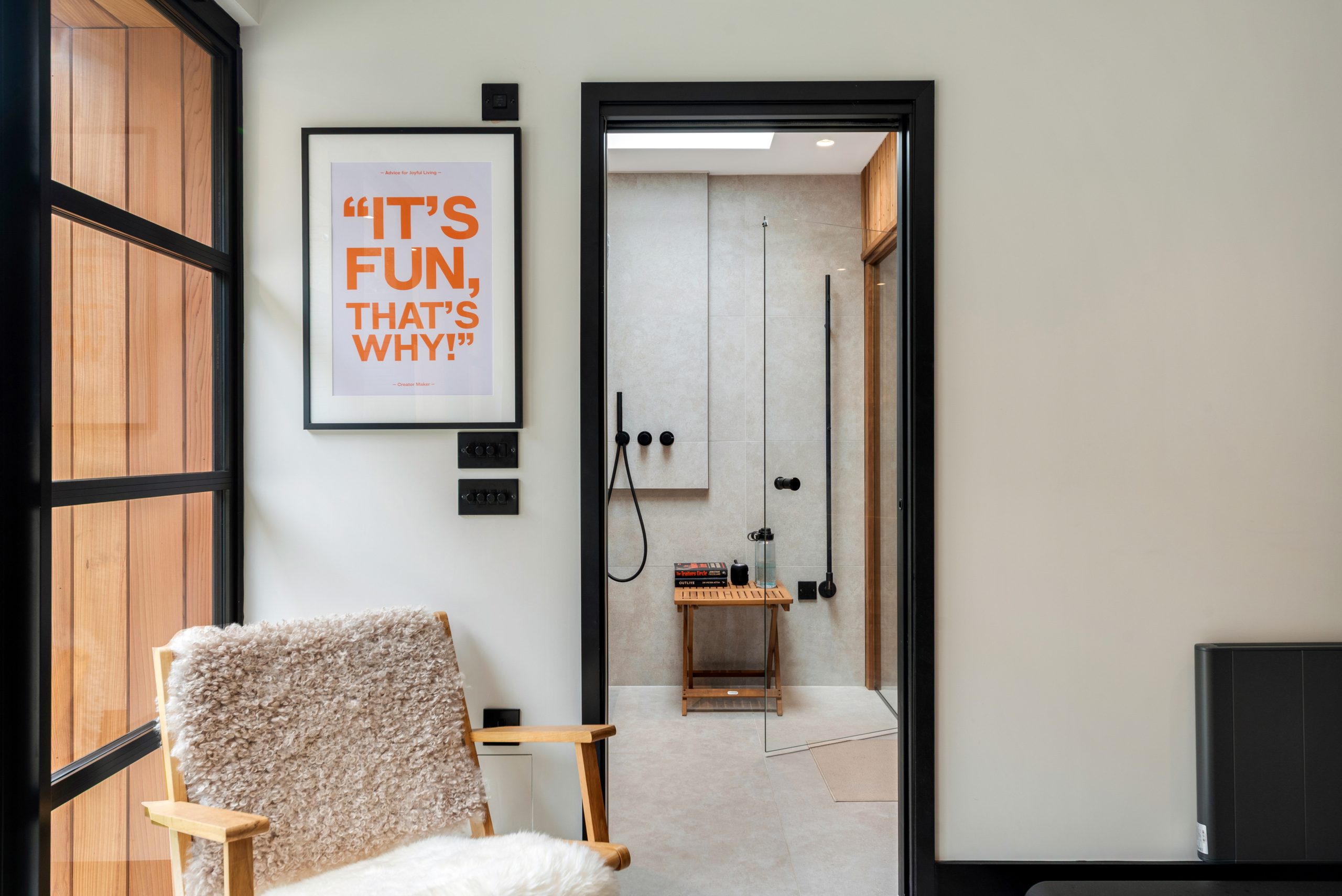
14. A yoga or Pilates studio
A yoga or Pilates garden room needs a different atmosphere from a weights gym. Think calm finishes, warm lighting, open floor space, storage for mats and props, and a view that helps the room feel peaceful. Large doors can be opened in good weather so the studio feels connected to the garden.
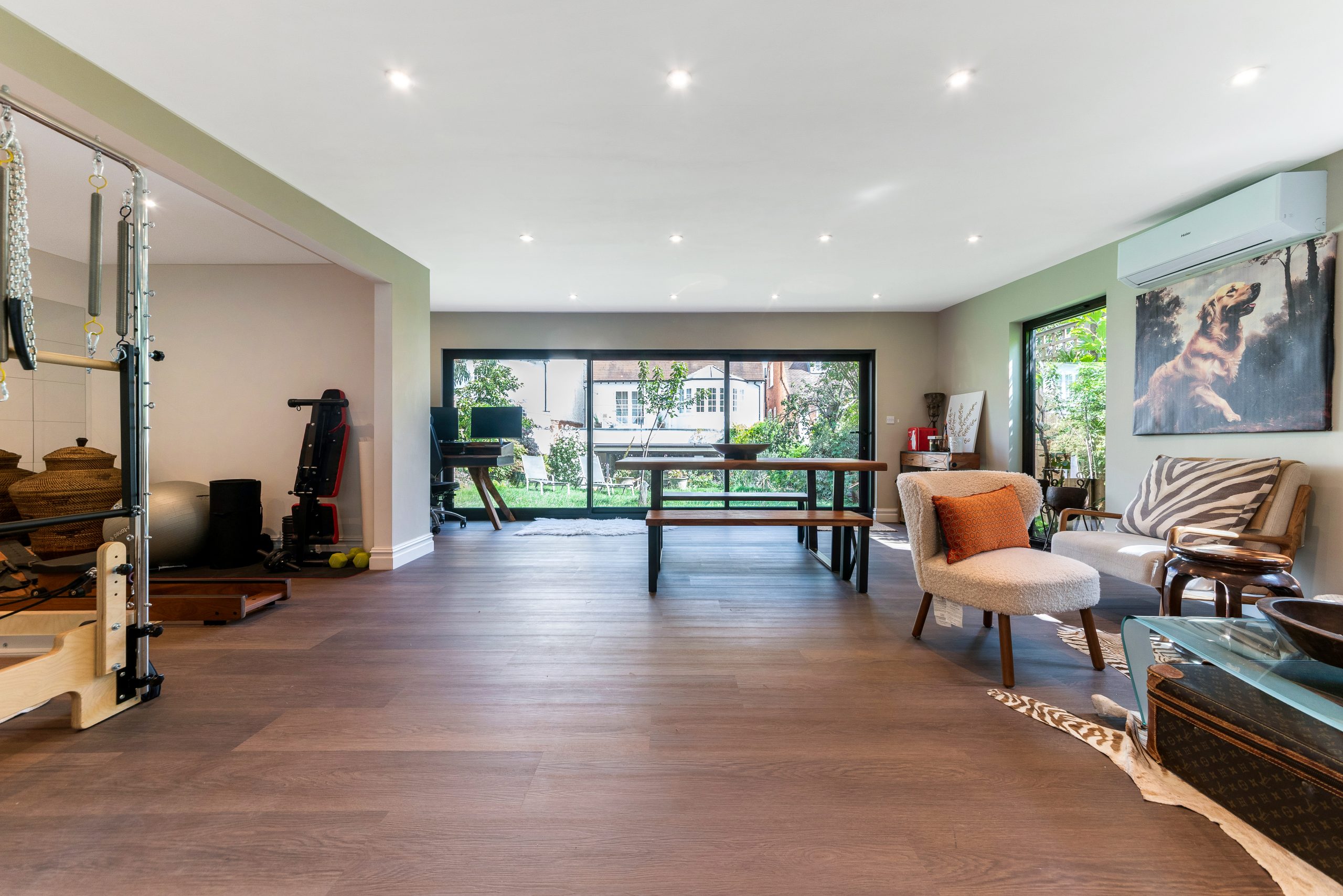
15. A personal training studio
If you are a personal trainer, physiotherapist or wellness professional, a garden room can create a focused studio separate from the home. Plan for client access, storage, WC facilities, heating/cooling, privacy and any permissions or insurance requirements that apply to your business use.
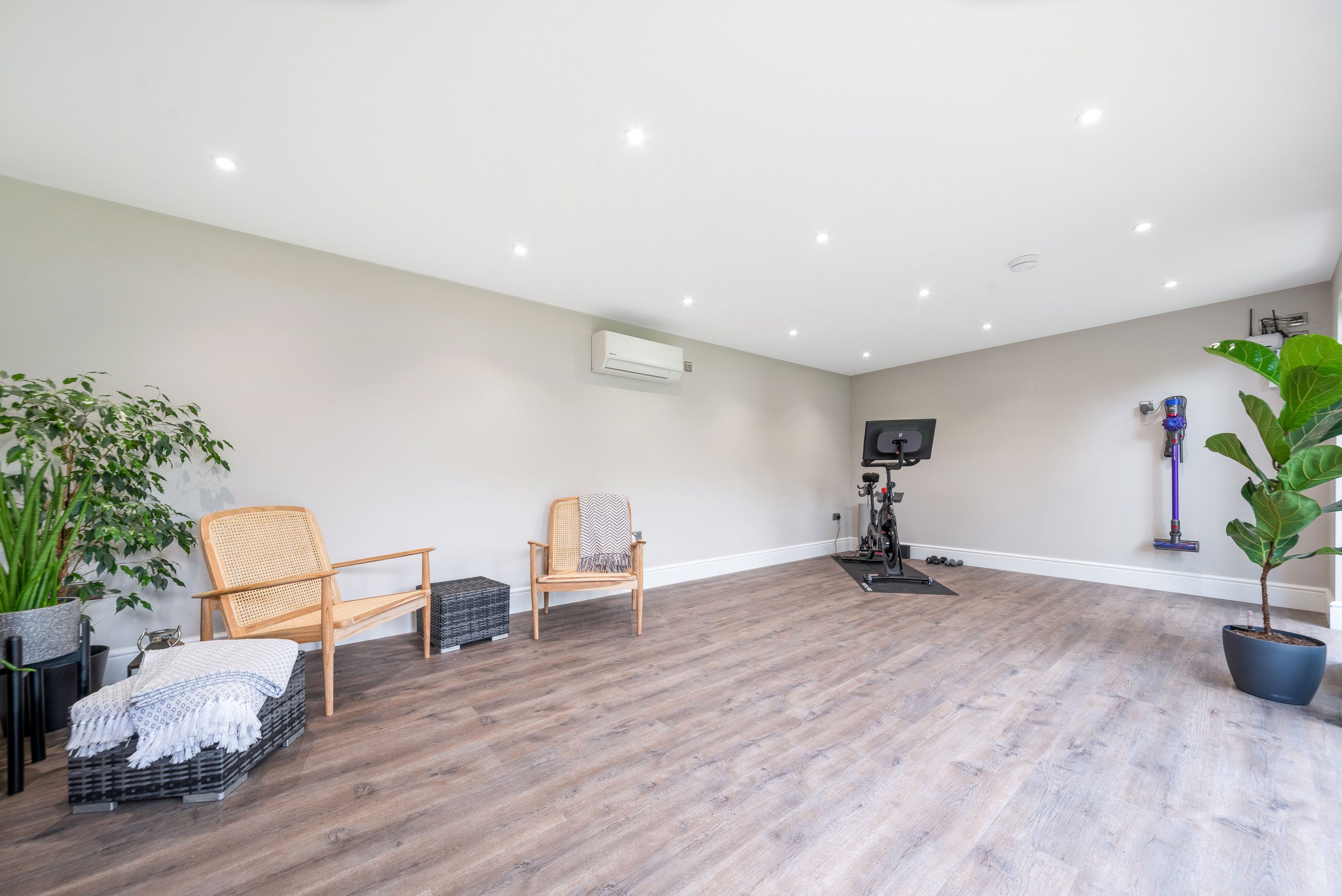
16. A recovery and stretching room
Not every fitness room needs heavy equipment. A recovery room can include mats, mobility tools, foam rollers, infrared panels, soft lighting and a calm seating area. This can work beautifully as part of a larger multi-use garden room where exercise, relaxation and work sit side by side.
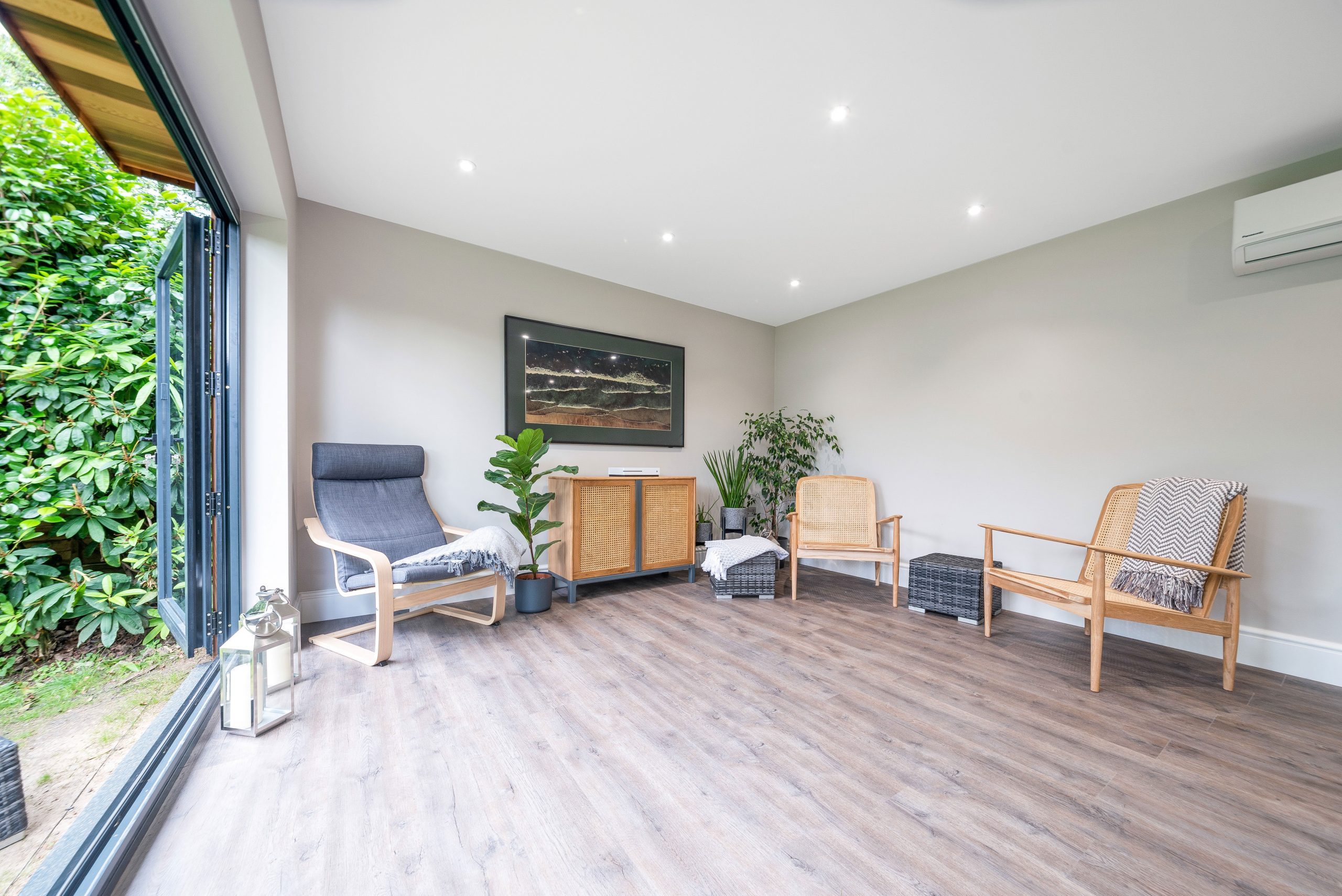
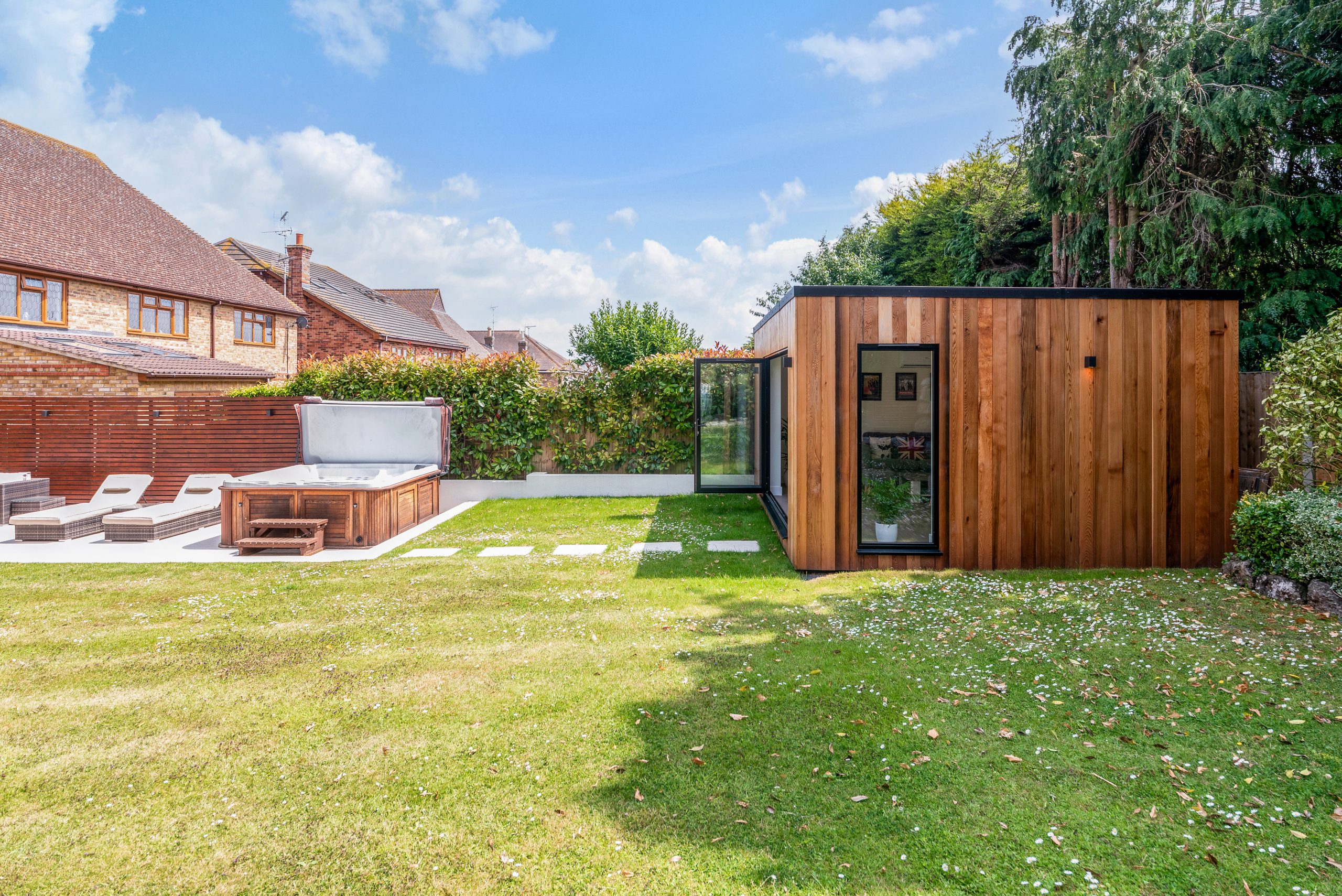
17. A hot tub garden room retreat
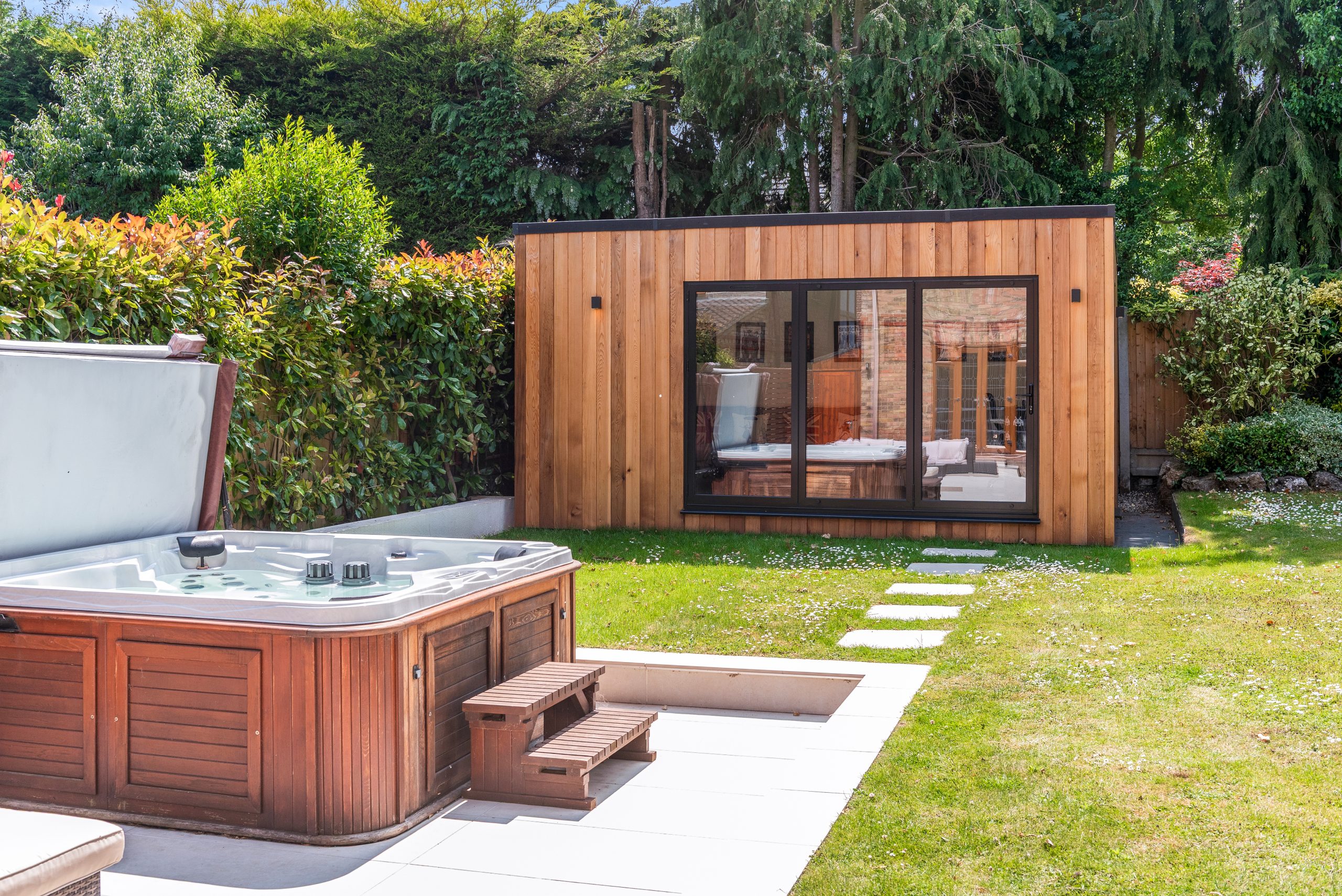
Pairing a garden room with an outdoor hot tub creates a private retreat for evenings and weekends. The room itself can serve as a changing area, lounge, office or relaxation space, while the patio or deck becomes the outdoor wellness zone. Consider privacy screens, lighting, non-slip surfaces and how people will move between the room, hot tub and house.
Creative studio and hobby room ideas
A bespoke garden room studio gives creative work a proper home. Whether you paint, make jewellery, record content, write, photograph products, sew, craft or run a small business, the room can be designed around your equipment, light, storage and workflow.
18. An art studio
An art studio needs light, storage and surfaces that can cope with real creative work. North-facing light, rooflights, washable flooring, a sink, wall-hung storage and deep shelving can all help. The beauty of a bespoke studio is that messy, creative work no longer has to be packed away at the end of each day.
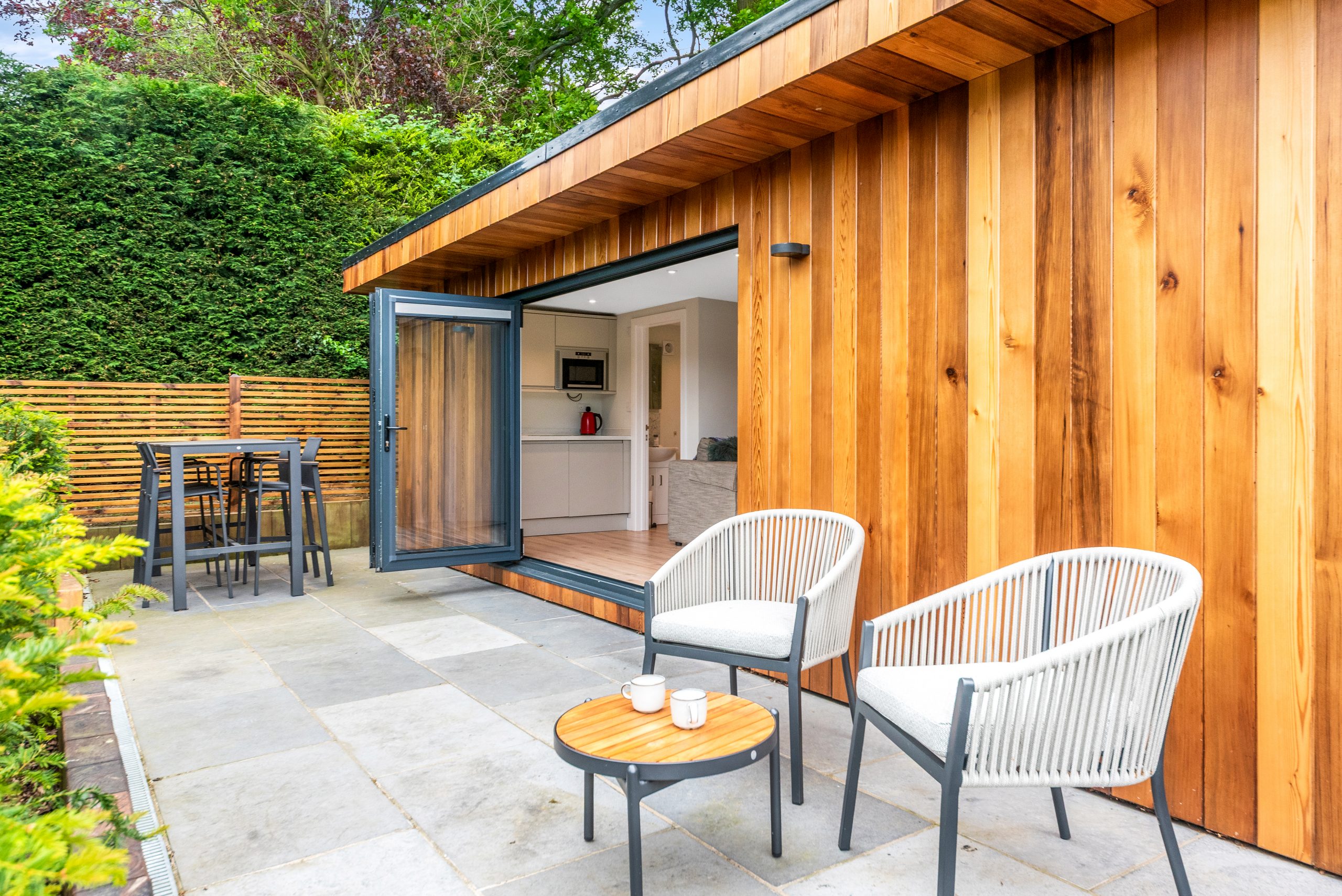
19. A craft room
A craft room can be designed with a large central table, storage wall, display shelves, task lighting and drawers for materials. If you sew, scrapbook, build models, make candles or create handmade products, dedicated storage is often more important than overall room size.
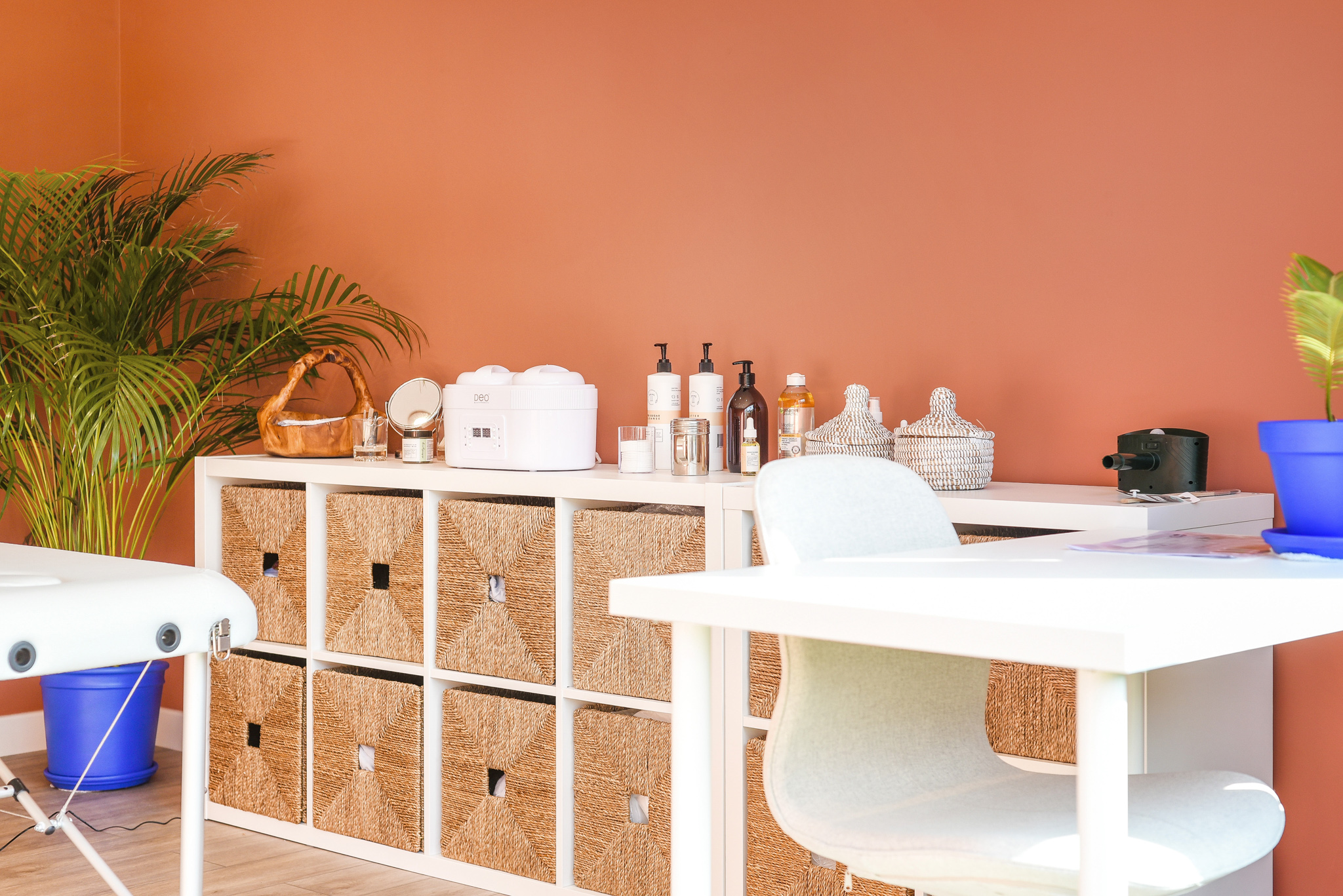
20. A jewellery workshop
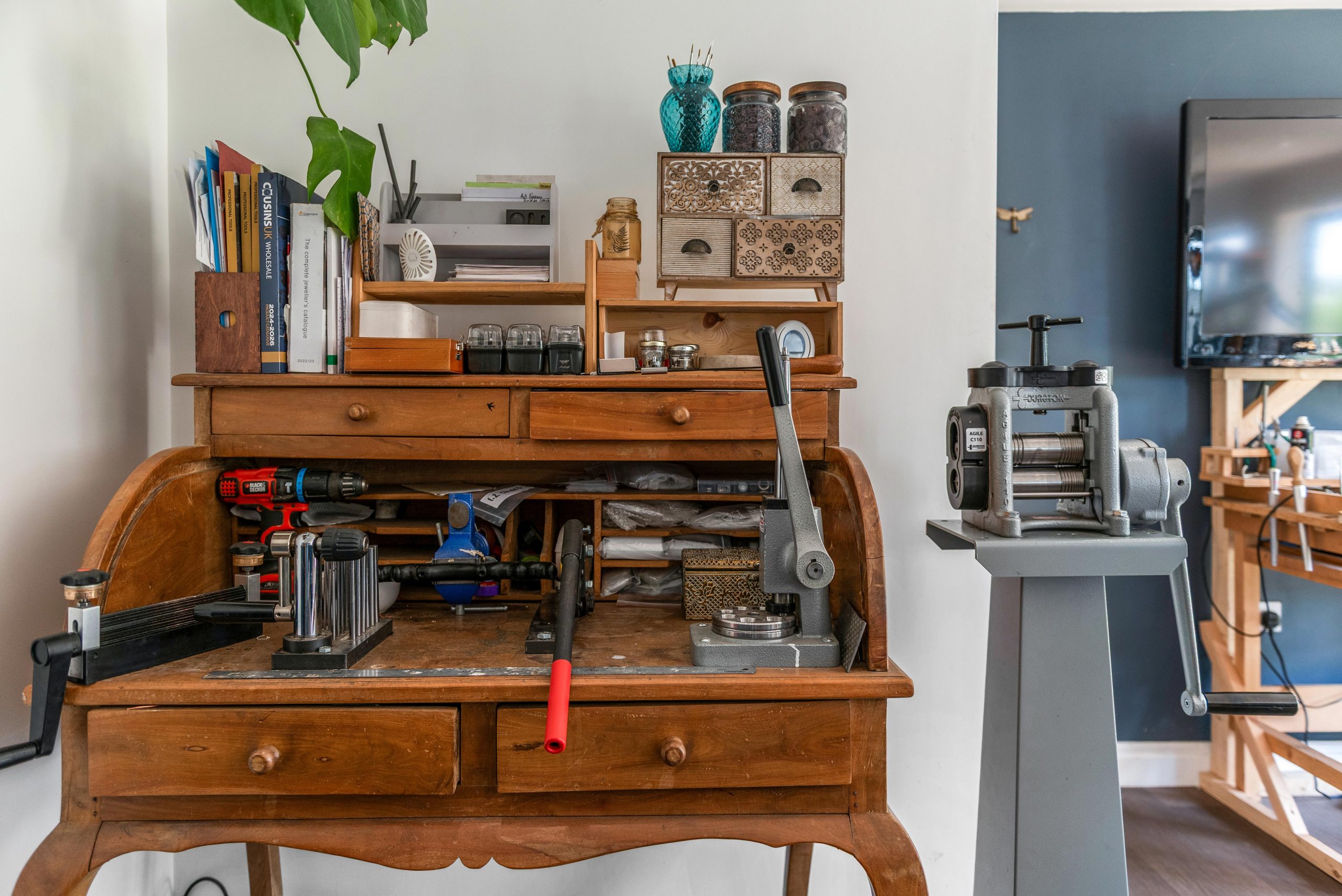
Small-scale making often requires excellent lighting, secure storage and a workbench at the correct height. A garden room can be designed as a peaceful jewellery workshop with strong task lighting, ventilation where required and a layout that keeps tools, materials and finished pieces organised.
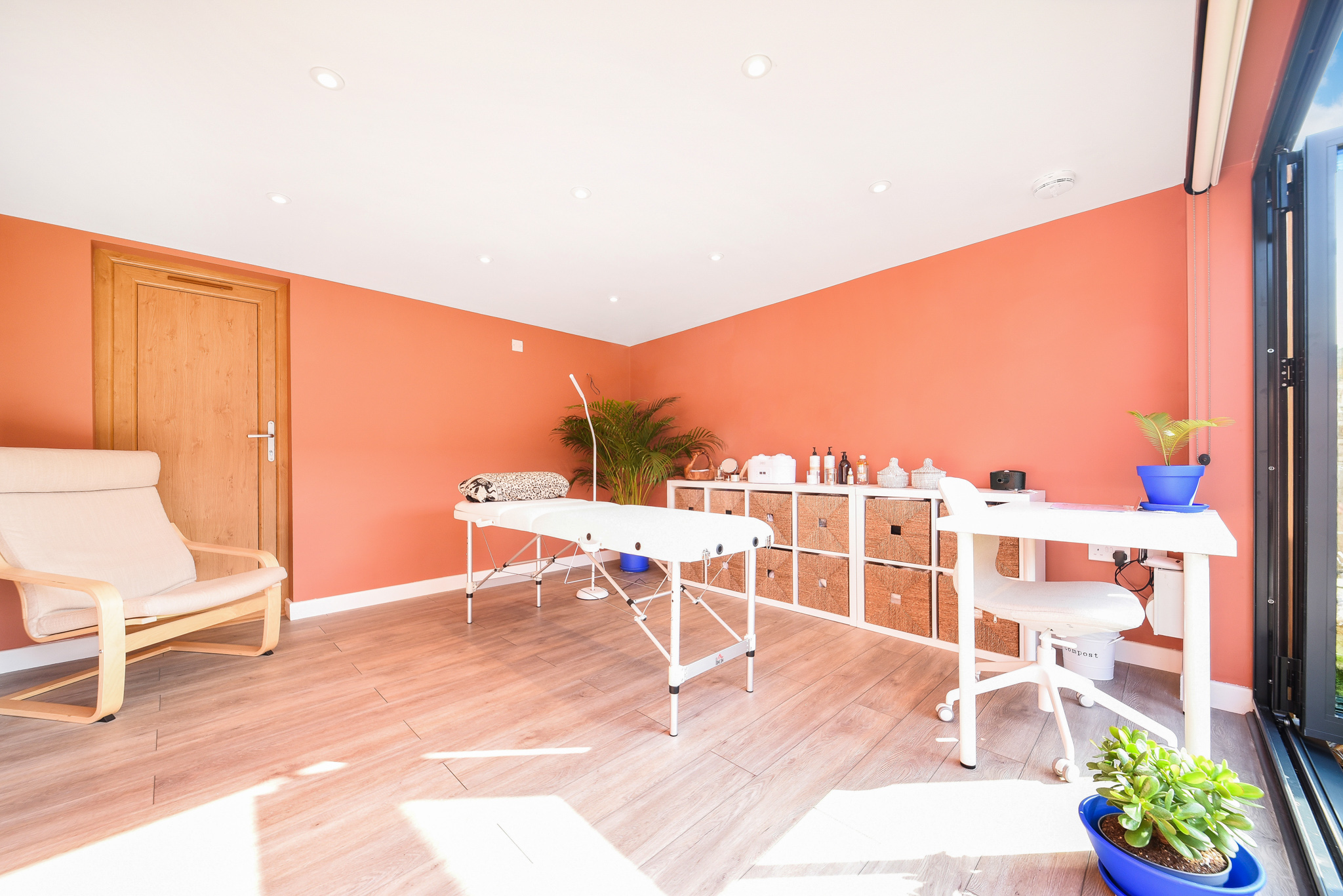
21. A photography studio
A photography or content studio benefits from clear wall space, controllable light, blackout options, storage for tripods and stands, and enough room to move around a subject. If you shoot products or social content, a small kitchenette or styling station can also be useful.
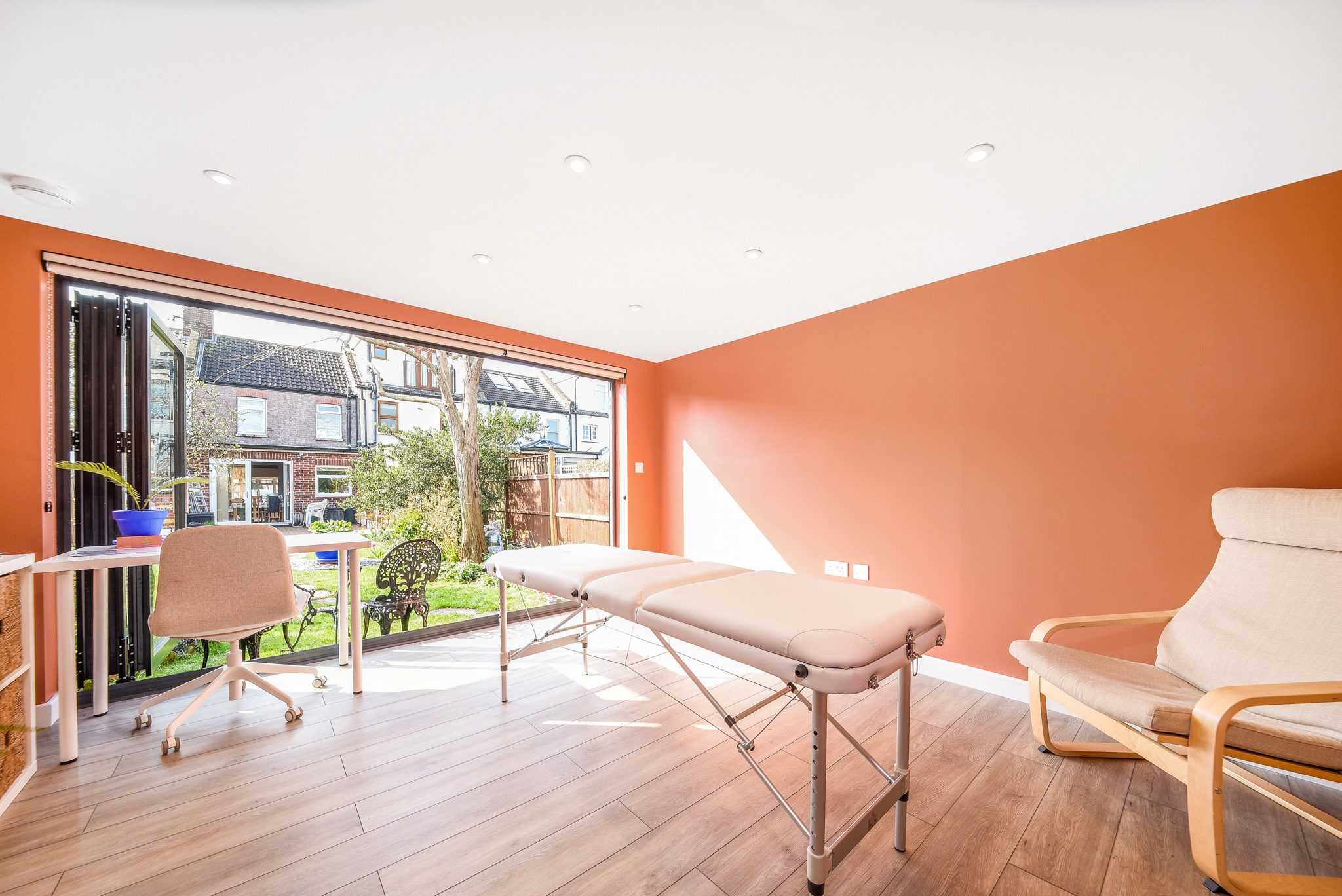
22. A writing retreat
For writers, researchers and anyone who needs deep concentration, the best garden room may be deliberately simple. A desk, comfortable chair, good heating, bookshelves and a calming view can create a space that feels mentally separate from household noise and daily interruptions.
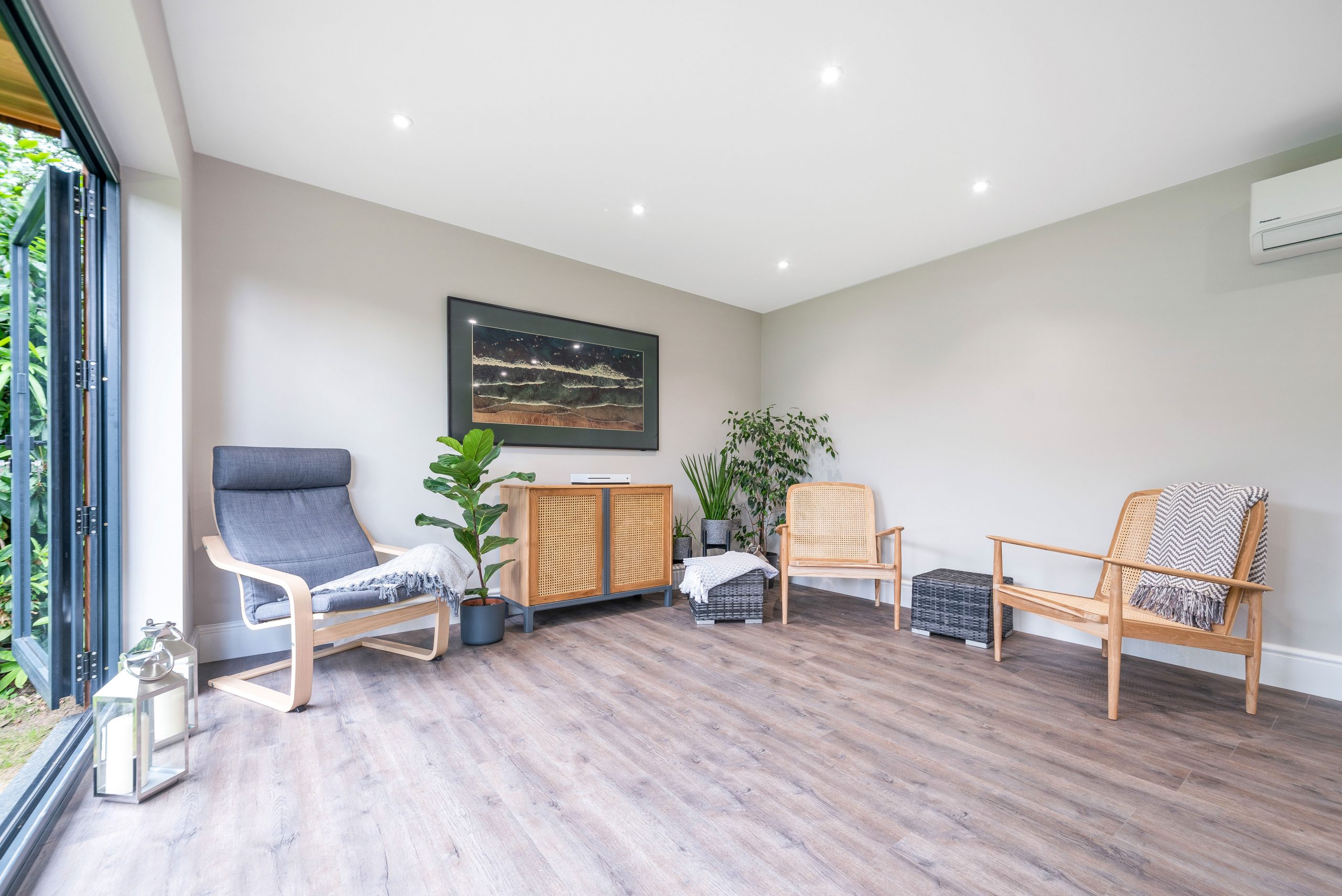
23. A content creation room
Podcasts, online courses, video calls and social content all benefit from a controlled environment. Consider acoustic treatment, lighting positions, background walls, reliable wired internet and discreet storage for microphones, cameras and tripods.
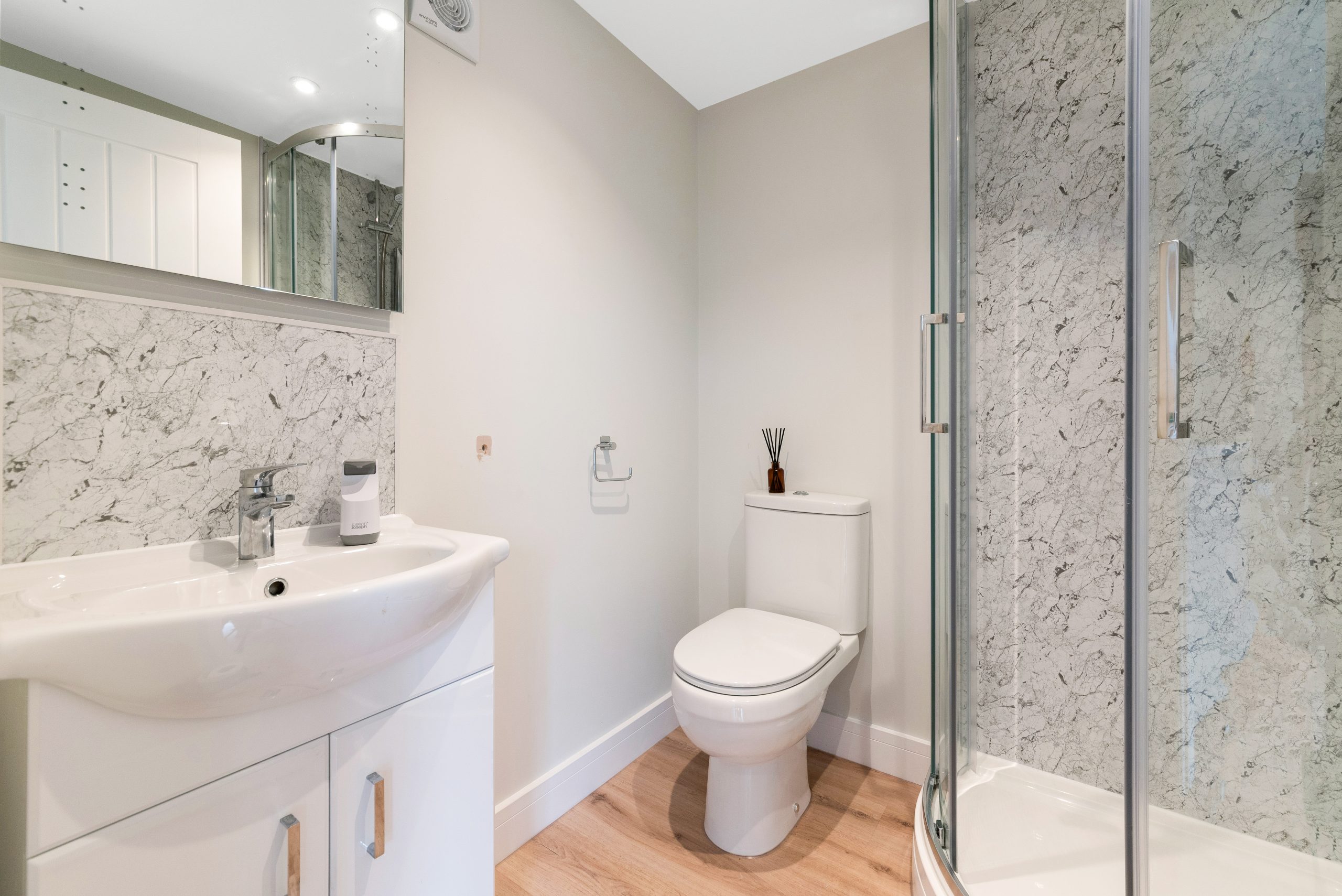
24. A therapy or treatment room
A garden room can work well as a private therapy, counselling, massage, beauty or treatment space, provided it is planned around client comfort and any professional requirements. Prioritise privacy, access, heating/cooling, soft lighting, storage, a WC if needed and a calm arrival experience through the garden.
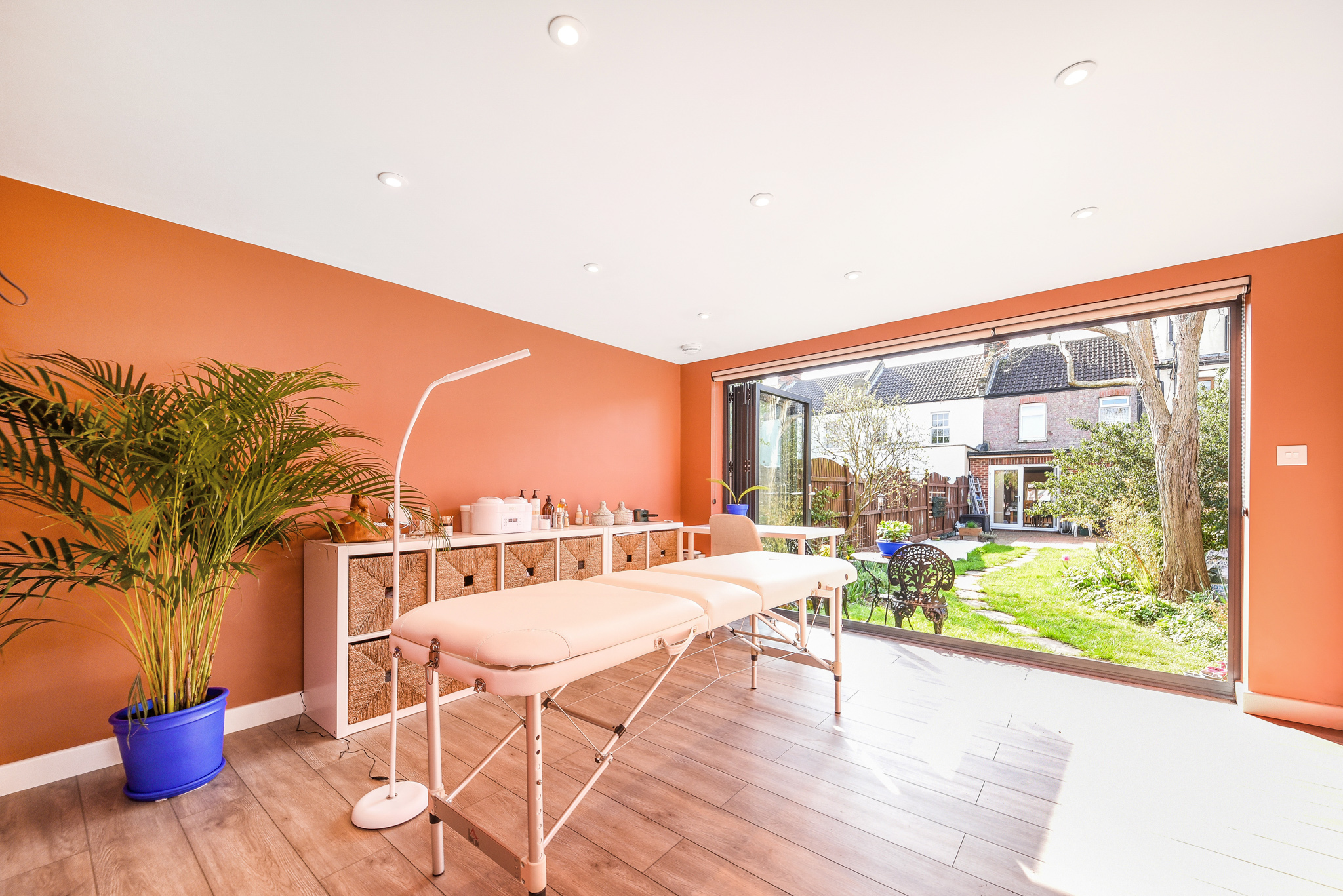
25. A hobby room that does not take over the house
Many hobbies are easier to enjoy when everything has a permanent home. A garden room can become the place where model railways, painting, gaming, sewing, collecting, reading or making can stay set up without taking over a dining table or spare bedroom.
Music and recording room ideas
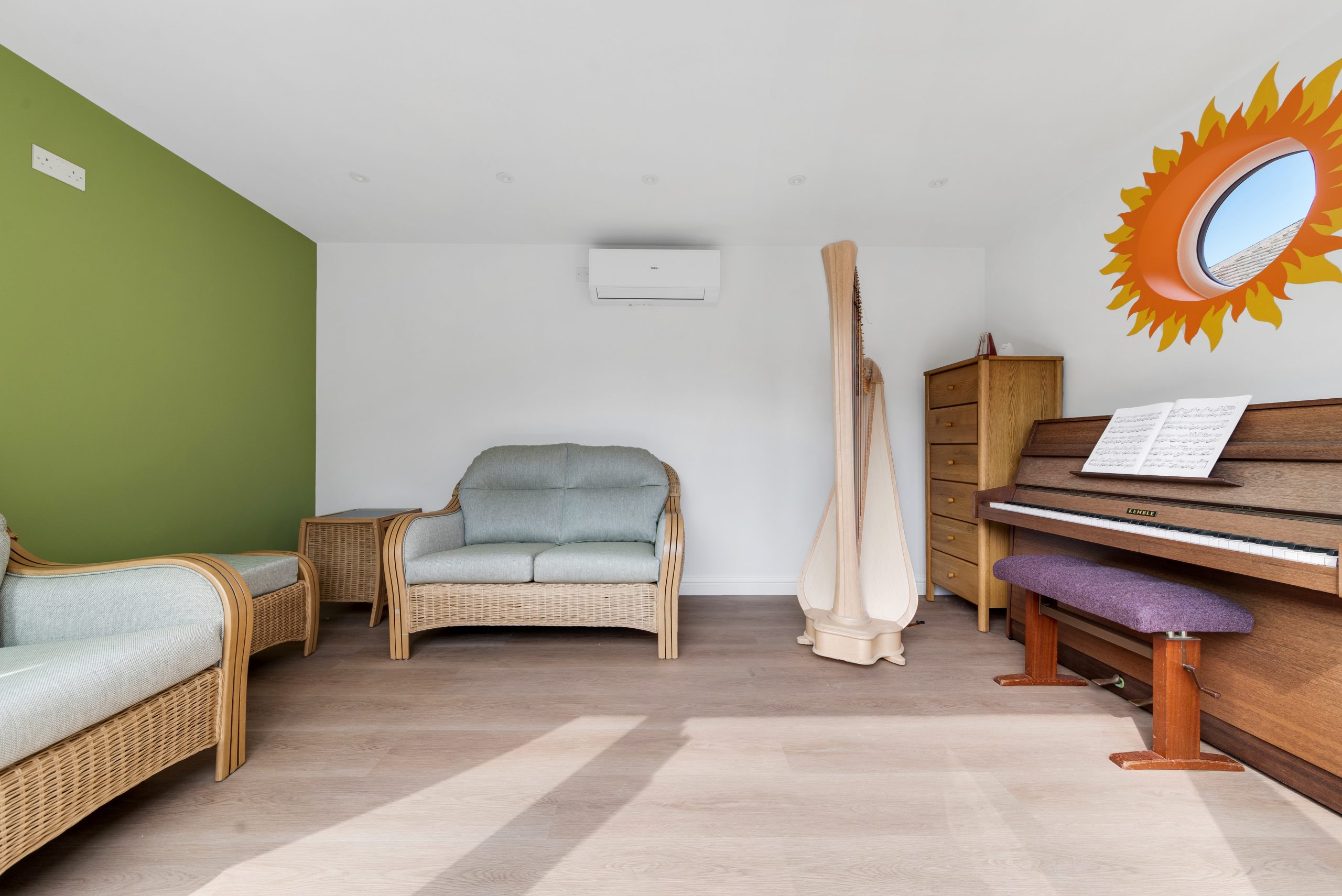
Music rooms are a perfect example of why garden rooms should be designed around use, not just appearance. A beautiful room for a piano and harp has very different requirements from a recording studio, rehearsal space or podcast studio.
26. A piano room
A piano garden room can be designed as both a practical practice space and a beautiful retreat. Think about stable comfort, natural light, humidity, acoustic feel and enough space around the instrument. A calm colour palette and garden views can make daily practice feel more enjoyable.
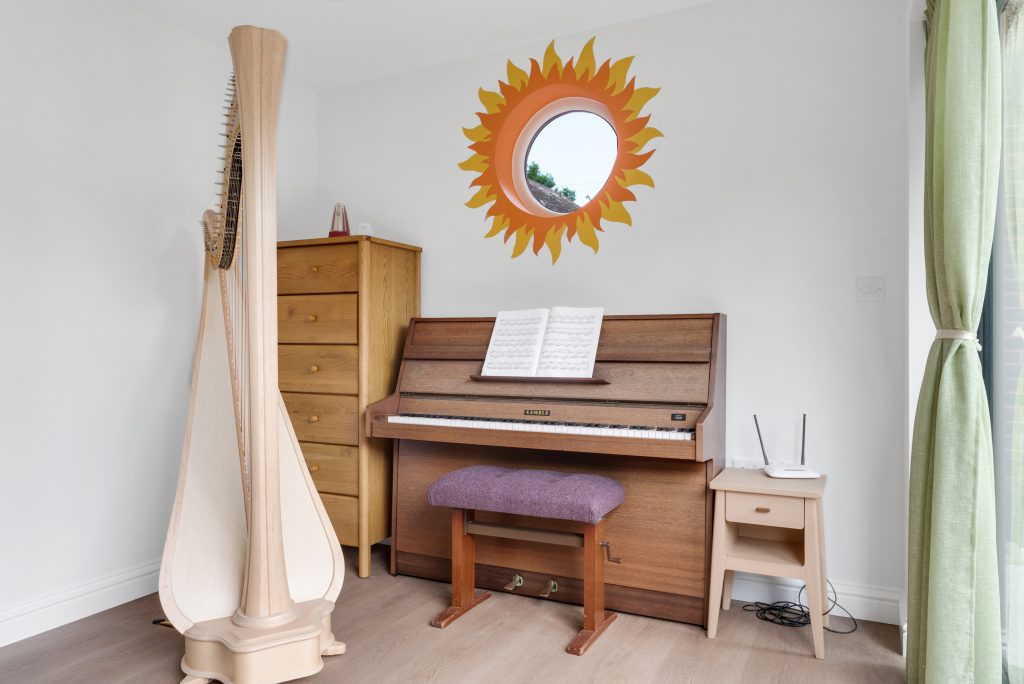
27. An acoustic music room
For harp, strings, voice, woodwind or acoustic guitar, the room should feel warm, quiet and balanced. Soft furnishings, wall finishes and thoughtful room proportions can help the room feel pleasant to play in, while good insulation can reduce disturbance to the house and neighbours.
28. A recording studio
A recording studio needs more technical planning than a standard garden room. Consider acoustic treatment, sound separation, ventilation noise, socket positions, desk depth, monitor placement, cable management and where instruments will be stored. It is much easier to design these details into the room from the beginning than to retrofit them later.
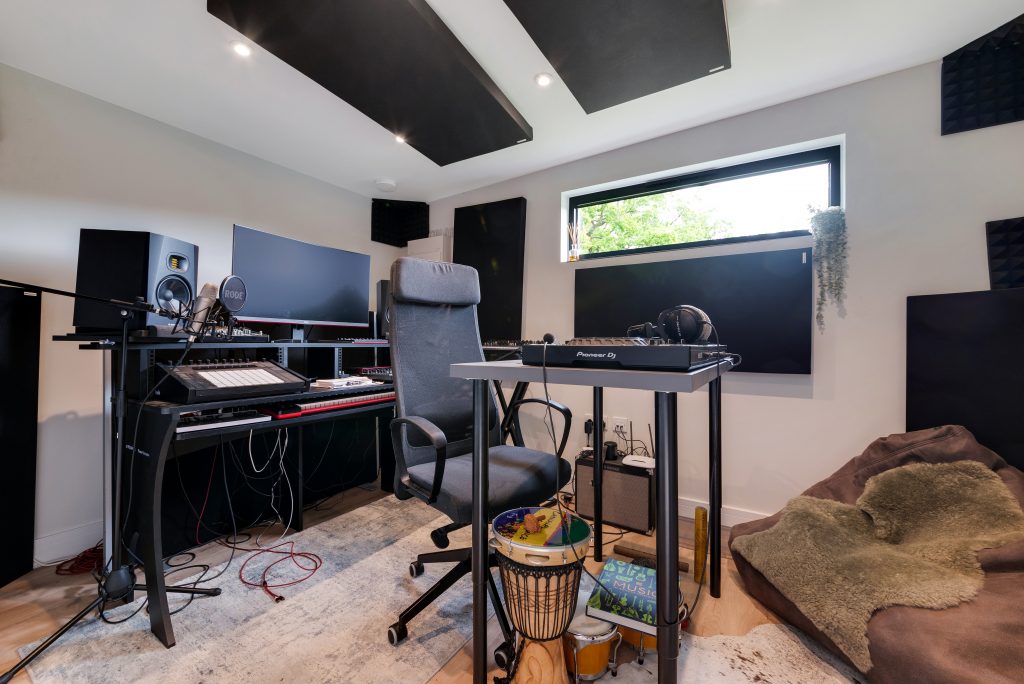
29. A podcast studio
A podcast studio can be smaller than a recording studio but still needs careful thought. A quiet room, acoustic wall treatment, good desk layout, reliable wired internet and controlled lighting will all improve the finished result. Add a small lounge or table area if you interview guests in person.
30. A rehearsal room
A rehearsal space should allow for movement, storage and repeated use. It may need more robust flooring, wall protection, sound control and storage for stands, amplifiers and cases. If several people will use the room, consider ventilation and access carefully.
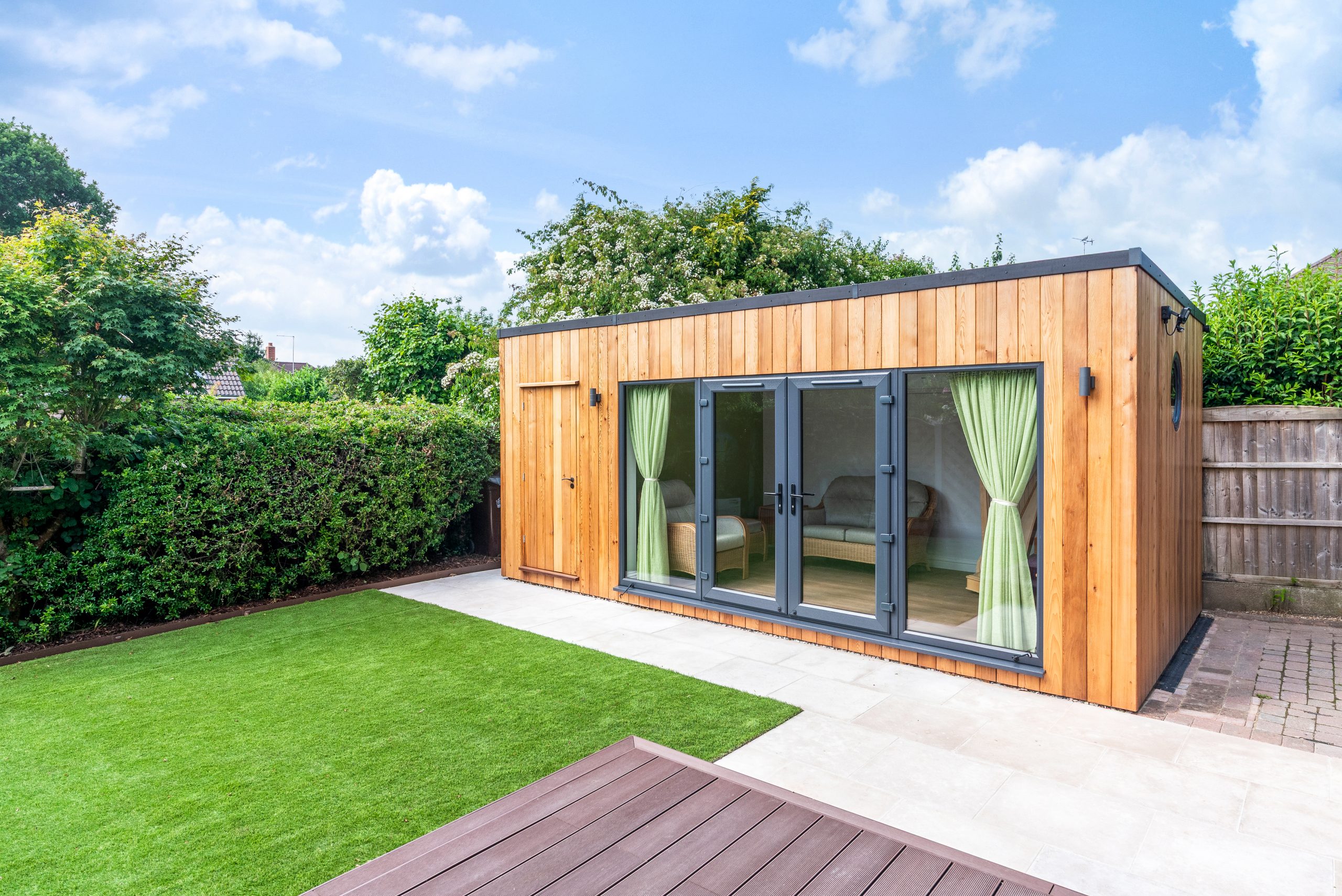
31. A music room with lounge space
Music rooms can also be deeply relaxing spaces. Add a sofa, side table and warm lighting and the room becomes a place to listen, practise, read or spend quiet time away from the main house.
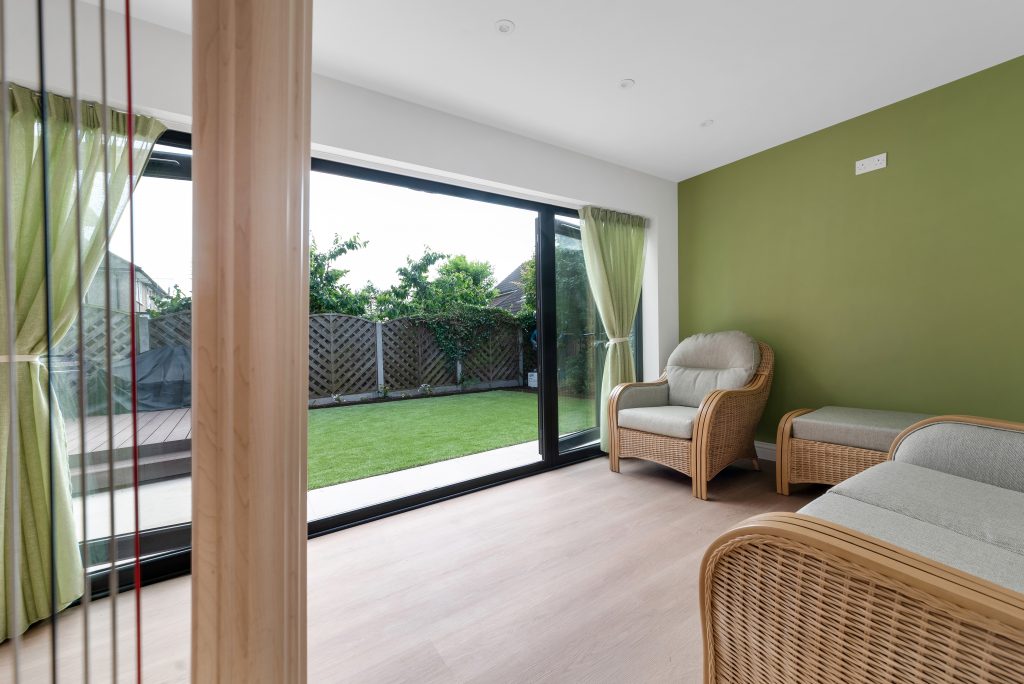
Garden bar and entertainment ideas
A garden room can create the entertaining space your house is missing. From a small cocktail bar to a cinema room, games room or family lounge, the aim is to design a room that feels special without being impractical.
32. A garden bar
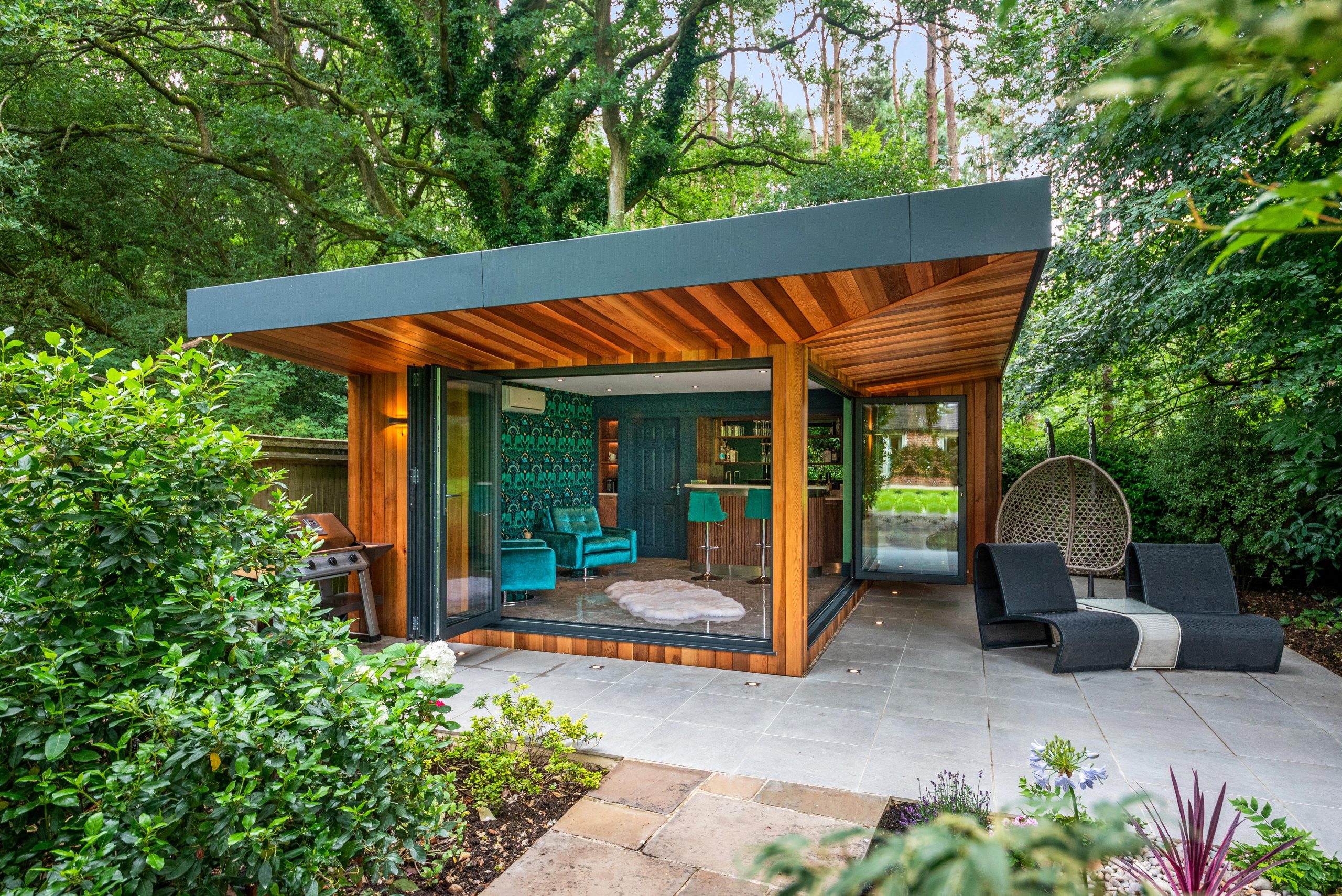
A bespoke garden bar can be as simple or as fully fitted as you like. Consider a counter, fridge, sink, glass storage, ambient lighting, durable flooring and bifold doors that open the room to a patio or deck. A toilet or shower room can be useful if the room will be used for long evenings or outdoor entertaining.
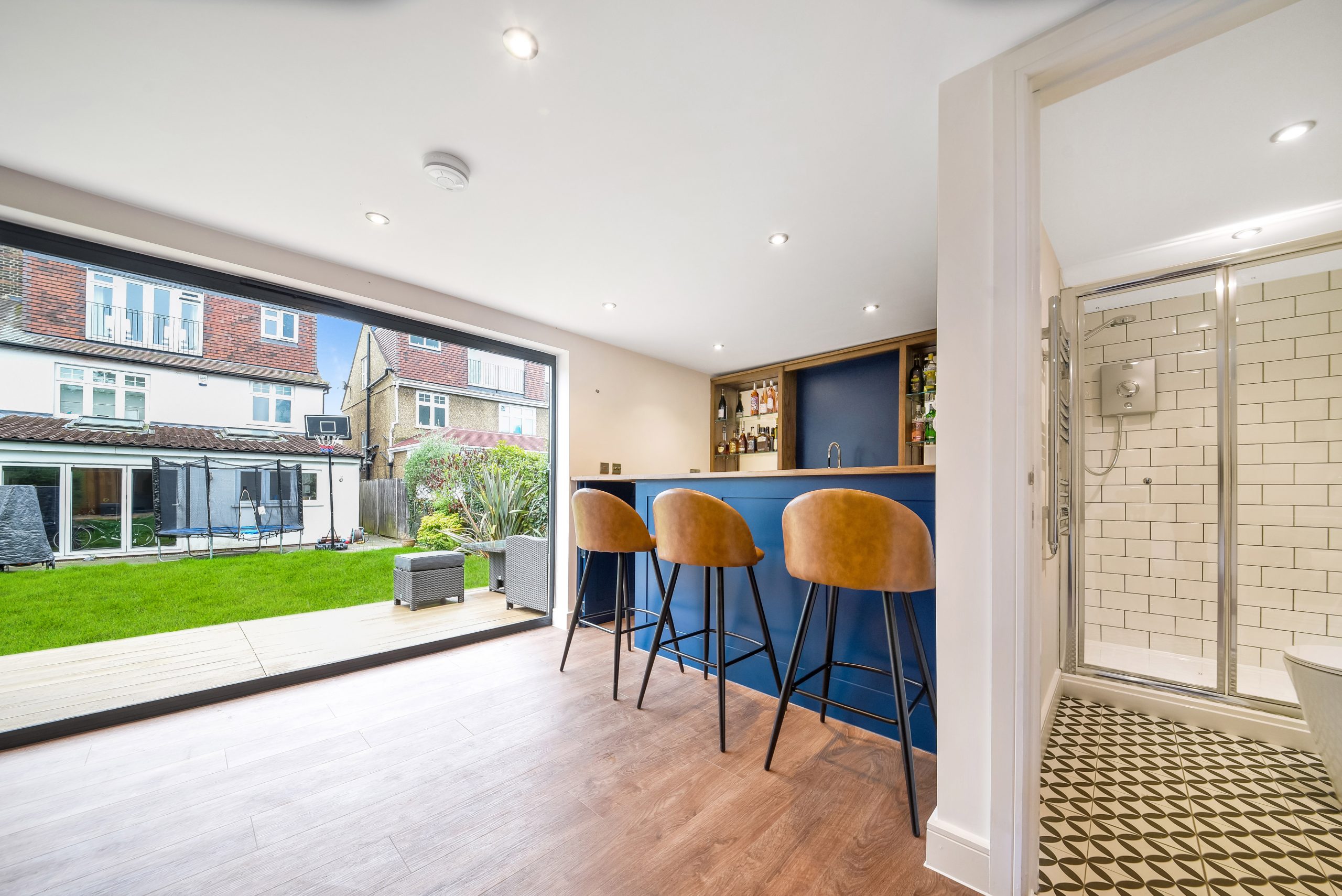
33. A cocktail room
For a more refined entertaining space, design a cocktail room with statement lighting, a feature bar, comfortable seating and darker, warmer finishes. It can feel like a boutique hotel bar in the garden, especially when paired with outdoor lighting and planting.
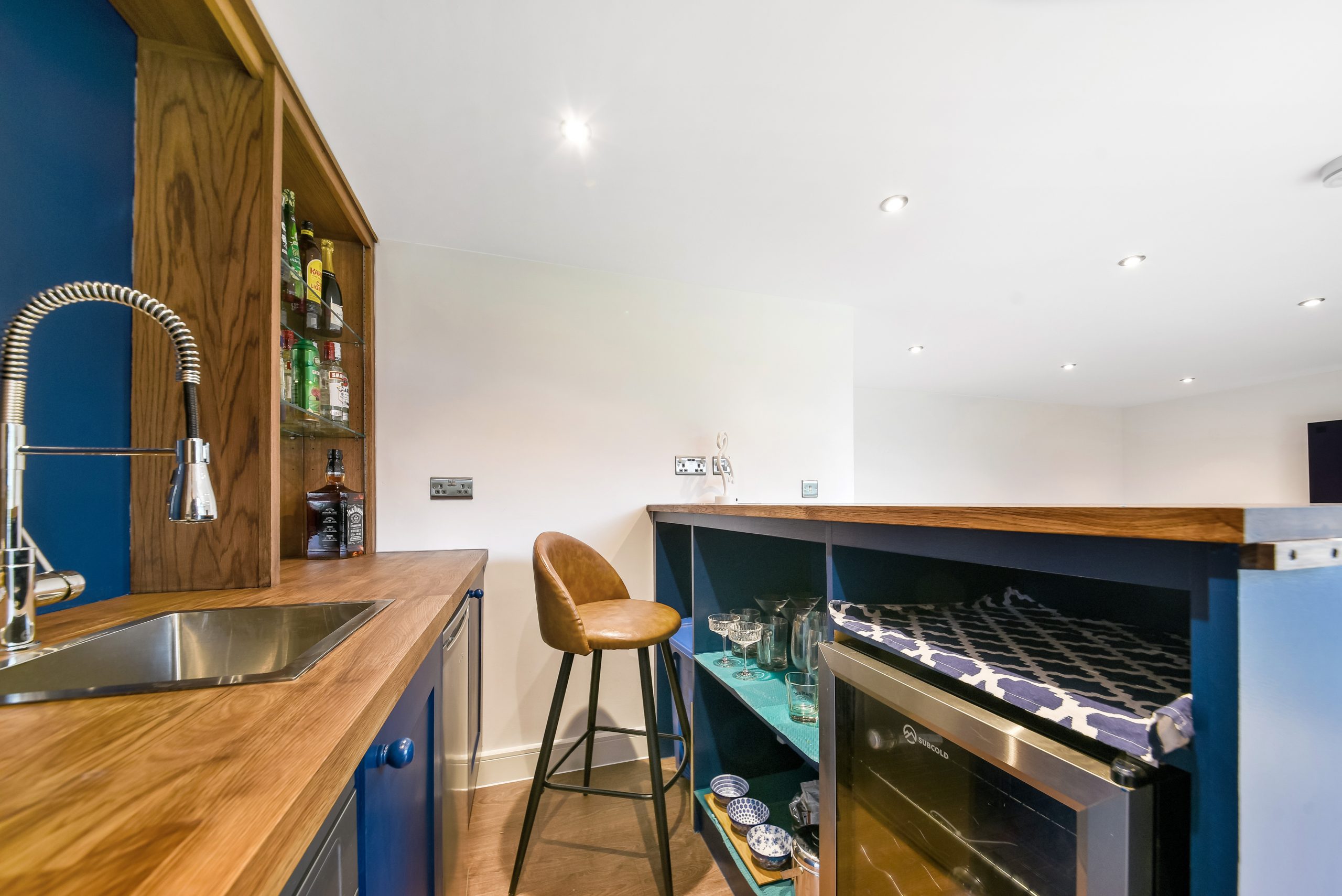
34. A cinema garden room
A cinema room benefits from controlled light, acoustic comfort, a media wall, hidden cabling and comfortable seating. Unlike a living room inside the house, a garden cinema can be designed from the start around the screen, speakers, blackout options and viewing distance.
35. A games room
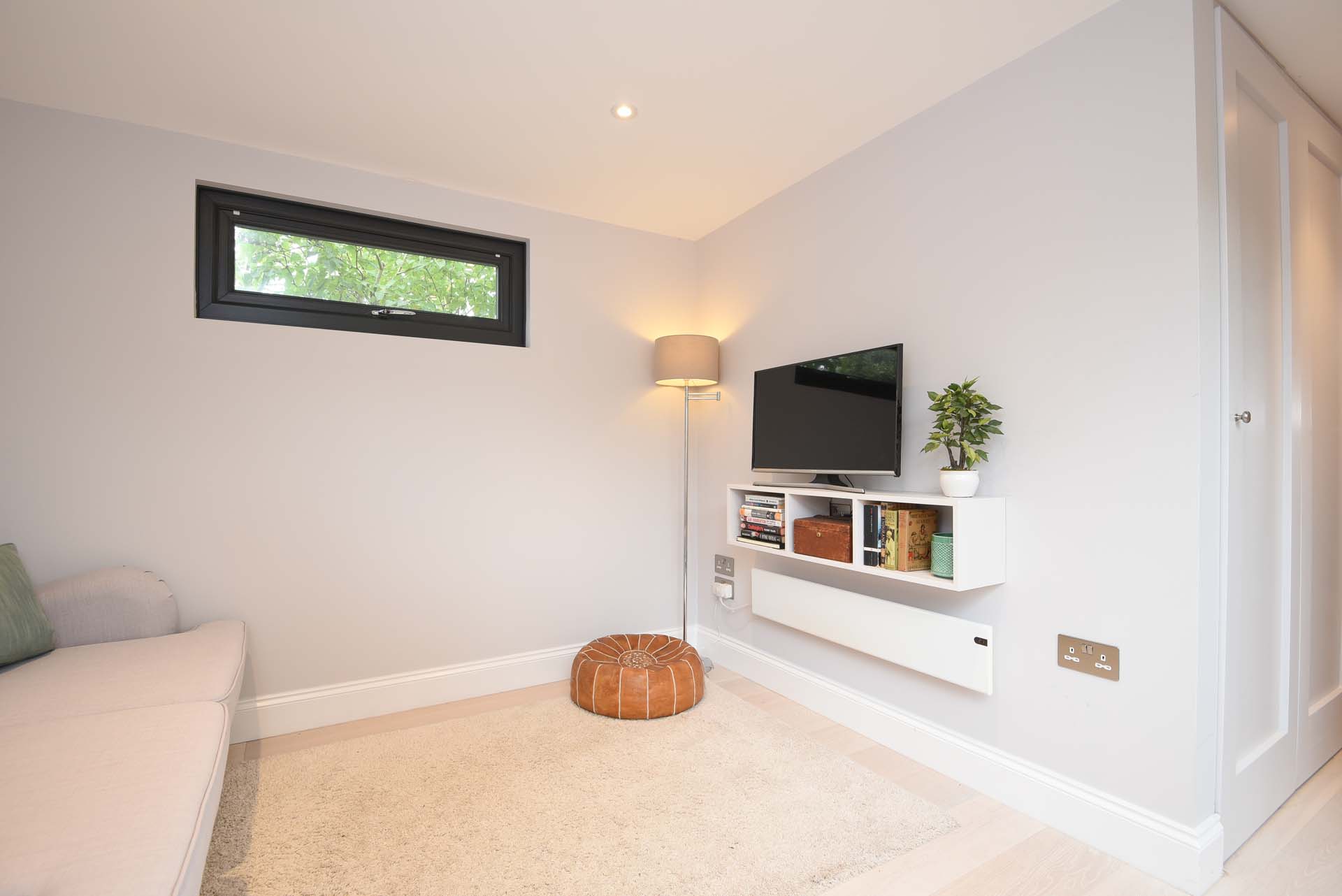
Pool tables, table football, darts, board games, consoles and arcade machines all need space around them. Measure the actual playing area required before deciding on the garden room size. Built-in storage is also useful so the room does not become cluttered with games, controllers and accessories.

36. A family lounge
A garden lounge can be a quieter alternative to the main sitting room, particularly for families with teenagers or frequent guests. Add soft seating, media, warm lighting, a coffee station and generous glazing to create a room that feels comfortable throughout the year.
37. A dining and hosting room
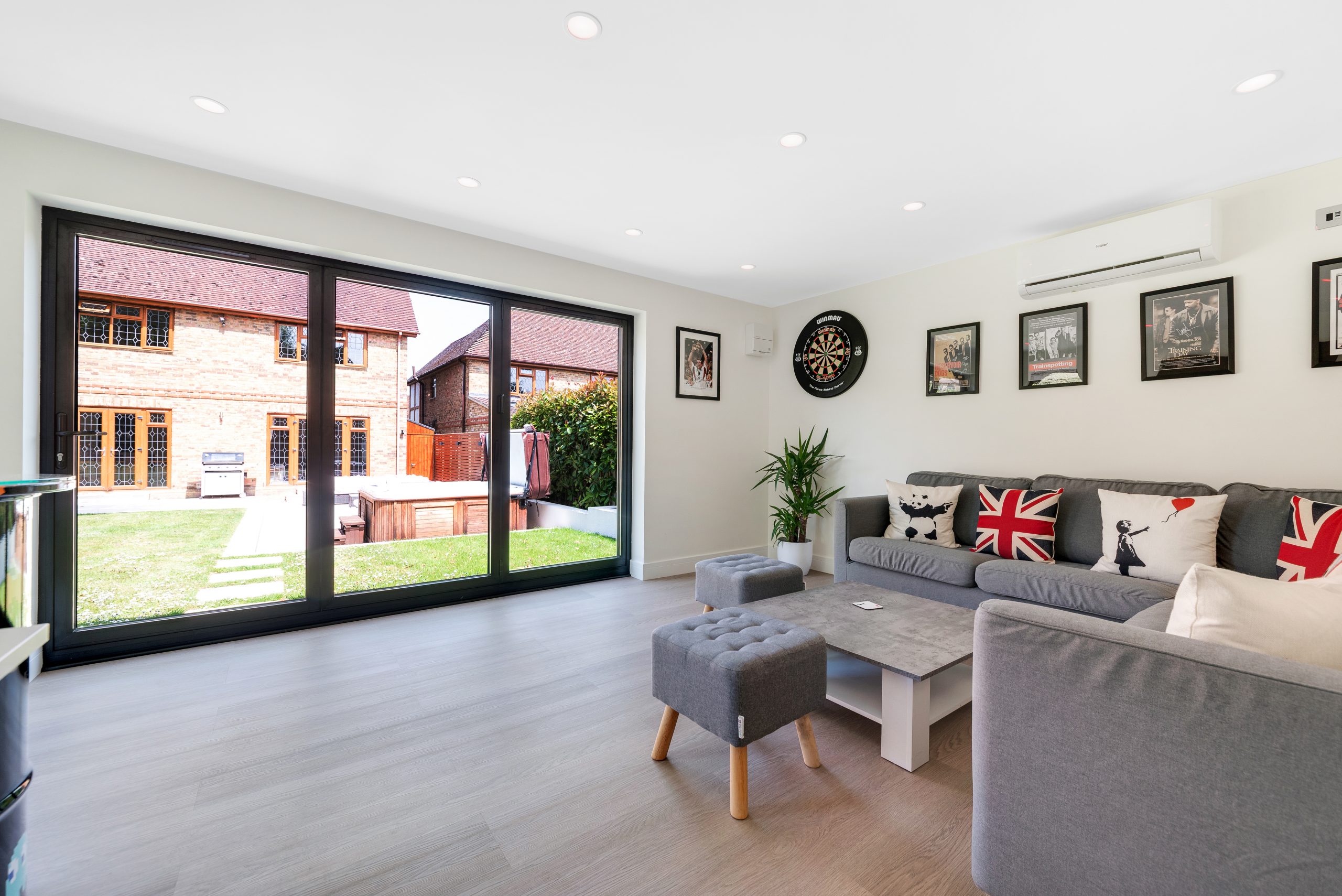
A dining garden room is a lovely choice for people who enjoy hosting but do not have enough entertaining space indoors. A round or rectangular dining table, kitchenette, storage and doors onto a patio can make the room feel ideal for long lunches, birthdays and summer evenings.

38. A teen den
A teen den gives older children a place to relax with friends without taking over the main house. Make it durable, warm, safe and well connected. Good Wi-Fi or hardwired data, simple storage and practical flooring will make the room easier to live with.

39. A party room with indoor-outdoor flow
If you enjoy summer parties, design the garden room and patio together. Bifold doors, outdoor lighting, decking, seating, privacy screens and a simple route back to the house can make the whole garden feel like one connected entertaining space.
Golf simulator and sports room ideas
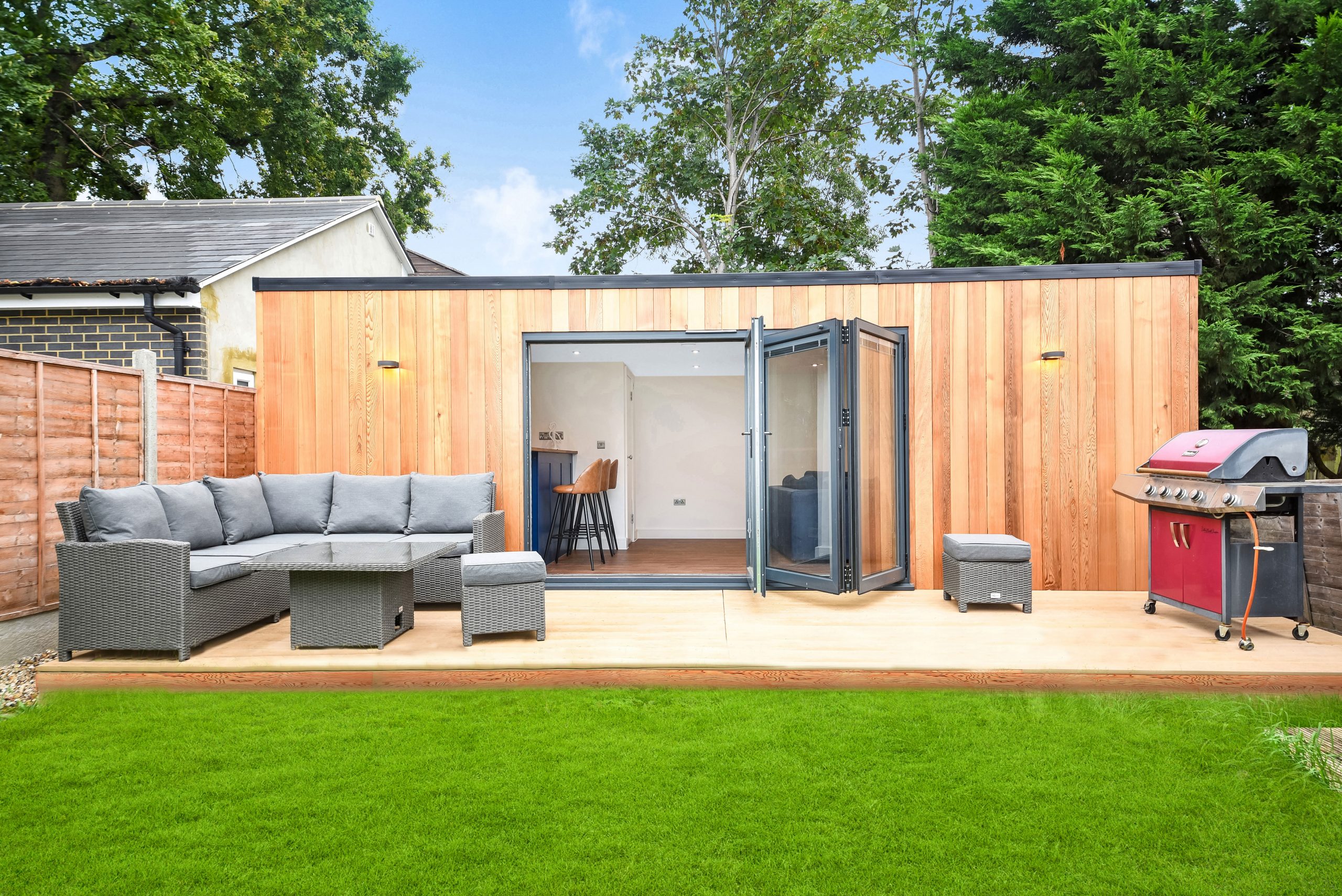
Specialist sports rooms need specialist planning. A golf simulator, for example, is not just a garden room with a screen. It needs the right height, width, swing clearance, lighting, flooring, power and technology layout.
40. A golf simulator garden room
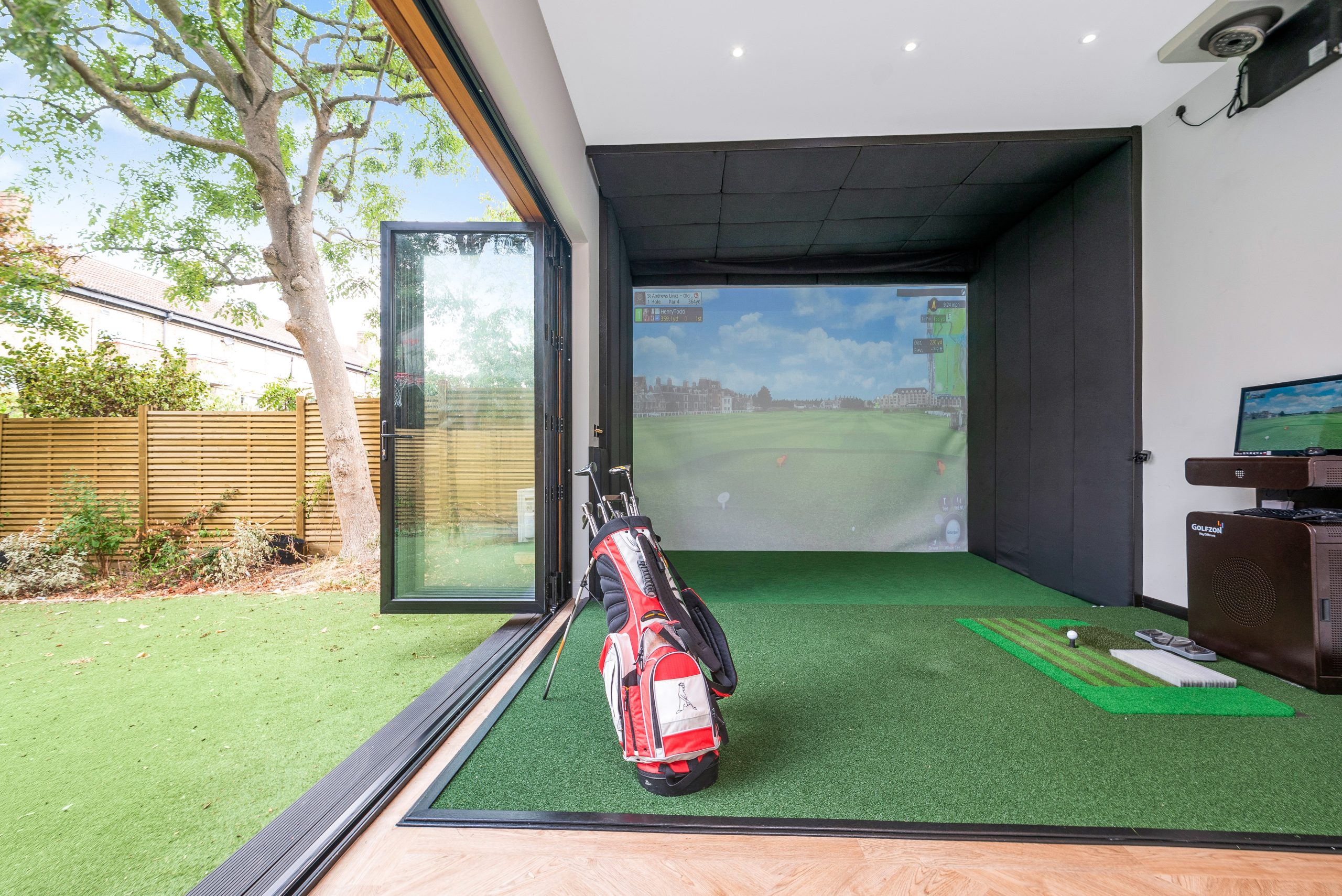
A golf simulator garden room should be designed around the golfer first. Allow room for a full swing, screen, projector, launch monitor, hitting mat and safe movement around the space. A kitchenette, bar or seating area can turn the room into a sports lounge as well as a practice facility.
41. A sports analysis room
If you coach, train or review performance, a garden room can include screens, seating, storage and a clear practice area. Good lighting, hardwired internet and enough space for equipment make the room more useful over time.

42. A multi-sport family room
For families, a sports room can combine fitness, games and storage in one place. It might include a rowing machine, exercise bike, table tennis, darts, gaming screen or yoga mat area. The secret is to avoid overcrowding the room; choose the activities you will use most often.

Garden annexe and living-space ideas
A larger garden room can become a highly flexible living space. It might be used for occasional guests, grown-up children, elderly relatives, work, hobbies or a combination of all of these. Because sleeping accommodation and self-contained living can have planning and building regulation implications, it is important to discuss the intended use early. Hawksbeck can help you think through the design, services and requirements for garden room annexes.
43. A guest bedroom garden room
A guest bedroom garden room gives visitors privacy and comfort without taking over the main house. Add heating, cooling, good lighting, wardrobe space and an ensuite or nearby WC if the room will be used frequently. Always get advice on planning and building regulations before designing a sleeping space.
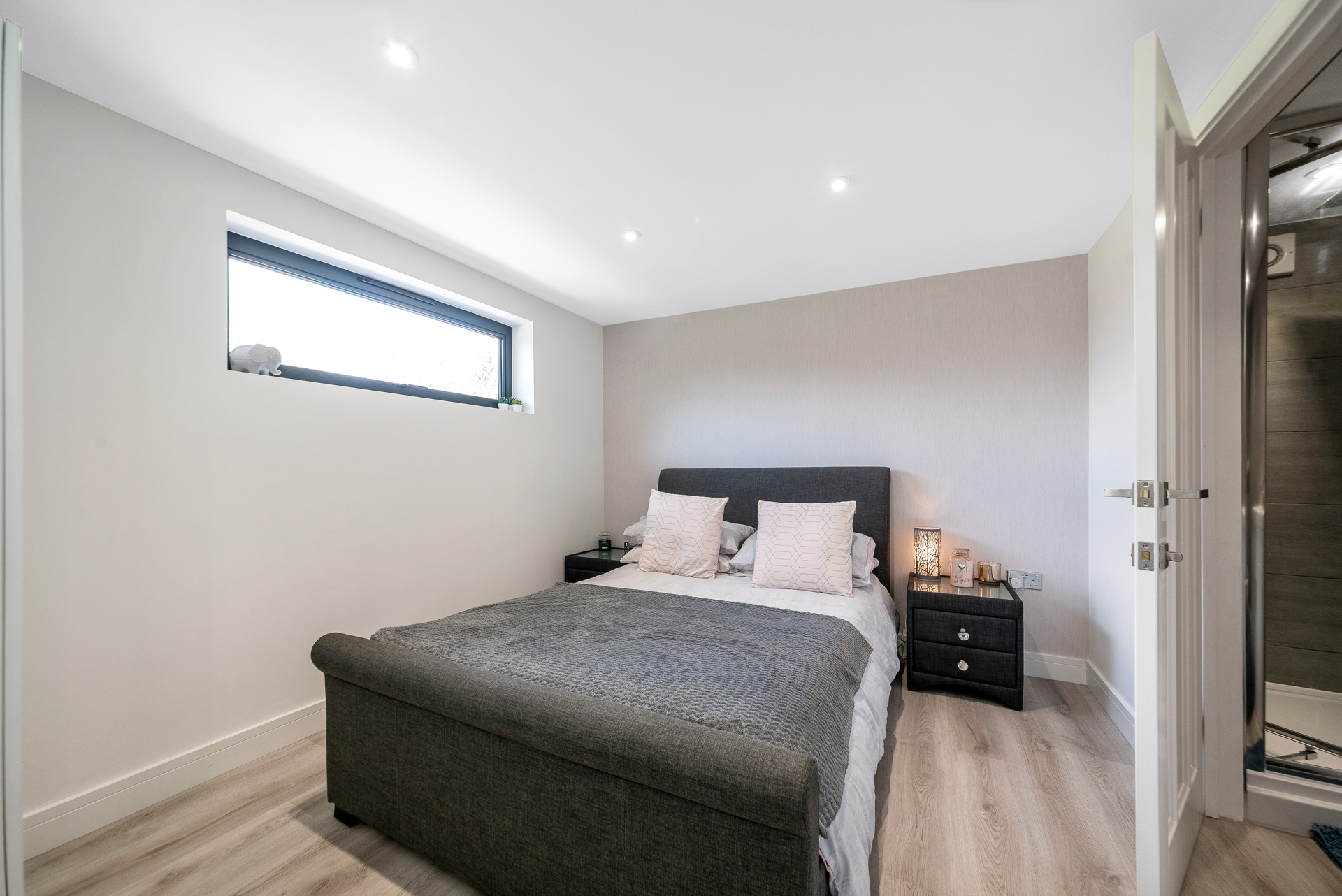
44. A bedroom and office combination
If you only host guests occasionally, combine the guest bedroom with an office or quiet study. A sofa bed, compact desk, built-in storage and calm finishes can make the room useful every week rather than only when someone stays.
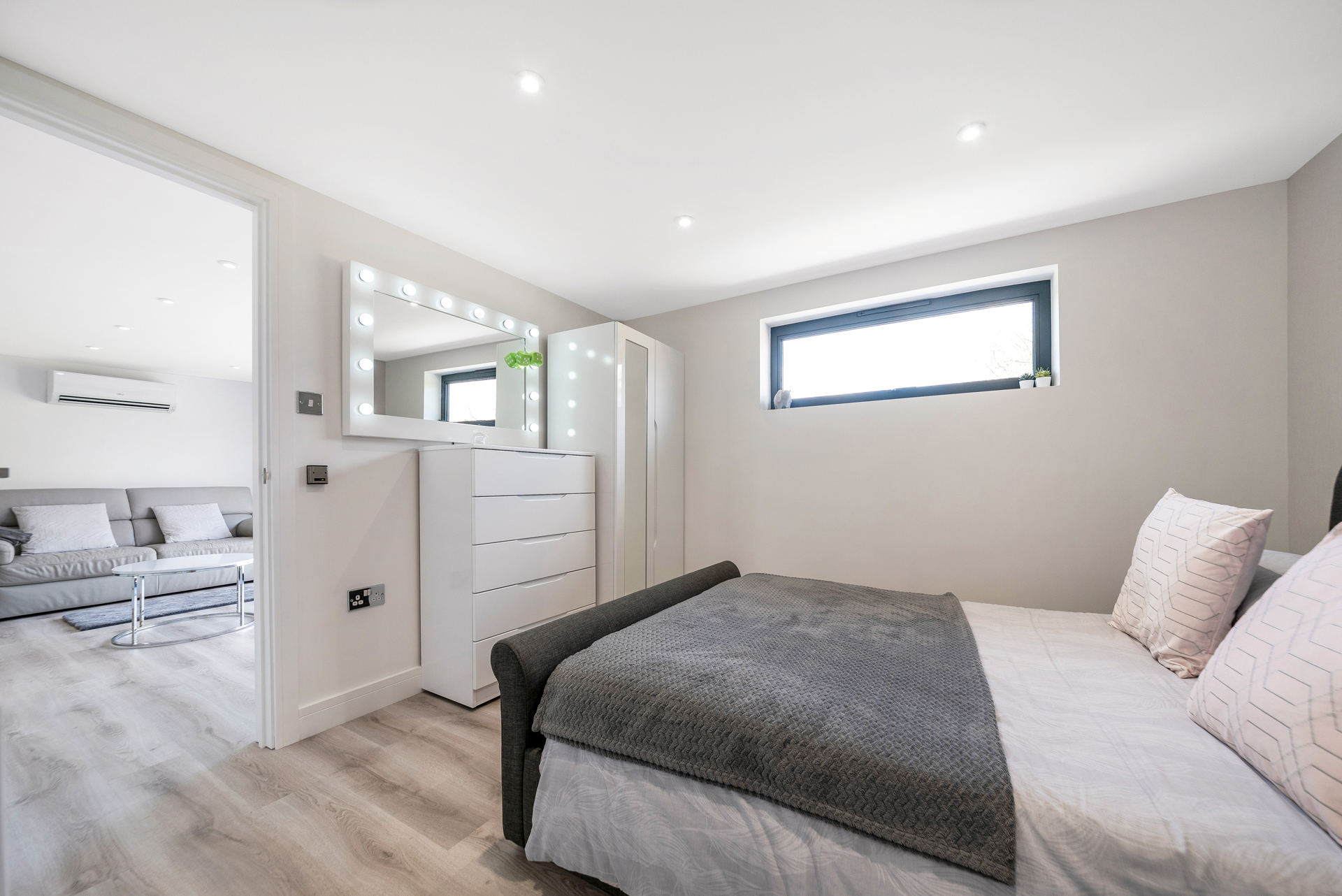
45. A kitchen-living garden annexe
A kitchen-living layout can make a garden room feel genuinely self-contained. This is useful for longer guest stays, multi-generational living or a private retreat. It requires more planning than a simple office because services, drainage, ventilation, layout and compliance all matter.
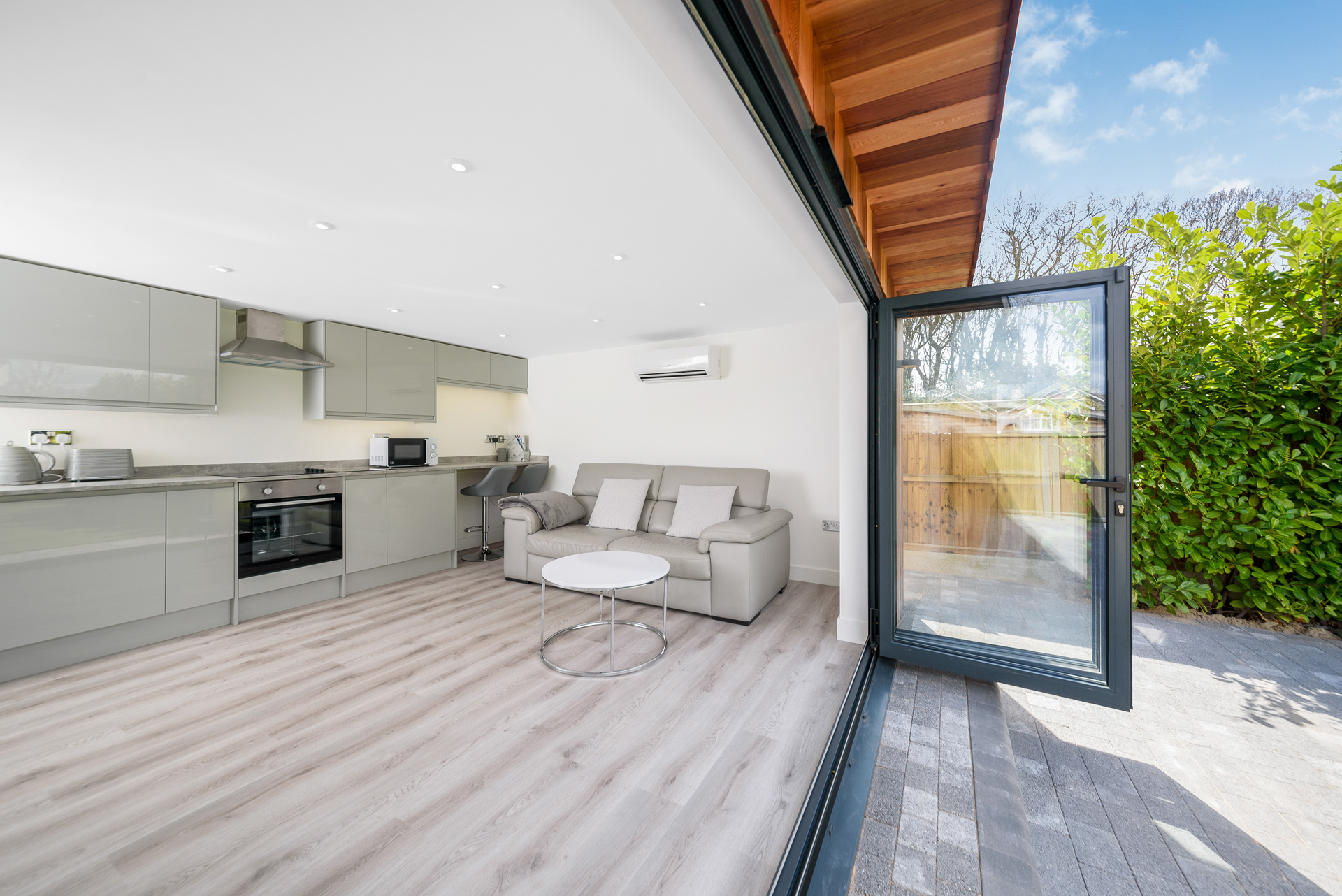
46. A garden room for elderly relatives
A carefully designed garden annexe can help elderly relatives stay close to family while retaining independence. Consider level access, bathroom layout, storage, heating, lighting, proximity to the main house and how the room may need to adapt over time.
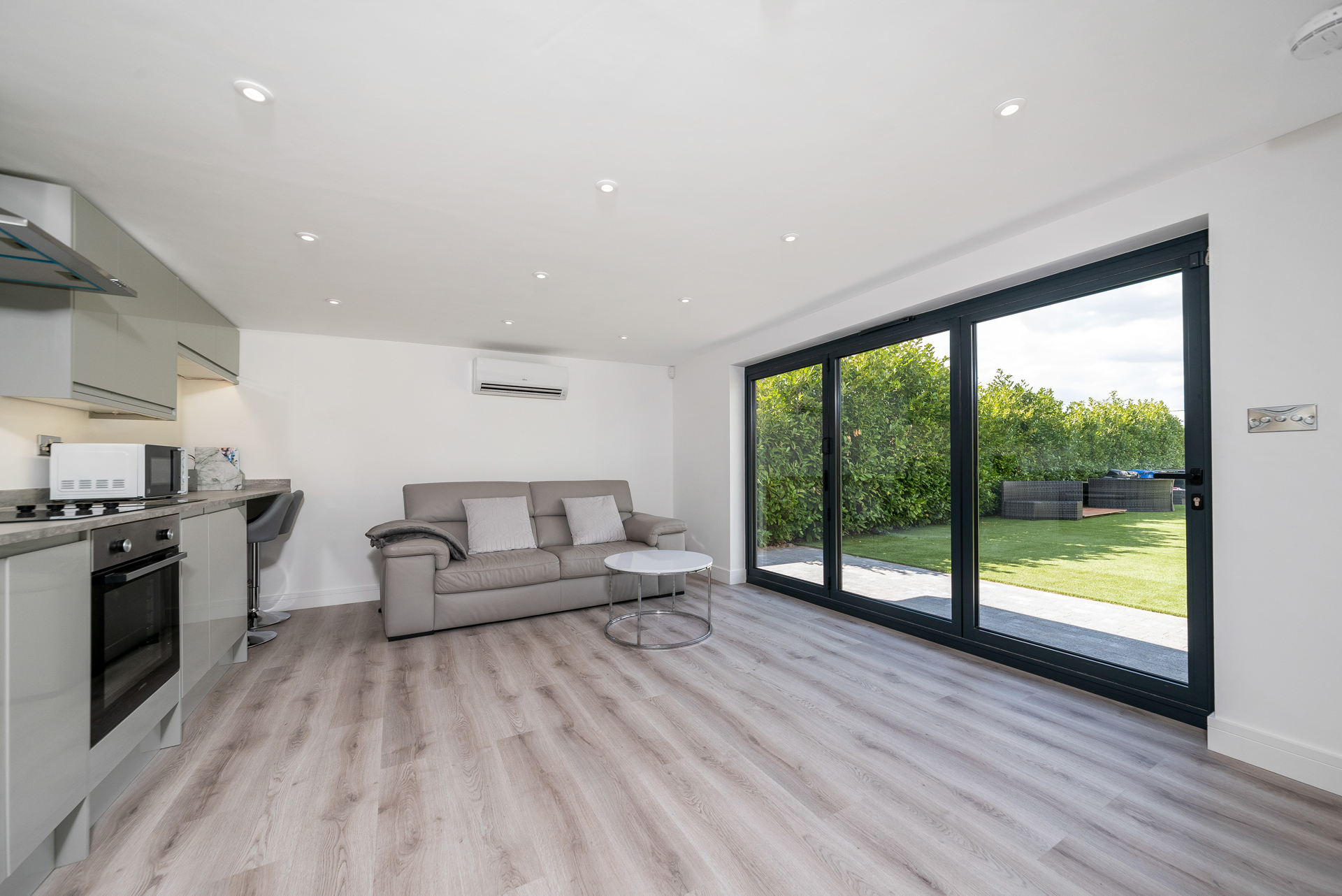
47. A space for grown-up children
For grown-up children living at home, a garden room can provide study, sleep, storage and living space without requiring a house move. Think carefully about privacy, sound, services and whether the room needs to work as an office or guest room later.
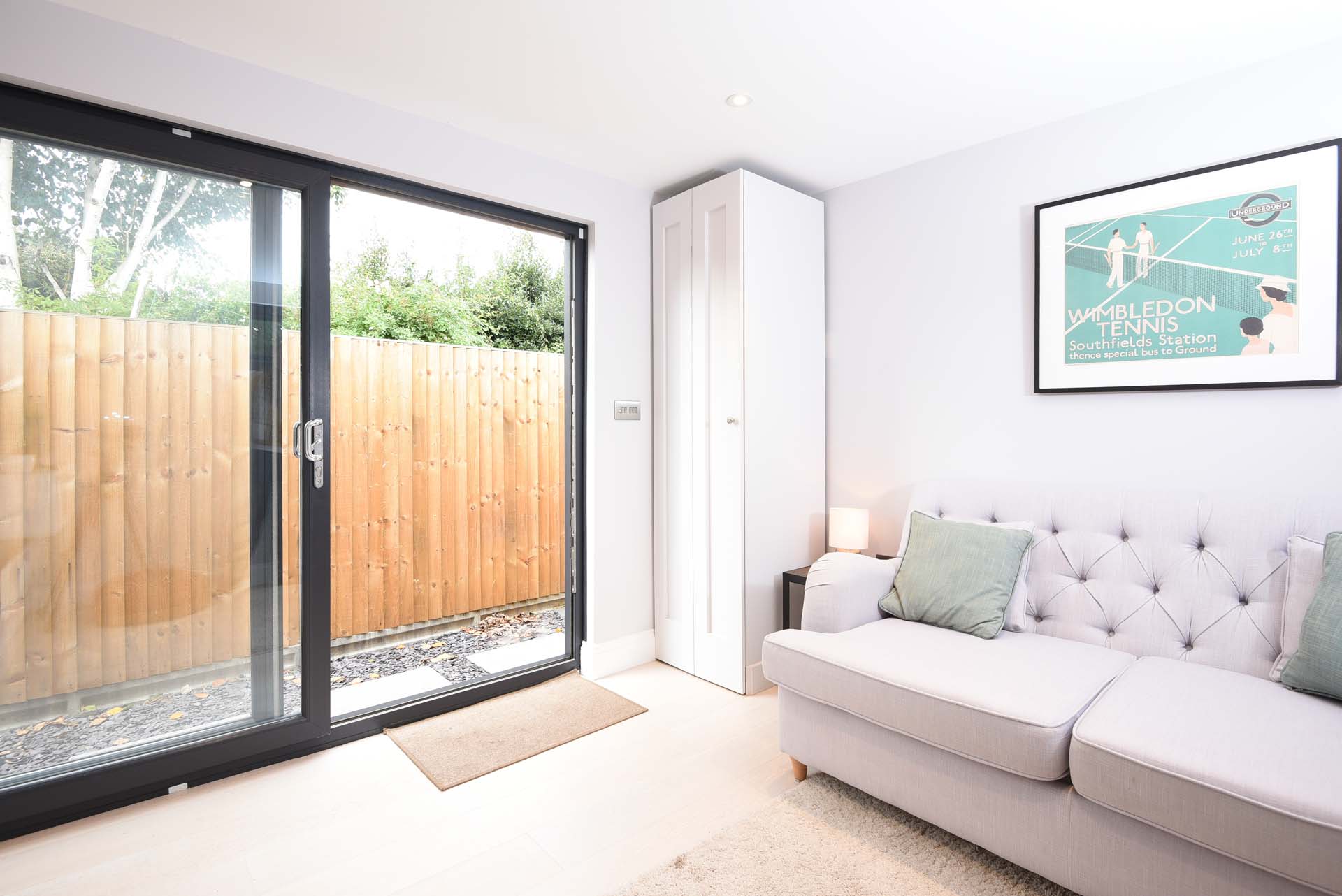
48. A self-contained guest suite
A guest suite might include a bedroom, shower room, kitchenette and small seating area. This is one of the most useful garden room ideas for families who host regularly, but it should be designed with planning, building regulations and long-term use in mind.
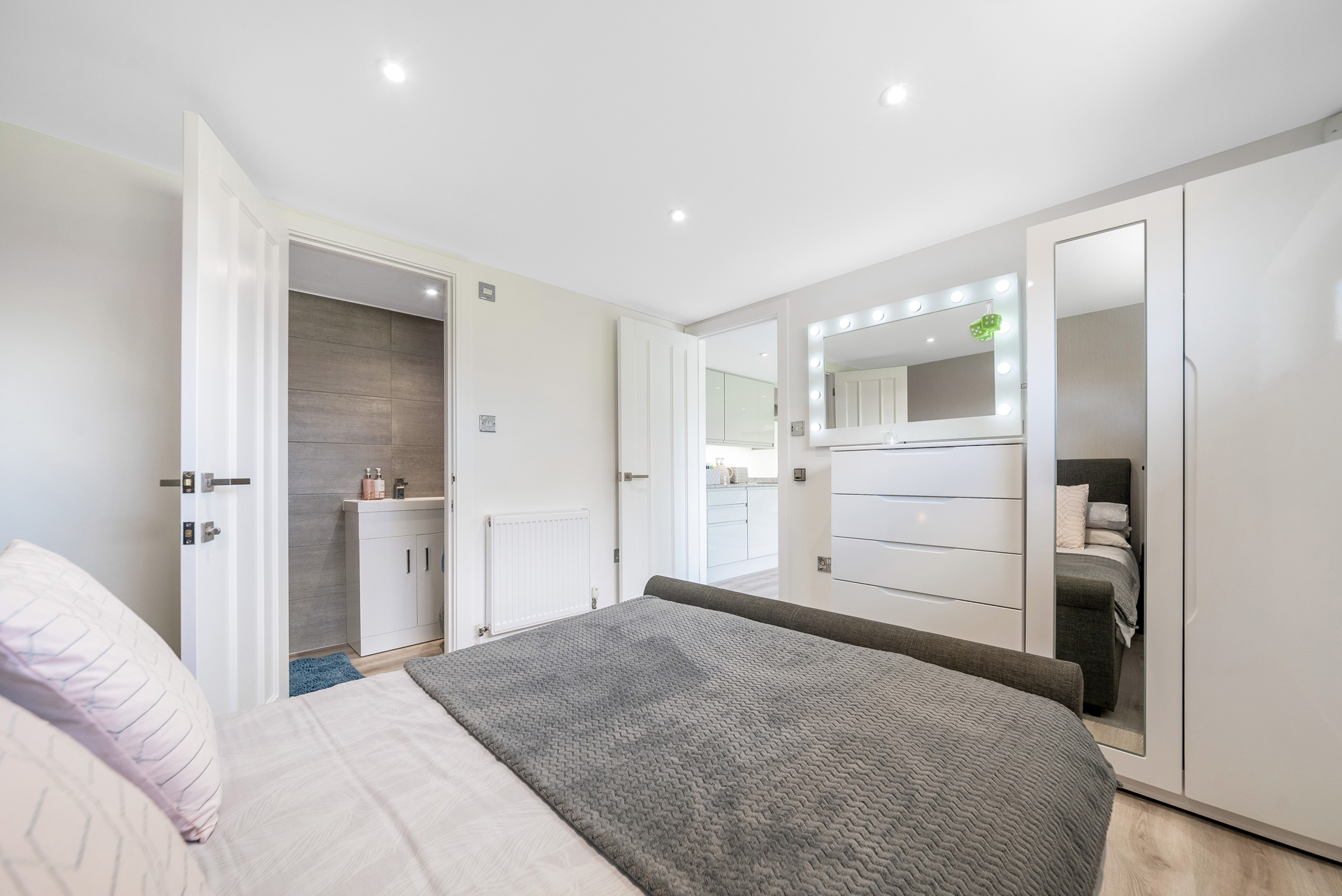
49. An Airbnb-style garden room
Some homeowners explore garden rooms as occasional accommodation or income-generating spaces. Before designing for this purpose, check planning, insurance, tax, local rules and any permissions needed. If it is suitable for your property, the design should prioritise privacy, comfort, safety, storage and simple maintenance.
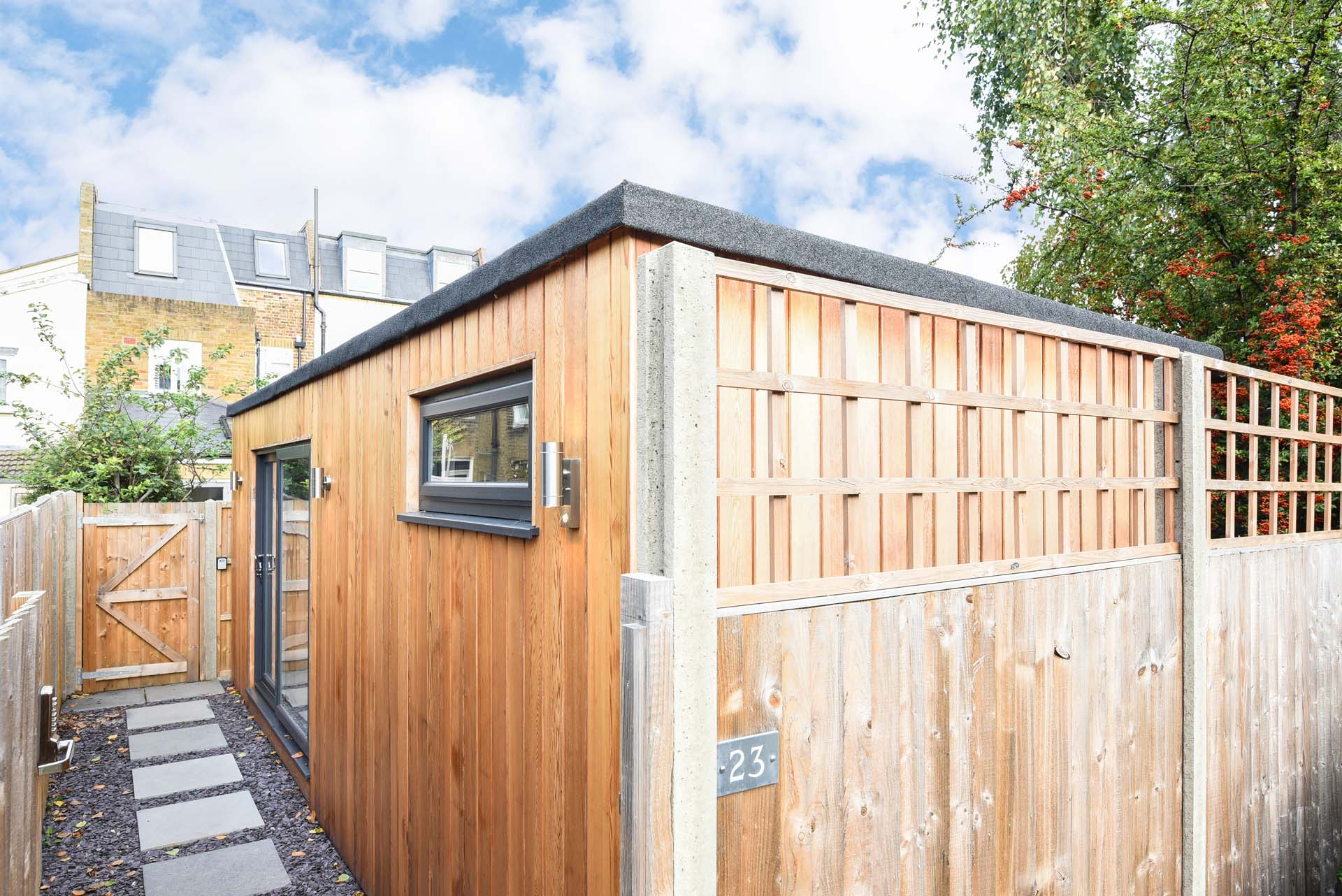
50. An L-shaped multi-room annexe
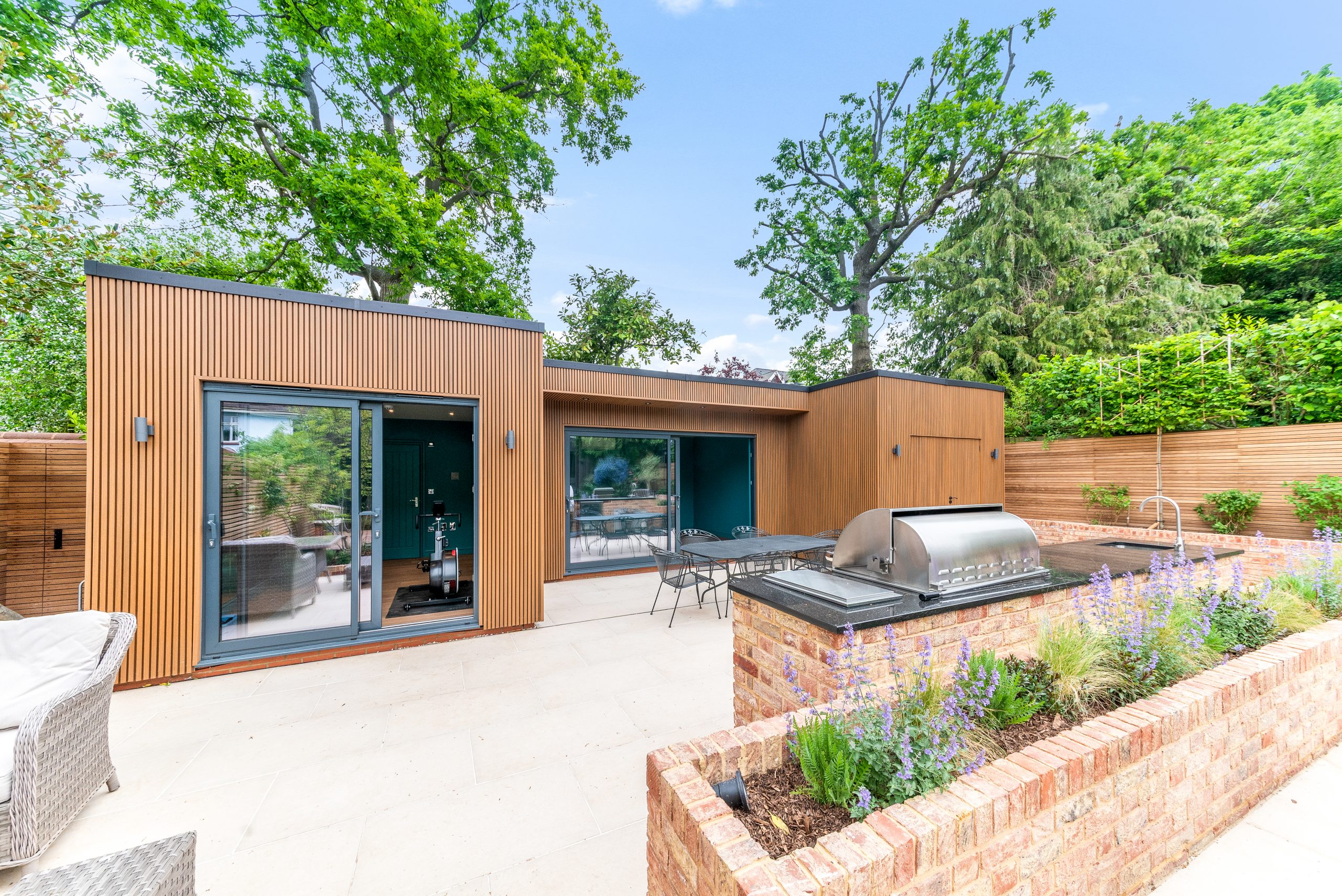
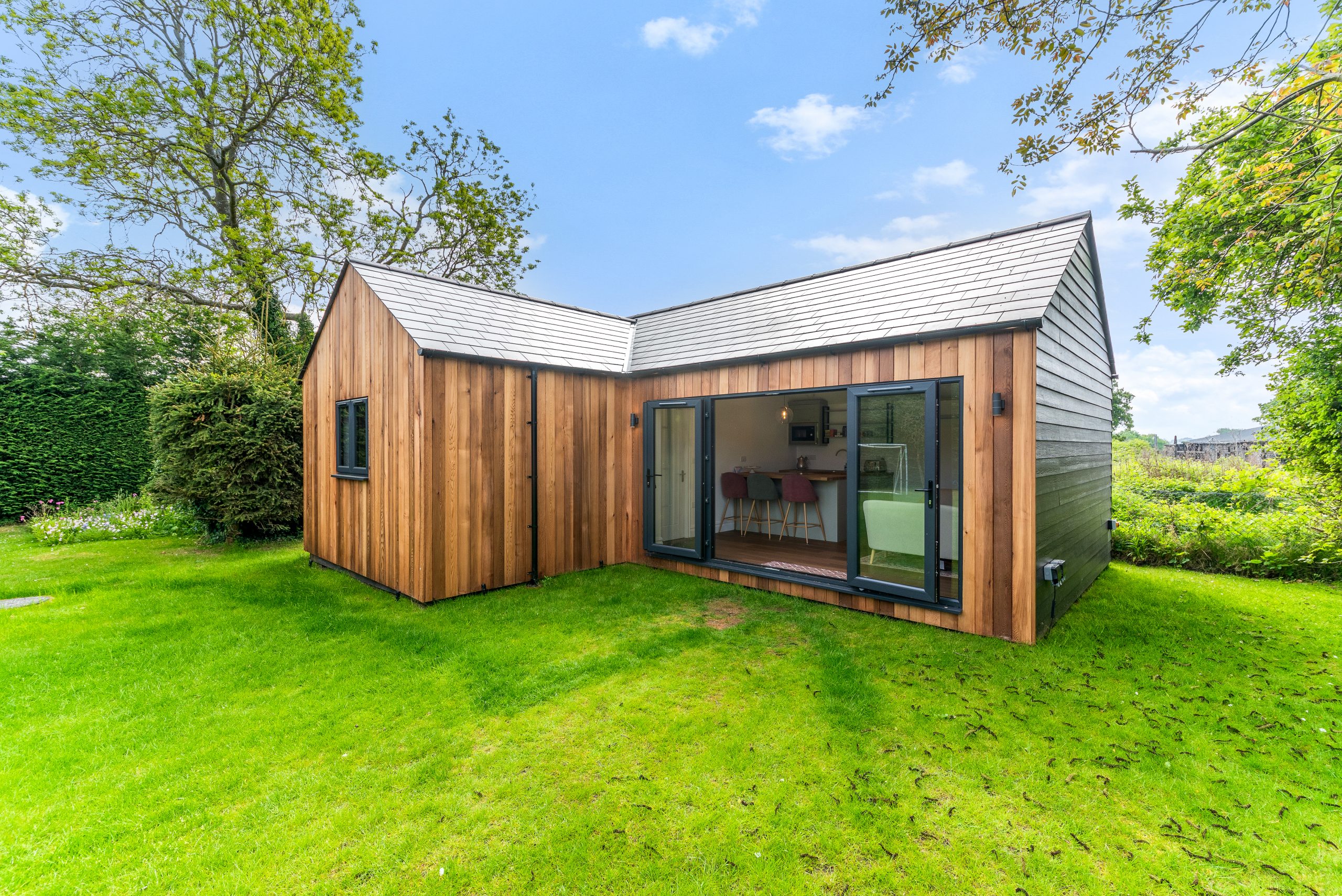
An L-shaped garden room is useful when you want to create distinct zones without making the building feel like one long rectangle. It can separate bedroom from kitchen-living space, office from lounge, or gym from shower room. It also helps a larger room sit more naturally within some garden layouts.
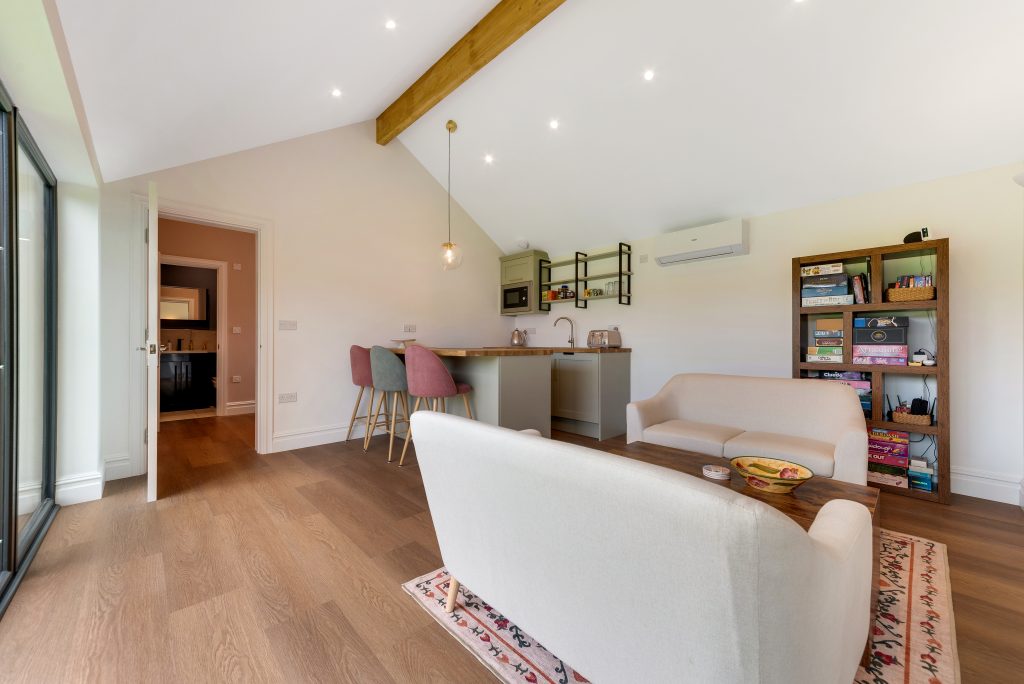
Garden rooms with toilets, showers and kitchens
Adding plumbing can transform how useful a garden room is. A toilet, shower, wet room, kitchenette or bar sink makes the room more self-contained, especially if it is used as a gym, studio, guest space, bar or annexe. The important point is to plan services early. Plumbing, drainage, hot water, ventilation and layout should be part of the design from the beginning.
51. A garden room with toilet
A toilet is one of the most useful upgrades for offices, gyms, studios and entertainment rooms. It reduces trips back to the house and makes the room feel more complete. It is especially worthwhile if clients, guests or family members will use the room for long periods.
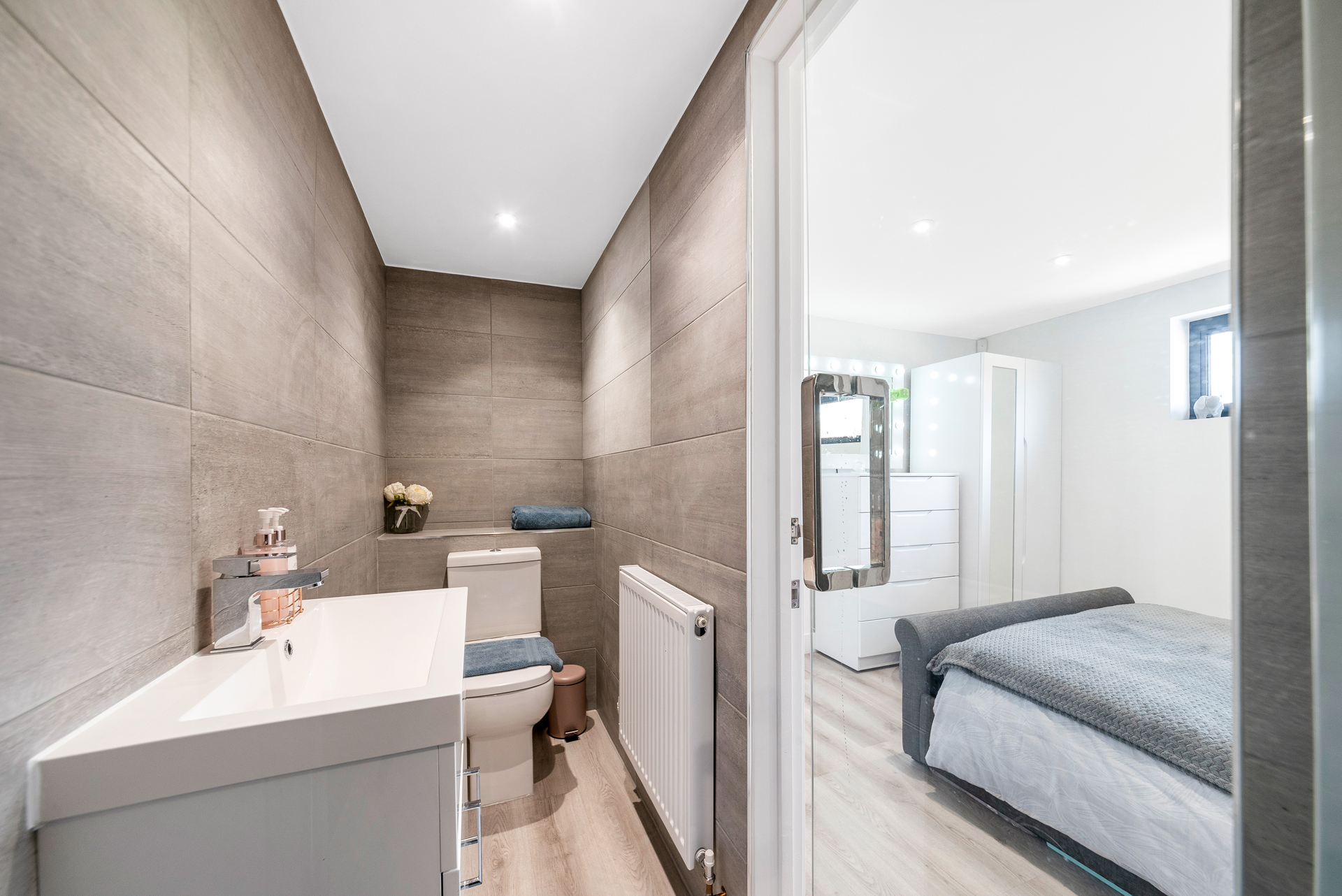
52. A garden room with shower
A shower is most useful in a gym, sauna room, guest space, pool house or hot tub retreat. It needs proper moisture management, ventilation and drainage. If the room may become more residential in the future, designing the shower room early can help preserve flexibility.
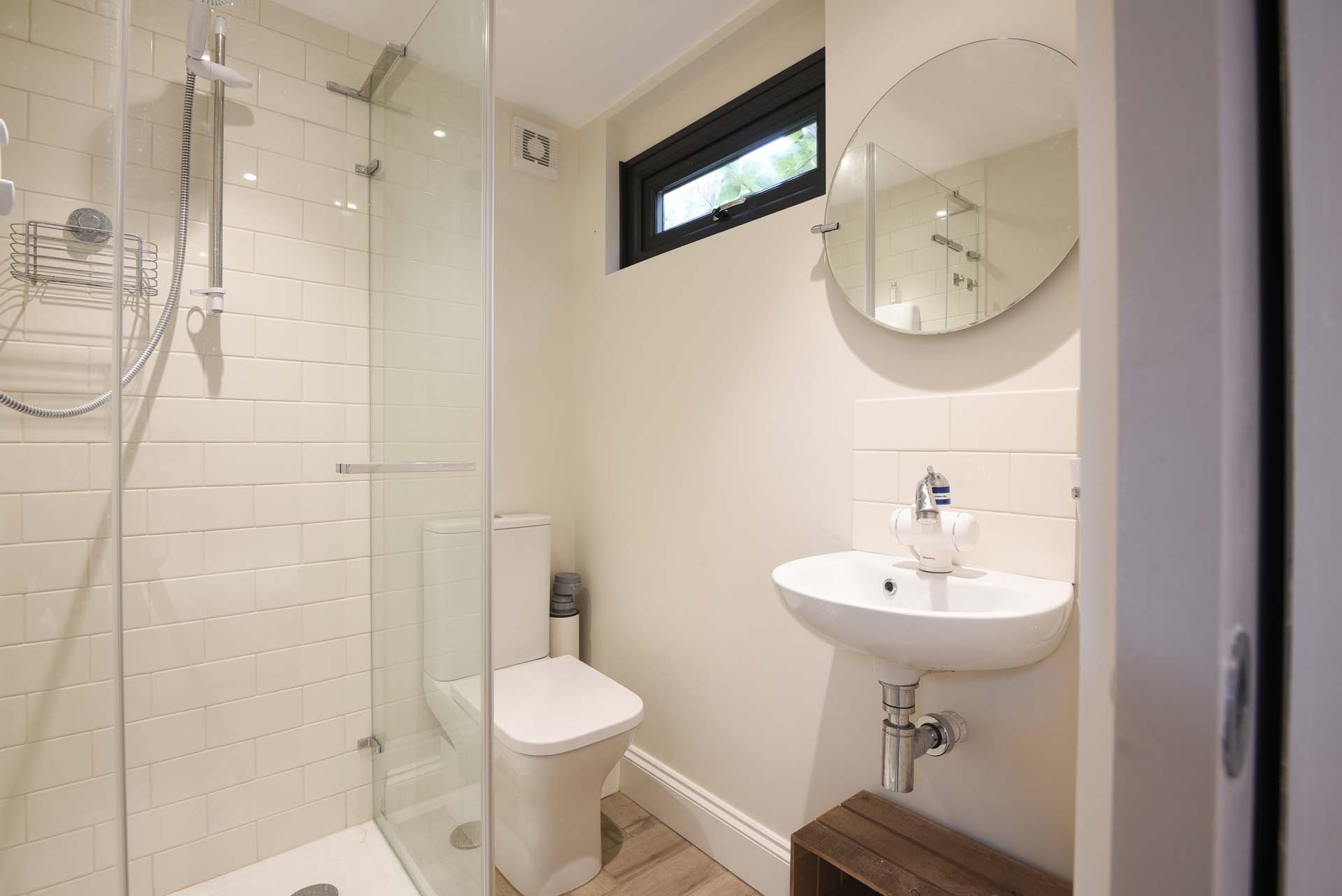
53. A garden room with wet room
A wet room works particularly well for gyms, saunas and wellness spaces because it can be practical, compact and easy to use after training. Plan the floor falls, waterproofing, ventilation and fittings carefully so the space performs as well as it looks.
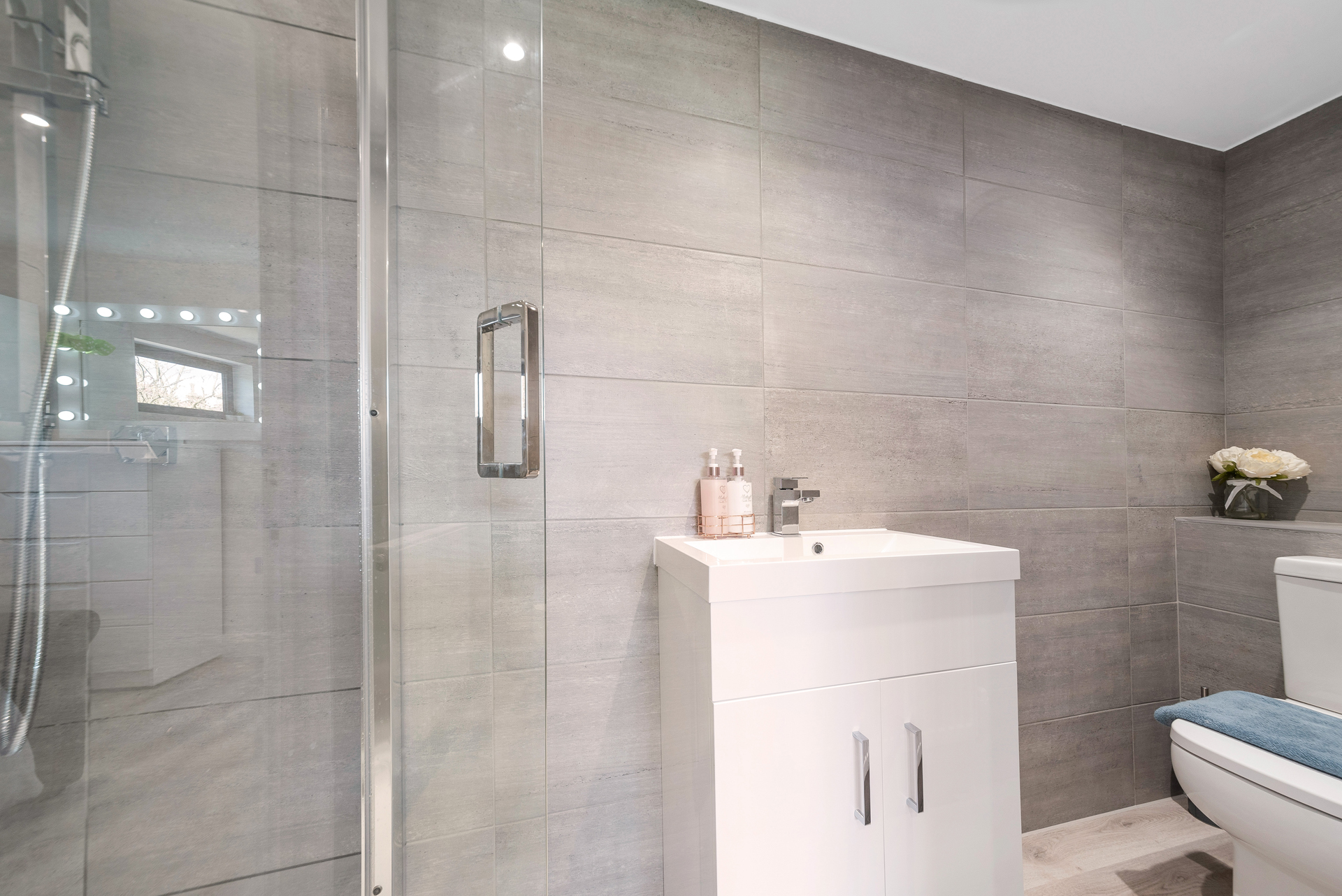
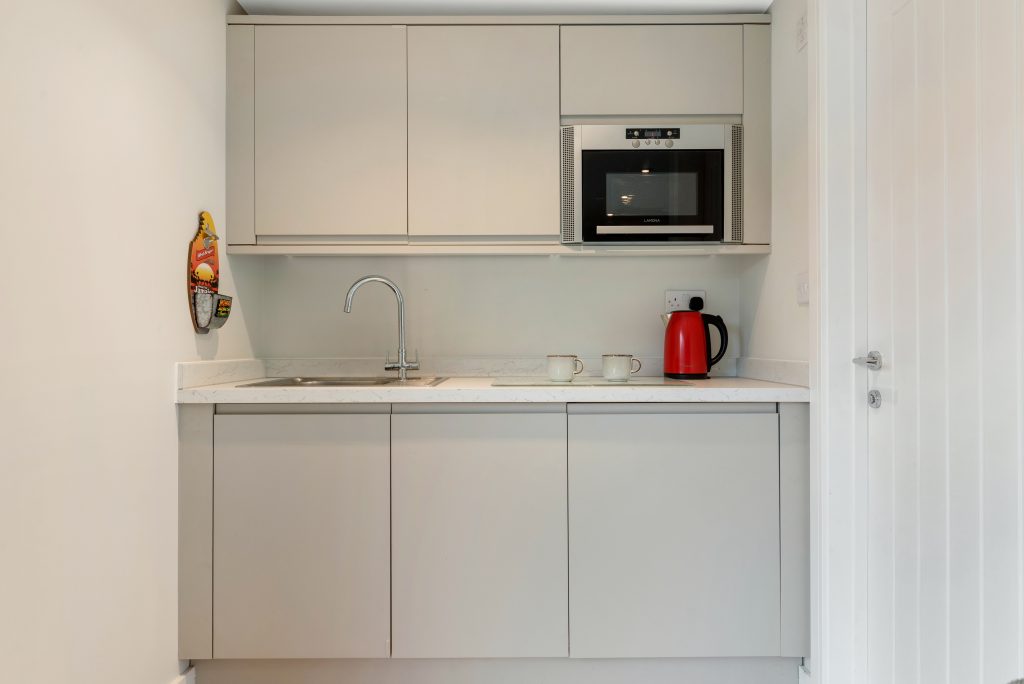
54. A garden room with kitchenette
A kitchenette is useful for annexes, studios, bars, offices and entertainment rooms. It might include a sink, fridge, storage, microwave, boiling water tap or compact appliances. The design should suit the way the room will actually be used: morning coffee for an office, drinks service for a bar, or practical cooking facilities for a guest suite.
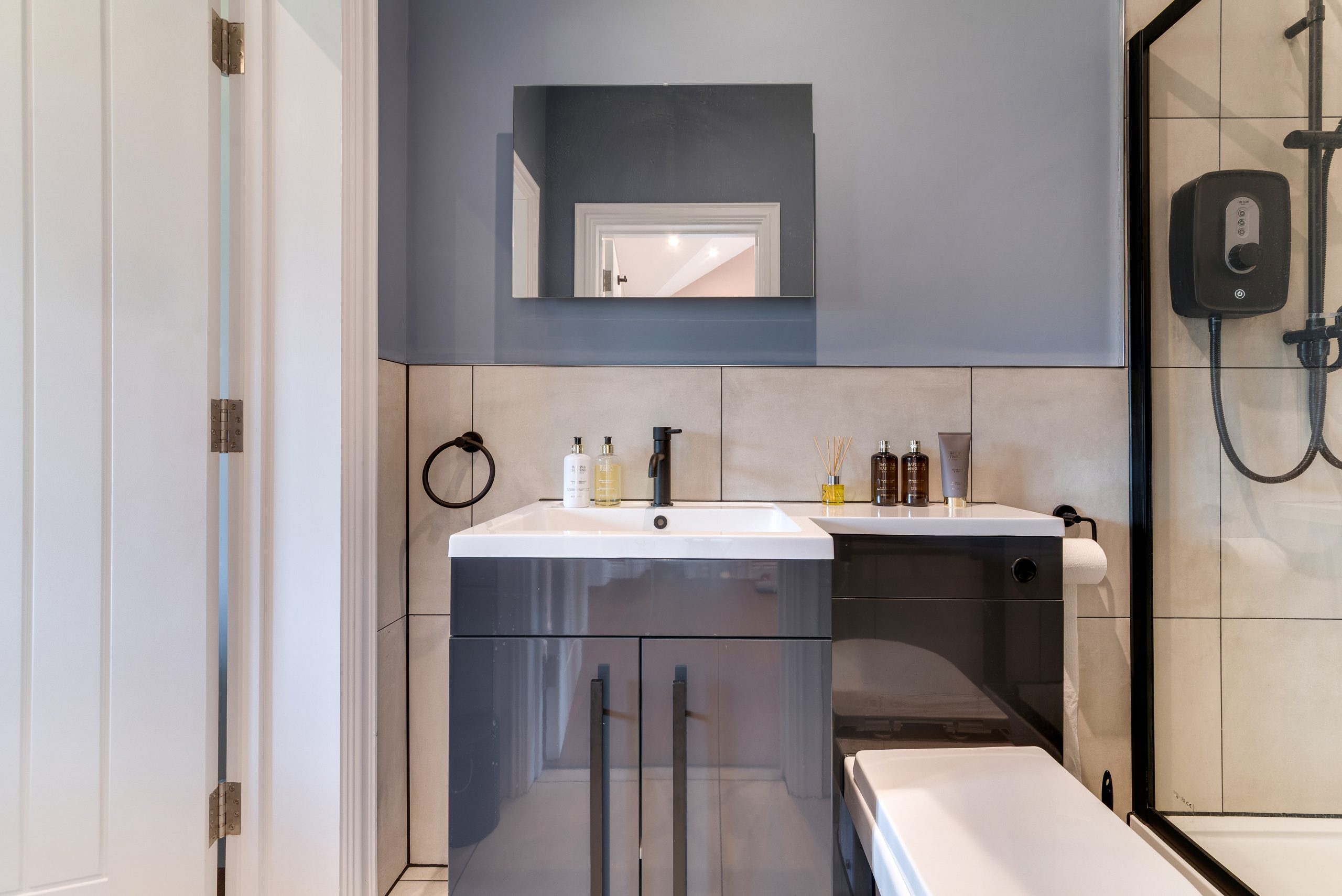
55. A garden room with full bathroom
For self-contained living, guest accommodation or a larger annexe, a full bathroom can be essential. It also raises the importance of building regulations, ventilation, drainage, waterproofing and layout. A bathroom should never be squeezed in as an afterthought; it should be part of the room's overall plan.
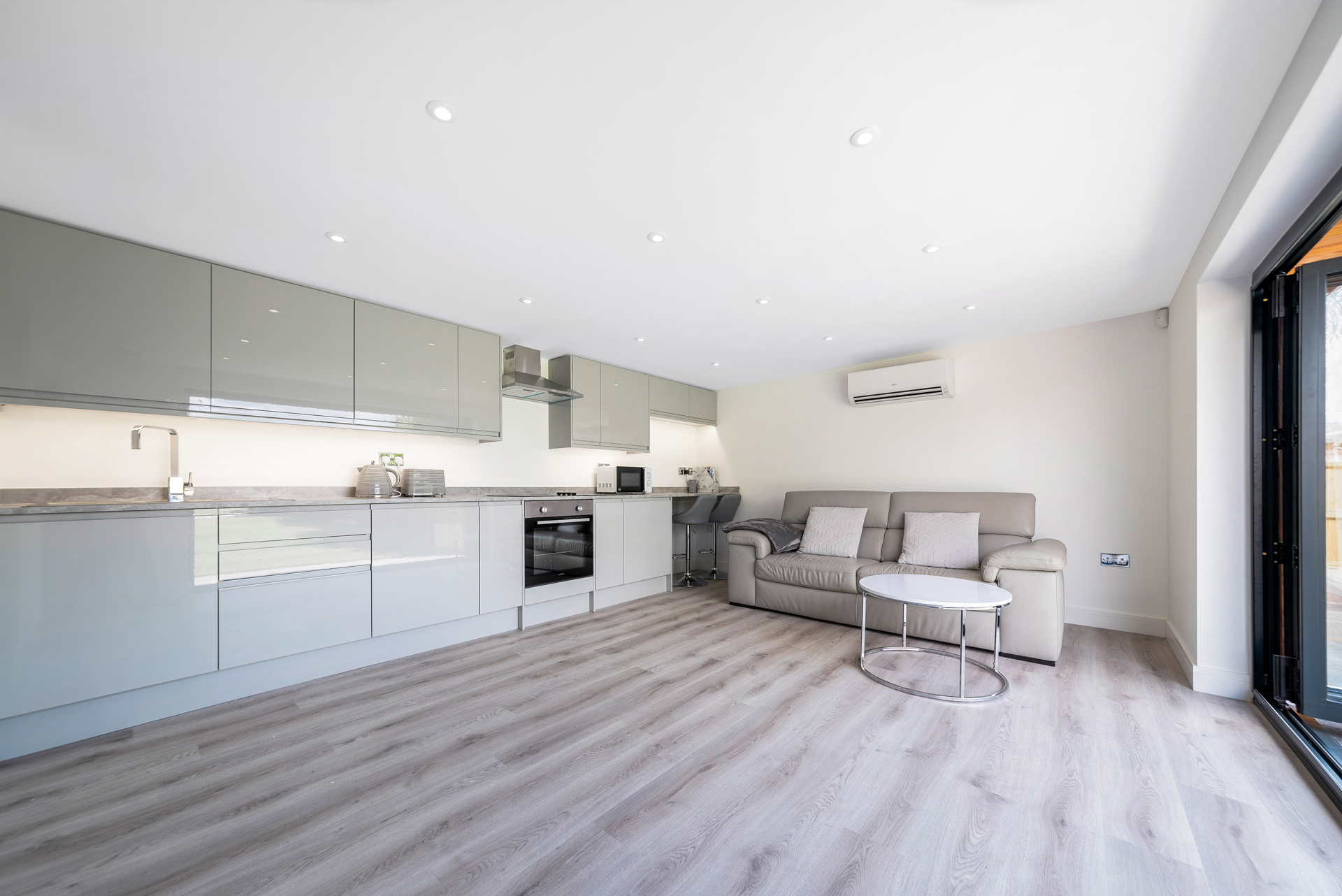
Small garden room ideas
A small garden room can still be beautiful, useful and full of character. The key is clarity. A compact room usually works best when it has one main purpose, excellent storage and design choices that make the space feel bright rather than cramped.
56. A small garden office pod
A compact office can be extremely effective if the layout is precise. Use a built-in desk, wall storage, good lighting and a clear view out to the garden. Avoid overfurnishing the space; a small office feels more luxurious when it has room to breathe.
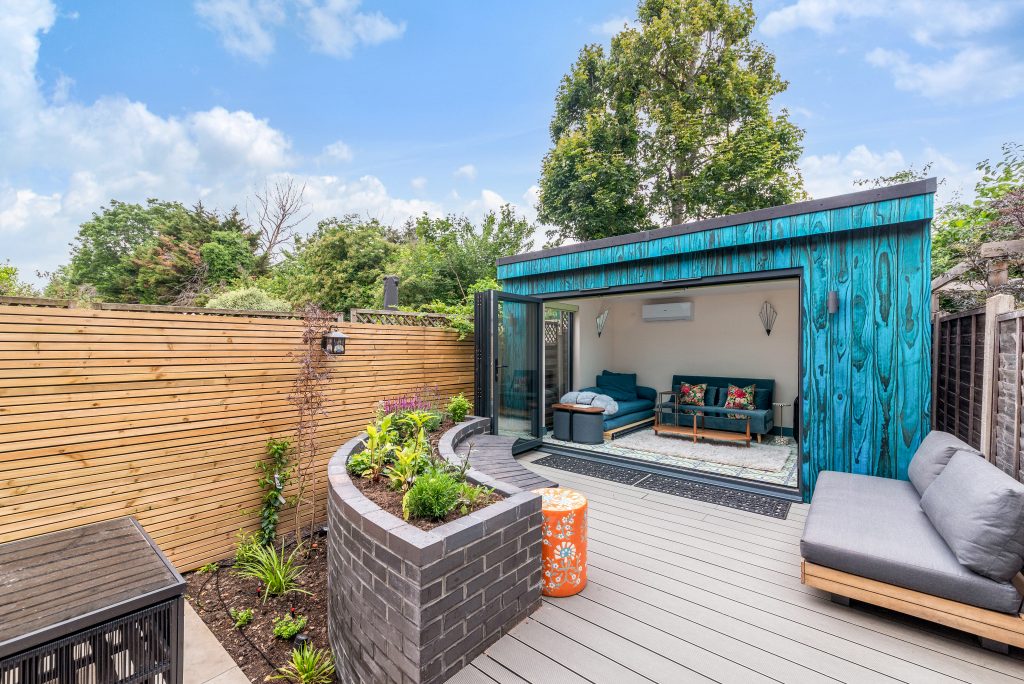
57. A small lounge or reading room
A small lounging room can become a private escape for reading, music, coffee or quiet evenings. Sofas, warm lighting, a small table and a strong colour scheme can make the room feel intentionally cosy rather than simply small.

58. A skylight garden room
Skylights are valuable in smaller garden rooms, especially when wall space is limited or the room sits in a shadier part of the garden. They bring light from above without sacrificing privacy or wall space for storage and furniture.
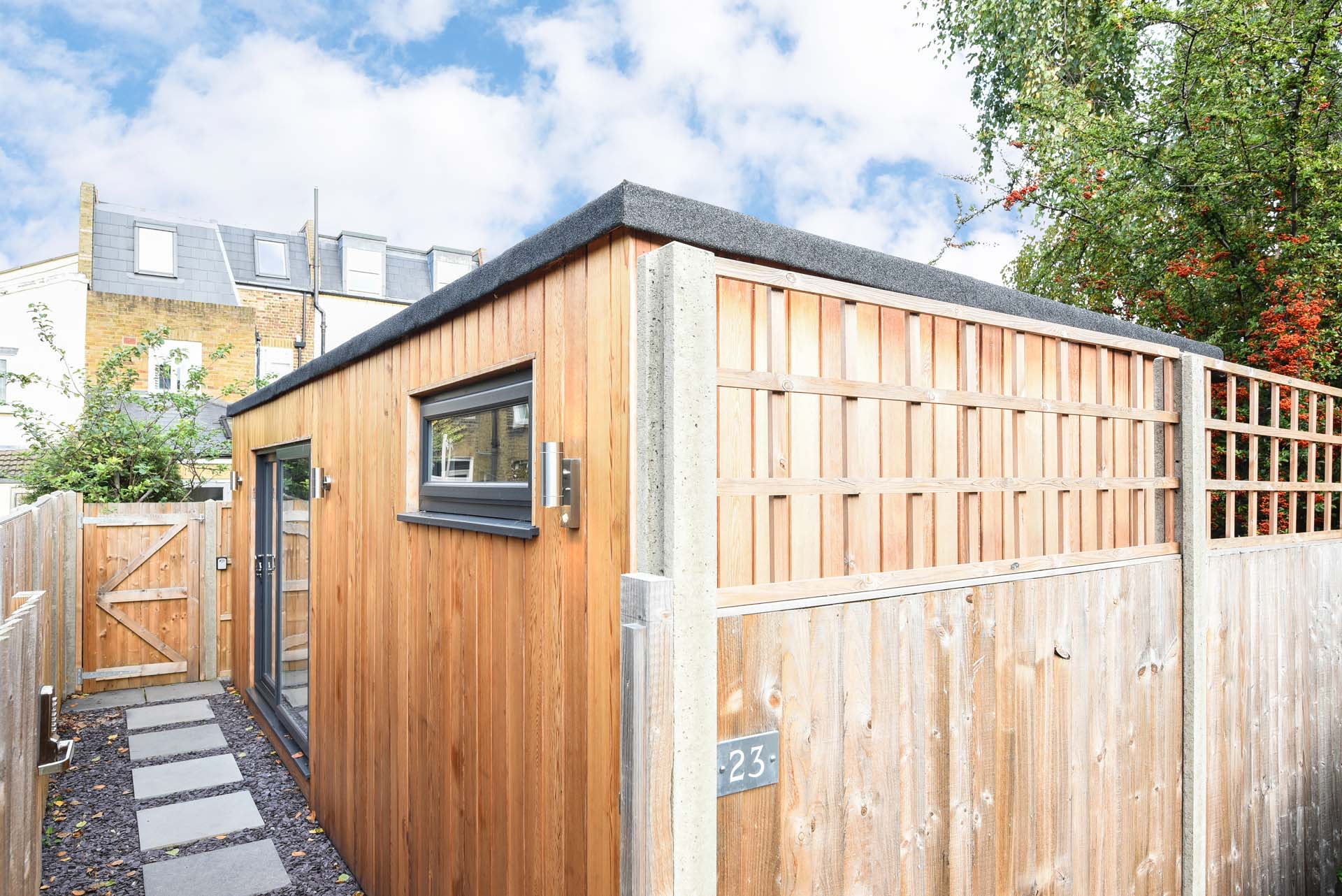
59. A small room with bifold doors
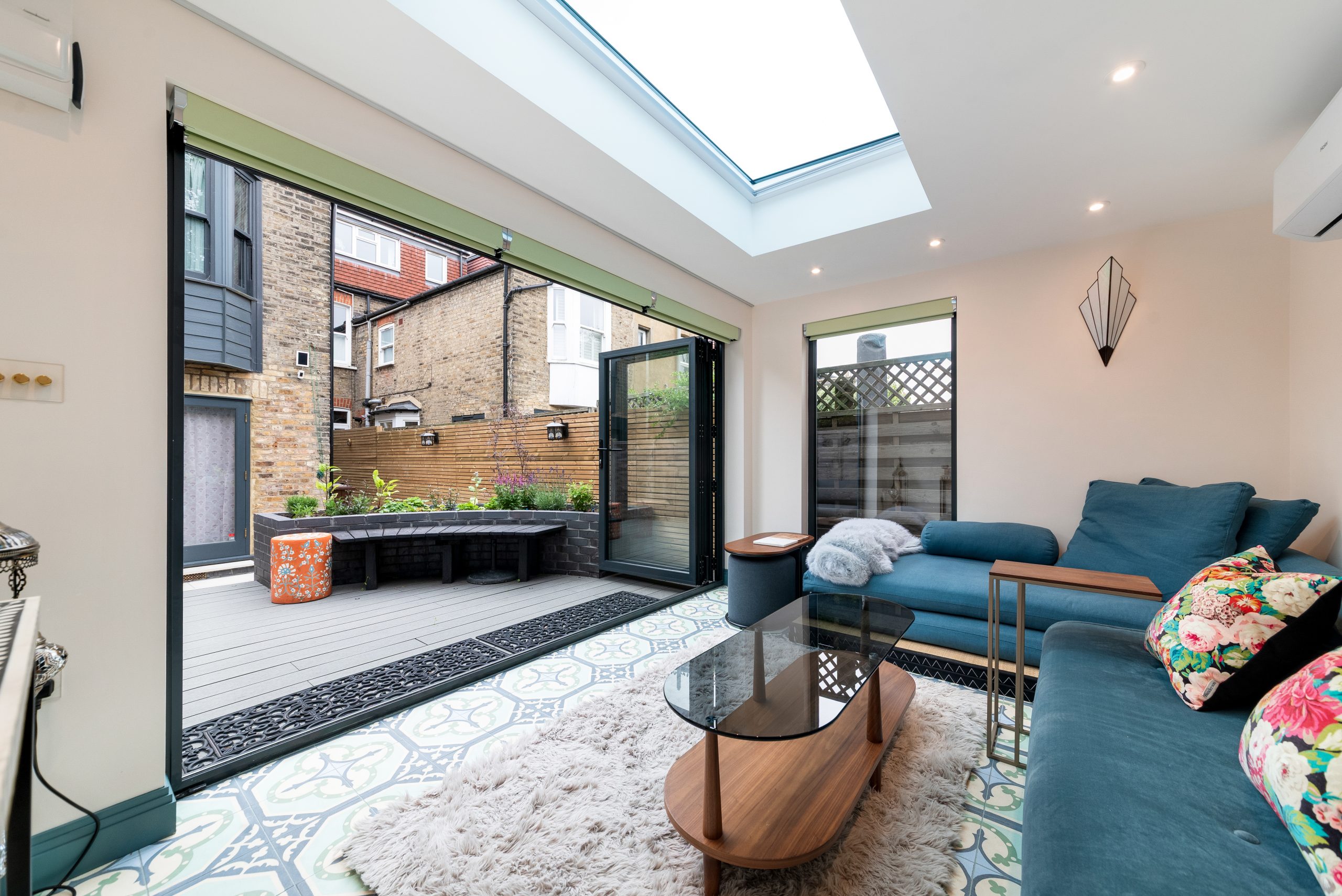
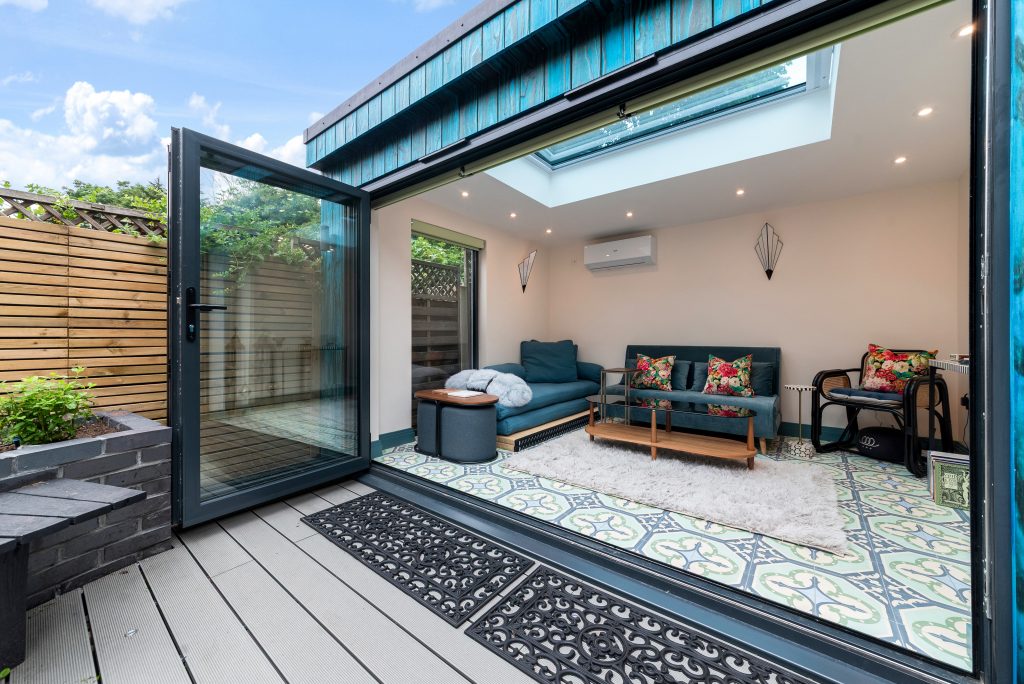
Bifold doors can make a compact garden room feel much larger by opening the whole front of the building to the garden. This is particularly useful for small lounges, studios and summer entertaining spaces.

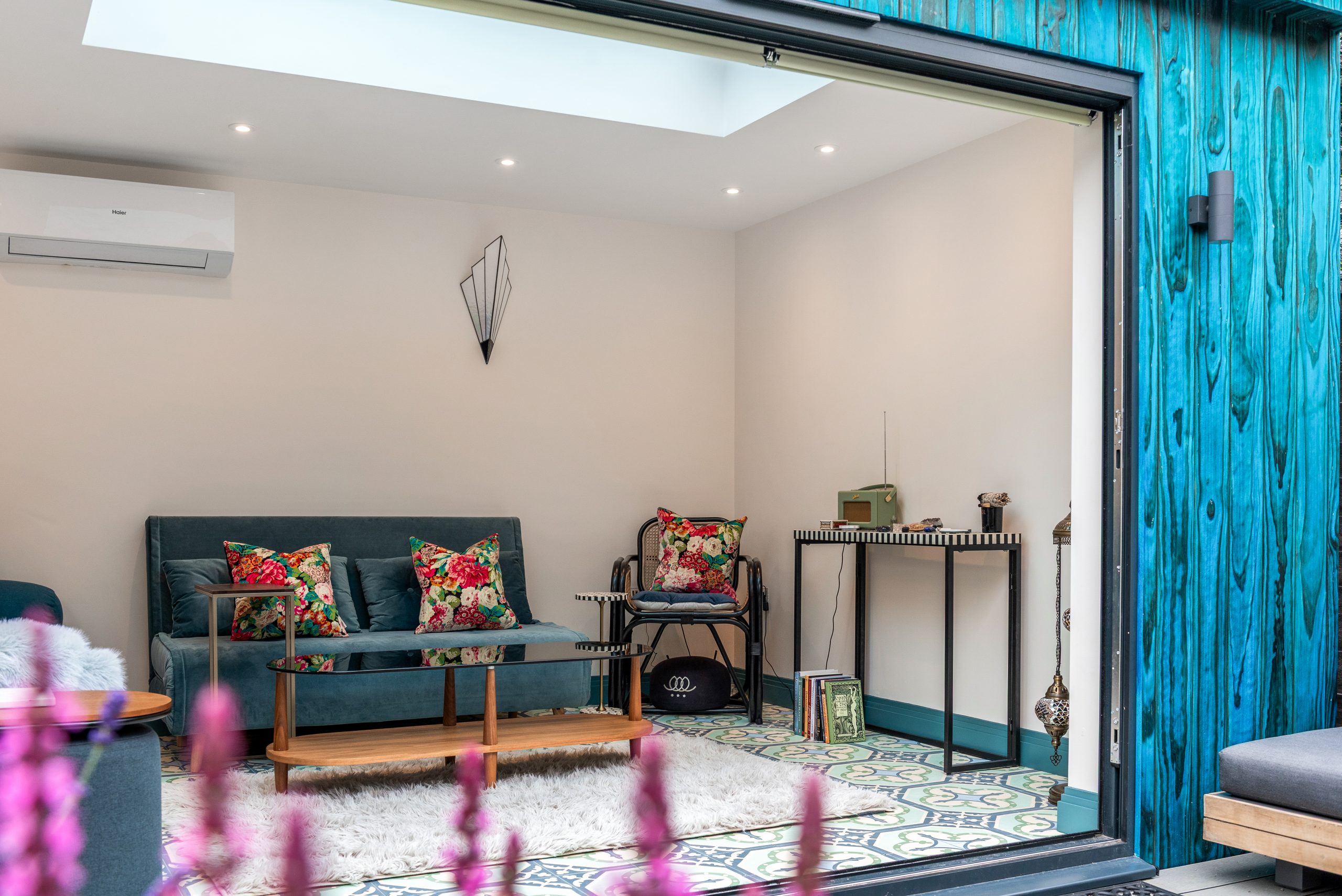
60. A small room with bold finishes
Small spaces can handle bold design beautifully. Coloured cladding, patterned tiles, feature lighting or a rich wall colour can turn a compact garden room into a memorable space. The secret is to keep the layout simple so the design feels confident rather than busy.

61. A small garden room with built-in storage
Storage is the difference between a small room that works and one that becomes cluttered. Built-in cupboards, benches with storage, wall shelves and hidden side storage can keep the main room clean and flexible.
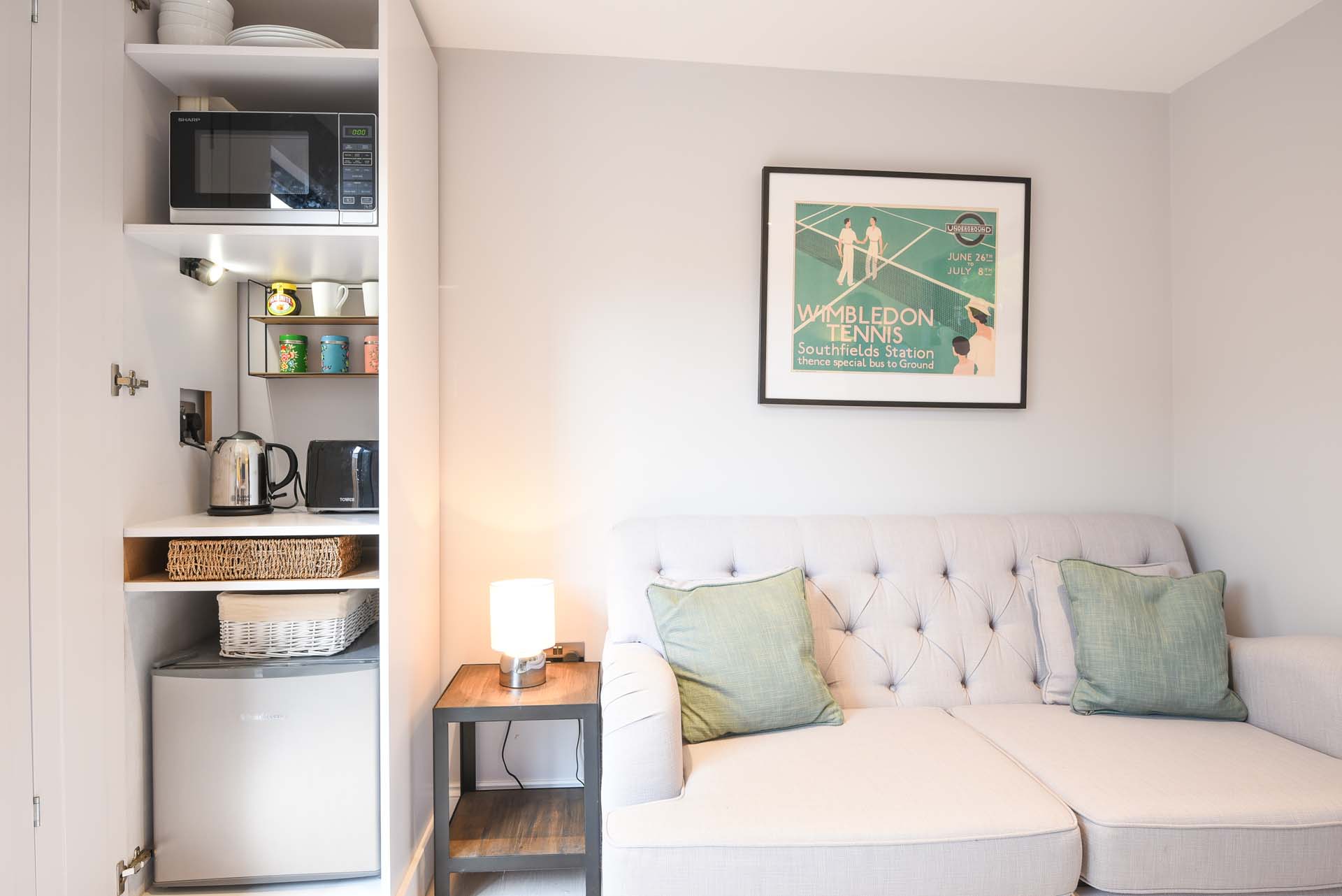
Large luxury and multi-room garden room ideas
Large garden rooms can act almost like a separate wing of the home. They can combine work, fitness, dining, entertaining, guest accommodation and storage in one carefully planned building. The best designs do not simply make one big empty room; they create zones that support different parts of daily life.
62. A large multi-zone garden room
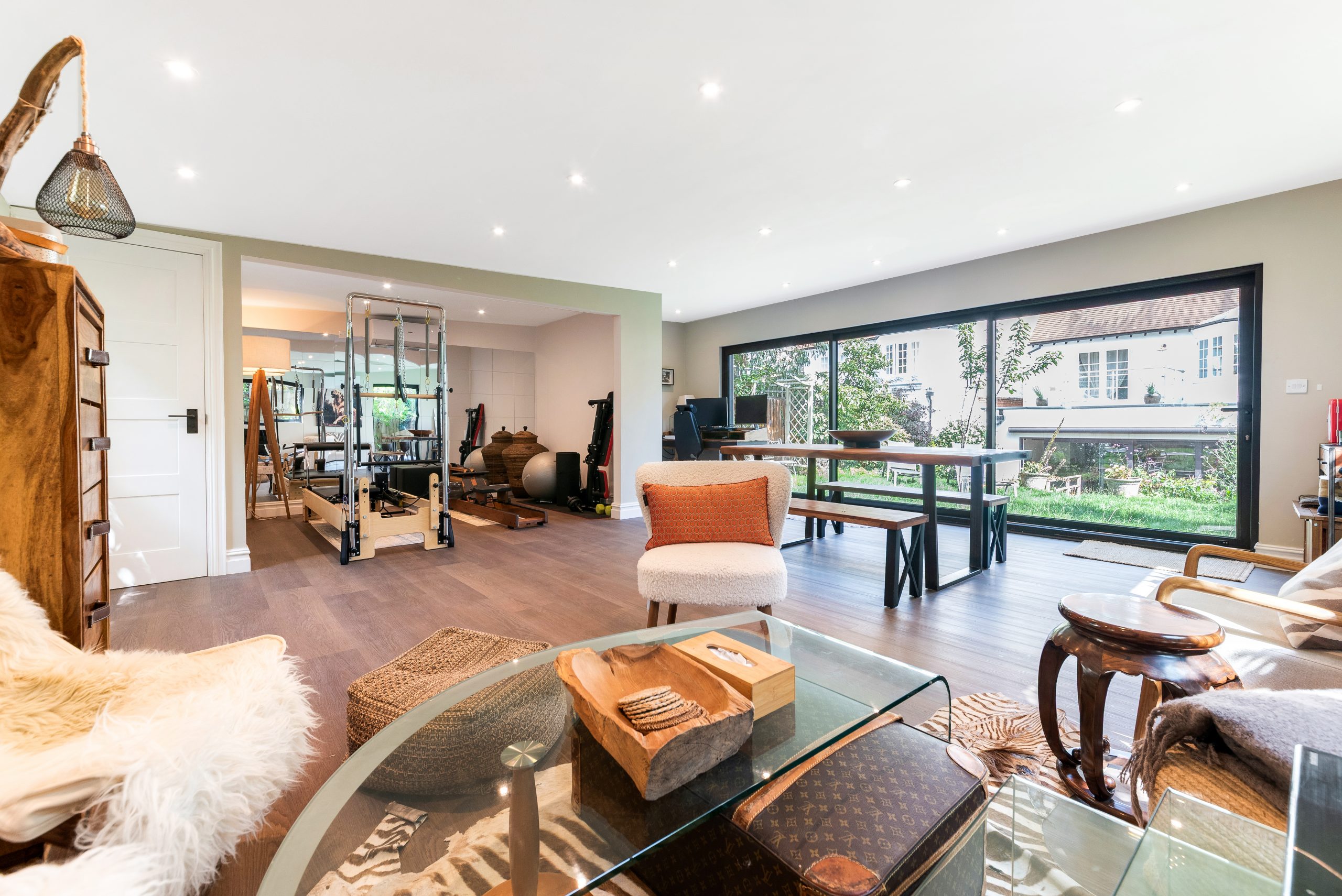
A multi-zone garden room might include a desk, sofa, dining table, gym mat, storage wall and toilet. Each area should have a clear purpose, but the room should still feel connected. Flooring, lighting, furniture placement and glazing can all help separate zones without adding unnecessary walls.
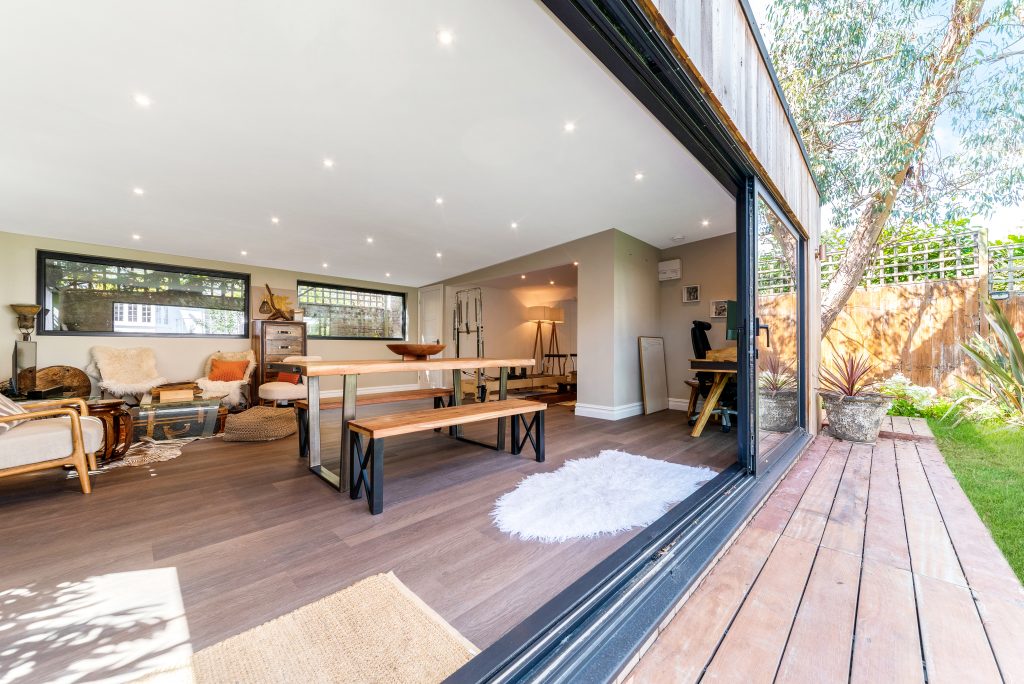
63. An L-shaped garden room
An L-shaped layout is ideal when you want to create privacy, separate functions or make better use of a particular garden shape. It can wrap around a patio, separate a gym from an office, or allow an annexe to include more than one room without feeling narrow.
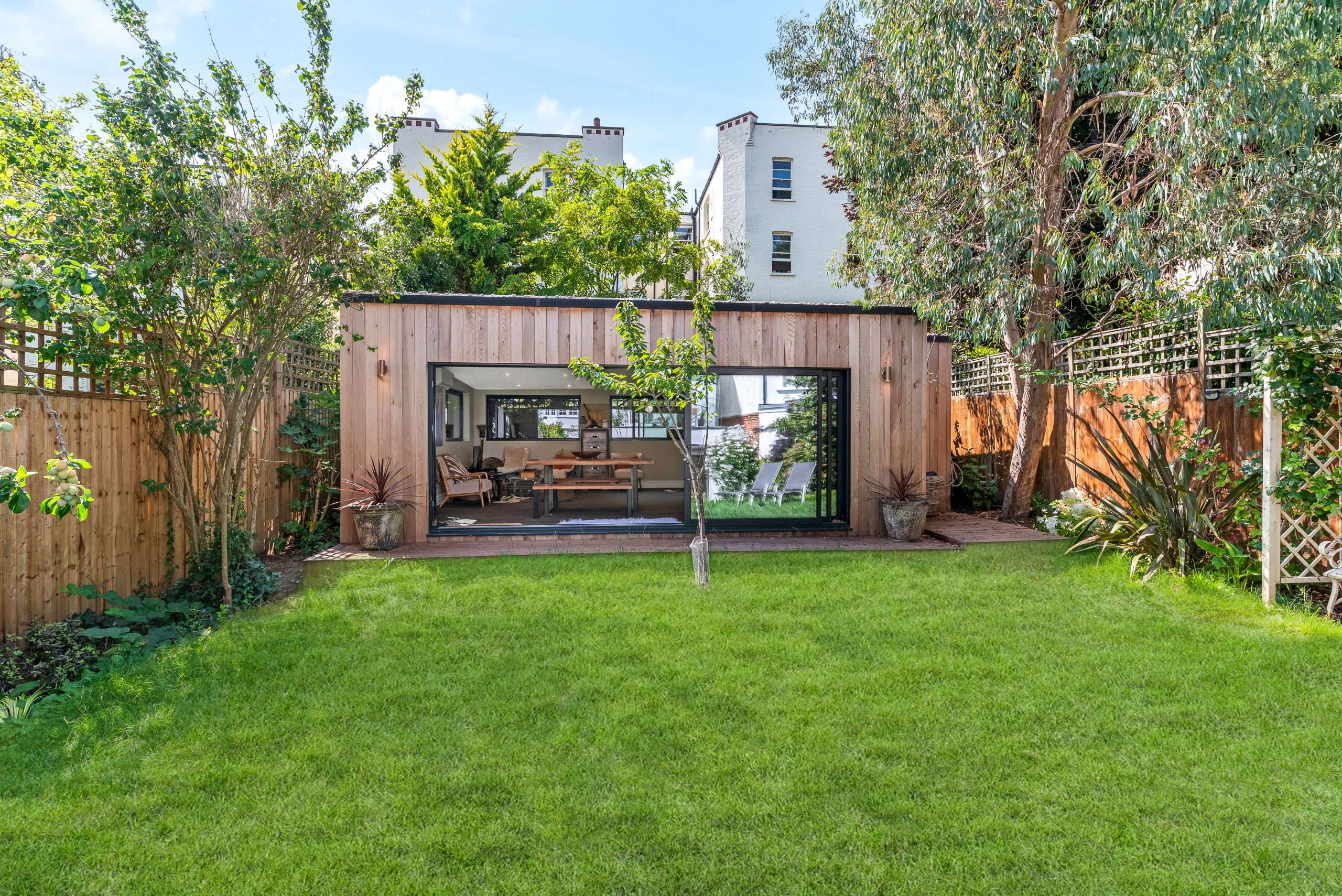
64. A luxury retreat with lounge, dining and wellness space
For a more lifestyle-led garden room, combine a soft seating area, dining space, Pilates or yoga zone and generous glazing. This type of room works well when the garden room is not solving one problem, but creating an entirely new way to use the garden and home.
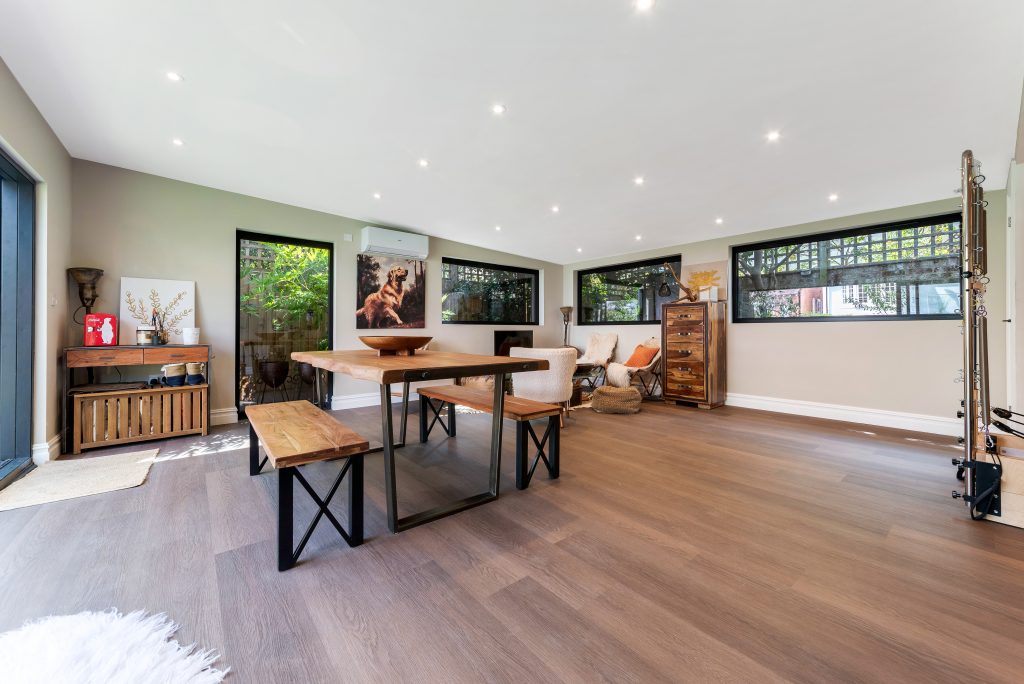
65. A garden room with separate rooms
Internal walls can be useful when privacy matters. Separate rooms can create a bedroom and bathroom, office and storage room, gym and shower, or studio and control room. The design challenge is balancing privacy with natural light and flow.
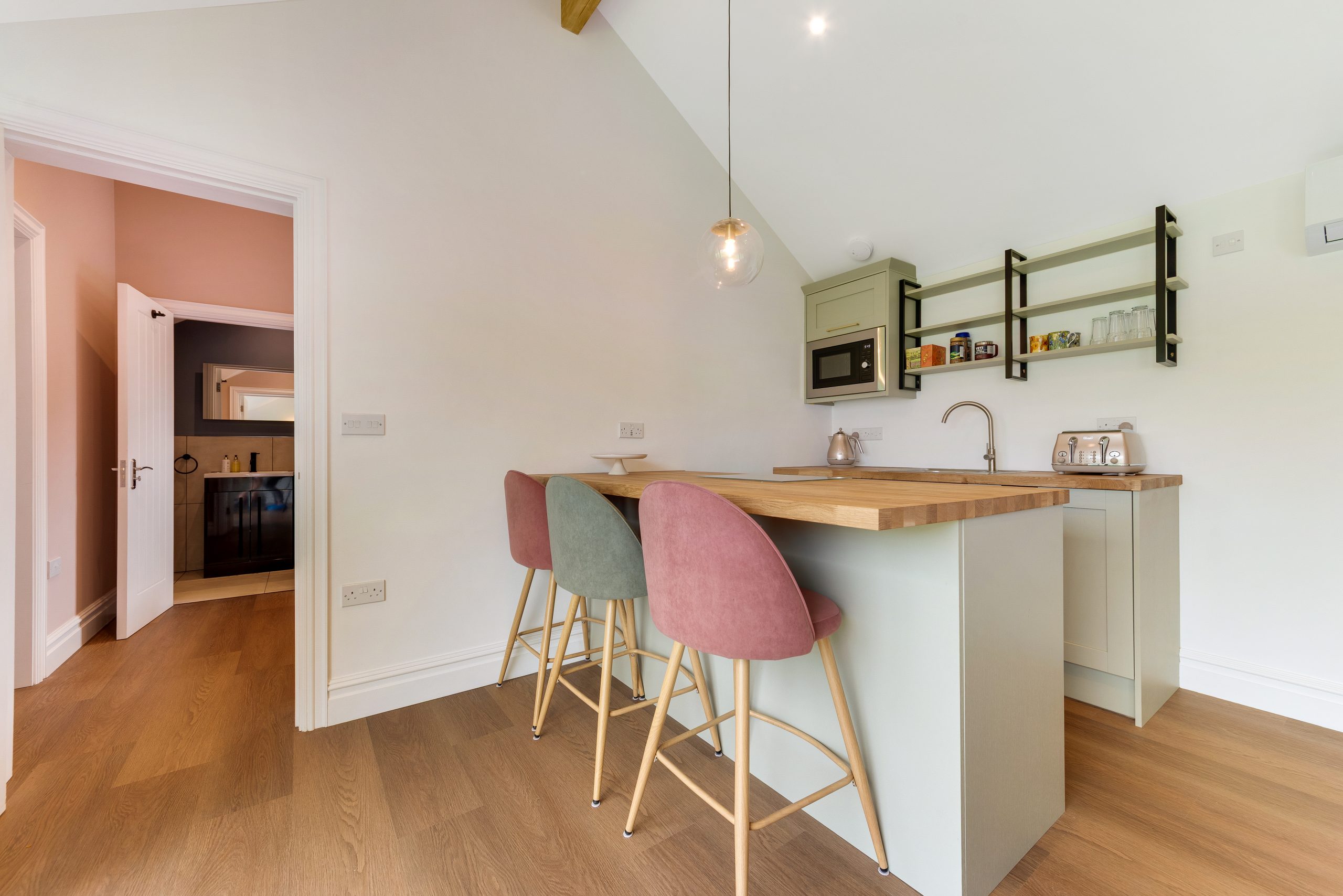
66. A future-proof garden room
The best garden room ideas often change over time. A room might begin as an office, become a playroom, later serve as a teen den and eventually become a guest space. If future flexibility matters, consider plumbing routes, data, storage, insulation, access and whether the layout could adapt later.
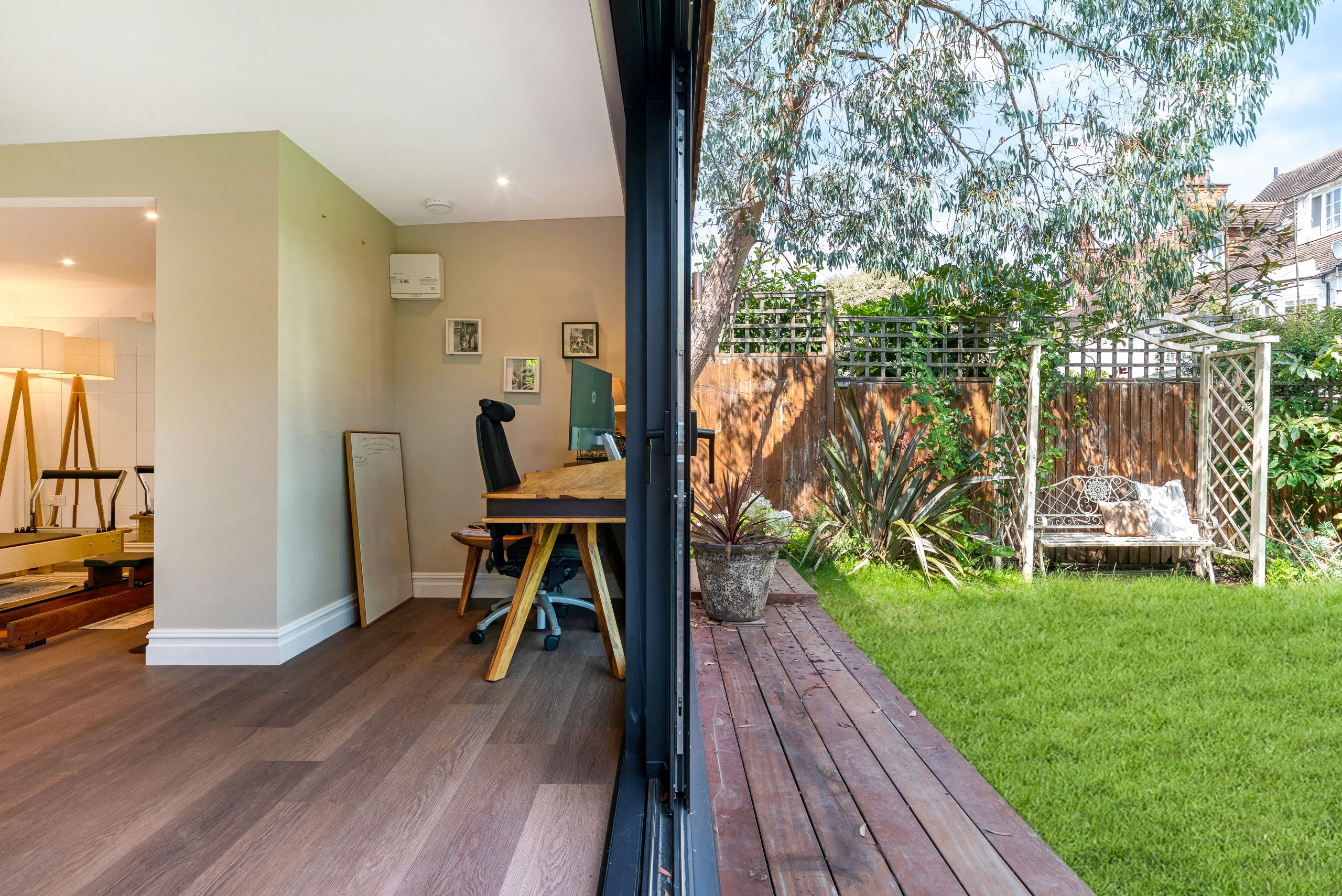
67. A luxury garden room with premium finishes
Premium finishes can include natural timber cladding, aluminium doors, concealed lighting, high-quality flooring, bespoke joinery, acoustic details, stone or tile finishes, and carefully chosen sanitaryware. Luxury is not only about appearance; it is about the room feeling comfortable, practical and built to last.
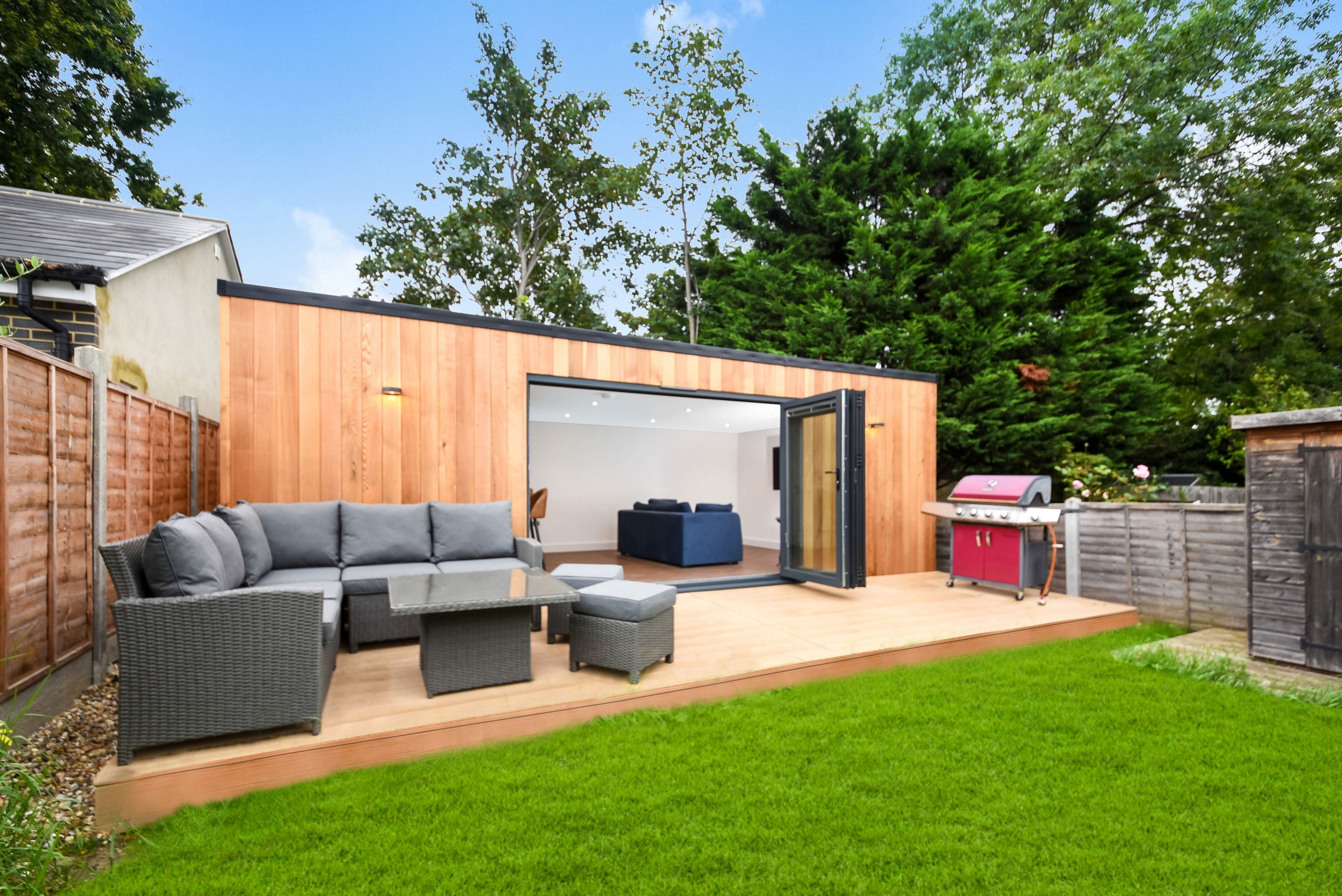
Exterior garden room design ideas
The outside of your garden room should suit your home, garden and intended use. A gym may suit a clean-lined modern exterior, while a music room or annexe may call for something softer or more traditional. Hawksbeck offers a range of design styles, from Classic, Modern and Heritage garden rooms through to more substantial Signature and Ultimate designs.
68. Cedar cladding
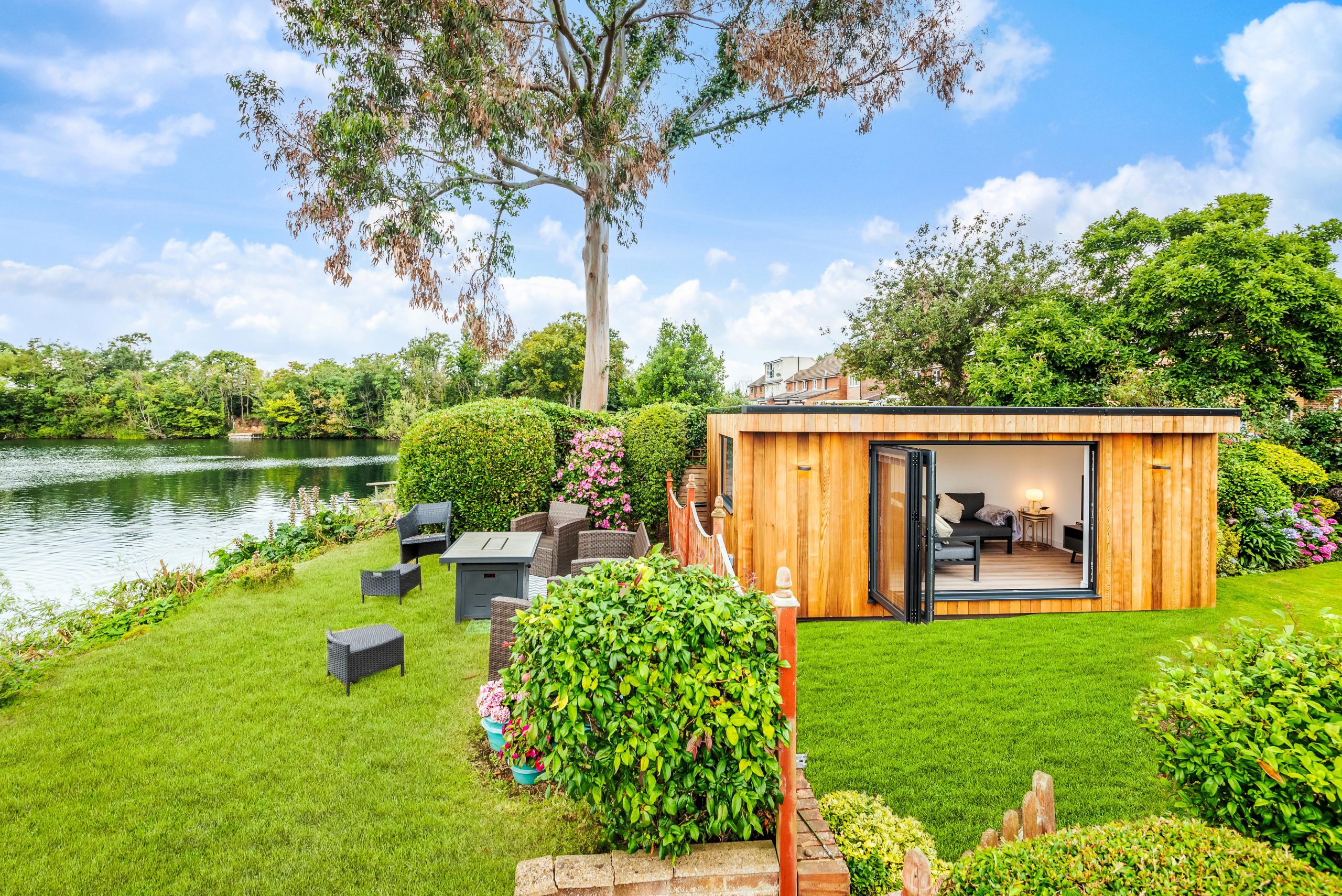
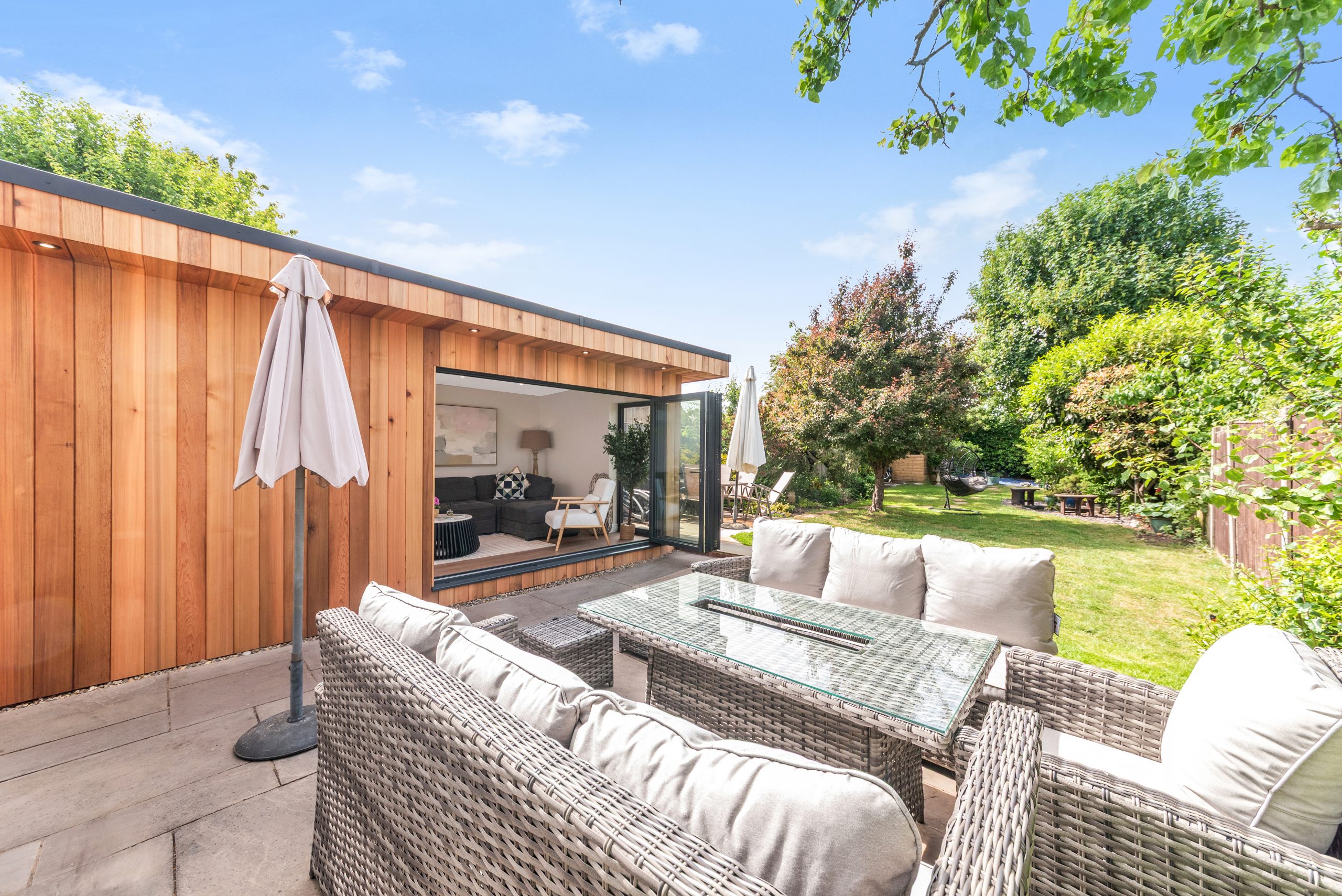
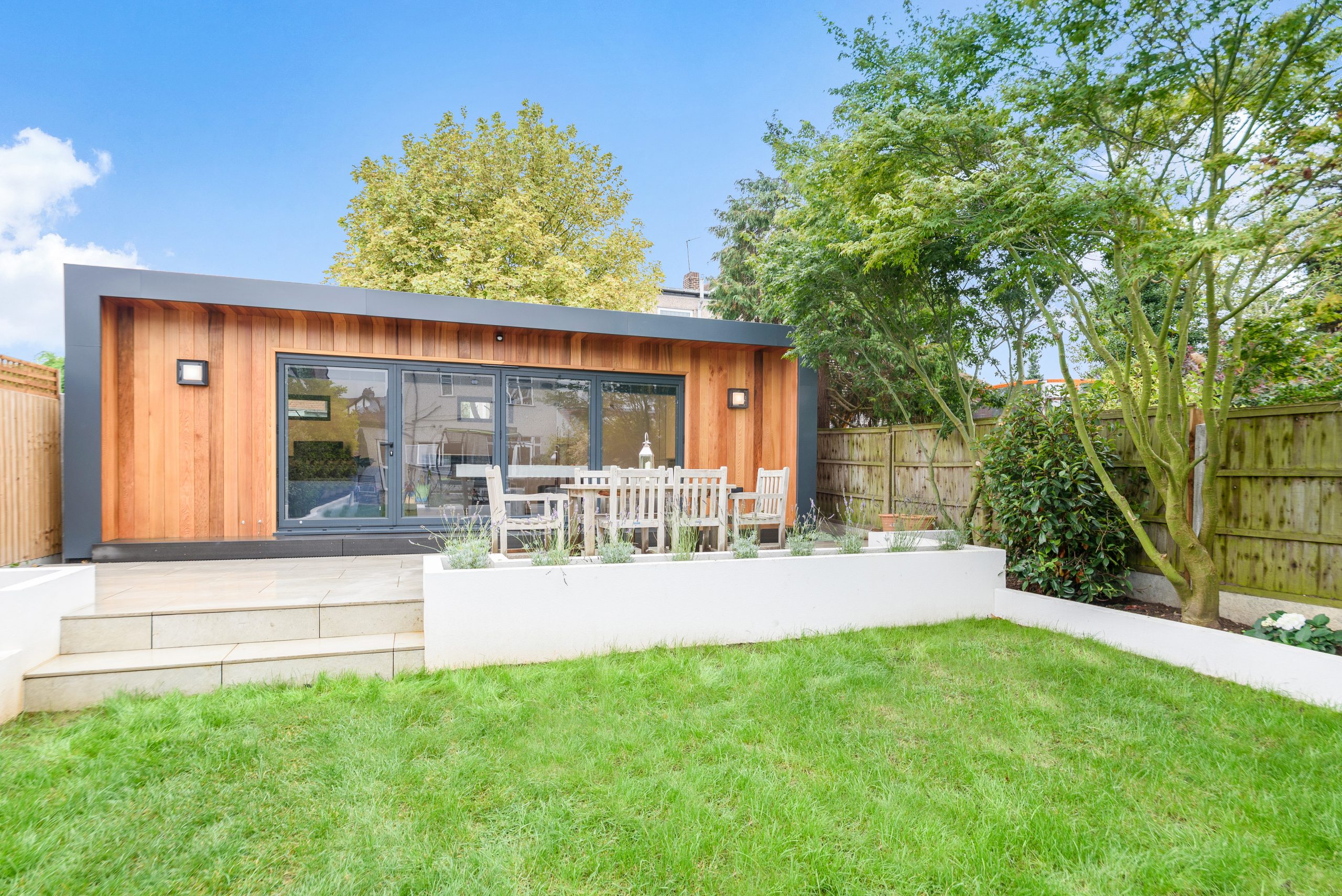
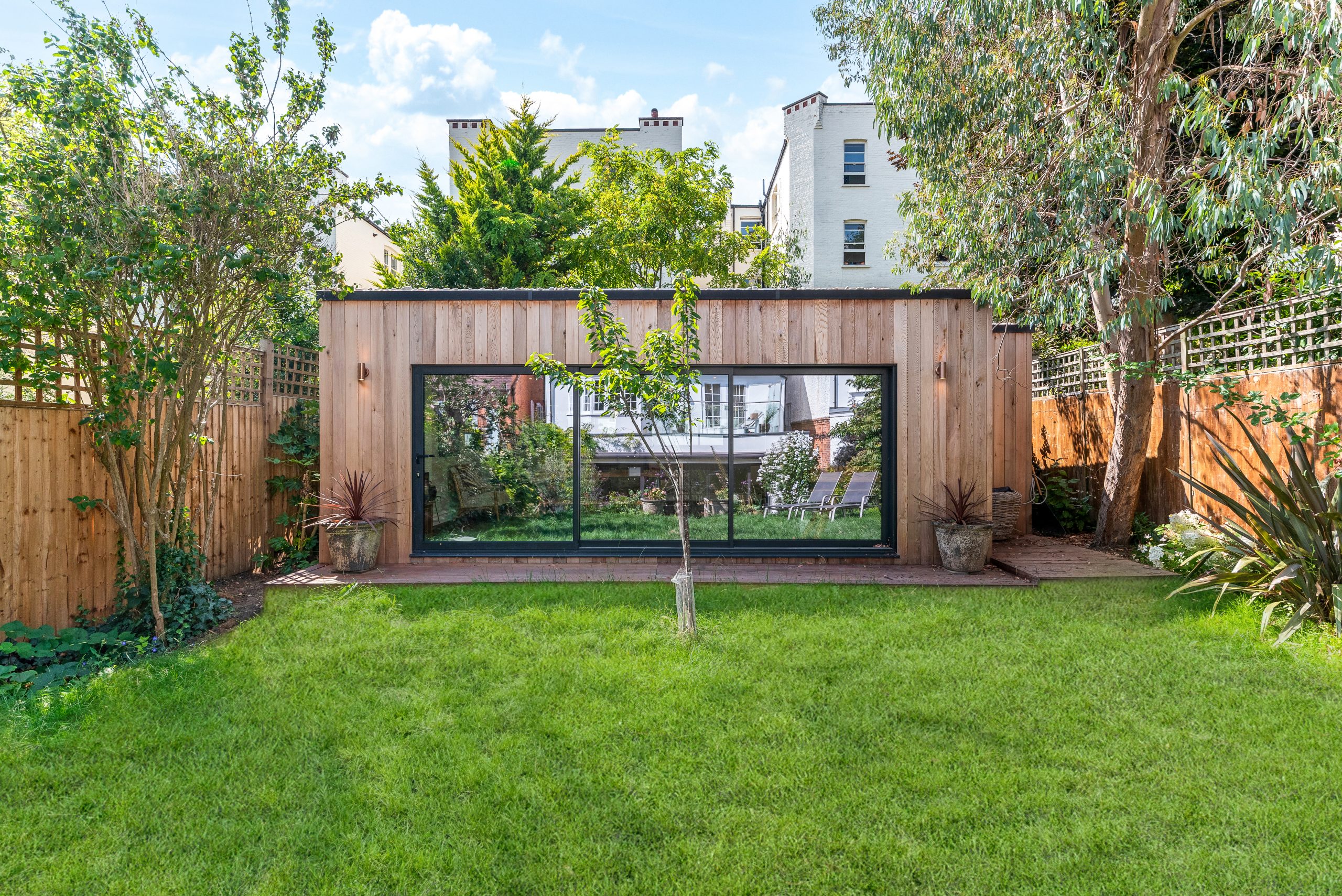
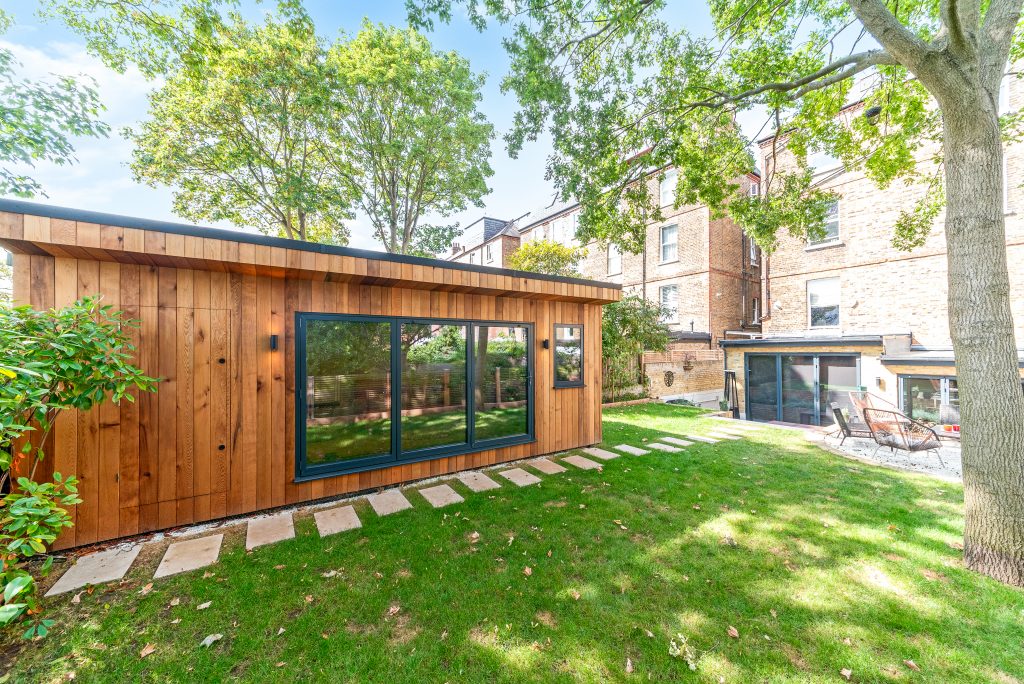
Cedar cladding gives a garden room a warm, natural appearance that suits many garden settings. It is particularly effective when paired with anthracite glazing, large doors and simple landscaping.
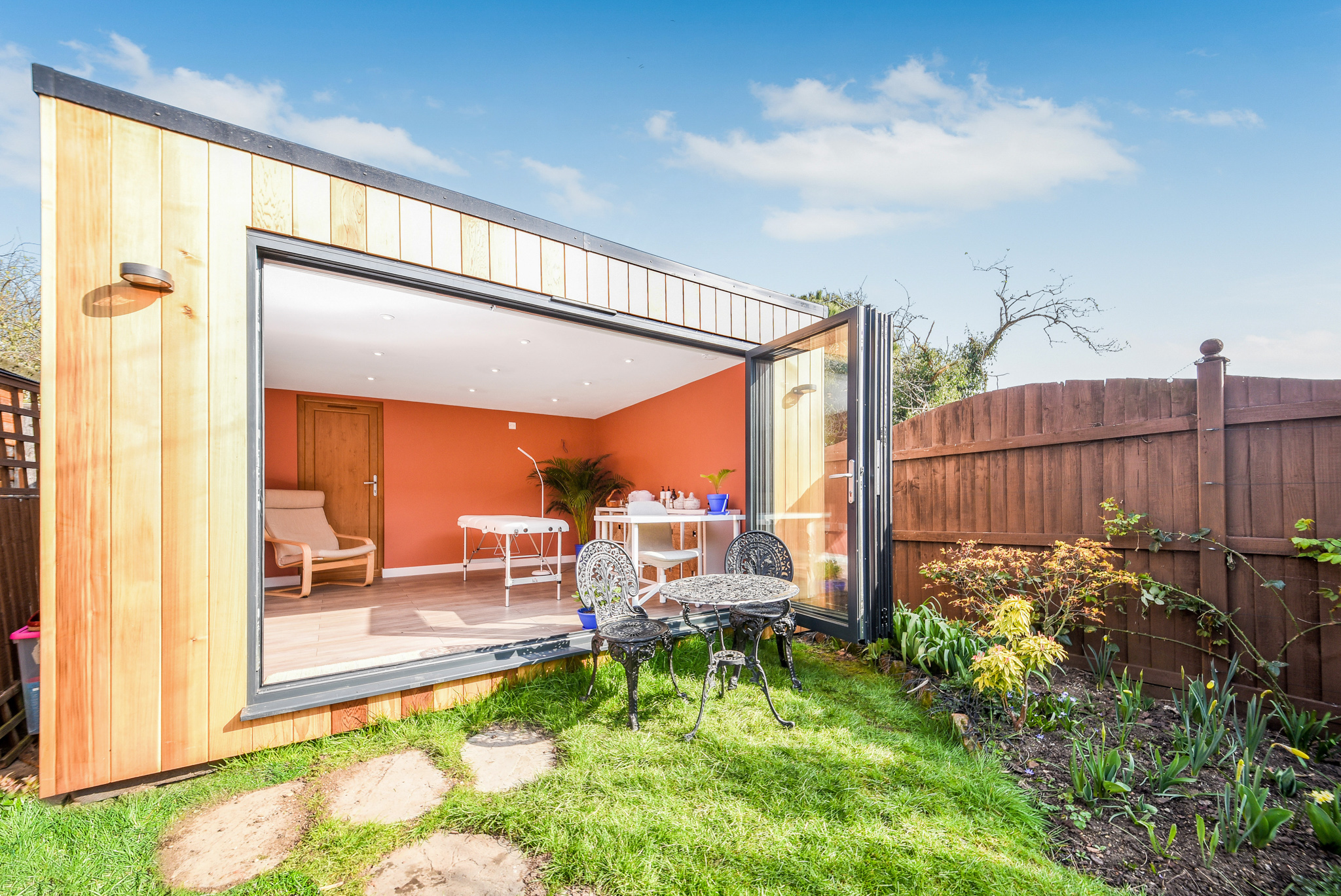
69. Accoya or statement timber cladding
For a bolder look, coloured or charred timber can create a more individual garden room. This works especially well for small rooms where a distinctive exterior turns the building into a feature rather than trying to hide it.

70. Composite low-maintenance cladding
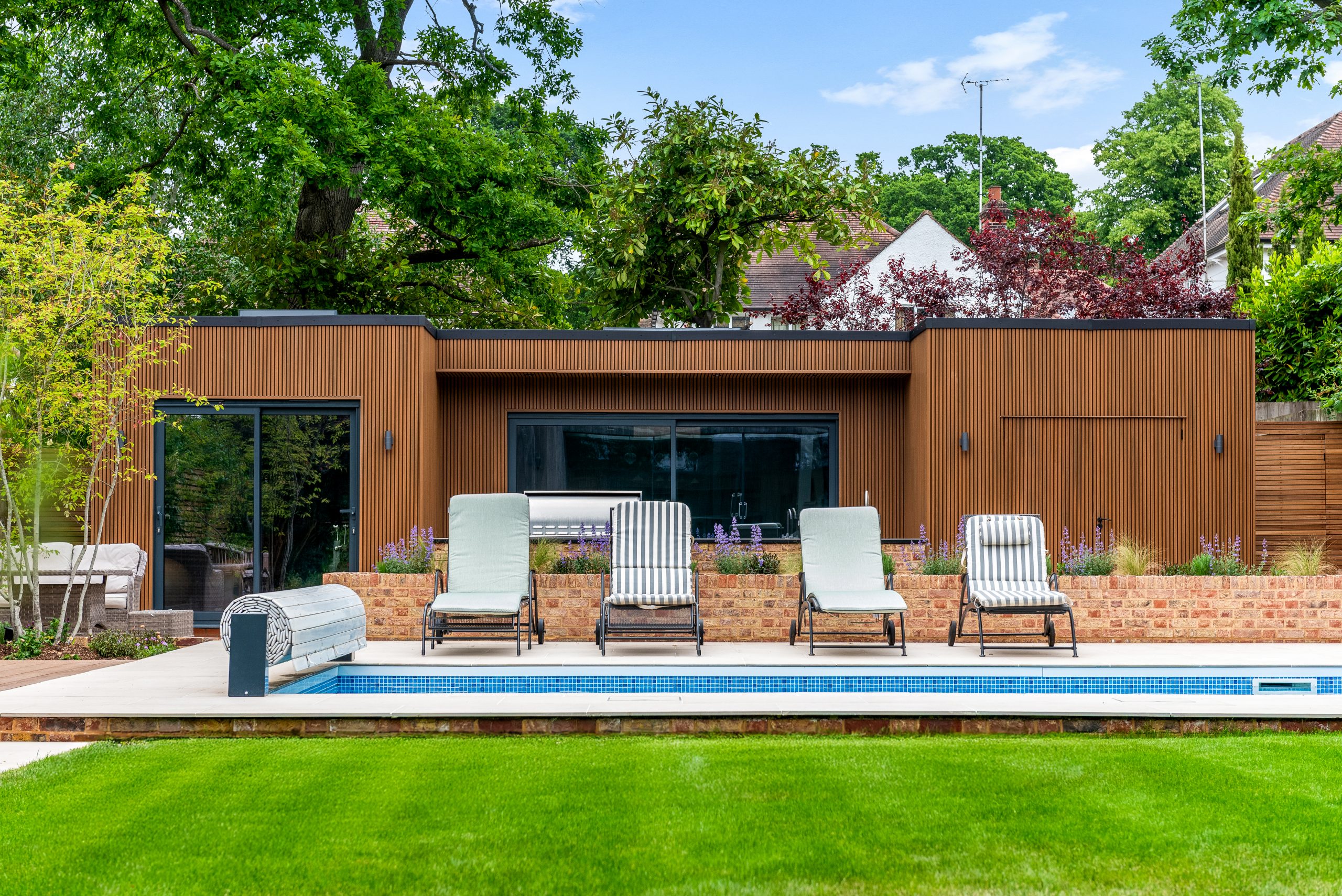
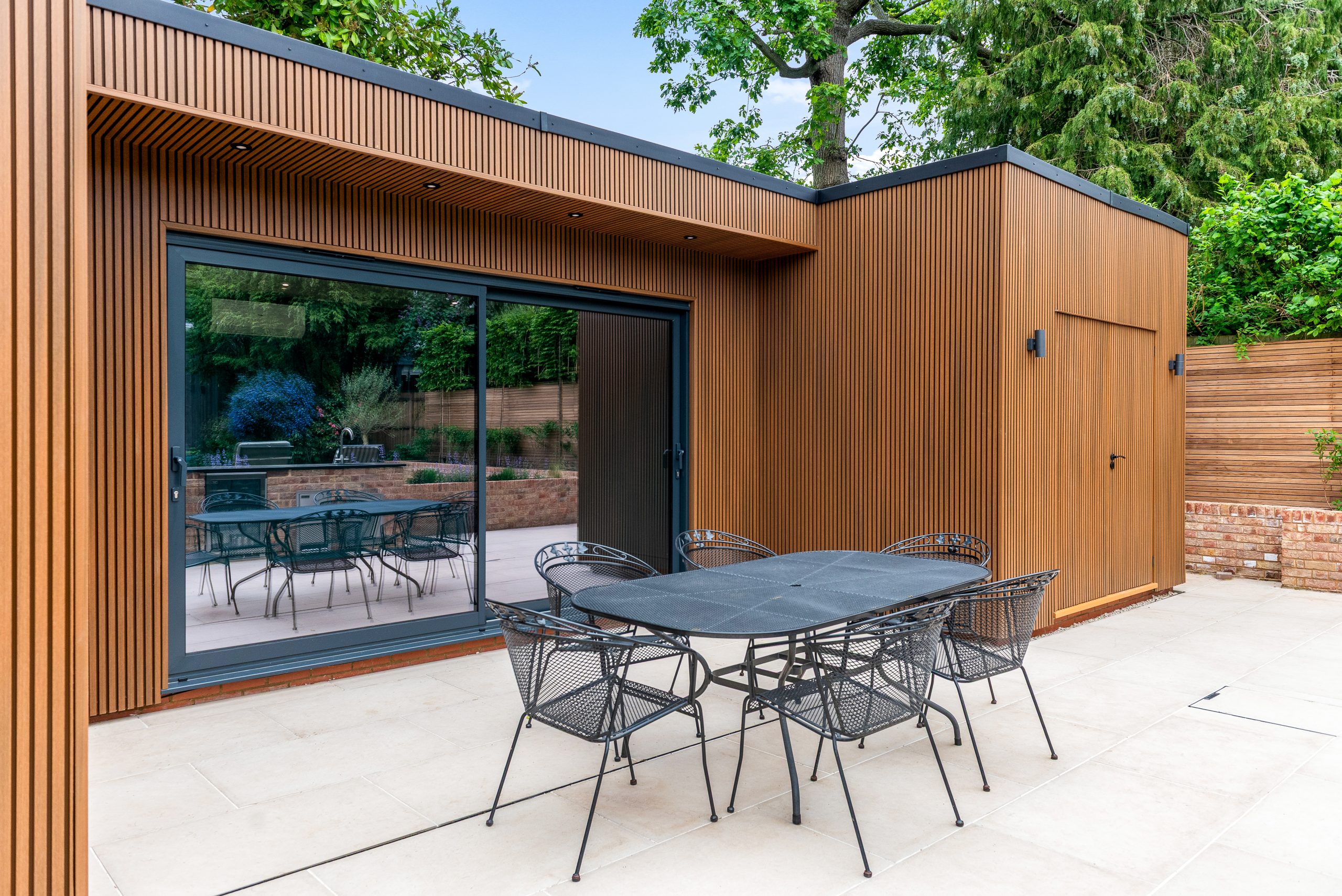
Composite cladding can be a good choice for homeowners who want a cleaner, contemporary look with lower maintenance. It can work well on modern garden rooms, gyms and offices where crisp lines are part of the design.
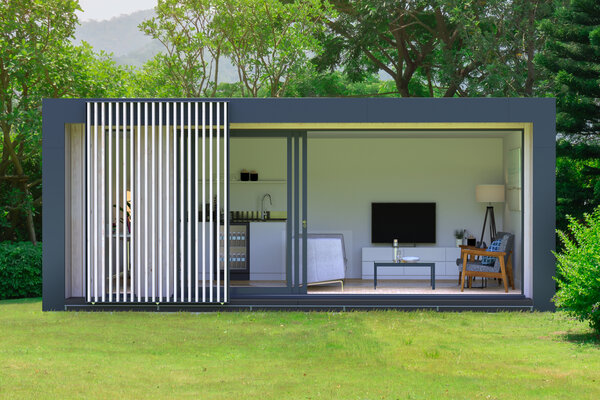
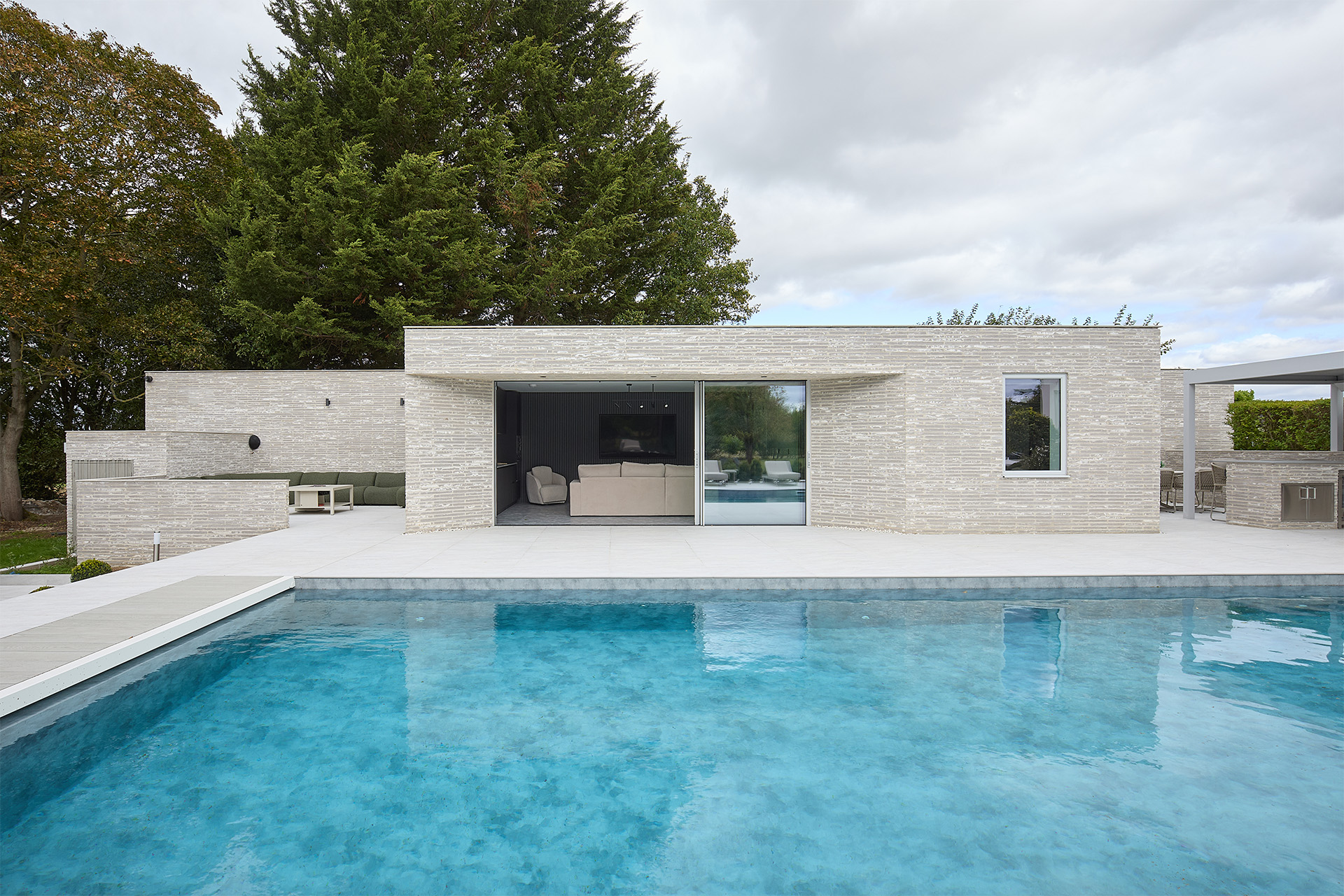
71. Brick or Heritage-style finishes
If your home is more traditional, a Heritage-style finish or brick detail can help the garden room feel connected to the main house. This is particularly useful for annexe-style rooms and properties where a timber-only exterior might feel too contemporary.
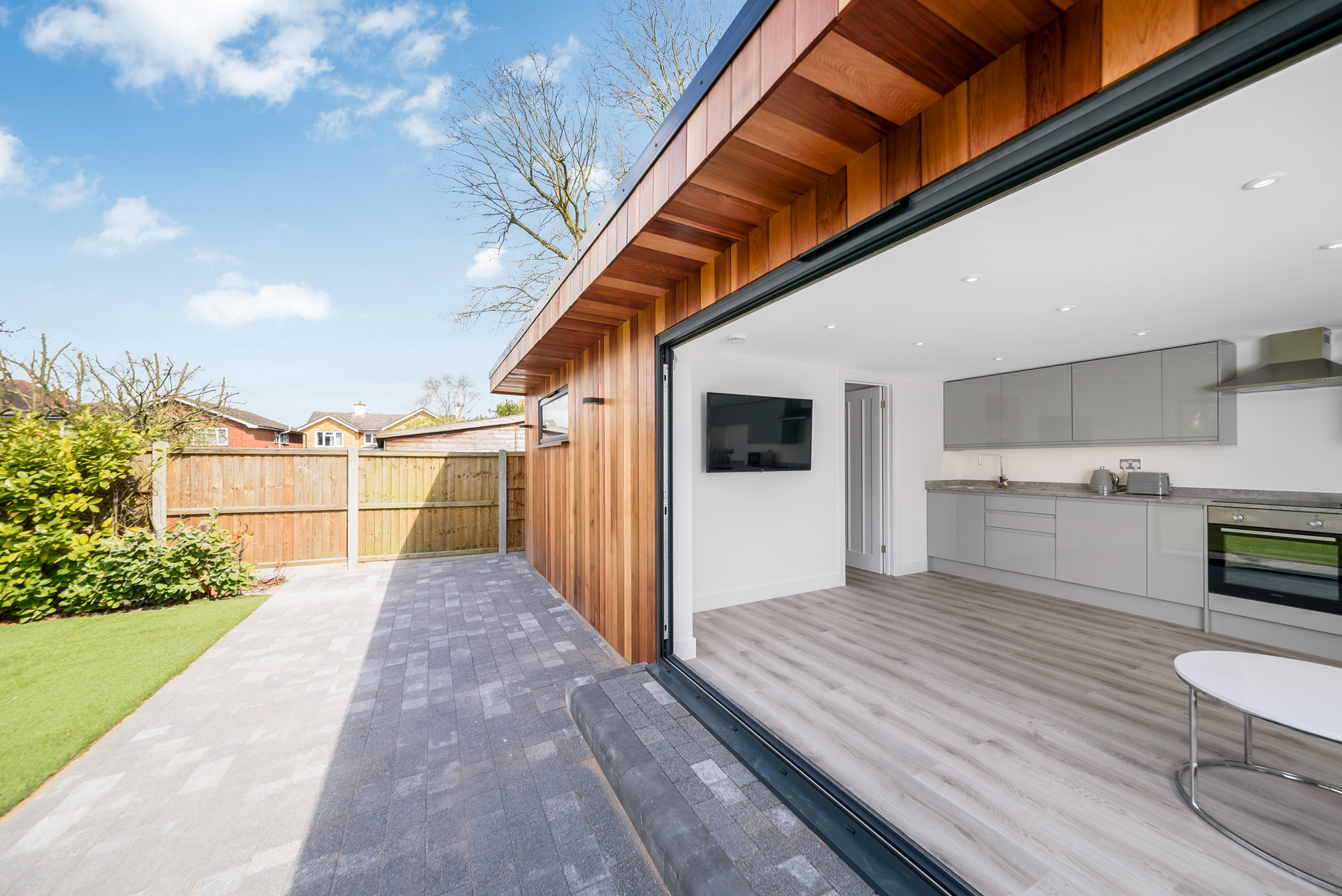
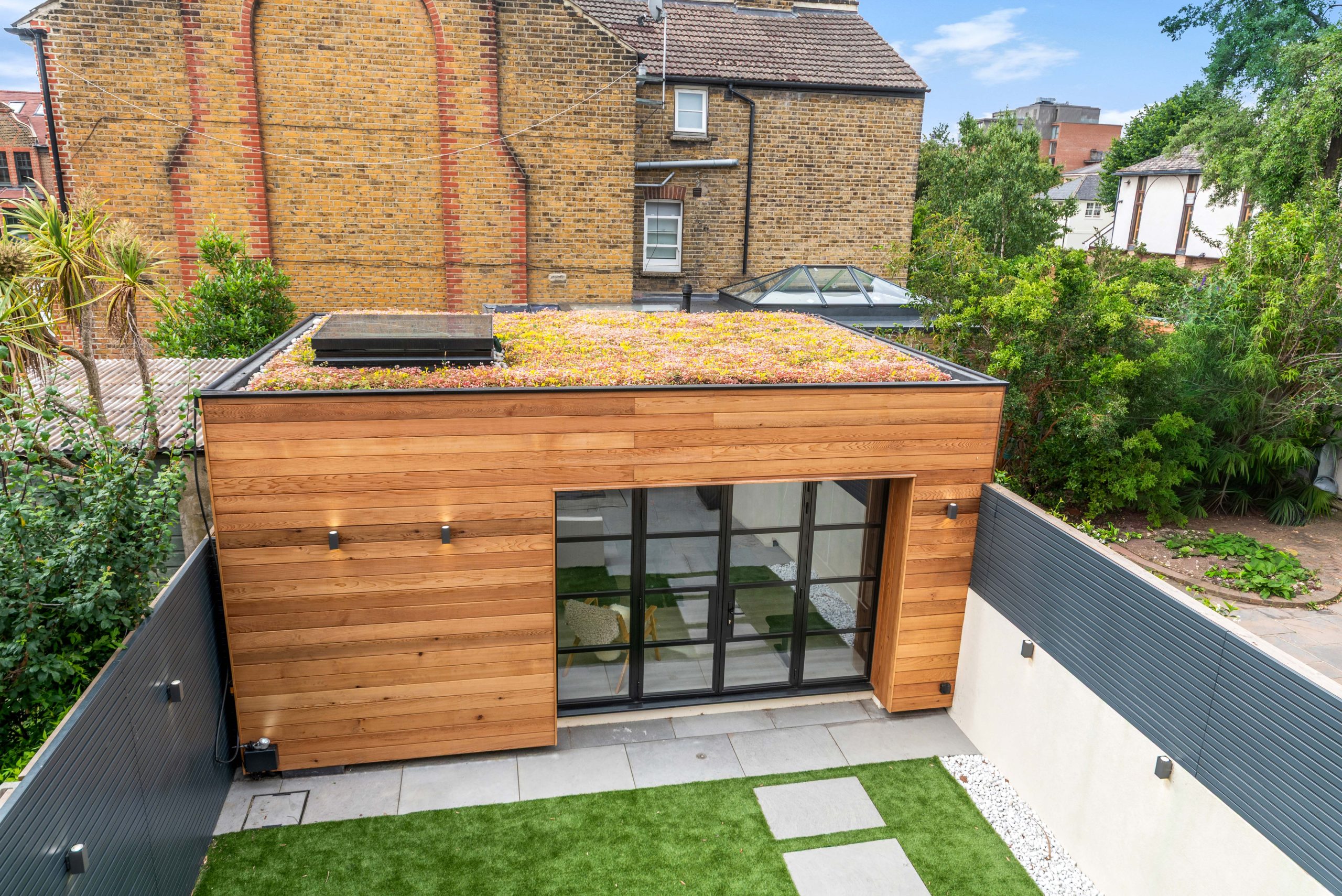
72. A green or sedum roof
A green roof can help soften the appearance of a flat-roof garden room, particularly when viewed from upstairs windows. It can also make the building feel more connected to planting and landscaping.
73. A roof overhang or sheltered veranda
A roof overhang gives the garden room more architectural depth and creates a sheltered threshold between inside and outside. It can protect the entrance, shade glazing and make the room feel more considered.
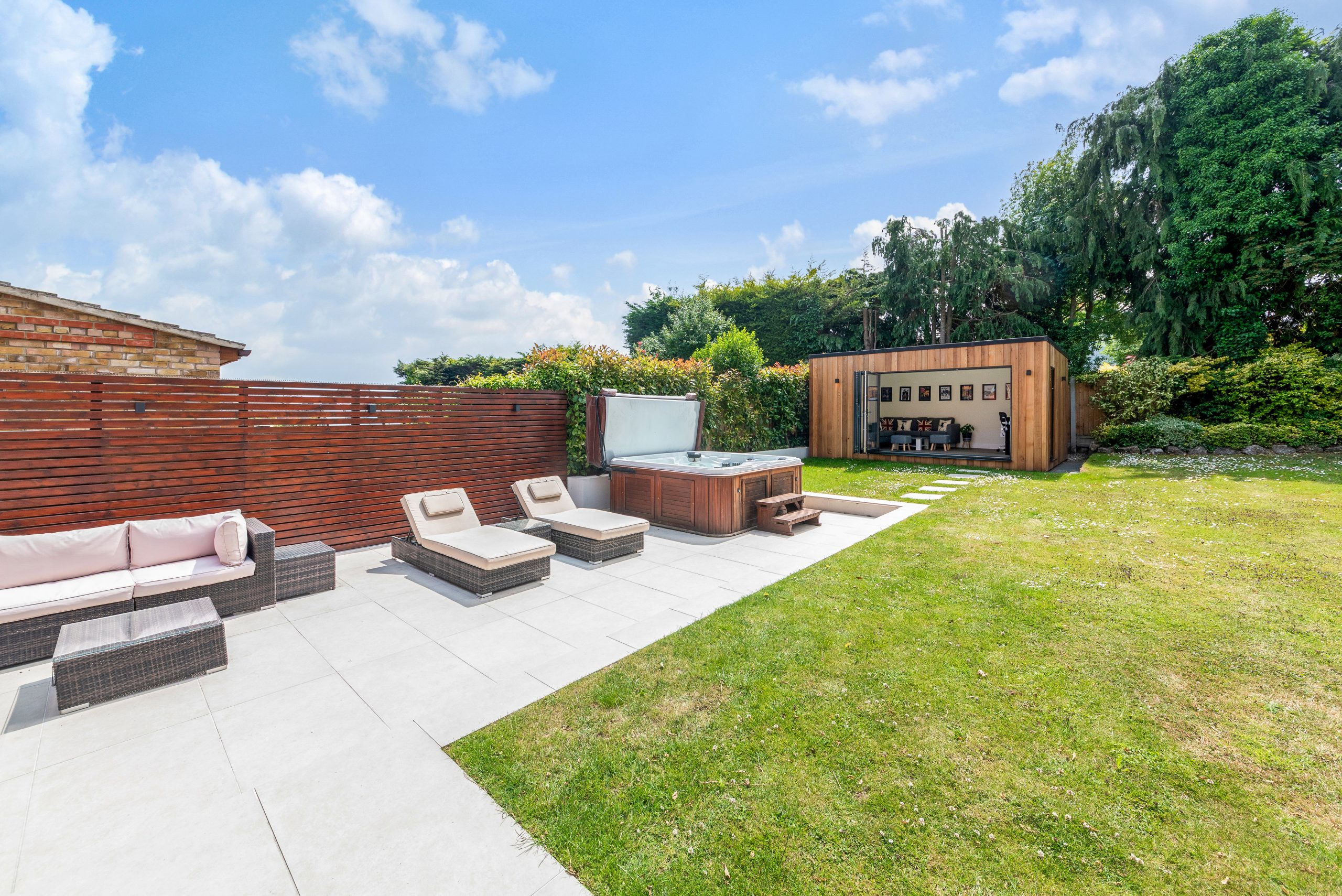
74. Decking or patio connection
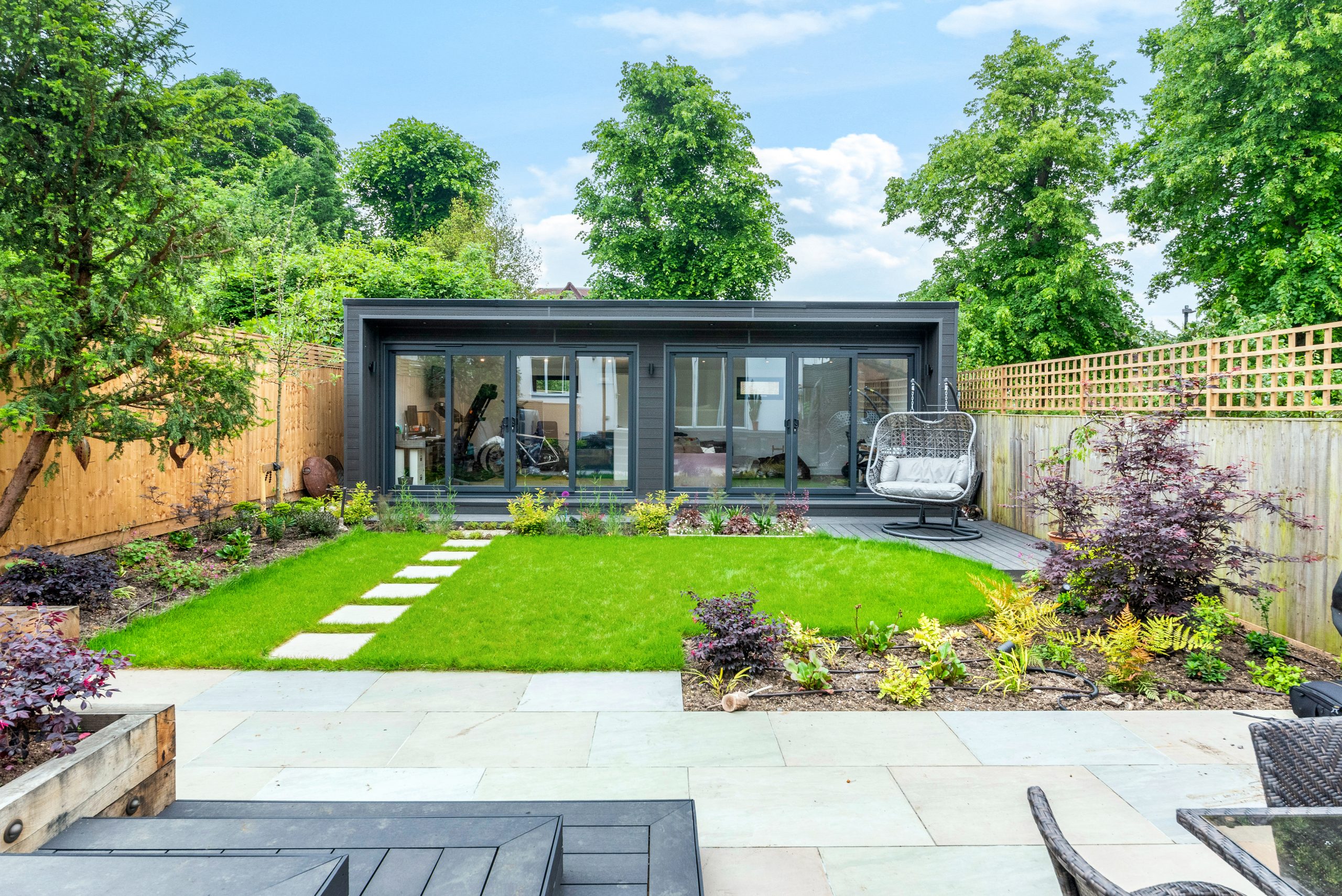
A garden room works best when the outside space is planned too. Decking, paving, planting, steps, lighting and seating can make the room feel like part of the garden rather than a separate structure.
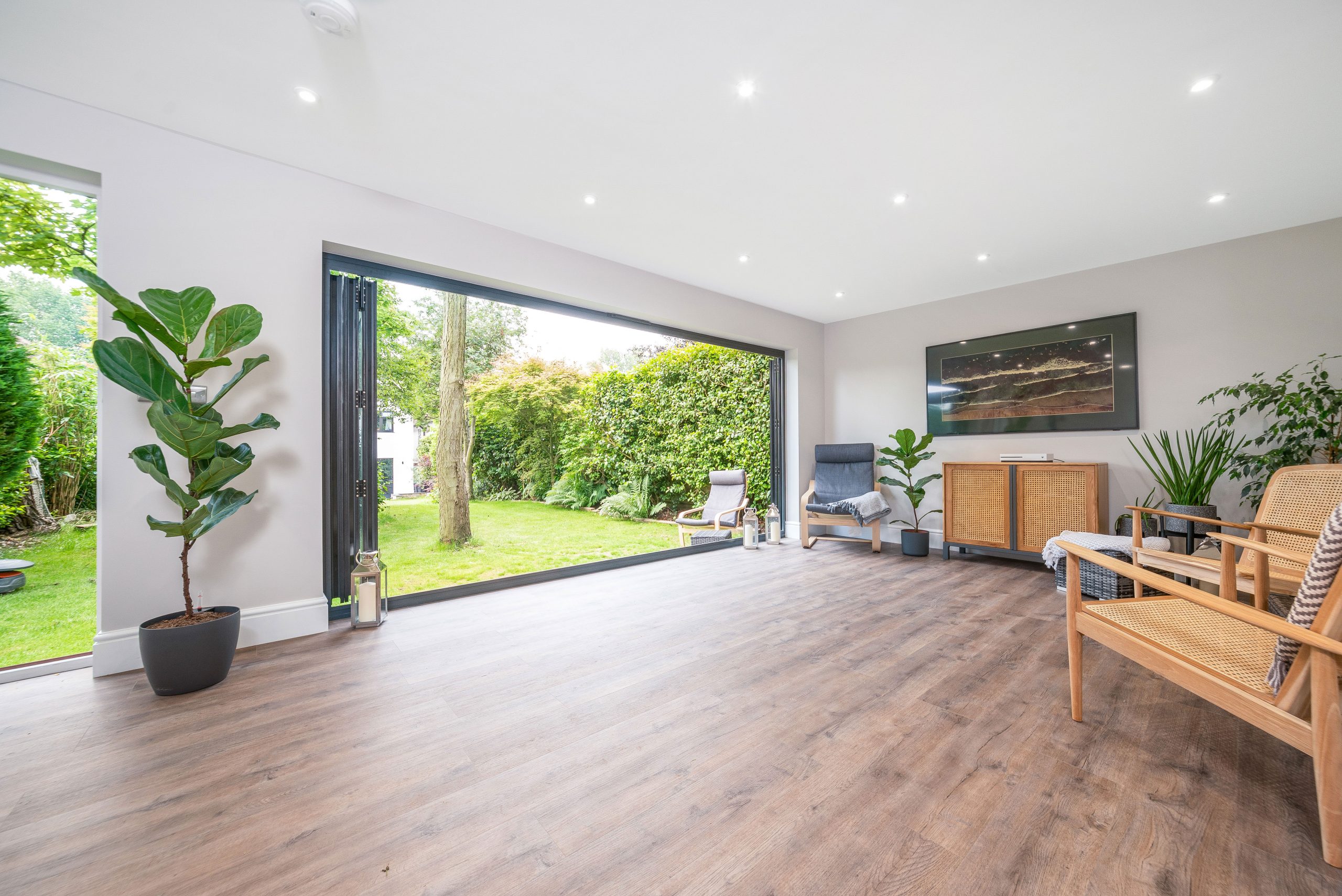
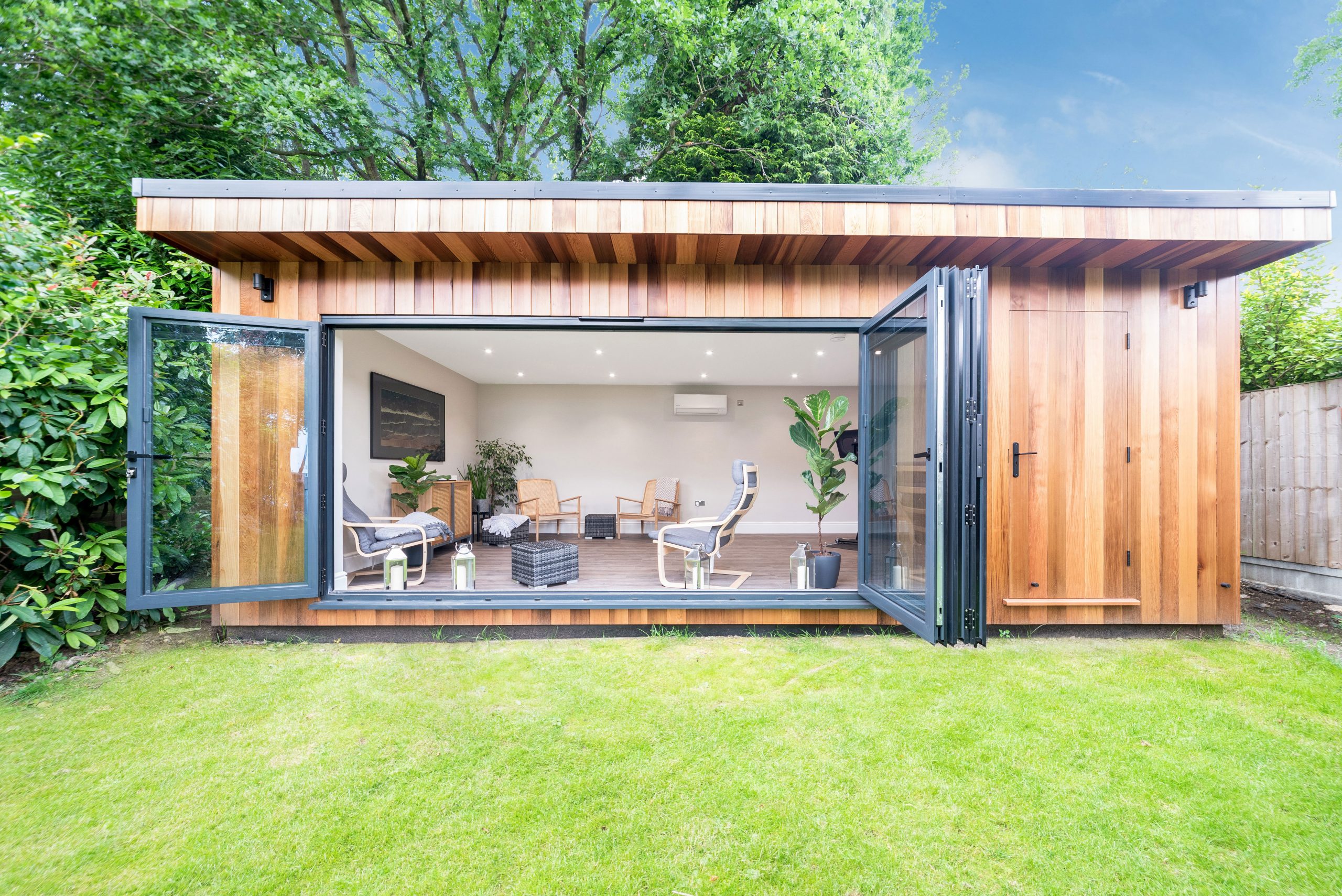
75. Bifold doors
Bifold doors are ideal when you want to open the room fully to the garden. They suit bars, lounges, gyms and small garden rooms where indoor-outdoor flow is part of the experience.
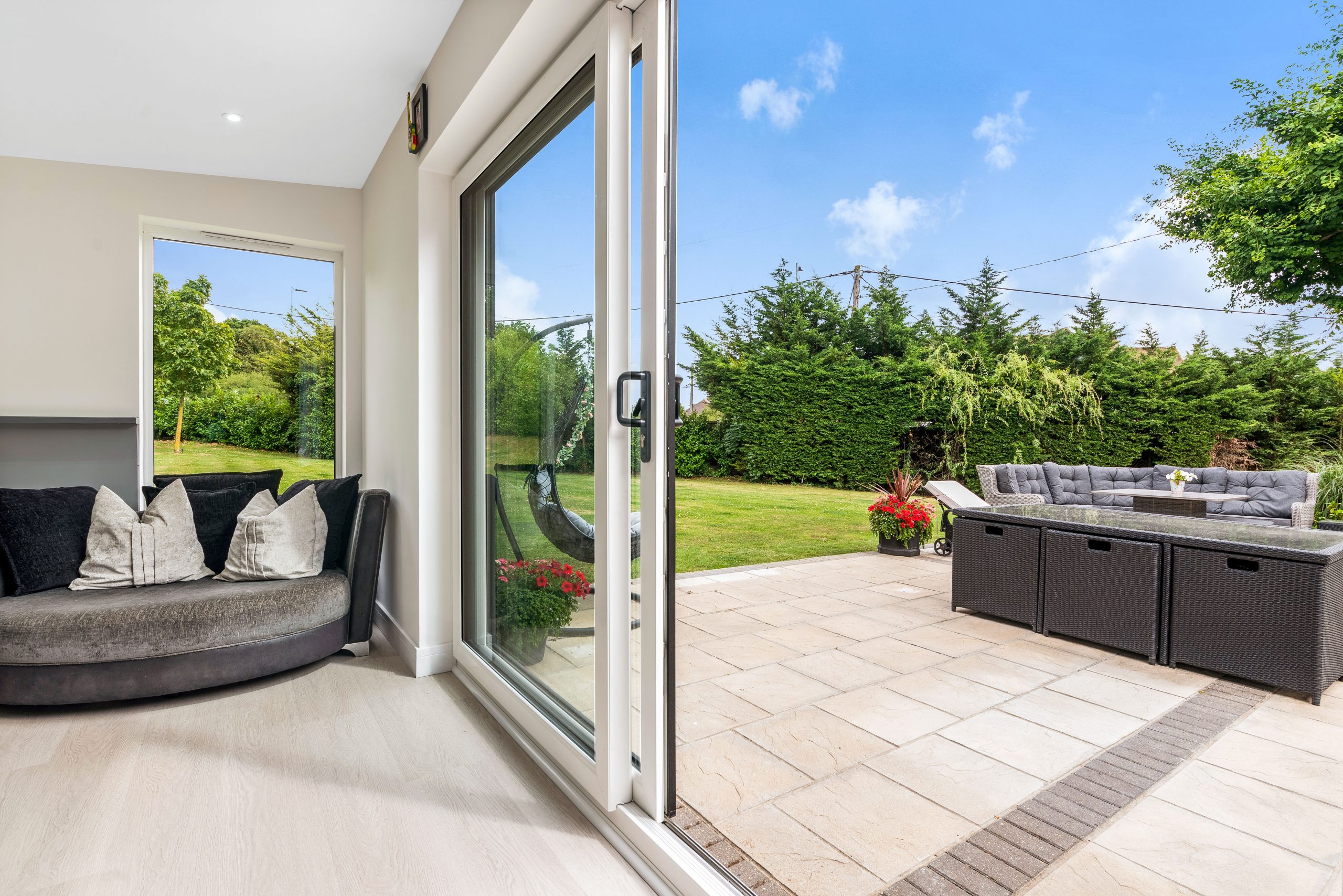
76. Sliding doors
Sliding doors create wide areas of glass without needing door panels to fold into the room or patio. They are a strong choice for modern, clean-lined garden rooms with large openings.
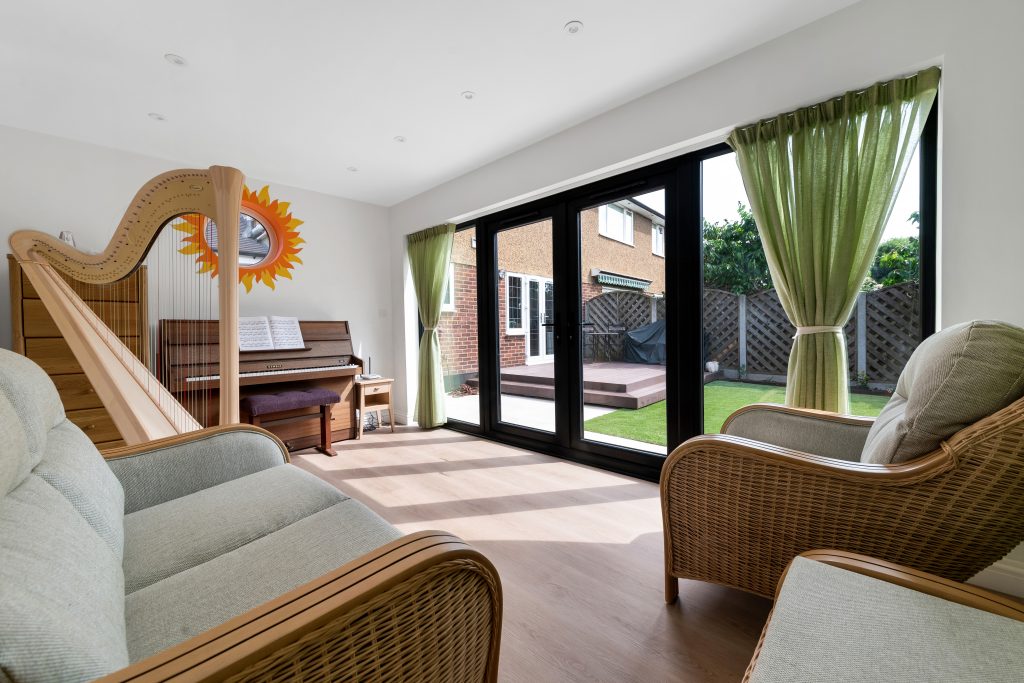
77. French doors
French doors can give a garden room a softer, more traditional look. They work beautifully with music rooms, reading rooms, studios and Heritage-style garden rooms.
Interior garden room ideas
The most successful garden room interiors are designed around use. A gym needs different flooring from a studio. A music room needs different acoustic treatment from an office. A bar needs different lighting from a guest annexe. Decide how the room needs to feel, then choose finishes that support that purpose.
78. Layered lighting
Use more than one type of lighting. Downlights can provide general light, but task lights, wall lights, LED strips, pendants and lamps can make the room feel warmer and more flexible. Lighting should match the use: bright and clear for work, softer for relaxing, practical for gyms and atmospheric for bars.
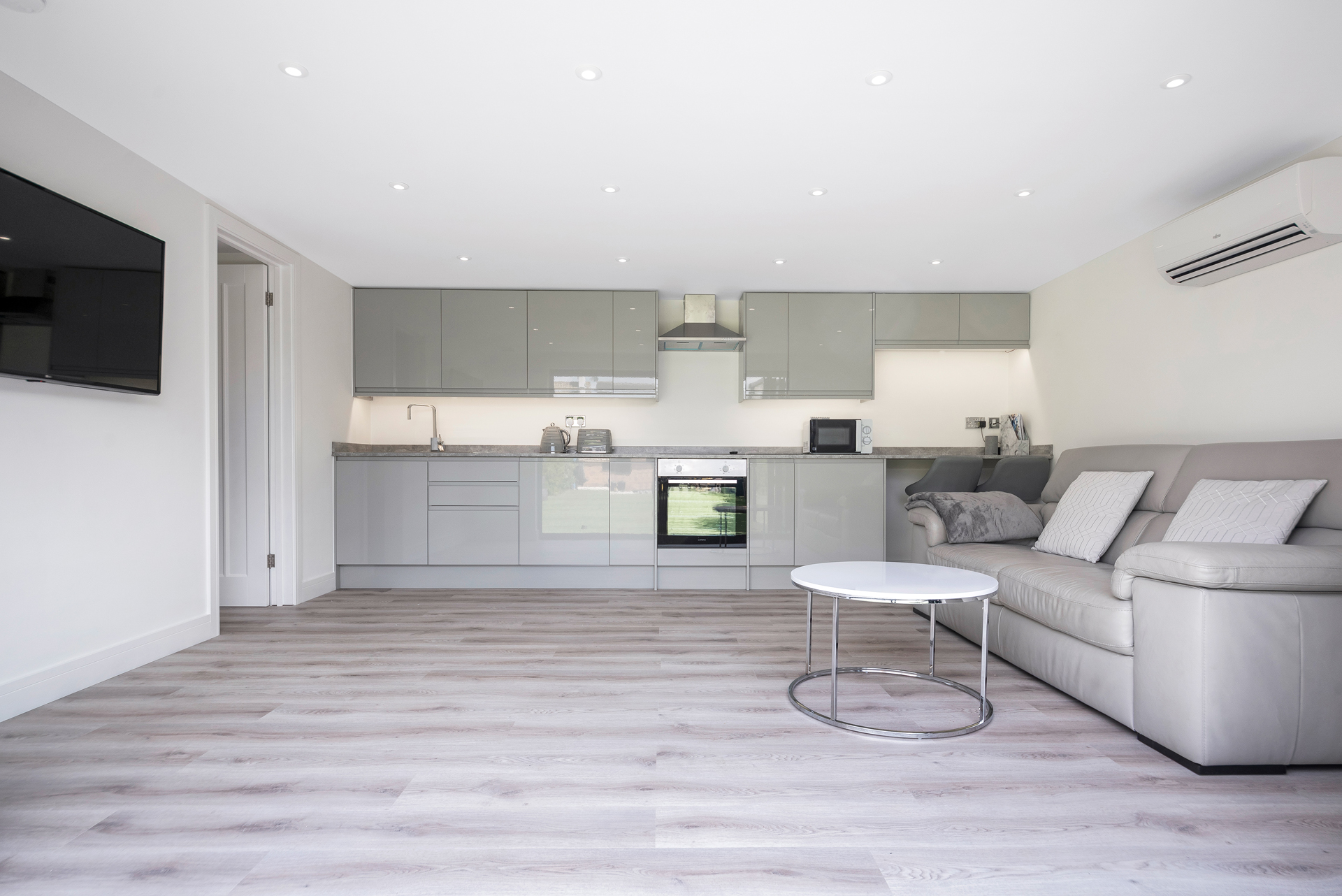
79. Durable flooring
Flooring should be chosen for the way the room will be used. Offices and lounges may suit warm, comfortable finishes, while gyms, studios and wet rooms need something more hardwearing. If the room opens straight into the garden, choose flooring that can cope with foot traffic and changing weather.

80. Built-in storage
Storage is rarely the most exciting part of a garden room design, but it is one of the most important. Built-in cupboards, hidden side storage, media storage, shelving and benches can keep the room elegant and practical.
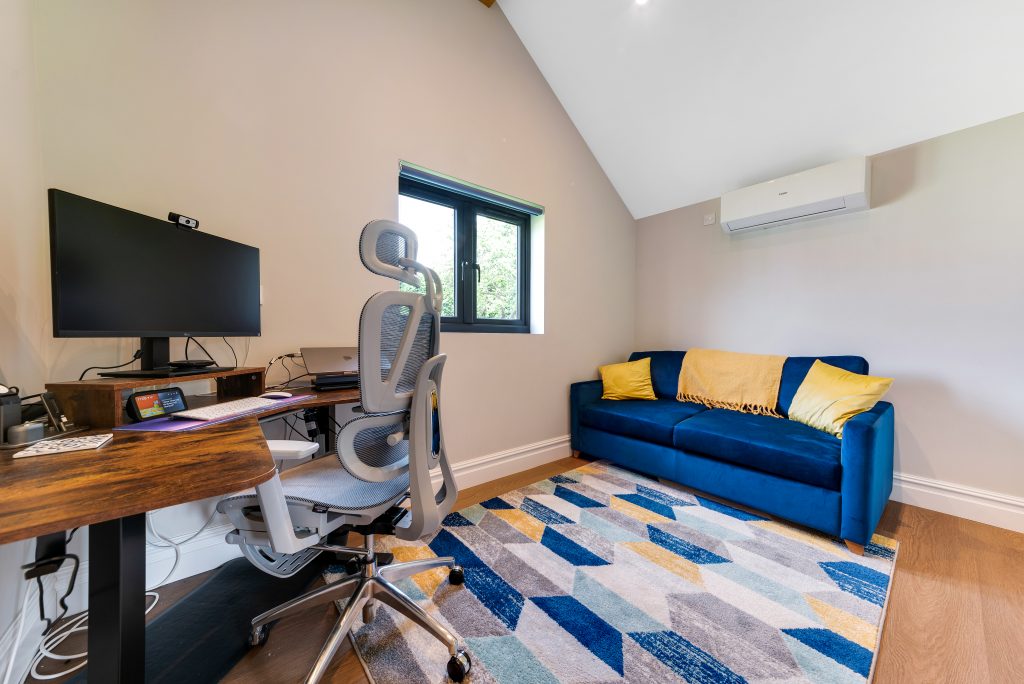
81. Acoustic panels as a design feature
In music rooms, podcast studios, cinemas and busy offices, acoustic panels can improve comfort while also becoming part of the interior style. Choose colours and layouts that feel intentional rather than purely technical.
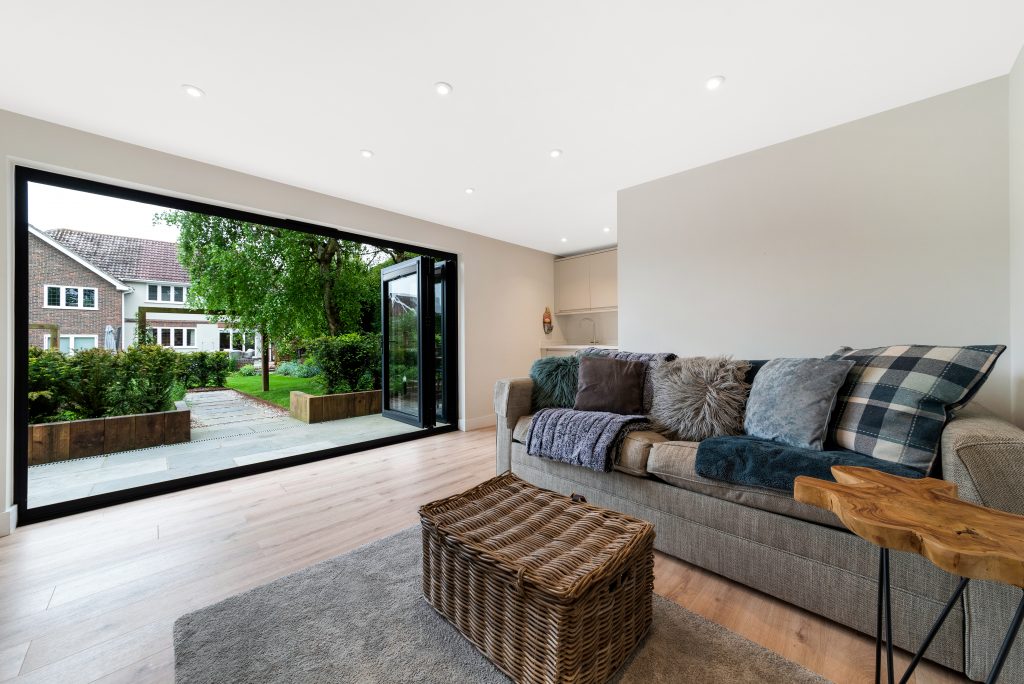
82. Feature walls
A feature wall can help define the mood of a small room or create a backdrop for video calls, music practice or entertaining. Timber, colour, wallpaper, acoustic panels or shelving can all work depending on the room's purpose.
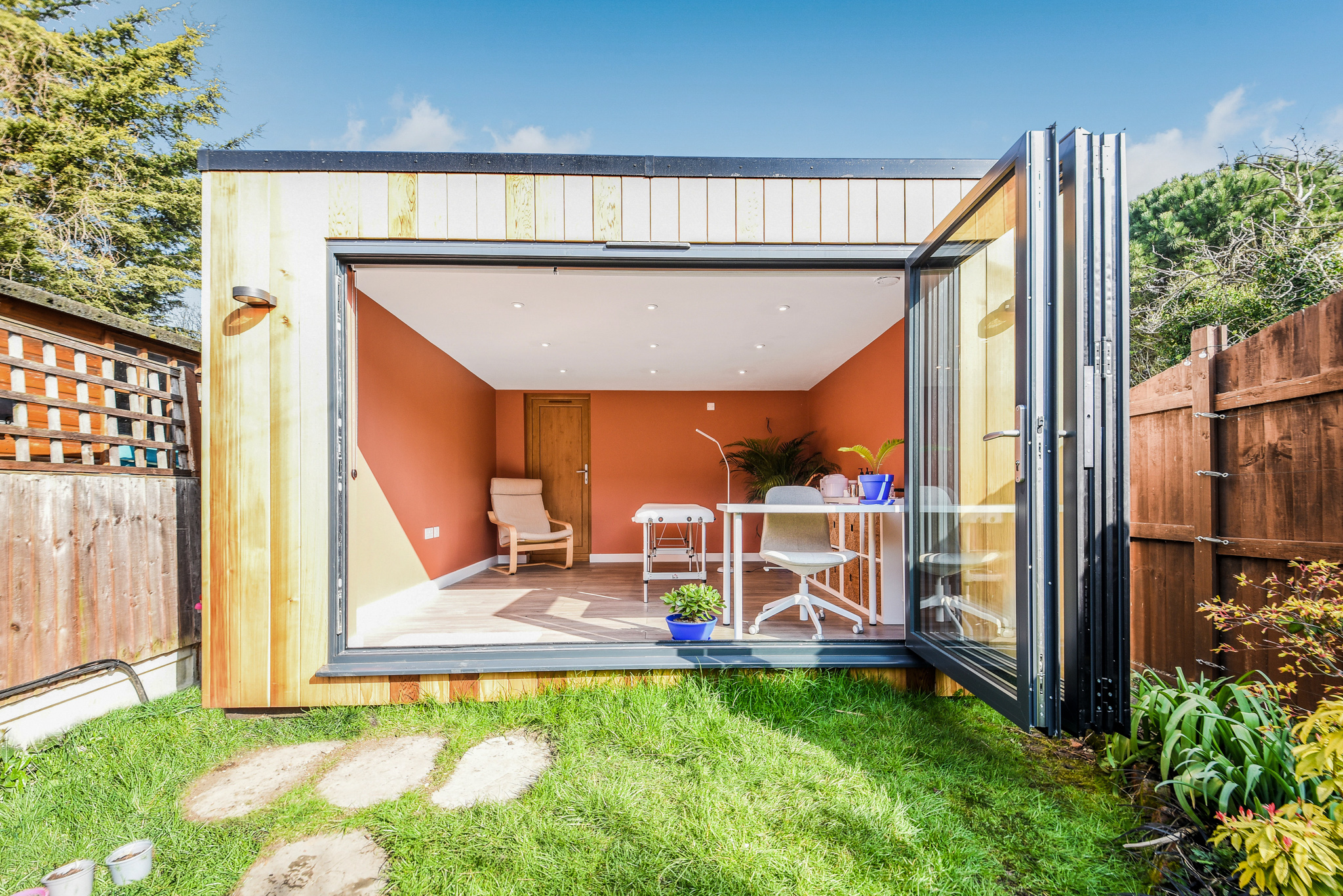
83. A media wall
Media walls are useful in cinemas, lounges, golf simulators, teen rooms and office/gym combinations. Plan sockets, cabling, speakers and screen height before the room is finished so the result looks clean.
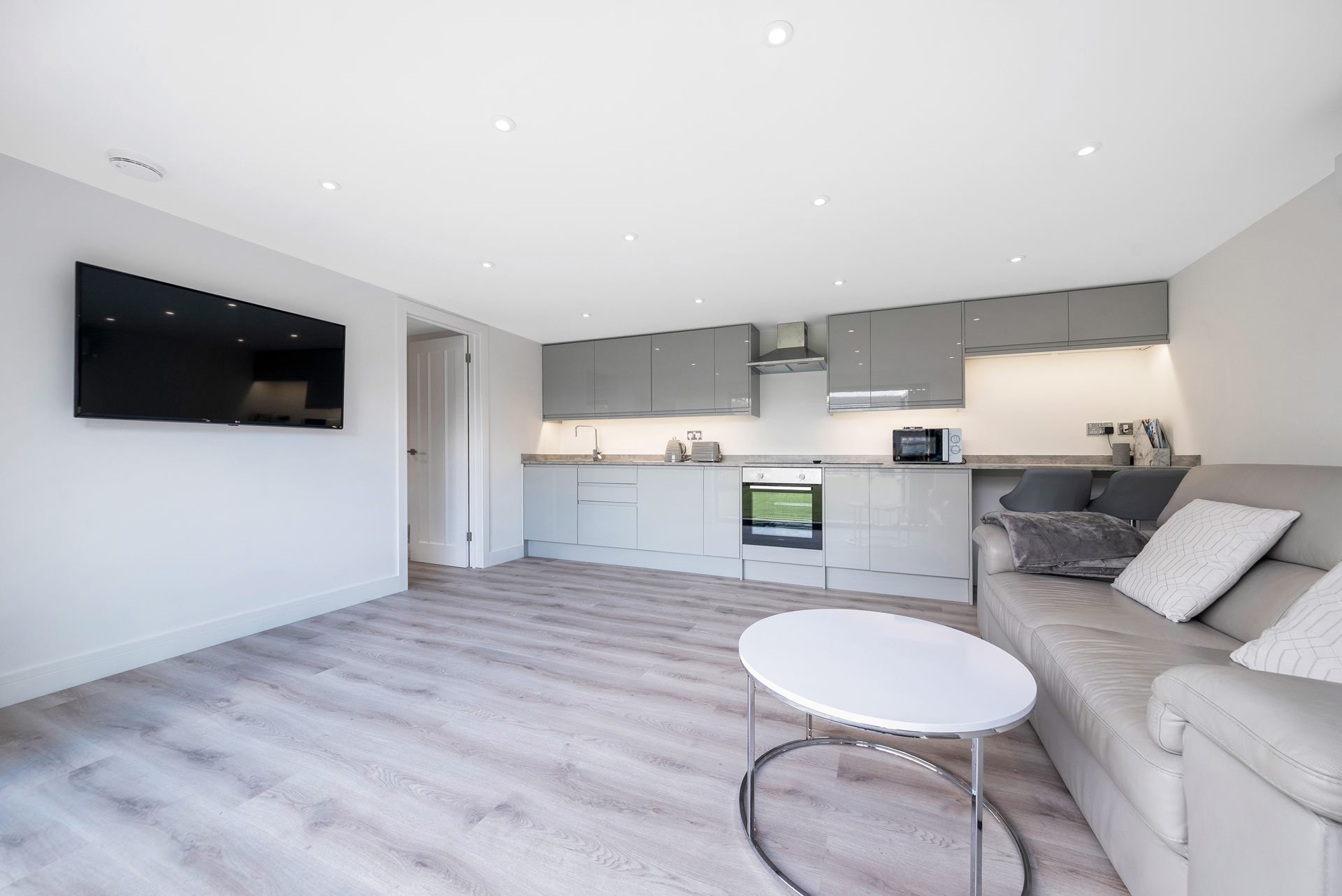
84. Mirrors
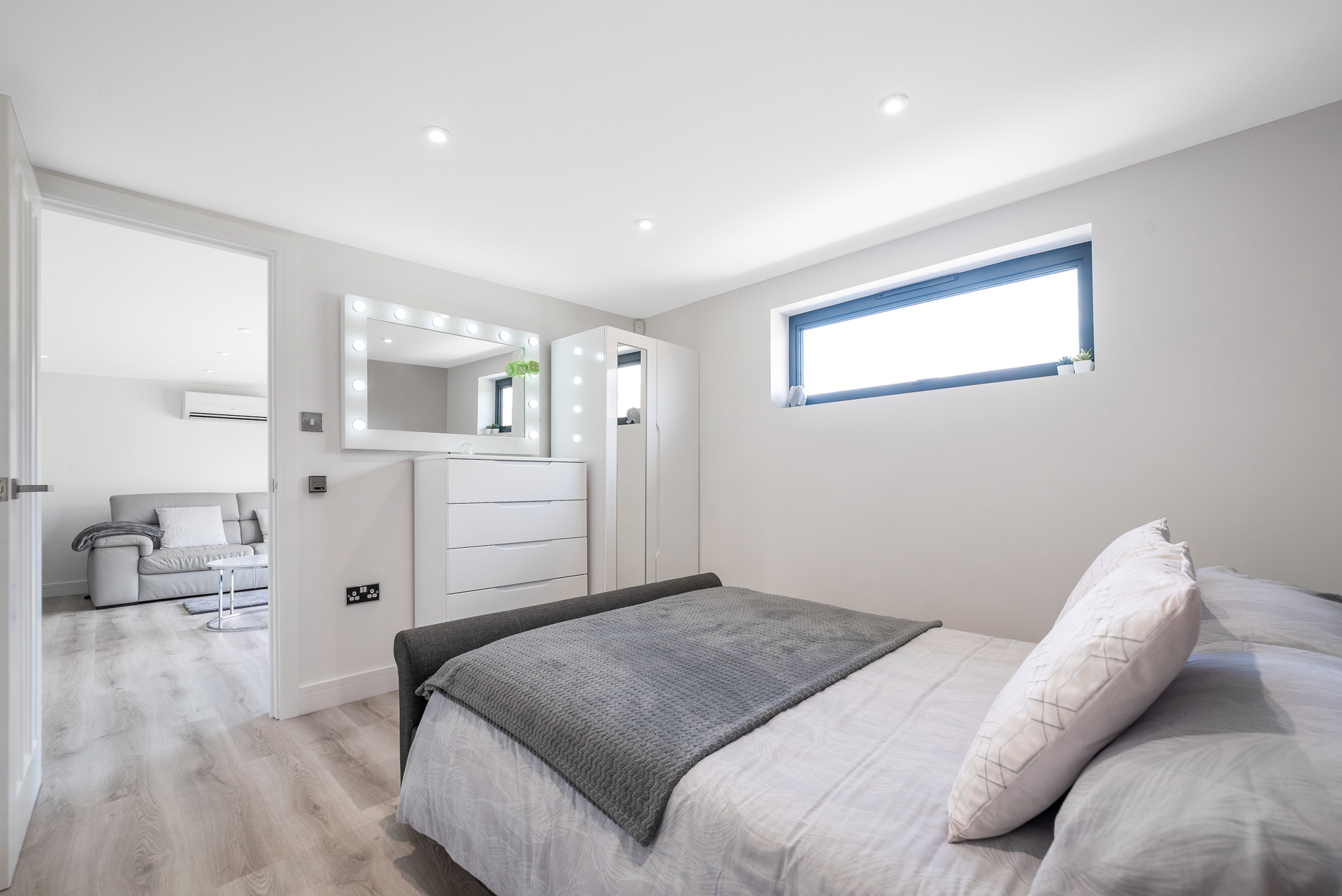
Mirrors are particularly useful in gyms, Pilates rooms, yoga studios and smaller garden rooms. They help with exercise form and can also make a compact space feel brighter and larger.
85. Soft furnishings
Rugs, curtains, cushions and sofas can soften the acoustics and make a garden room feel less like a separate building and more like part of the home. They are especially useful in lounges, music rooms, reading rooms and guest spaces.
86. Colour with purpose
Light colours can make small rooms feel open, darker colours can make bars and cinemas feel atmospheric, and natural greens or warm neutrals can suit studios and wellness rooms. Choose colour based on how you want the room to feel.
Practical checklist before choosing your garden room idea
Before falling in love with a particular garden room idea, it is worth checking the practical details. The most beautiful room will only work if it suits your garden, budget, services and long-term plans.
Start with the purpose
Write down the main use of the room, the secondary use and the future use. For example: office now, teen den later, guest room eventually. This helps avoid short-term decisions that limit the room later.
Measure furniture and equipment
Do not guess. Measure desks, gym machines, beds, sofas, instruments, treatment couches, golf simulator equipment and storage items. Then allow room to move around them comfortably.
Think about position in the garden
Sunlight, shade, privacy, views, access, trees, boundaries and the route from the house all affect the design. A free site survey helps turn general ideas into a plan that suits the actual space.
Check planning permission and permitted development
Many garden rooms can be built under permitted development, but rules depend on height, size, position, location and use. Sleeping accommodation, annexes and larger buildings need particular care. Read more about the rules on building garden rooms and speak to Hawksbeck before finalising your plans.
Consider building regulations
Building regulations can apply depending on size, facilities and use. Garden rooms with sleeping accommodation, bathrooms, kitchens or more complex services should be planned with compliance in mind from the start.
Plan heating and cooling
A year-round garden room needs comfort in winter and summer. Insulation, glazing, ventilation, heating and cooling should all be considered together, especially for offices, gyms, studios and annexes.
Plan electrics, internet and media
Think about sockets, lighting circuits, exterior lighting, data points, Wi-Fi, media walls, speakers, chargers, equipment and future technology. It is much easier to include these details during the build than after the room is finished.
Decide early on plumbing
If you might want a toilet, shower, kitchenette, bar sink or wet room, raise this early. Even if you do not include everything immediately, it may influence layout, services and future flexibility.
Choose materials for maintenance and style
Cladding, roofing, glazing, flooring and internal finishes should suit both your taste and the way you want to maintain the building. A low-maintenance gym and a characterful music room may call for different choices.
Think beyond the building
Paths, steps, decking, patios, planting, screens, lighting and seating can all influence how much you use the room. The best garden rooms feel connected to the garden, not simply placed in it.
Garden room ideas FAQs
What is the best use for a garden room?
The best use depends on your lifestyle. Garden offices, gyms, studios, bars and guest spaces are among the most popular ideas, but the most future-proof garden rooms are flexible enough to change use over time.
Can I use a garden room as an office all year round?
Yes, provided the garden room is properly insulated, heated or cooled, ventilated and fitted with reliable electrics and internet. A purpose-built garden office should feel comfortable in every season.
Can a garden room have a toilet or shower?
Yes. Many bespoke garden rooms can include toilets, showers, wet rooms or bathrooms when plumbing and drainage are planned correctly. These features are especially useful for gyms, annexes, studios and entertainment rooms.
Can I build a garden room with a kitchen?
Yes, a kitchenette or kitchen area can be included in larger or annexe-style garden rooms, subject to design, services and any relevant permissions. It is important to plan plumbing, electrics, ventilation and layout early.
Do garden rooms need planning permission?
Many garden rooms can fall under permitted development, but this depends on size, height, position, location and use. Sleeping accommodation, annexes and larger or more complex buildings need particular care, so always check before you build.
Do building regulations apply to garden rooms?
Building regulations can apply depending on the size, use and facilities included. Rooms used for sleeping, buildings with bathrooms or kitchens, and larger garden rooms should be discussed with an experienced garden room company early in the process.
What is a good size for a garden office?
A compact single-person office can be relatively small, while a two-person office, meeting room or office-gym combination will need more space. Start by measuring your desk, chair, storage and any equipment, then allow room to move comfortably.
What should I include in a garden gym?
A garden gym should include enough clearance for equipment, durable flooring, ventilation, heating/cooling, mirrors, storage and suitable lighting. Larger gyms may also benefit from a shower room, wet room or sauna.
How can I make a small garden room feel bigger?
Use large glazing, bifold doors, skylights, light finishes, built-in storage and a simple furniture layout. A small garden room works best when it has one clear purpose and is not overloaded with furniture.
What are the most luxurious garden room ideas?
Luxury garden room ideas include gyms with saunas, self-contained annexes, recording studios, garden bars, golf simulators, wet rooms, hot tub retreats and large multi-zone rooms with premium finishes.