
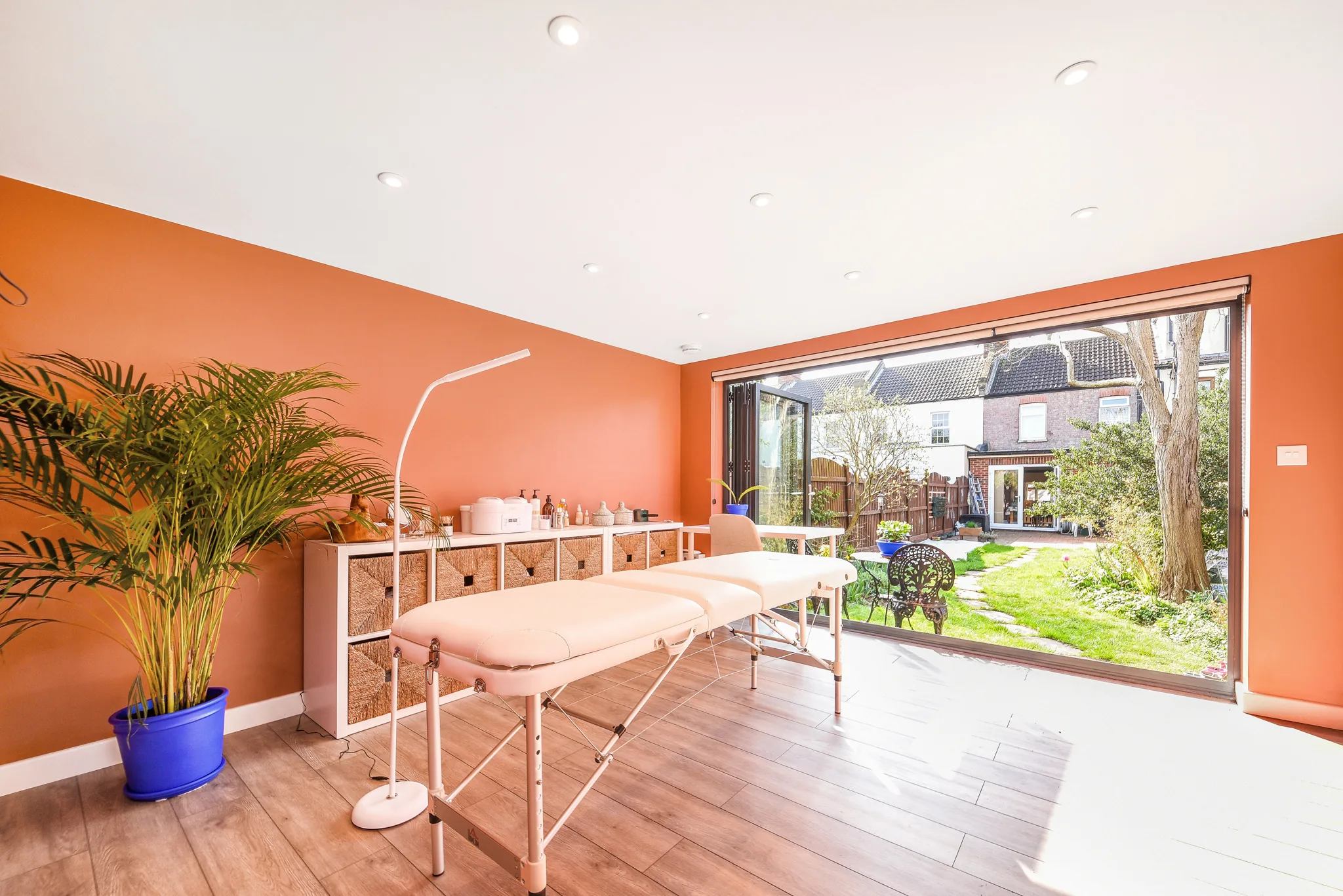
Creative Studio Retreat
A beautifully considered garden studio retreat showing how a bespoke building can create a peaceful, practical and inspiring space for creative work at home.
View project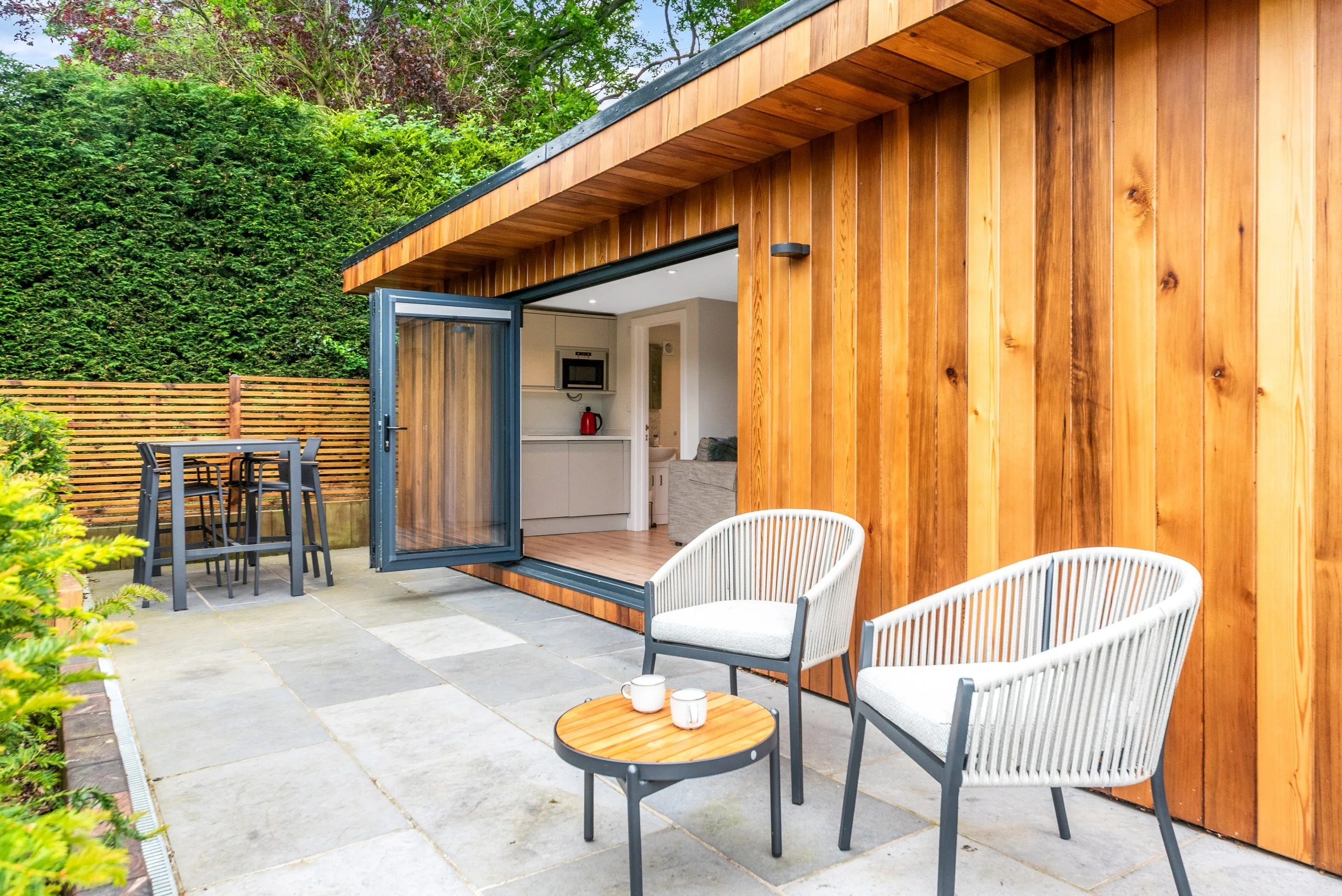
An art studio has to do two things at once: give you the calm, light and headspace to create, and quietly deal with the practical mess that comes with real work.
Wet brushes, canvases leaning against walls, rolls of paper, drying racks, clay dust, framing tools, portfolios, half-finished pieces that cannot be packed away every evening — these details matter. A good garden room art studio should not feel like a spare room that happens to be outside. It should feel like a purpose-made creative space, designed around the way you actually work.
For artists, makers, illustrators, ceramicists, designers and hobby creatives, a bespoke garden building can be an exceptional alternative to renting a studio elsewhere. You gain a private, year-round workspace at home, with the freedom to choose the light, layout, storage, heating, surfaces, glazing, plumbing and finishing details from the start. If you are still comparing possible uses for an outdoor building, our main guide to garden room ideas is a useful place to explore the wider possibilities.
Creative work benefits from separation. It is difficult to paint, draw, sculpt, sew or design properly when every session begins with clearing a dining table and ends with putting everything away before family life resumes. A garden studio gives your practice its own address, without taking you away from home.
The biggest advantage is continuity. You can leave a canvas on the easel, keep materials organised, return to a piece after lunch, or step out for an early morning hour before the day begins. That sense of ease often changes how often people create. The studio is not just an attractive building in the garden; it becomes a practical reason to make more work.
A Hawksbeck garden building can be designed for:
The design can be as simple and serene as a painting retreat, or as technically considered as a working studio with sink, extraction, durable flooring, integrated storage and specialist electrical planning.
Light firstLight is usually the first serious design conversation for an art studio. Too little and the room feels flat. Too much direct glare and colours become difficult to judge, screens are hard to use and finished work can be affected by heat or UV exposure. A bespoke garden art studio allows the glazing, orientation and internal layout to be planned together.
Many artists favour consistent, indirect natural light. In the UK, north-facing light is often valued because it is softer and more stable across the day. However, not every garden layout allows a perfect north-facing studio, and not every artist works in the same way. Some people want bright, uplifting glazing and views into the garden; others require controlled conditions for colour matching or photography.
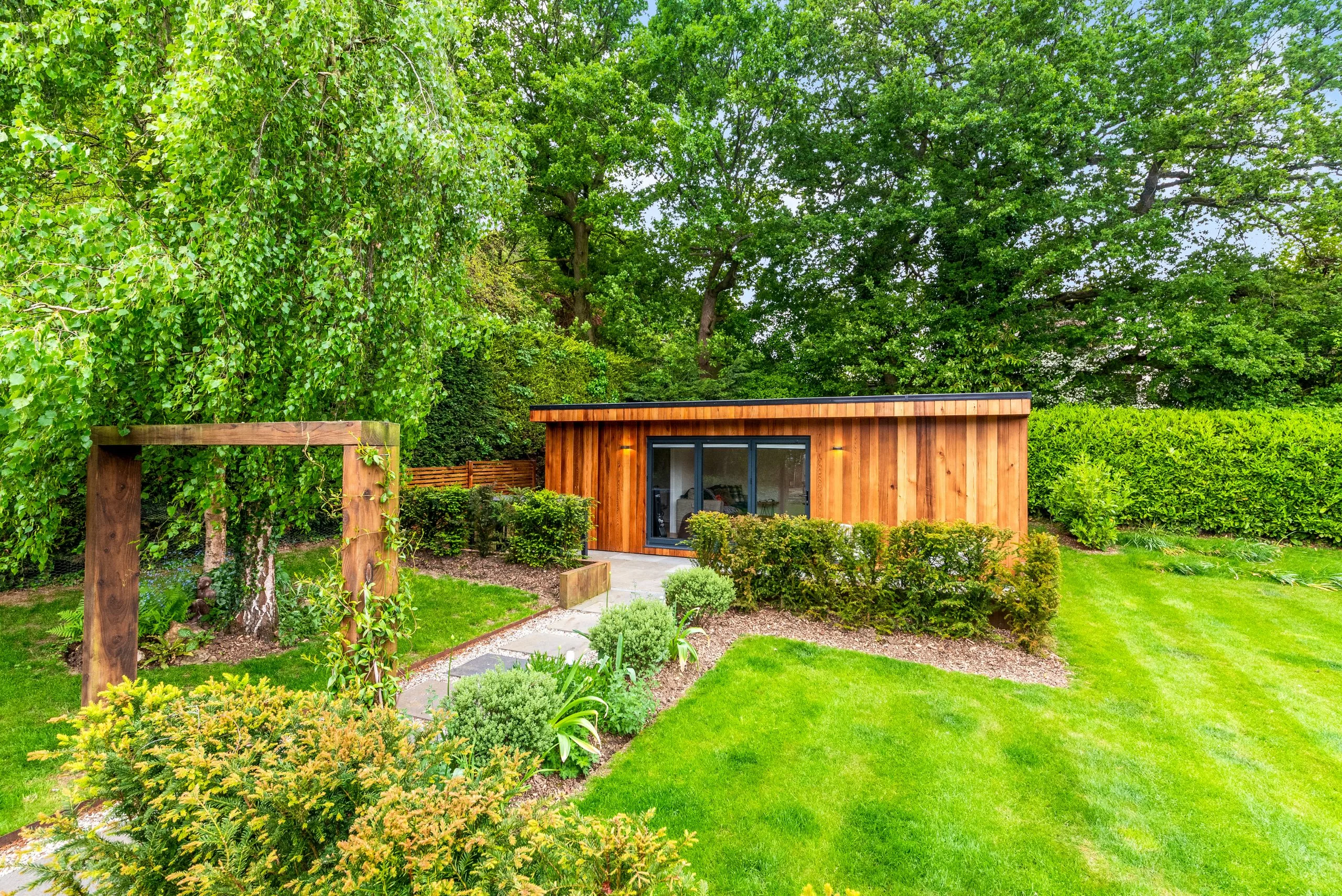
Useful design options include:
The best approach is not simply “more glass”. It is the right glass in the right places, with enough wall space for canvases, shelving, plan chests and work in progress.
A beautiful studio can quickly become frustrating if the layout is not based on your process. Before choosing finishes, it helps to map how you move through a typical creative session. Where do you stand? Where do you sit? What needs to be within reach? What must be kept clean? What needs to dry, cure or be stored flat?
Most art studio garden rooms benefit from some combination of these zones:
The primary easel, desk, bench, wheel, cutting table or work surface.
Sink, brush cleaning, water containers, wipeable splashback and disposal planning.
Shelves, racks, wall rails or protected corners for unfinished work.
Laptop, printer, scanner, packaging, invoices and sketchbooks.
Tall cupboards, plan chests, shelving, drawers and material storage.
A clear stretch of wall where you can assess pieces from a distance.
Useful if you sell work, host clients or photograph finished pieces.
One of the most common mistakes in a studio is underestimating the value of empty space. Artists need room to step back. A canvas can look entirely different from three metres away. A textile piece needs to be unfolded. A sculpture needs to be viewed from different angles. A bespoke garden studio can be planned so that the room still has breathing space once the functional elements are installed.
Already know where the easel, sink and viewing wall should go? Bring that sketch to us.
Talk to UsAn art studio should still feel premium, but it cannot be precious in all the wrong places. Surfaces need to suit the medium. A paper artist may need pristine, clean worktops and dust-free storage, while an oil painter may prioritise wipeable, resistant surfaces and ventilation. A ceramicist may need robust flooring and easy-clean areas. A textile artist may want a large central table with storage below.
Practical surface choices can include:
There is no need for the studio to look clinical. With the right specification, it can feel warm, calm and beautifully finished while still being tough enough to use every day.
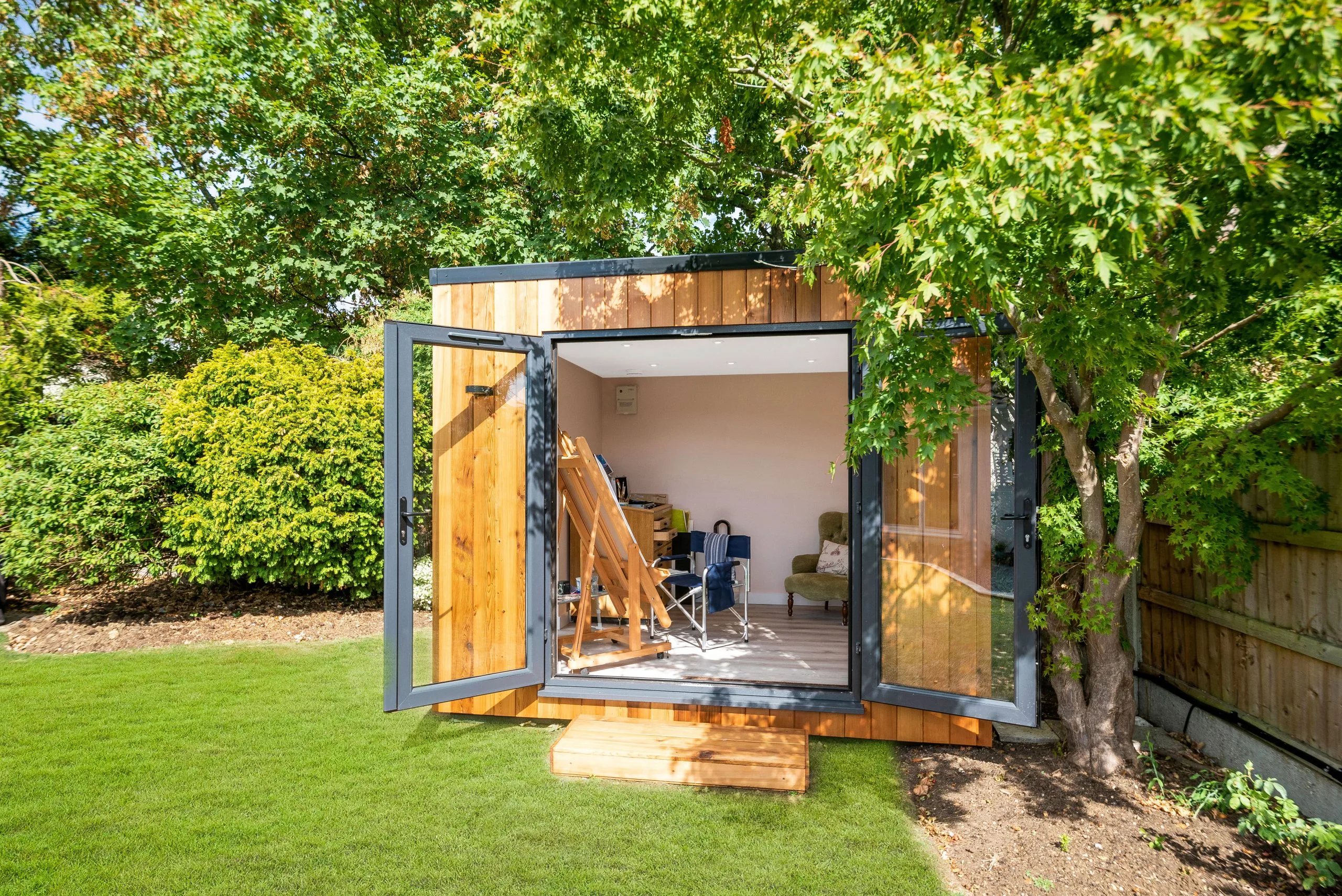
For many artists, a sink transforms how usable the studio feels. Walking back through the house to wash brushes or rinse tools interrupts the flow of work, and it can be impractical if you regularly use paint, clay, dye, ink or adhesives.
A sink can be designed into the studio from the outset, subject to site conditions and the service route available. The best solution depends on your materials and how the space will be used. For light watercolour, craft or general handwashing, a compact sink may be enough. For heavier use, a larger utility-style sink with a practical drainer and splashback can be more suitable.
If your practice involves oils, solvents, plaster, clay or specialist materials, it is important to design safe and appropriate cleaning routines rather than relying on a standard domestic sink arrangement. The studio can still be highly practical, but the specification should follow the way you work.
Art materials multiply. Even the most disciplined studio owner eventually has canvases, frames, sketchbooks, tubes, papers, fabrics, tools, mounts, bubble wrap, packaging, labels and reference books. Storage should not be an afterthought; it should be a key part of the architecture of the room.
For a premium art studio garden room, consider a mix of open, closed, vertical and flat storage:
Closed storage is particularly valuable in a luxury studio because it allows the room to reset visually. After a busy day, materials can be put away without the entire studio feeling cluttered. This is especially useful if the building will occasionally double as a meeting space, gallery room or quiet retreat.
The ideal studio size depends on the medium, the number of users and whether you want additional facilities such as a sink, WC, kitchenette, storage wall or teaching area. A compact room can work beautifully for drawing, illustration or writing, but painting, sculpture, textile work and workshops usually benefit from more generous proportions.
A smaller garden studio can suit one person working at a desk, easel or small bench. It may include a glazed frontage, fitted storage, good lighting and a comfortable working area. This can be ideal for sketching, watercolour, digital art, writing, jewellery making or quiet creative practice.
A mid-sized studio gives you more flexibility. There may be room for a main work table, sink, storage cupboards, a viewing wall and a comfortable chair. This is often the sweet spot for artists who want a proper year-round workspace without occupying too much of the garden.
A larger bespoke garden building can provide a more serious working environment, with room for several easels, drying racks, client seating, workshop tables, a store room or display wall. If you sell work, teach small groups or need to manage large pieces, this additional floor area can be invaluable.
As a broad guide, a well-specified bespoke art studio garden room may start from the lower tens of thousands for a smaller design, with many premium artist studios sitting in the region of approximately £35,000 to £70,000+ depending on size, specification, glazing, foundations, electrics, heating, plumbing, internal finishes and bespoke storage. Larger, highly tailored buildings with sink facilities, extensive glazing, premium cladding, complex groundwork or multiple internal zones can exceed this. Final pricing is always project-specific, because a Hawksbeck building is designed around the customer, the site and the intended use.
Although every art studio has its own requirements, it can be useful to see the wider potential of a bespoke garden room. This video shows how one high-quality garden building can be adapted for many different lifestyles, hobbies and daily routines.
A studio that is too cold in February or too hot in July will not be used as much as intended. Comfort is central to the value of a garden room, especially for creative work where concentration matters. Insulation, heating, glazing and ventilation should all be considered together.
For an art studio, year-round comfort is not only about the artist. It can also affect materials. Paper, canvas, timber frames, paints and fabrics all respond to temperature and humidity. A stable, well-insulated environment helps the room feel more professional and can support better storage conditions for materials and finished pieces.
Comfort features may include:
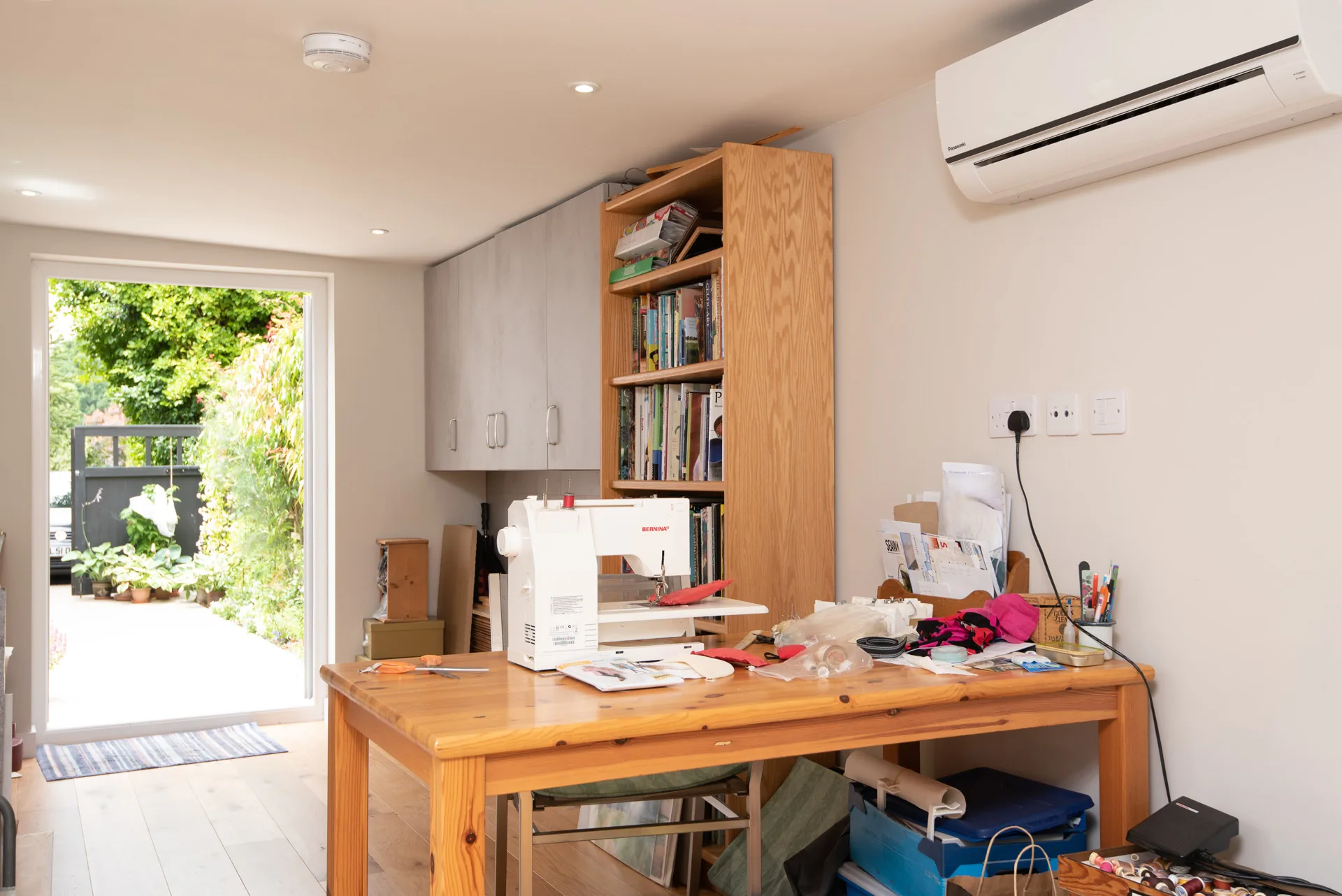
Some art studios need more than a window that opens. If you use solvents, varnishes, resins, aerosols, kiln-related equipment, adhesives, dyes or dusty materials, ventilation and safety should be discussed early. A bespoke approach allows these requirements to influence the design rather than being added awkwardly later.
Depending on your practice, the studio may need:
Not every creative space requires a technical specification, but the important point is that the design should match the medium. A painter’s studio, ceramic studio and textile studio may all be described as art studios, yet each has different practical demands.
Power sockets are easy to underestimate. Once you add task lights, chargers, printers, scanners, sewing machines, cutting machines, speakers, heaters, laptops, camera equipment or specialist tools, a basic electrical layout can quickly feel limiting. In a bespoke studio, sockets and lighting can be planned around your furniture and workflow.
If you photograph your work, make prints or hold online classes, connectivity and controlled lighting become even more important. A calm studio can still be technically capable; the key is making those elements feel integrated rather than improvised.
Many artists prefer a studio that recedes into the background. Too much visual noise can compete with the work. Light walls, natural textures, simple storage and a refined palette often create the most useful creative environment. That does not mean the room should be plain. It means the architecture should support the art, not overpower it.
Popular interior approaches include:
The exterior can also be tailored to your garden and home. A contemporary building with large glazing may suit a modern property, while a more discreet finish can sit quietly within a mature garden. The result should feel intentional from both inside and outside.
Yes, where the site and specification allow, a bespoke garden studio can include additional facilities such as a WC, kitchenette or utility-style area. This is particularly useful if you plan to spend full days in the studio, teach workshops, welcome clients or sell work by appointment.
Adding facilities will usually increase the cost and may affect the design, service routes and permissions required. However, it can make the building far more independent and convenient. For some artists, a simple sink is enough. For others, a WC and small refreshment area turn the studio into a more professional and self-contained space.
Many garden rooms can be built under permitted development, provided they meet the relevant criteria. However, this depends on factors such as height, position, garden size, boundaries, intended use and whether the property has restrictions. If the studio includes plumbing, is very large, is positioned close to boundaries or will be used for teaching or commercial visits, the planning position may need closer review.
Because every site is different, it is sensible to discuss your plans before assuming what is possible. A well-designed studio should be beautiful, practical and appropriate for its setting.
By mediumA painting studio often needs excellent daylight, a clear easel wall, durable flooring, brush storage, ventilation, a sink and space to view work from a distance. Canvas storage is important, as is a place to leave wet pieces safely. If you paint in oils, ventilation and material storage require particular care.
For watercolour, drawing and illustration, the studio may centre around a large desk or adjustable table, clean storage, paper drawers, controlled daylight and comfortable seating. A smaller sink can be useful, but dust control and flat storage may be just as important.
A ceramics garden studio requires robust thinking. Clay, water, dust, tools, shelving and equipment all influence the design. Depending on your process, you may need stronger surfaces, easy-clean floors, drying shelves, ventilation and specific power considerations. Kiln use would need careful technical review.
A textile studio benefits from a generous cutting table, strong task lighting, plenty of sockets, fabric storage, thread organisation and space for machines. A wall-mounted design board or pinboard can be helpful for planning colours, samples and commissions.
Mixed media work often requires flexible storage and surfaces that can handle different materials. Modular furniture, movable tables, wall rails and a combination of clean and messy zones can make the room easier to adapt as projects change.
If the studio will be used to meet buyers, consultants, collaborators or students, presentation matters. You may want a display wall, comfortable seating, a small refreshment area, discreet storage and beautiful external lighting. The studio should still function as a workplace, but it also becomes part of the experience of your work.
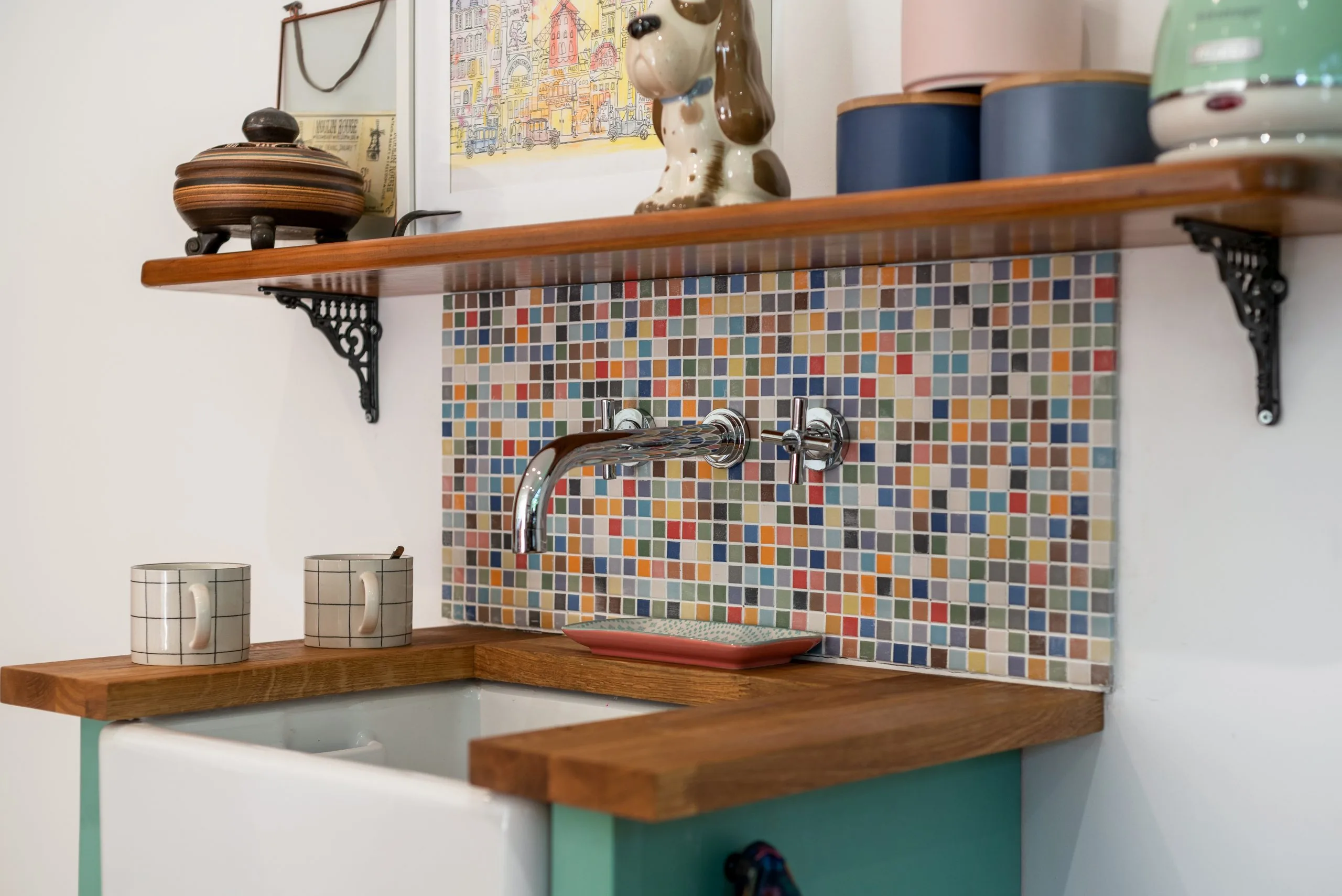
Before the design is developed, it helps to gather a clear brief. This does not need to be technical. In fact, the most useful information is often practical and personal.
The more accurately the space reflects your habits, the more useful it will be. A bespoke garden room is an opportunity to remove the daily friction from creative work.
An art studio garden room should not feel like a compromise between practicality and beauty. It can be both. With Hawksbeck, the building can be designed around the demands of creative work while still delivering the refined finish, comfort and craftsmanship expected from a luxury garden room.
Whether you want a quiet painting room flooded with soft natural light, a serious working studio with sink and storage, or a flexible creative building for making, teaching and displaying work, the design can be tailored around you. The result is a space where materials can stay out, ideas can develop over time, and creative work has the room it deserves.
If you are planning an artist’s garden studio, the best next step is to talk through the way you work, the size of your garden, the services you may need and the level of finish you want to achieve.
Three creative studios we have built in Chelmsford and Shenfield, from a quiet retreat to a cosy artist’s studio.
A beautifully considered garden studio retreat showing how a bespoke building can create a peaceful, practical and inspiring space for creative work at home.
View project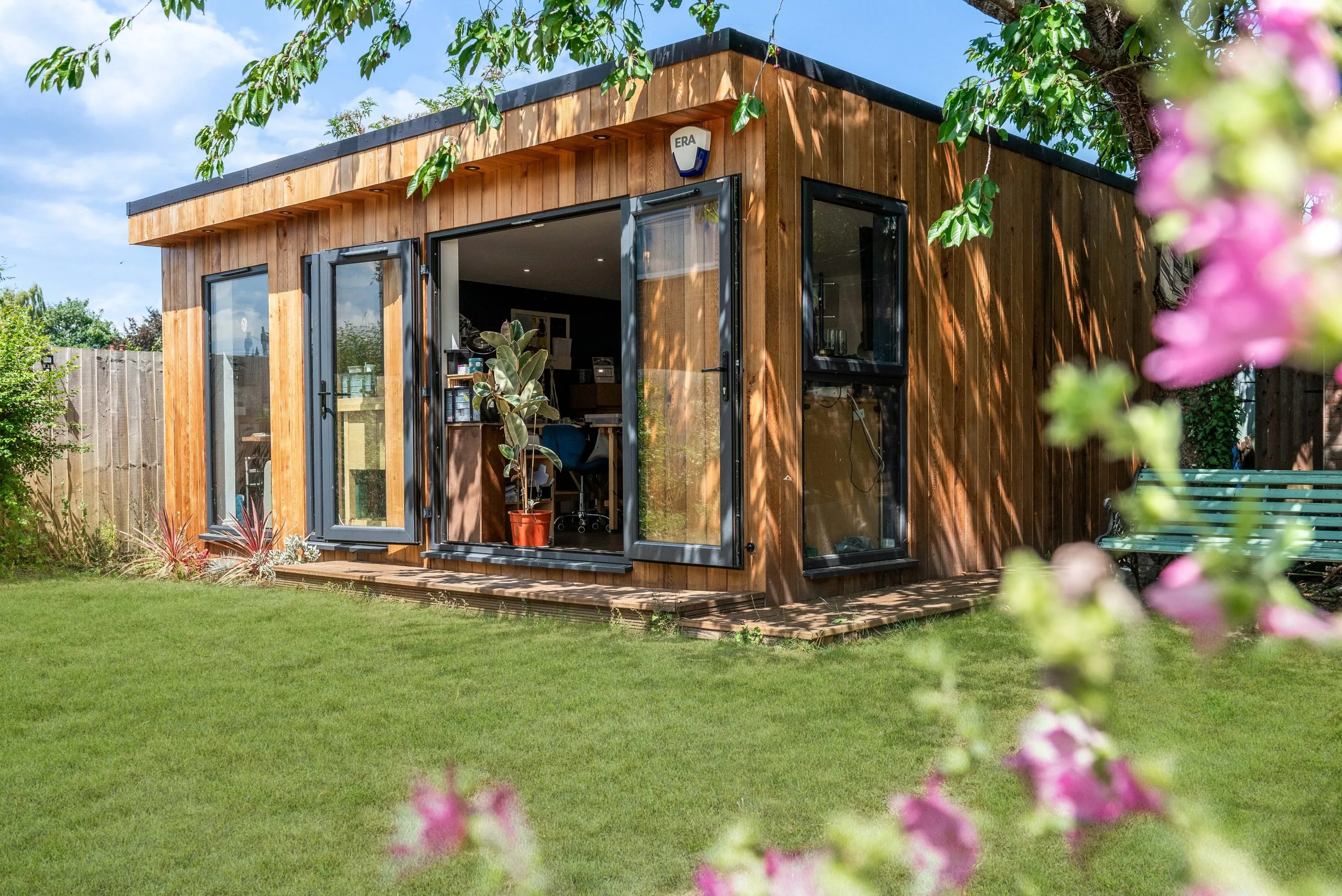
This artist’s studio demonstrates how a warm, inviting garden room can provide the focus, comfort and separation needed for regular creative practice.
View project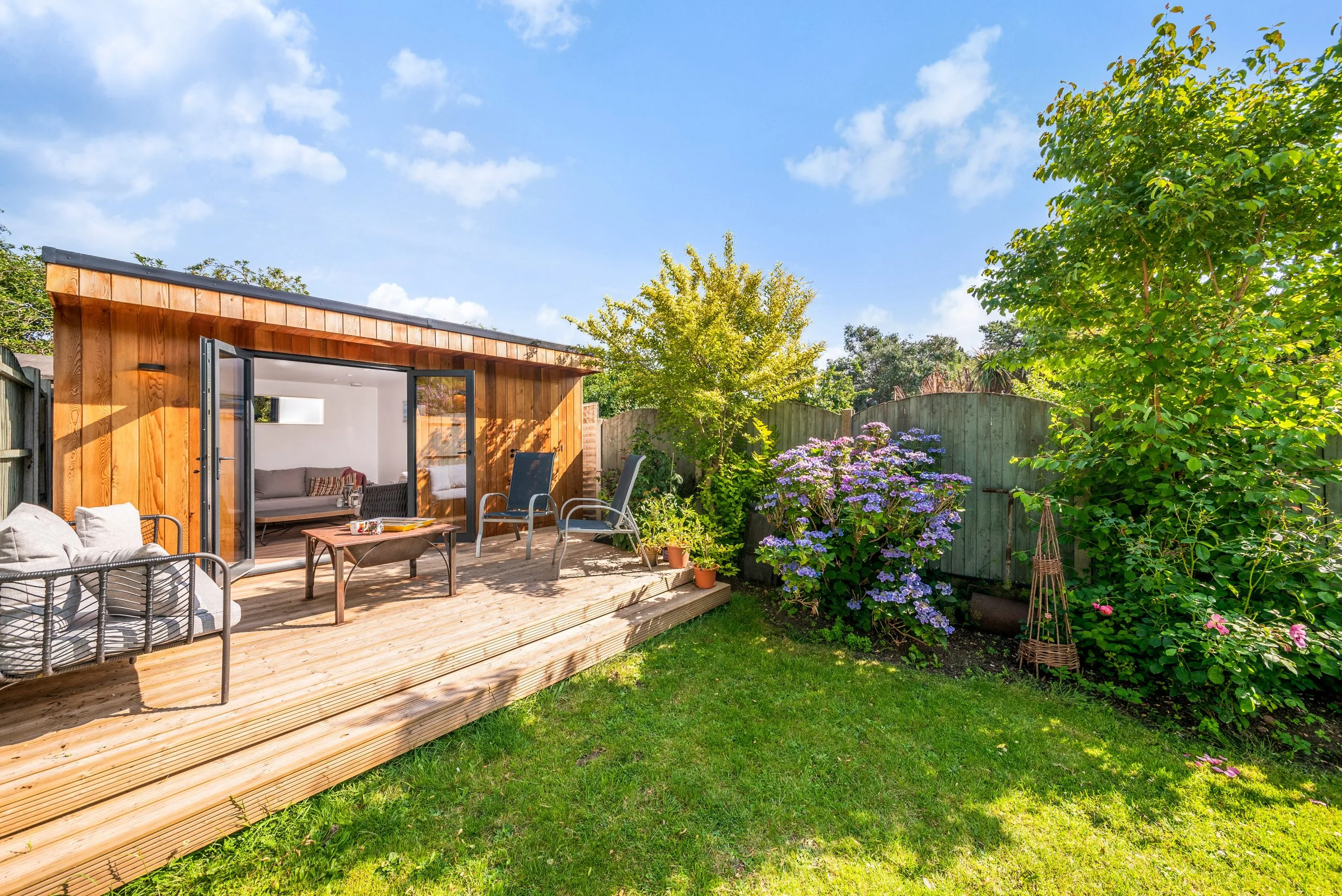
A tailored artist studio garden room in Shenfield, designed to support creative work with a dedicated, high-quality space away from the main house.
View project