
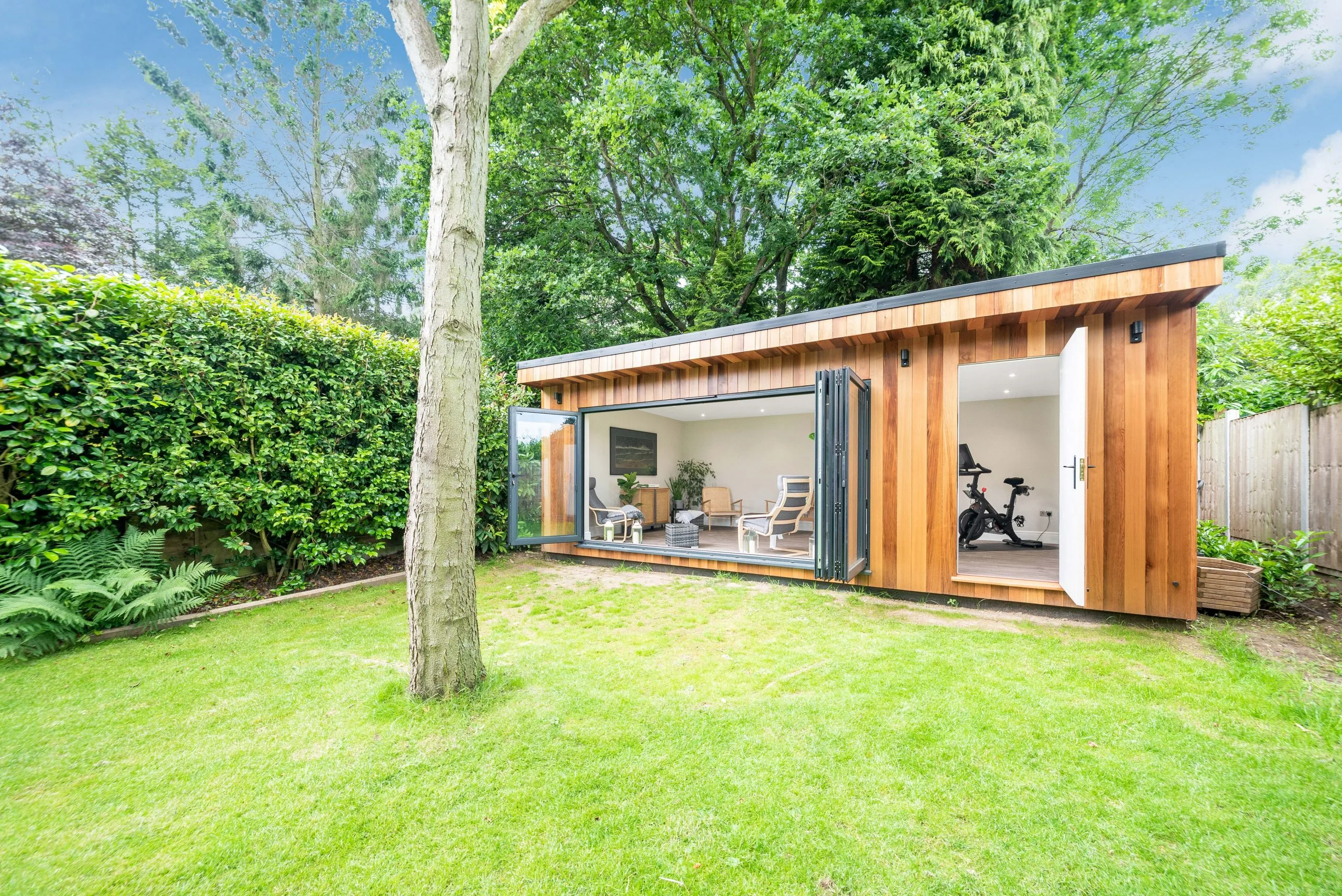
Creative Studio Retreat
A refined garden studio project showing how a separate building can become an inspiring creative space with the comfort, finish and privacy needed for focused work at home.
View project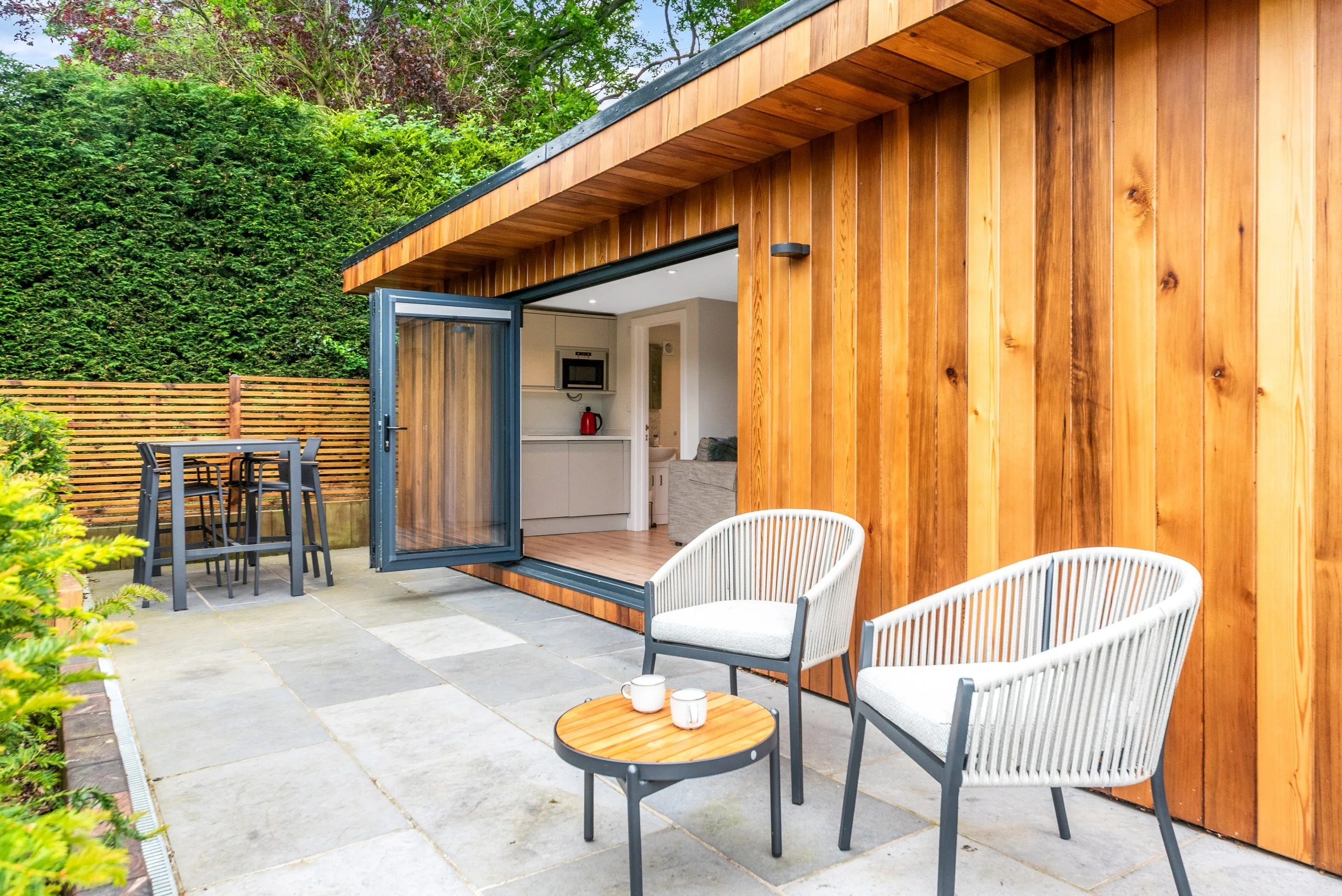 A studio that stays set up between shoots
The difference between a useful product photography setup and a frustrating one is rarely the camera.
It is the room: the amount of controllable light, the distance you can get from the product, the surfaces you can style on, the storage you have for props and packaging, and whether everything can stay in place between shoots. A bespoke garden room can solve that beautifully — giving you a dedicated product photography studio at home, away from the interruptions of the house, but close enough to use every day.
For online shops, makers, interior brands, content creators and small businesses, a garden photography studio can become a practical production space rather than a spare-room compromise. You can photograph products, shoot short-form video, pack campaign assets, style flat lays, meet collaborators and store equipment in one purpose-built building designed around your workflow.
Product photography rewards consistency. If you are shooting for e-commerce, catalogues, social media, packaging, Amazon listings, Etsy, Not On The High Street, Shopify or your own brand website, you need repeatable lighting and a space that helps you work quickly. A bespoke garden room gives you more control than a corner of a kitchen, dining room or spare bedroom.
With a dedicated garden studio, you can keep backdrops installed, lighting stands positioned, products organised and props ready to use. That means less time setting up and more time creating polished, consistent imagery.
Design the room for soft natural light, blackout options, artificial lighting or a mixture of all three.
Keep a product table, backdrop system, flat lay surface or styling bench ready between shoots.
Include bespoke cabinetry for lenses, tripods, modifiers, clamps, paper rolls, packaging and props.
Keep products away from everyday household clutter, pets, children and kitchen surfaces.
Create a repeatable visual style, especially useful when adding new products to an existing range.
Insulation, heating, cooling and proper electrics make the space usable in every season.
If you are exploring different ways to use a bespoke garden building, our wider guide to garden room ideas is a useful starting point. This page focuses specifically on how to plan one for product photography and content production.
A garden room photography studio is not only for professional photographers. It can be just as valuable for business owners who regularly need high-quality images but do not want to hire a studio for every new product launch.
If you sell online, photography is part of the sales process. A dedicated studio allows you to produce clean product shots, lifestyle images, detail close-ups, packaging photos and short videos whenever stock arrives. This is especially useful for clothing, jewellery, homeware, skincare, food products, craft items, gifts, stationery, accessories and small furniture.
For ceramicists, artists, florists, candle brands, woodworkers, designers and handmade product businesses, a garden studio can double as a photography zone and creative workspace. You can design it with display shelving, robust worktops and a practical floor finish so it is not too precious to use.
If your business produces regular social content, a garden studio can become a controlled space for reels, tutorials, product demos, unboxings and campaign photography. With the right layout, you can have one area for stills, one for video and one for editing or admin.
Not every product photographer needs a large commercial unit. A well-designed bespoke garden building can provide the privacy, comfort and functionality of a compact professional studio without the commute or ongoing rental commitment of an off-site space.
The best layout depends on what you photograph. A jewellery brand has different requirements to a homeware business. A fashion accessories shop needs more hanging space. A skincare brand may want an elegant styling counter, while a furniture maker might need floor area, wide access and robust storage.
When planning a product photography studio garden room, it helps to think in zones rather than just square metres.
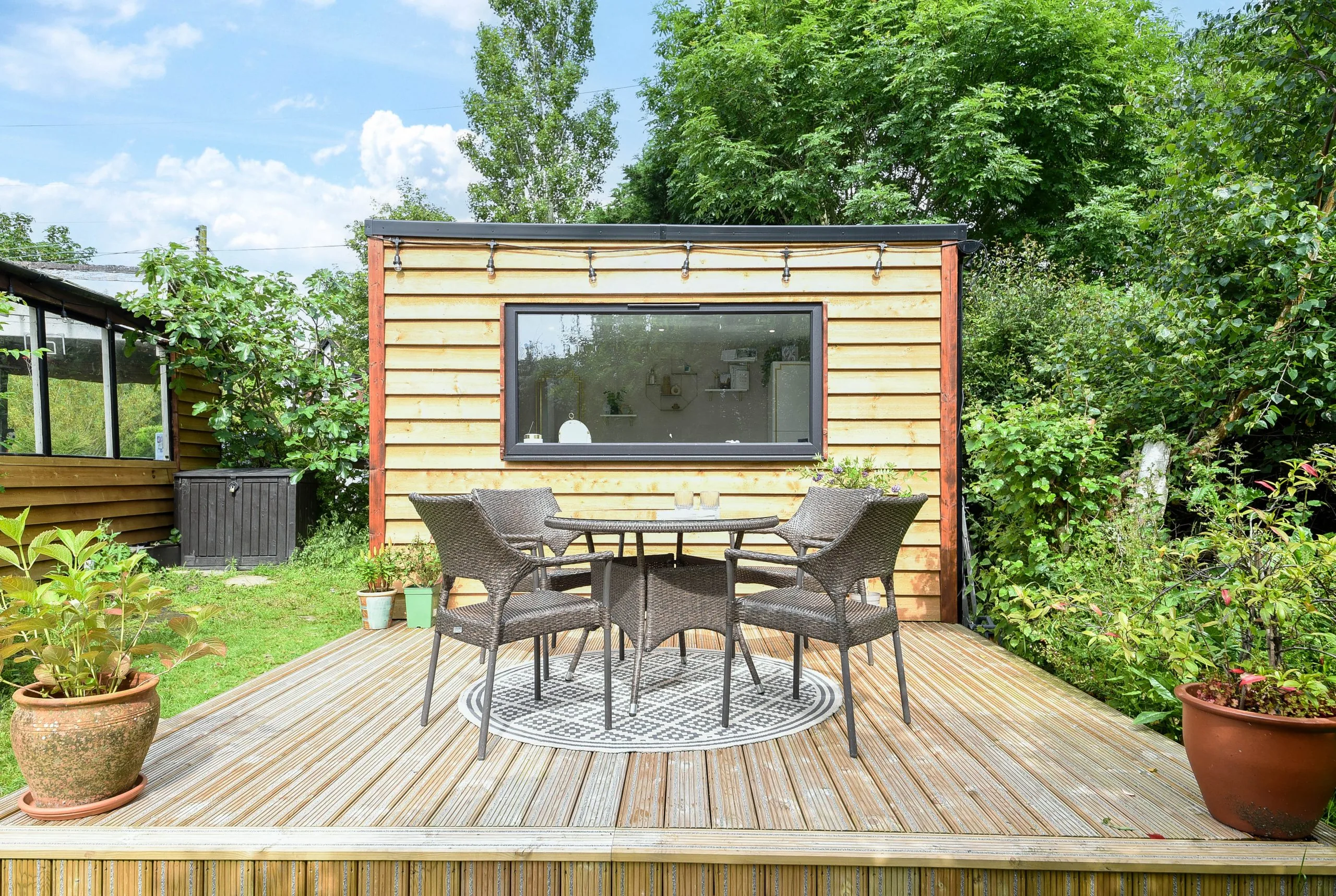
This is the heart of the studio. It should give you enough clear floor space to position the product, camera, tripod and lights comfortably. For smaller products, a generous worktable may be more important than floor space. For larger products, furniture or lifestyle sets, depth becomes crucial because you need distance between the product, camera and background.
Useful considerations include:
Flat lay photography is easier when you have a permanent surface at the right height. A bespoke garden room can include a styling bench, moveable table, wall-mounted rail or storage beneath for backgrounds and props. For food, beauty, craft and gift products, this can save significant time.
Photography spaces quickly become cluttered if storage is not planned properly. A bespoke design allows for cupboards, open shelving, tall storage for stands, drawers for small accessories and secure areas for cameras and lenses. If you pack orders or prepare sample sets in the same building, packaging storage can also be integrated.
Many product photographers shoot tethered to a laptop or monitor. A comfortable editing desk with power, data access and controlled glare can make the room feel like a proper working studio rather than just a shooting space. This area can also serve as an admin desk for listing products, editing images, exporting assets and managing campaigns.
If clients, stylists, assistants or team members will visit, consider a compact seating area. This does not need to dominate the room; even a small consultation corner can make the space feel more professional and welcoming.
There is no single perfect size, because product photography covers everything from jewellery to furniture. However, the room should be sized around your largest regular shoot, not your smallest.
| Studio use | What to allow for | Typical garden room approach |
|---|---|---|
| Small products Jewellery, cosmetics, candles, craft items |
Tabletop shooting, macro work, light control, prop drawers, editing desk | Compact studio with excellent storage and a dedicated workbench |
| Medium products Homeware, fashion accessories, hampers, lamps |
Backdrop system, styling surfaces, floor space for lighting and stands | Larger open-plan room with flexible shooting wall and storage zone |
| Lifestyle sets Furniture, interiors, larger brand campaigns |
Greater depth, ceiling height, flexible furniture, multiple wall finishes | Generous bespoke garden building designed around set-building and movement |
| Photo and video studio | Lighting grid, acoustic comfort, backdrop options, screen, desk and storage | Multi-zone studio with shooting, editing and equipment areas |
One of the advantages of choosing Hawksbeck is that your garden room does not have to fit a fixed template. If you need extra depth for camera distance, a particular wall for seamless paper, a section of blank uninterrupted space, or storage designed around specific equipment, the building can be planned around those details.
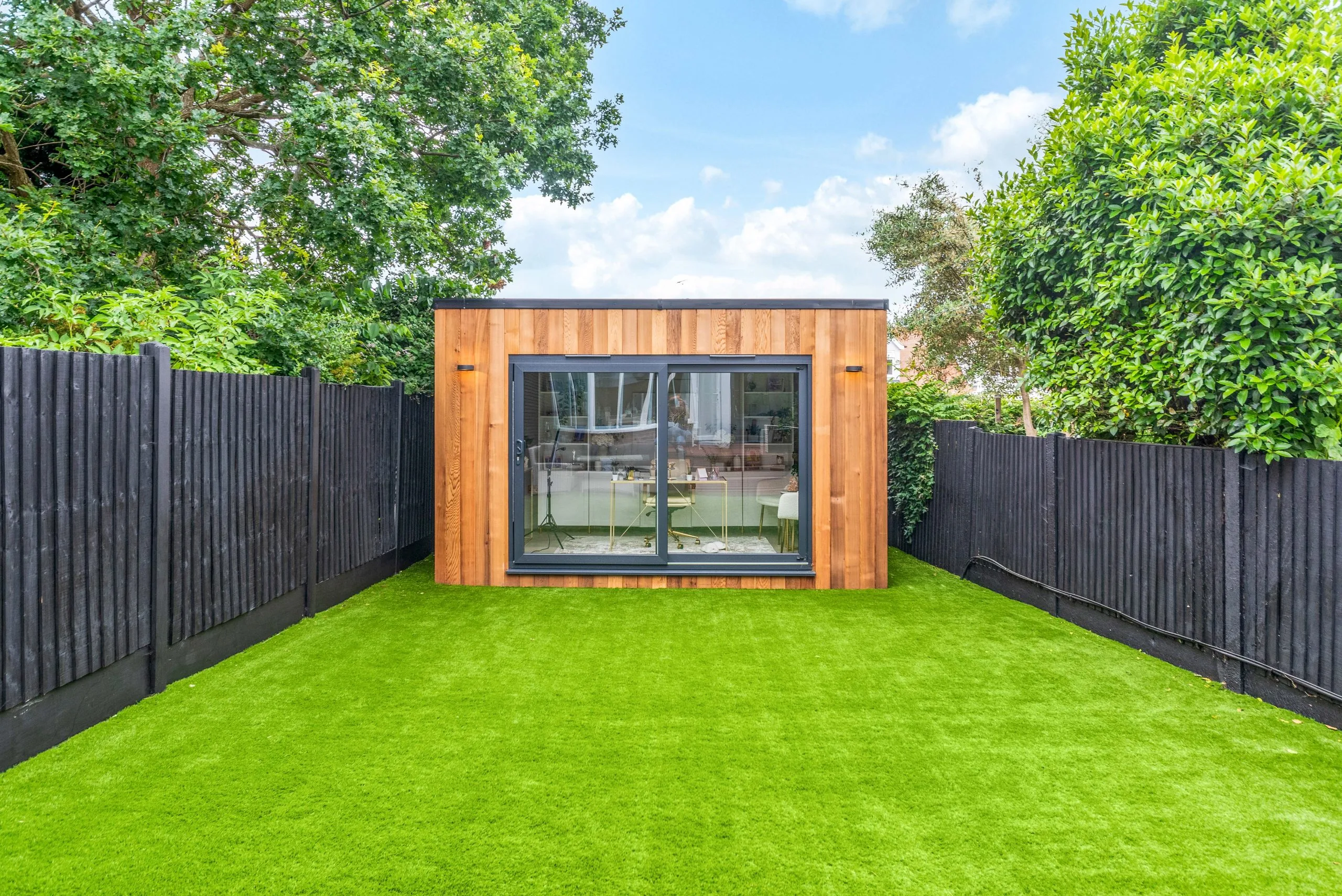
Light is the biggest reason to plan a photography studio carefully. Some photographers want abundant natural light. Others want to block out daylight completely and rely on flash, LED panels or continuous lighting. Many product businesses want both.
Natural light can be beautiful for lifestyle product photography, especially for homeware, food, interiors, stationery, flowers and handmade products. Glazing can be positioned to create soft directional light, and the outlook can make the studio feel inspiring to work in.
However, uncontrolled sunlight can cause harsh shadows, inconsistent colour and reflections. For that reason, the placement and size of windows and doors needs thought. You may want:
For e-commerce photography, artificial lighting often gives the most consistent results. If you shoot product cut-outs, packshots or repeatable catalogue images, your garden studio should support controlled lighting from the start.
That may include a generous electrical specification, carefully positioned sockets, ceiling-mounted options, lighting stand space and surfaces that do not create unwanted colour casts. For video, you may also want quiet heating and cooling so audio is not affected during recording.
Reflective products such as glassware, jewellery, glossy packaging, ceramics, watches and beauty products can be difficult to photograph in a bright room. A bespoke studio can include blackout blinds, matt wall finishes and layout choices that reduce unwanted reflections.
A product photography studio is a working room, so the interior should look refined but also behave well on camera. Small choices can make a noticeable difference to the quality and efficiency of your shoots.
Neutral walls are usually the best starting point. White, soft grey or warm off-white can help avoid colour contamination. Some clients may want one statement surface or texture wall for lifestyle imagery, but it is sensible to keep at least one wall plain and highly usable.
The floor should be durable, easy to clean and suitable for moving stands, tripods, props and furniture. A premium finish can still be practical. If you photograph products on the floor, consider how the tone and texture will appear in images.
Removable or interchangeable styling boards give you variety without needing to rebuild the room. Popular options include stone-effect surfaces, timber boards, white melamine, painted panels, fabric backdrops and textured plaster-style boards. Your garden room can include a storage slot or cupboard specifically for these boards.
Ceiling height matters if you use overhead lights, booms, backdrops or raised camera positions for flat lays. It is worth discussing the type of shots you create most often so the building can be planned to feel open and practical.
Watch it with your own shooting wall, editing desk and prop storage in mind, and picture where each would sit.
Photography equipment is awkward to store because so much of it is long, fragile or oddly shaped. A bespoke garden room gives you the chance to design storage properly from the beginning rather than trying to make standard furniture work afterwards.
Useful storage ideas include:
The more you can leave set up, the more valuable the studio becomes.
If every shoot begins with unpacking equipment from plastic boxes, the room will not save as much time as it could. Bespoke cabinetry, planned socket locations and clear zones make the difference.
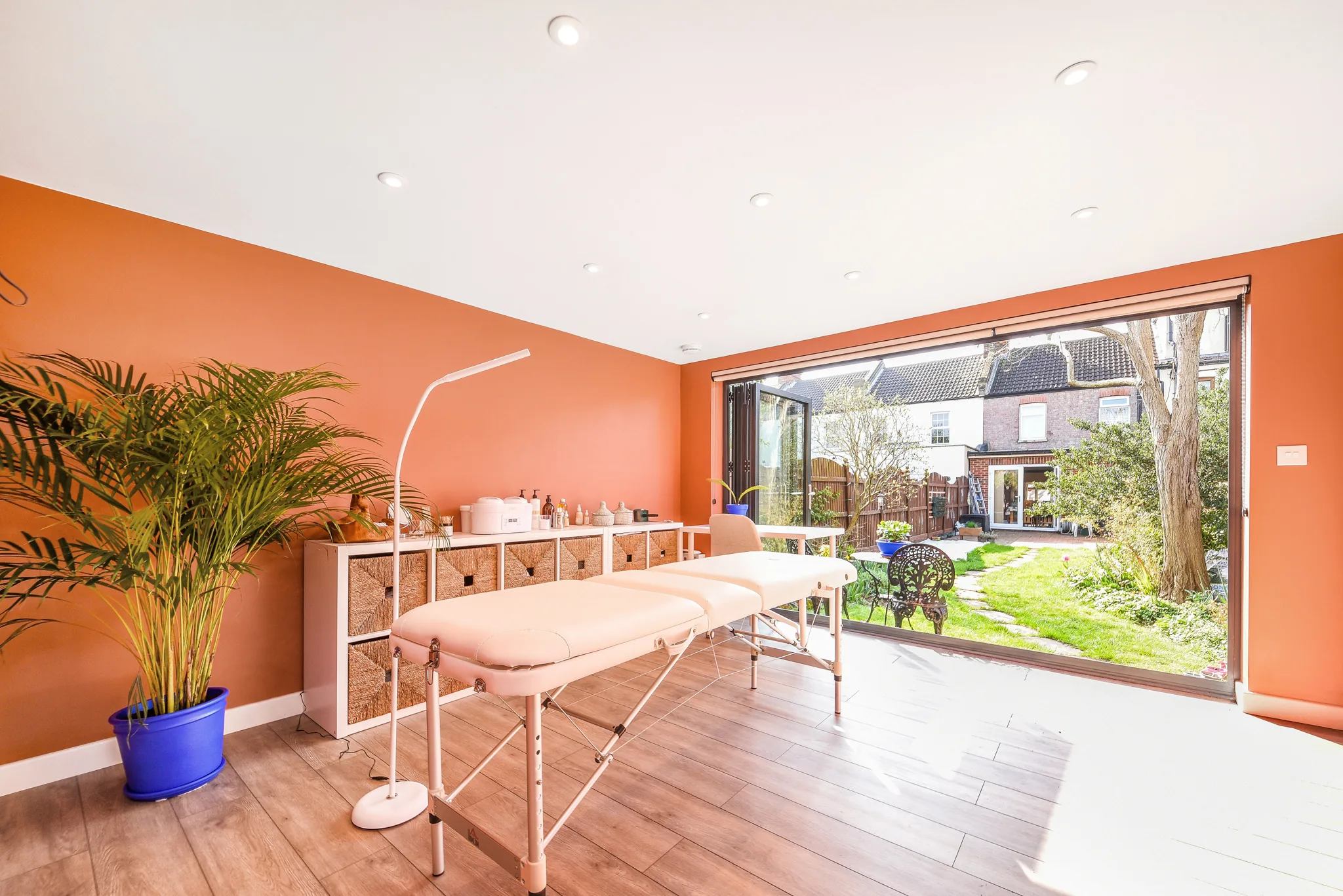
A product photography studio needs more than a couple of sockets. Cameras, lights, laptops, monitors, chargers, turntables, printers, speakers, dehumidifiers and heating or cooling all place demands on the room. Planning the electrical layout early keeps cables tidy and reduces trip hazards.
Think about where you will shoot, where you will edit, where lights will stand and where batteries will charge. Sockets at the right height can make the room much easier to use. Some clients also prefer dedicated charging drawers or a concealed power area for equipment.
A reliable connection is helpful if you upload images, manage product listings, join client calls, back up files to cloud storage or stream campaign content. Depending on the property, this may be planned through Wi-Fi support, data cabling or another suitable solution.
Photography studios can become warm when lights and equipment are running. A comfortable working temperature is important, especially for longer shoots. Ventilation also matters if you work with paints, sprays, flowers, food, packaging materials or products sensitive to moisture.
A bespoke garden room becomes far more effective when it is shaped around what you actually sell or photograph. Here are a few examples of how the same building could be adapted for different types of product photography.
Small reflective products need excellent light control, clean work surfaces and secure storage. A compact studio may include a macro photography desk, blackout options, neutral finishes and lockable cabinets for stock and equipment.
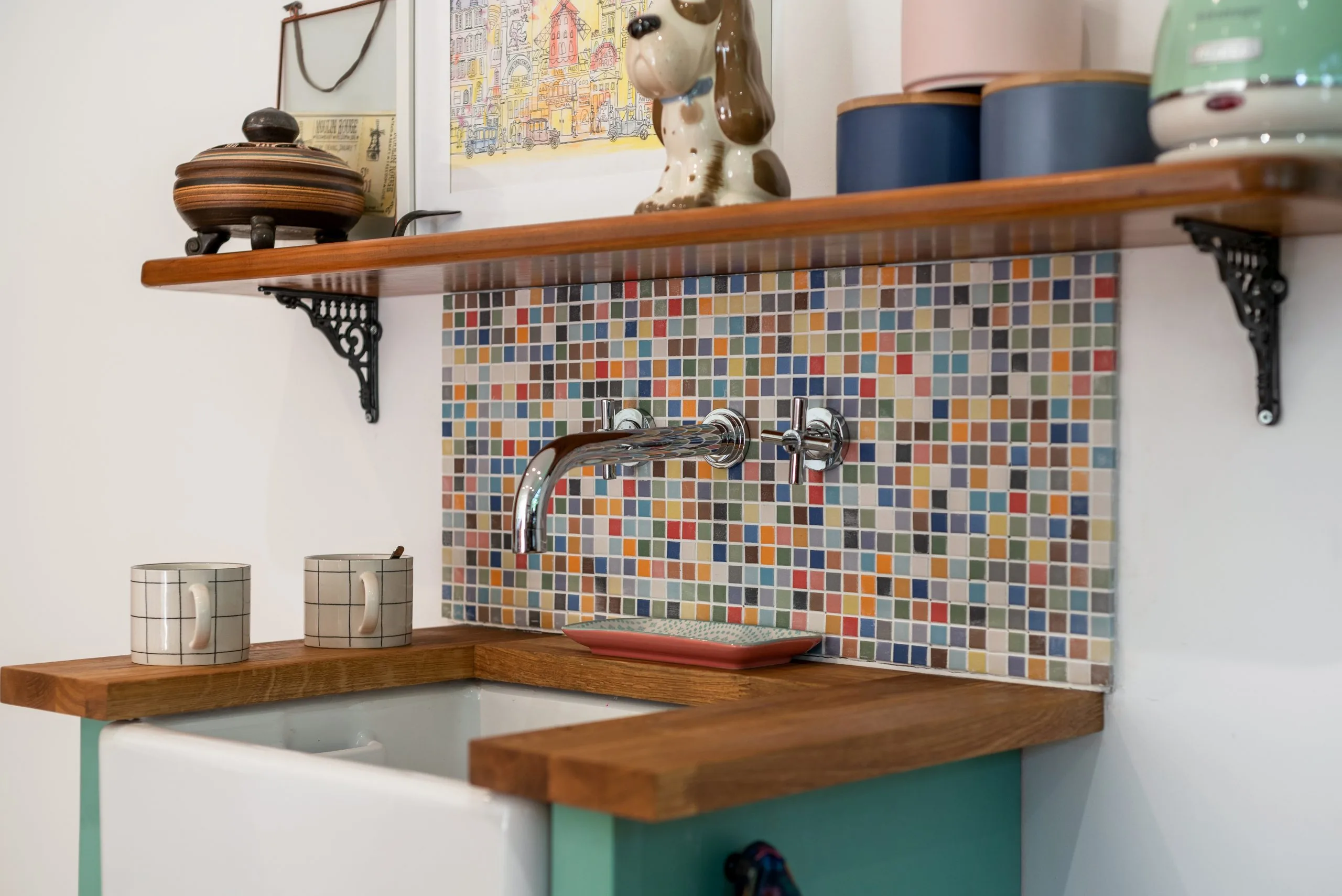
Beauty photography often needs pristine surfaces, soft light, close-up detail shots and room for styling ingredients, towels, flowers, trays and campaign props. A sink may be worth considering depending on the level of styling involved.
Homeware brands benefit from lifestyle corners, shelving, changeable wall colours, flooring that photographs well and enough space to style a small scene. A larger garden building can provide more distance for shooting lamps, chairs, mirrors and decorative pieces.
Food photography may require wipe-clean surfaces, ventilation, refrigeration, water access or a small prep zone. Even if the main cooking happens in the house, the studio can be designed to support styling, plating, lighting and photography.
Fashion accessories, bags, footwear and clothing need hanging rails, steamers, mirrors, storage and possibly space for a model or mannequin. You may also want a neutral full-height wall for lookbook shots or video content.
Yes — if it is built properly. A premium garden room designed for professional or business use should be comfortable in winter, summer and shoulder seasons. Insulation, quality glazing, heating, cooling and ventilation all contribute to a stable environment.
This is particularly important for product photography because temperature and moisture can affect equipment, paper backdrops, packaging, textiles, products and electronics. A well-built garden room should feel like a genuine extension of your working environment, not a shed that is only pleasant on mild days.
Many garden rooms can be built under permitted development rights, but this depends on the size, height, location, intended use and the specifics of your property. If the studio will be used for business, client visits or anything beyond occasional personal use, it is wise to discuss this early so the correct route can be considered.
Hawksbeck can talk through the practical implications of the design and help you understand what may need to be checked before moving forward. The aim is always to create a building that is both beautiful and appropriate for the site.
The cost of a bespoke product photography studio garden room depends on the size, specification, finishes, access, glazing, electrical requirements, storage, heating, cooling and any specialist features. Because every Hawksbeck garden room is designed around the client, the final price can vary significantly.
As a broad guide, a smaller premium garden room suitable for a compact e-commerce photography setup may start from the lower end of the Hawksbeck range, while a larger bespoke studio with extensive glazing, upgraded finishes, integrated storage, enhanced electrics and multiple working zones will naturally sit higher. For many serious home studios, it is sensible to think in terms of an investment from the tens of thousands, with more involved bespoke projects rising according to size and specification.
Features that may influence the cost include:
If photography is part of your business, it is also worth considering the room as a productivity investment. A dedicated studio can reduce hire costs, speed up product launches, improve brand consistency and allow you to generate content whenever you need it rather than waiting for availability elsewhere.
Packshots, flat lays or full lifestyle sets? Size the studio around your largest regular shoot.
View Our Full RangeThe best studios are designed around movement. Think about the journey from product arriving, to preparation, to styling, to photography, to editing, to storage or dispatch.
A clear surface near the entrance is useful for unpacking samples, checking stock, steaming fabrics, cleaning products and preparing items before they reach the shooting area.
If paper rolls, vinyl backdrops and boards are stored at the opposite end of the room, changing setups becomes slower. Vertical storage near the main wall keeps options within reach.
Tables on castors, moveable plinths and modular shelving allow the room to adapt quickly. This is useful if you switch between flat lays, seated product styling, video and larger scenes.
Lights, laptops and chargers can create messy cables. Floor sockets, wall sockets, cable channels and well-placed power points can make the studio safer and more pleasant to use.
A pinboard, magnetic wall or planning rail can help with moodboards, campaign notes, shot lists and styling references. This is especially useful for brands shooting seasonal collections.
A product photography studio may contain valuable cameras, lenses, lighting, stock, computers and business materials. Security should be considered as part of the design rather than added as an afterthought.
Depending on the project, this could include robust doors and windows, appropriate locks, discreet storage for valuable items, external lighting, alarm considerations and careful positioning within the garden. The aim is to create a beautiful studio that also feels secure and practical for everyday business use.
Yes, if it is built properly. Insulation, quality glazing, heating, cooling and ventilation keep the environment stable, which matters for equipment, paper backdrops, packaging, textiles and products.
Size the room around your largest regular shoot, not your smallest. Tabletop work for jewellery or cosmetics suits a compact studio, while furniture and lifestyle sets need more depth and ceiling height.
A bespoke studio can include blackout blinds, matt wall finishes and layout choices that reduce unwanted reflections from glossy and reflective products.
Many garden rooms fall under permitted development, but size, height, location and intended use all matter. If the studio is used for business or client visits, it is wise to discuss this early so the correct route can be considered.
A product photography studio has to work harder than a simple spare room. It needs to look good, feel comfortable and support a very specific workflow. Hawksbeck’s bespoke approach means the design can respond to the way you shoot, the products you sell and the level of finish you want your business to reflect.
Rather than forcing your studio into a standard layout, the building can be planned around details such as camera distance, blank wall space, lighting positions, storage sizes, workbench height, glazing orientation and client presentation. That is where a premium bespoke garden building becomes especially valuable: the room is not just added to your garden, it is designed around the work you want to do inside it.
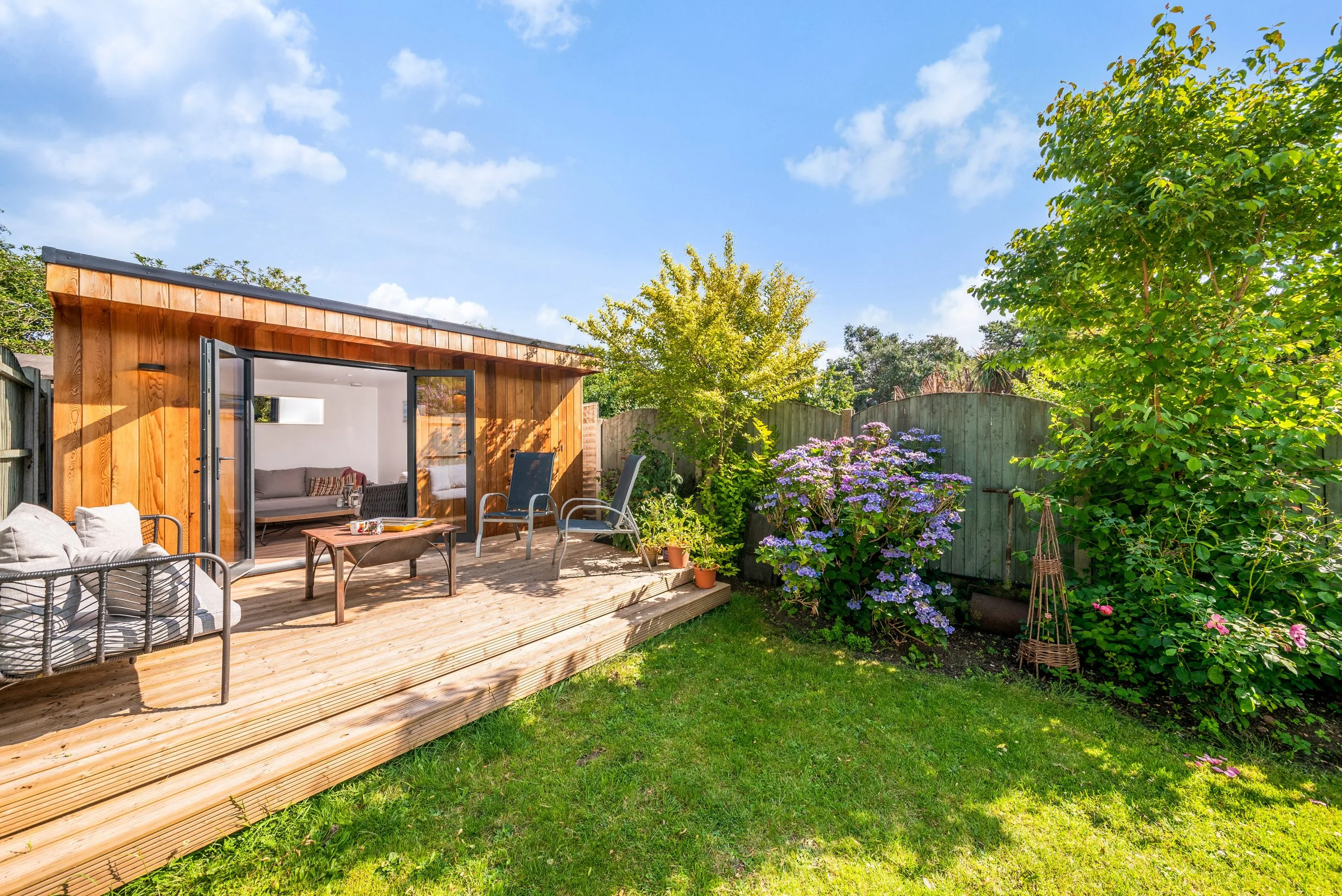
If you are tired of clearing the dining table, hiring studios, working around poor light or packing equipment away after every shoot, a bespoke garden room could give your brand a permanent creative base. The most useful next step is to think about what you photograph most often, what frustrates you about your current setup and what would make your production process faster, cleaner and more consistent.
Hawksbeck can help you turn that brief into a premium garden room designed for photography, content creation and day-to-day business use.
These projects show how a bespoke garden room can be tailored for creative work, studio use, focused business space and premium everyday comfort.
A refined garden studio project showing how a separate building can become an inspiring creative space with the comfort, finish and privacy needed for focused work at home.
View project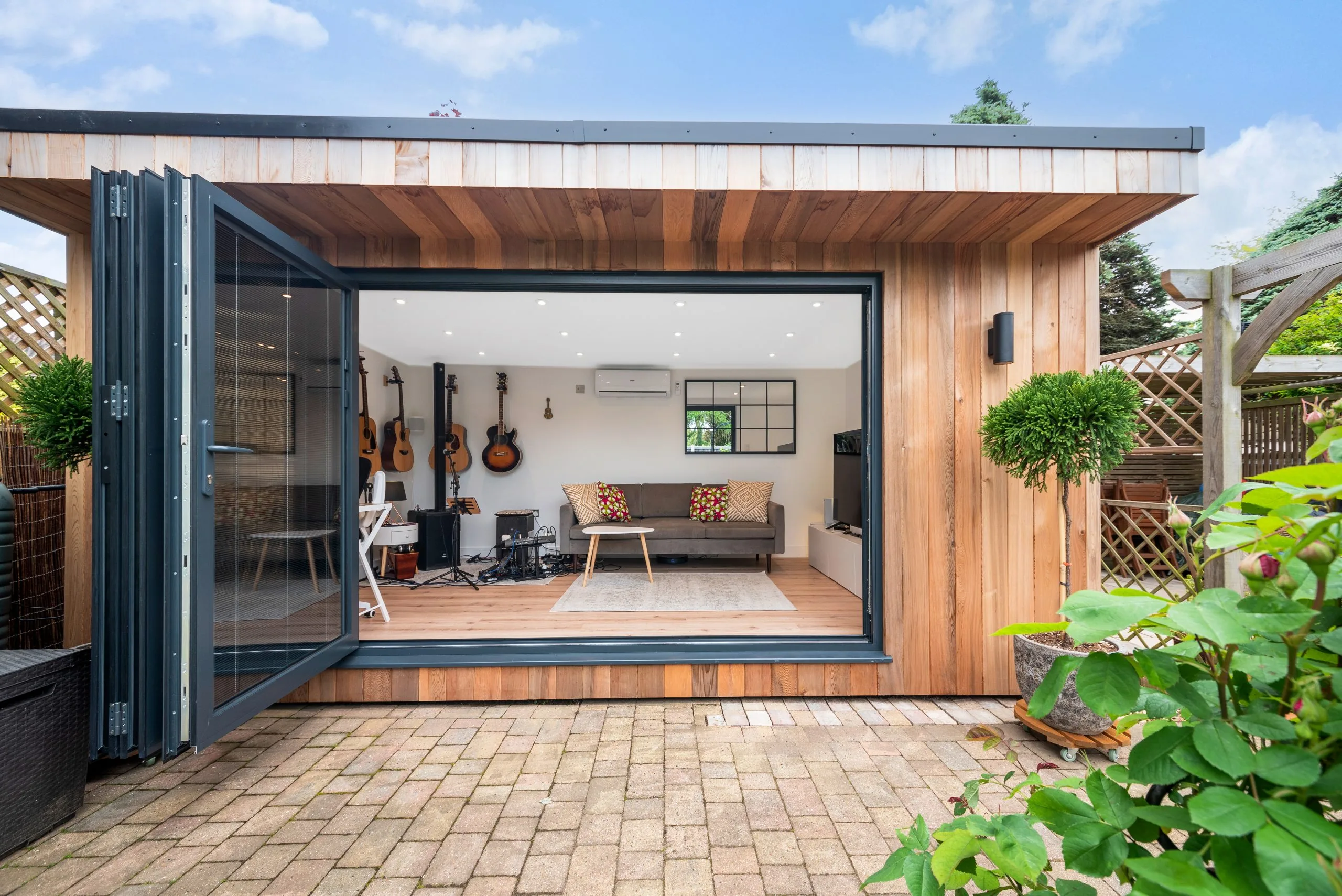
This studio office demonstrates the value of a carefully planned garden building for business use, combining practical working space with a premium contemporary finish.
View project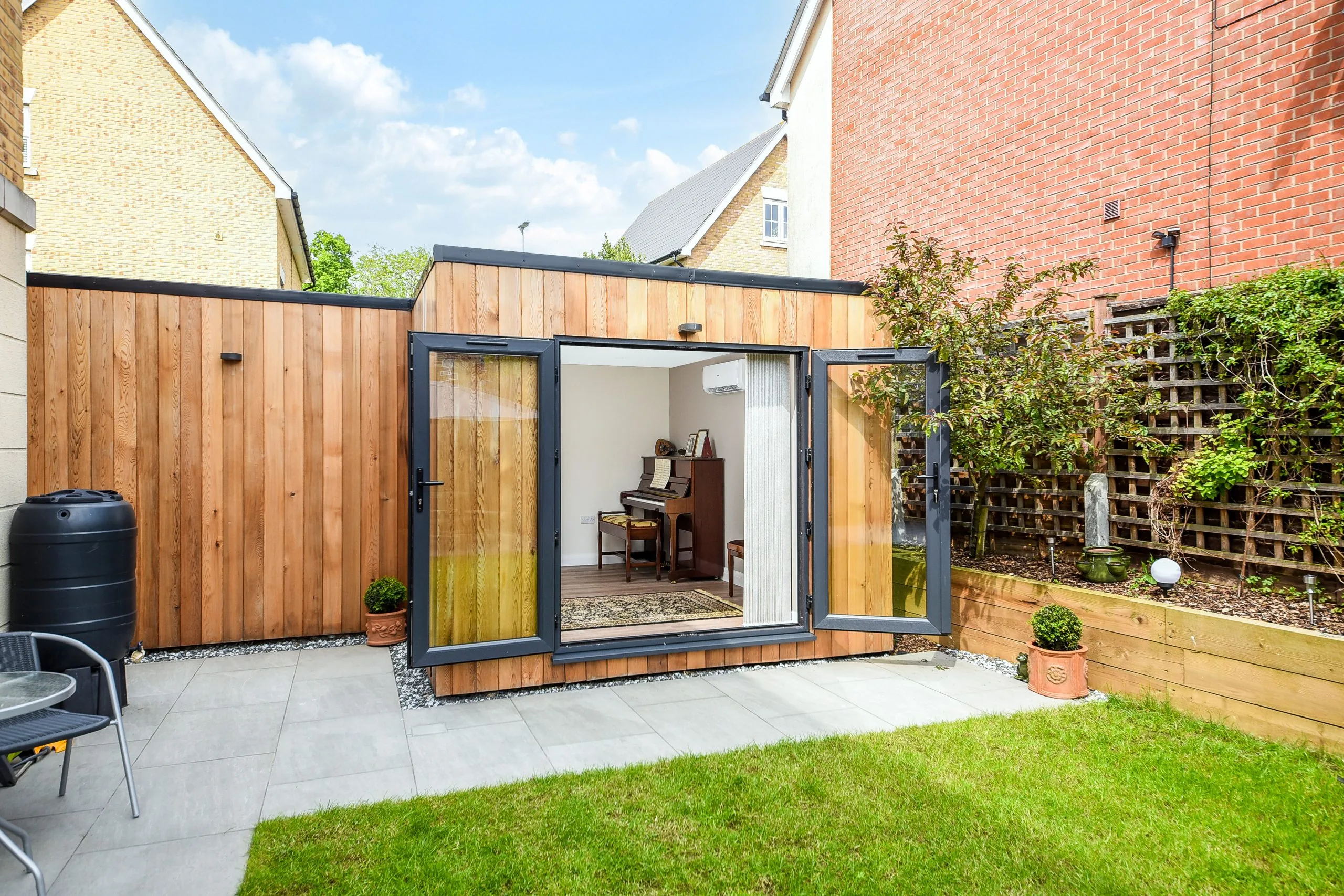
A versatile office and studio build highlighting how a bespoke garden room can support professional work, creative activity and a calm separation from the main home.
View project