
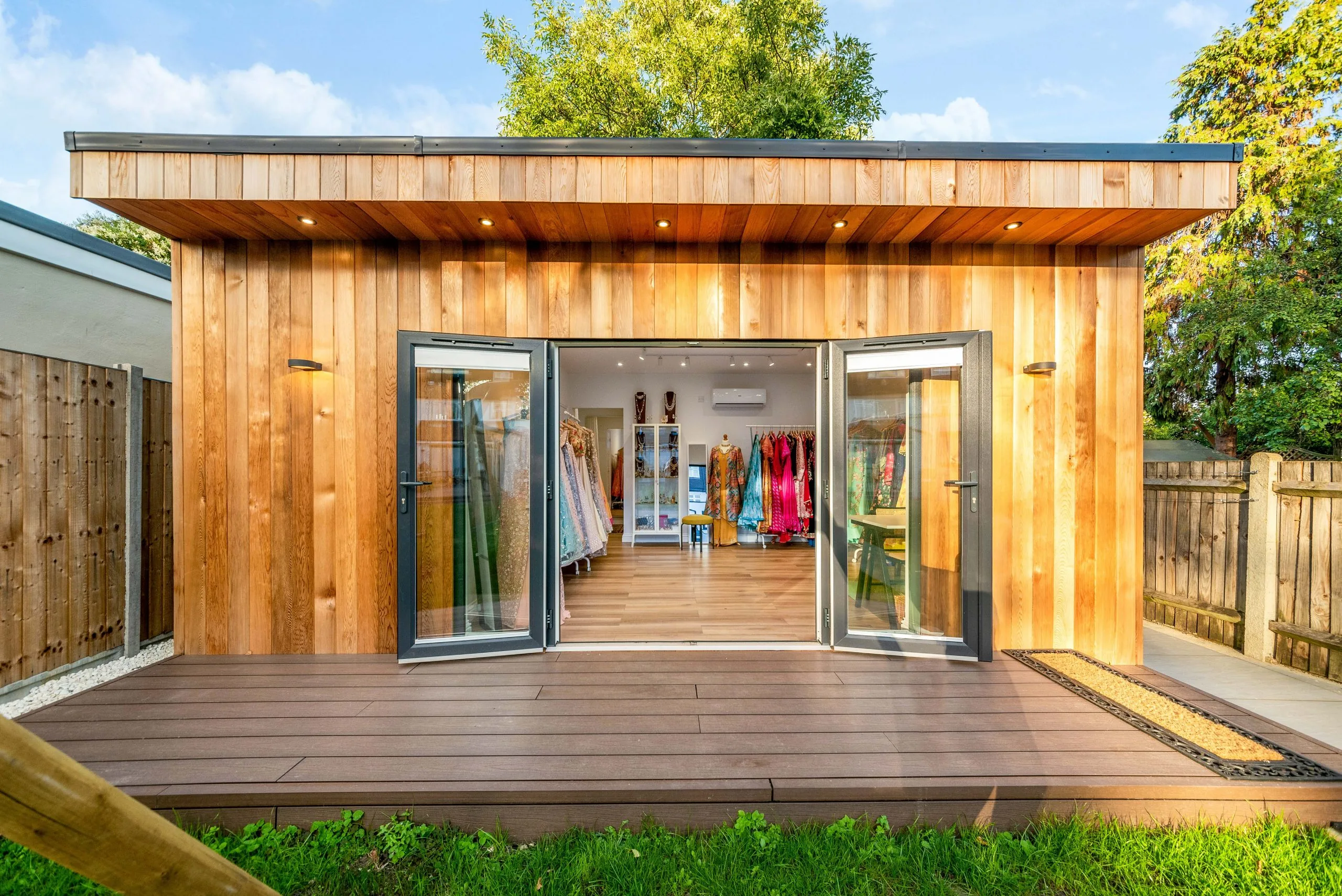
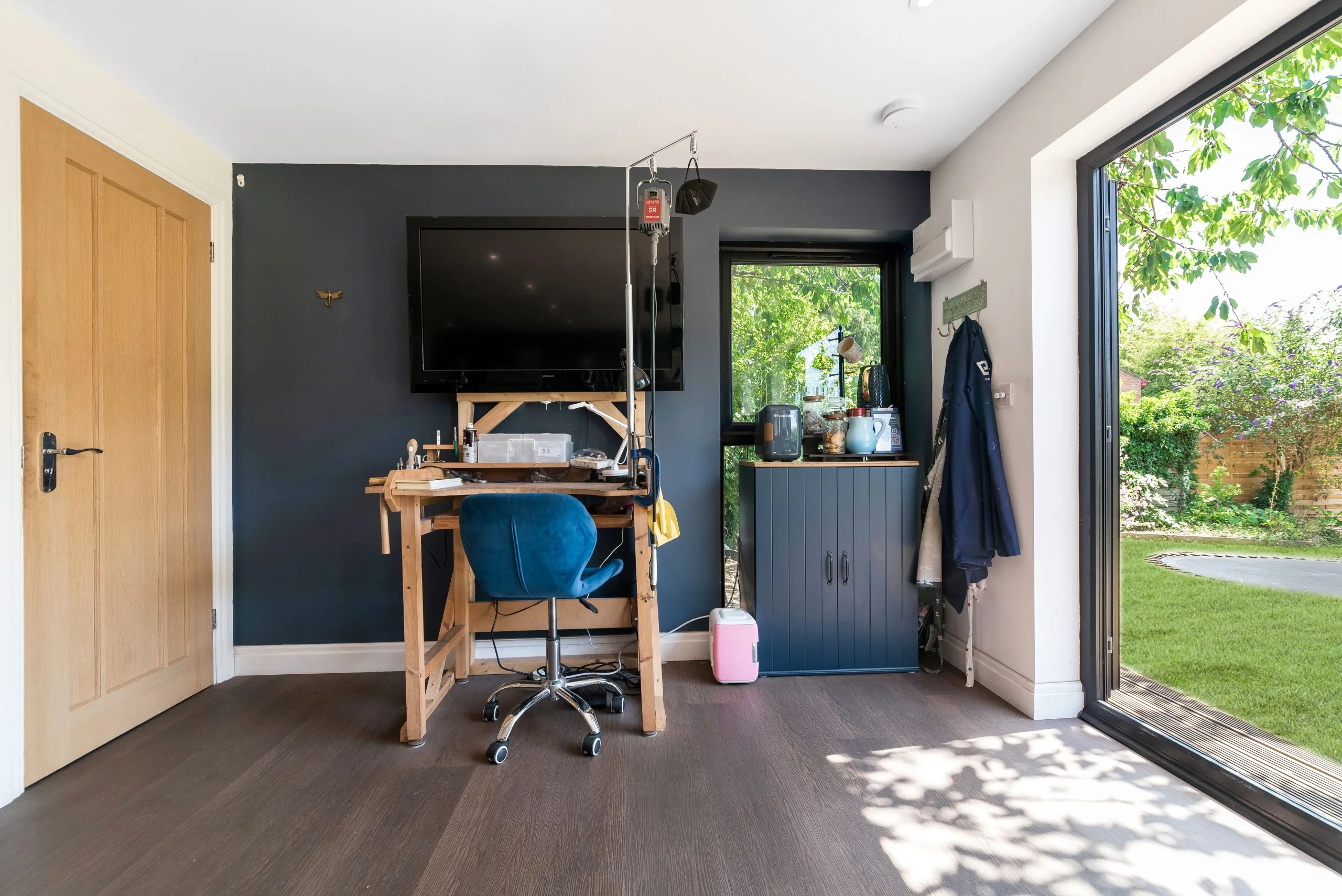
Bespoke Garden Room Workshop
A tailored workshop garden room showing how a dedicated building can be designed for practical tasks, storage and year-round use while still achieving a refined, premium finish.
View project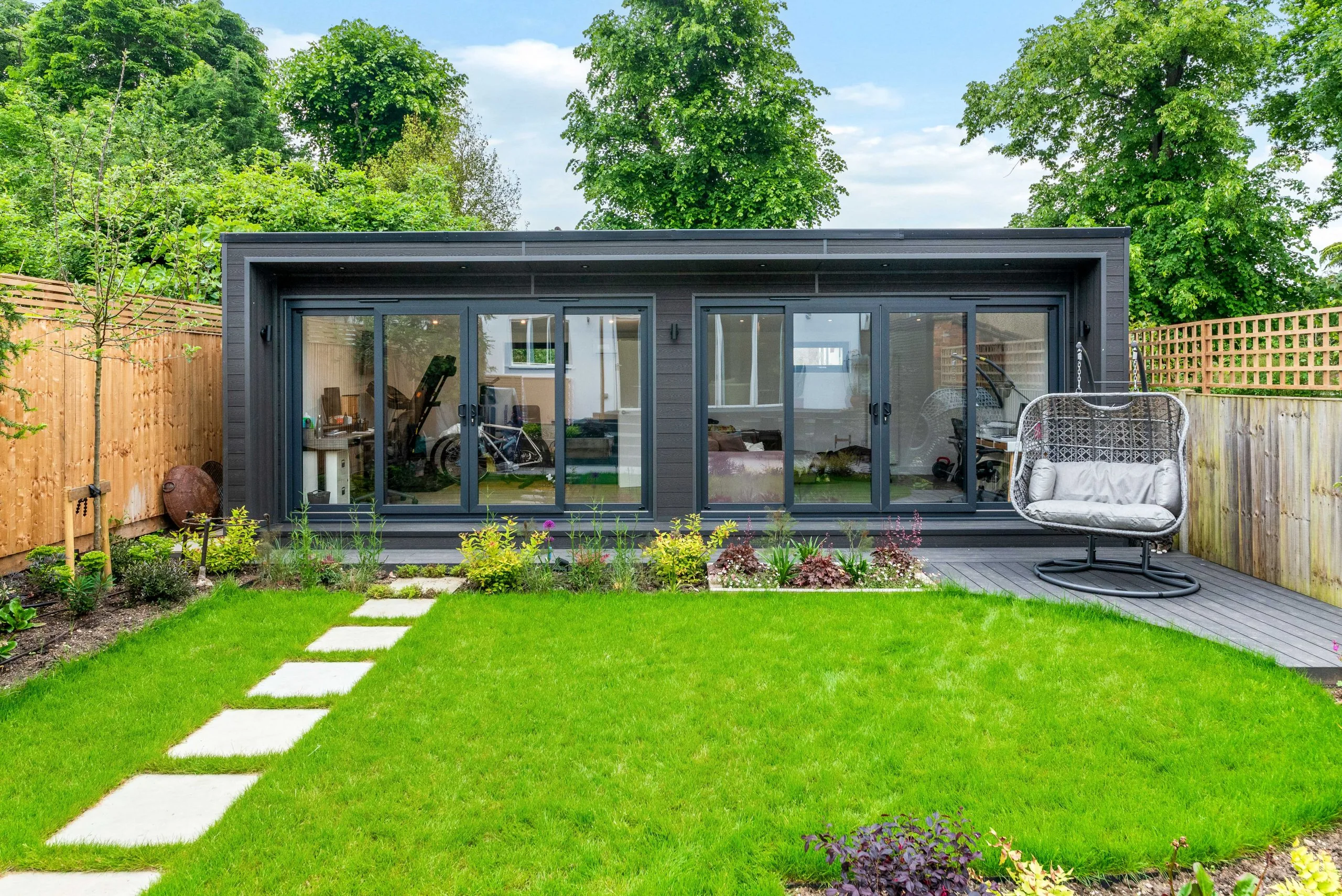
Premium bikes deserve more than a crowded garage corner, a hallway wall hook or a shed that becomes too cold, damp or cluttered to work in properly. A bespoke garden room bicycle workshop gives you a calm, organised space where your road bike, gravel bike, mountain bike, e-bike or collection of frames can be stored, maintained and enjoyed without compromising the rest of the house.
For keen cyclists, the difference is not just having “somewhere to put the bike”. It is having the right height workbench, a sturdy repair stand, shadow-boarded tools, clean lighting for detailed mechanical work, secure storage for expensive components, enough floor space to move around the bike, and a building envelope that protects your equipment all year round.
At Hawksbeck, our garden rooms are individually designed and built to suit the purpose, which makes a bicycle workshop a particularly strong use case. Whether you want a beautifully finished bike maintenance studio, a combined cycle workshop and turbo training room, or a secure garden building with workshop space and discreet storage, the room can be planned around your bikes, your tools and your routine.
A bicycle workshop has a very particular set of requirements. It needs to be practical enough for real mechanical work, but comfortable enough that you actually want to spend time in it. It should be secure, insulated, easy to keep tidy and properly lit. It should also be laid out so the bike, the tools and the person working on it all have enough room.
A bespoke garden room can provide exactly that, with advantages that are hard to achieve in a standard shed or typical garage:
Year-round comfort: insulation, heating and proper glazing help create a pleasant working environment during winter servicing, spring race prep and wet-weather repairs.
Better protection for premium bikes: a high-quality building helps reduce exposure to damp, cold and condensation, all of which can affect components, bearings, drivetrains and stored kit.
Dedicated security: doors, locks, glazing choices, discreet positioning and alarm options can all be considered from the start.
Cleaner organisation: wall-mounted tools, storage cabinets, tyre racks, hooks, drawers and worktops can be arranged to suit your collection.
Space to work safely: enough clearance around a repair stand means you can remove wheels, adjust gears, bleed brakes or clean drivetrains without squeezing past clutter.
A more enjoyable cycling lifestyle: the room can also include space for indoor training, stretching, kit storage, nutrition, race-day preparation and post-ride maintenance.
If you are exploring wider options for how to use a garden building, our main garden room ideas guide includes many more ways a bespoke room can be designed around your home and lifestyle.
The best bicycle workshop layouts begin with one simple question: how many bikes need to be stored, and how often will each one be worked on? A single high-value road bike has very different space requirements from a family cycling hub with e-bikes, children’s bikes, cargo bikes and trail bikes. A cyclist who enjoys full strip-downs and wheel building will need a different internal arrangement from someone who mainly wants safe storage, cleaning space and occasional maintenance.
Here are the key areas to think about when planning the room.
A freestanding repair stand or wall-mounted work stand needs space around it. Ideally, you should be able to walk around the bike while it is clamped in place, remove both wheels, access the drivetrain side comfortably and use longer tools without hitting walls or furniture.
For serious home mechanics, this area may include:
Bike tools are often small, specific and easy to misplace. A bespoke garden room workshop can include a neat combination of shadow boards, slatwall, drawers, cabinets and open shelving, so your torque wrench, chain whip, cassette tool, brake bleed kit and bottom bracket tools all have a logical home.
Many cyclists prefer a visible wall-mounted system for commonly used tools, with enclosed storage for spares, fluids and less attractive items. The result is a room that feels ordered rather than industrial, which is especially important when the garden building is close to the house or visible from the garden.
The correct bike storage depends on the type of bikes you own, how frequently they are used and how much you want them on display. Premium road bikes and custom builds may suit a clean wall-mounted display system, while mountain bikes and e-bikes often need more robust floor-level storage due to their weight and geometry.
Possible storage approaches include:
There is no single correct size, because the answer depends on whether the room is purely for maintenance, storage and tools, or whether you want it to double as a training studio, hobby room, home office or garden store. However, the following guide gives a useful starting point.
It is worth allowing slightly more room than you think you need.
Bikes are awkward shapes, wheels take up space, and maintenance work is far easier when you are not constantly moving items out of the way. If your garden allows, a modest increase in footprint can make the workshop feel significantly more usable.
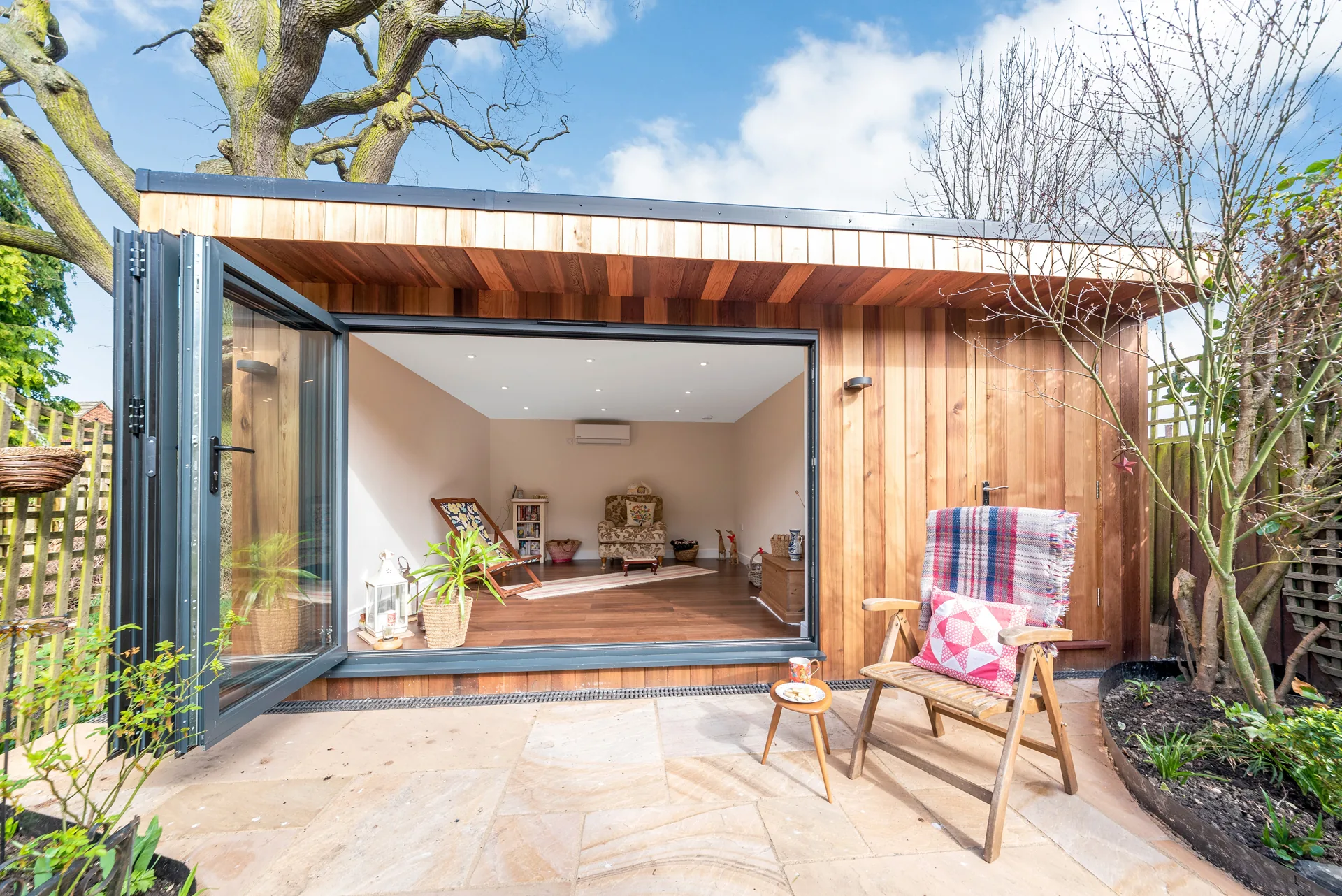
For many cyclists, security is the deciding factor. Modern bikes can represent a substantial investment, particularly if you own carbon road bikes, e-bikes, full-suspension mountain bikes, custom frames, wheelsets or electronic groupsets. A proper bicycle workshop should therefore be designed with security from the outset rather than treated as an afterthought.
Important security considerations include:
A bespoke approach makes it easier to balance security with aesthetics. The room can still feel bright, refined and premium, but the layout, access points and storage positions can be planned intelligently.
Bikes do not like being stored in damp, poorly ventilated spaces. Moisture can contribute to corrosion, unpleasant smells, swollen wooden cupboards, degraded kit and general workshop discomfort. A high-quality garden room offers a much more stable environment than a basic outbuilding, especially when insulation, ventilation and heating are correctly considered.
For a bicycle workshop, we would usually recommend thinking carefully about:
If you often return from wet rides, we can discuss how the entrance, flooring, heating and ventilation can work together so the space remains fresh and practical.
Good workshop lighting is often underestimated. Adjusting gears, checking brake pad alignment, inspecting chain wear, seating tubeless tyres or tracing a mystery creak is much easier in a properly lit space. Natural light is pleasant, but task lighting is essential.
A strong lighting plan for a garden bicycle workshop may include:
Because a Hawksbeck garden room is designed to suit your individual use, lighting can be positioned around your actual workshop layout rather than added afterwards in inconvenient places.
A contemporary bicycle workshop is rarely just a manual workspace. You may need sockets for charging lights, GPS devices, electronic shifting batteries, e-bike batteries, heated drying rails, power tools, a compressor, speakers, a smart trainer, a laptop, a screen or a Wi-Fi-connected training platform.
Useful electrical features can include:
For e-bike owners, charging needs should be discussed carefully. Battery storage, ventilation, socket positions and safe charging habits all matter, particularly if multiple e-bikes are kept in the workshop.
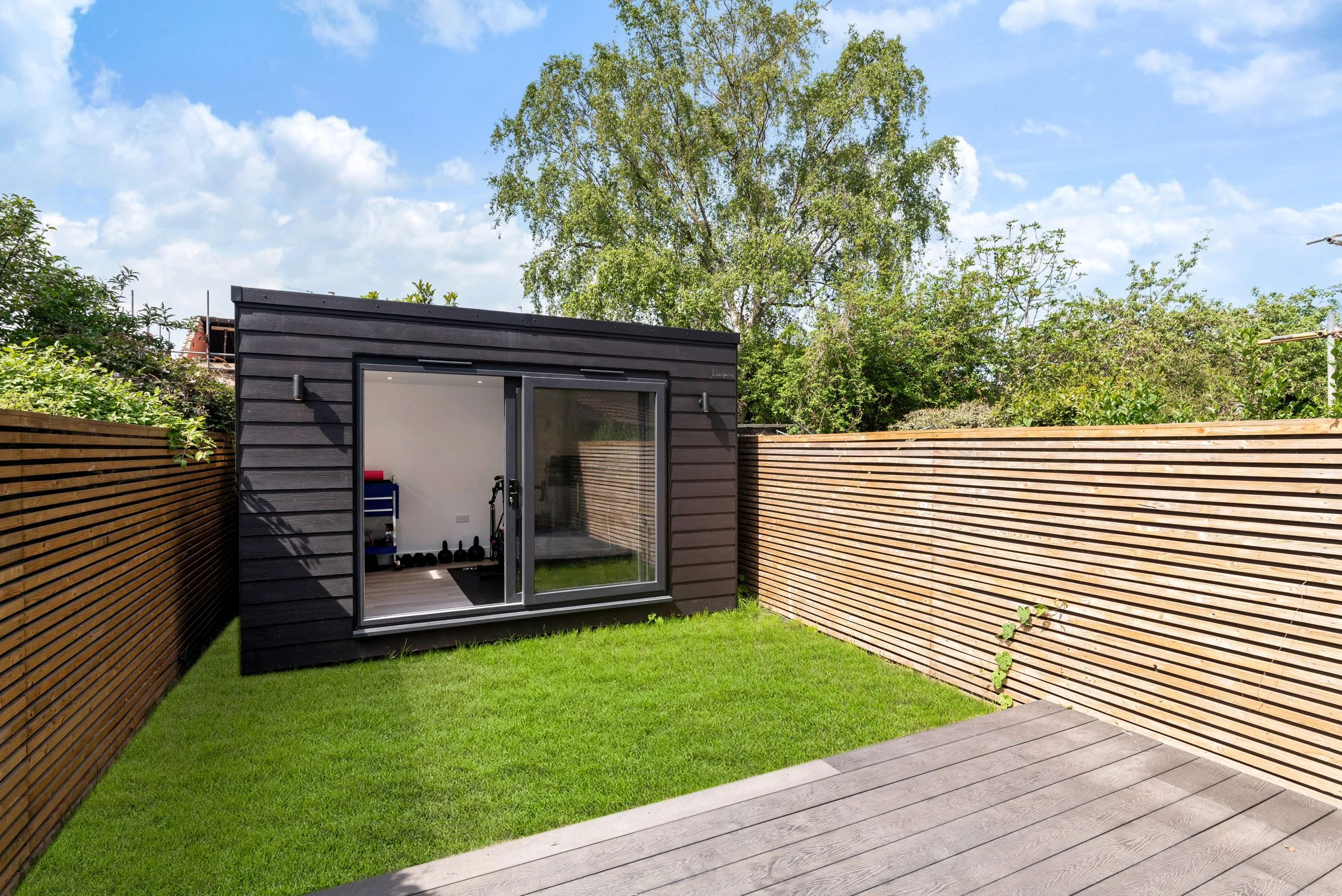
For many cyclists, the ideal garden building is not only a repair space. It is also somewhere to train. A combined bicycle workshop and indoor cycling studio can make excellent use of the room, particularly during winter, early mornings or busy working weeks.
A dual-purpose layout might include a clean workshop zone on one side, with a smart trainer or static bike zone on the other. You could add a wall-mounted screen, large fan, towel storage, water bottle shelf and easy-clean flooring. This creates a practical cycling hub where your equipment, training and maintenance all happen in one place.
Key details to consider include:
A bicycle workshop does not need to look like a utility shed. With the right finishes, it can feel polished, calm and intentional while still being practical enough for oily chains and wet tyres. This is where a bespoke garden room has a major advantage: the exterior can complement your garden and home, while the interior can be adapted for real cycling use.
Popular finish choices for bike workshops include:
Durable flooring: easy to clean, resilient and suitable for wheeling bikes in and out.
Hardwearing wall finishes: especially around workbench and storage zones.
Integrated cabinetry: useful for hiding helmets, shoes, cleaning products and spares.
Feature walls: ideal for displaying a favourite bike or frame.
Discreet exterior design: a refined building that does not look like a commercial workshop.
Premium glazing and doors: to create a bright, comfortable room with a high-quality feel.
The balance is important. Too utilitarian and the room may feel cold; too delicate and you may be nervous about using it properly. A good bicycle workshop sits in the middle: elegant, robust and easy to maintain.
Some cyclists want a simple, dry maintenance room. Others would like a more complete setup with a sink, water supply or nearby wash-down area. Whether this makes sense depends on your garden, drainage options, budget and how you clean your bikes.
A full indoor wash area is not always necessary, and in many cases it is better to keep heavy washing outside and use the workshop for drying, storing and fine maintenance. However, a small sink can be useful for hand washing, cleaning small parts, filling bottles or rinsing brushes. External taps, covered wash zones or nearby drainage can also be discussed as part of the wider design.
If you regularly ride off-road, commute in winter or maintain multiple bikes, it is worth raising this early so the building can be planned sensibly.
A road cycling workshop often benefits from clean display storage, precise lighting and organised small-parts storage. Space for a turbo trainer, wheelsets, race kit, nutrition and electronic charging is usually valuable. The room can feel more like a performance studio than a traditional workshop.
Mountain bikes typically need tougher flooring, more generous clearances, space for mudguards, suspension tools, helmets, body armour and cleaning equipment. Ventilation and drying areas become more important, especially after winter trail riding.
Gravel riders often accumulate bags, lights, navigation equipment, spare tyres, tools and camping kit. A bespoke storage wall can bring all of this together, making it easier to prepare for long rides and weekend trips.
E-bikes are heavier, so floor-level storage is often preferable. Charging points, battery storage, wider access and robust flooring should all be considered. If multiple e-bikes are stored, the layout needs to allow easy movement without lifting heavy bikes awkwardly.
A family cycling room may need less bench space and more practical storage: helmets, scooters, children’s bikes, pumps, locks, coats and school cycling kit. A split layout with workshop space for adult bikes and simple storage for family equipment can work well.
Pricing depends on the size of the building, specification, groundworks, glazing, doors, electrics, internal finishes, heating, storage requirements and any additional features such as plumbing, enhanced security or a combined training area. Because Hawksbeck garden rooms are bespoke, the final cost is discussed and tailored to your project rather than forced into a one-size-fits-all package.
As a broad guide, a compact premium garden room suitable for a clean bicycle workshop may begin from the lower end of the Hawksbeck range, while larger, more highly specified buildings with extensive glazing, integrated storage, heating, electrical upgrades and multi-use zones will naturally sit higher. Many clients considering a dedicated bike workshop should expect a serious, high-quality garden building investment, often in the region of £25,000 to £60,000+, depending on the size and level of specification.
A simpler workshop and bike storage room may sit closer to the entry point of the range. A larger cycling studio with workshop, smart trainer area, bespoke cabinetry, premium finishes and enhanced security could be considerably more. The most accurate way to understand cost is to talk through your bikes, your tools, your garden and how you want to use the room day to day.
When comparing options, it is also worth considering what the building is protecting. If the room will house several premium bikes, e-bikes, wheelsets, tools and cycling technology, a secure and properly insulated bespoke building can be a very sensible investment.
The build quality and finishes that let a hard-working bike room sit quietly in the garden instead of looking like a lock-up.
Many garden rooms can be built under permitted development rights, provided they meet the relevant rules on size, height, position and use. However, every property is different, and factors such as conservation areas, listed buildings, boundaries and intended use can affect what is possible. This should always be checked before progressing.
For a bicycle workshop, positioning matters for practical reasons as well as planning. You may want the building close enough to the house for convenience, but discreet enough that it does not draw attention to valuable bikes. Access from the side gate, driveway or garden path is also important, especially if you regularly wheel bikes in and out.
Good location questions include:
Before commissioning a bespoke garden room, it helps to create a simple inventory of what the space needs to hold and how you want to use it. This does not need to be technical; it simply helps shape the design around real life.
Useful details to share include:
The more precise the brief, the easier it is to create a room that feels effortless once it is built.
A garden bicycle workshop should make cycling simpler, not create new frustrations. These are some of the most common issues worth avoiding:
The best bicycle workshop garden rooms are quietly capable. They do not need to look like a bike shop or an industrial unit. They can sit beautifully within the garden, complement the house and still provide the strength, storage, lighting, security and practicality required for a serious cycling setup.
For some clients, the appeal is the convenience of having every tool exactly where it should be. For others, it is the reassurance of storing expensive bikes in a dedicated, secure and insulated space. Some want a workshop that doubles as a training room; others want a beautifully finished private retreat centred around cycling. A bespoke Hawksbeck garden room can be designed around any of these priorities.
If you are planning a premium garden bicycle workshop, the most useful next step is to discuss the bikes, the garden and the way you want the room to function. From there, the design can be shaped around the details that will matter every time you open the door.
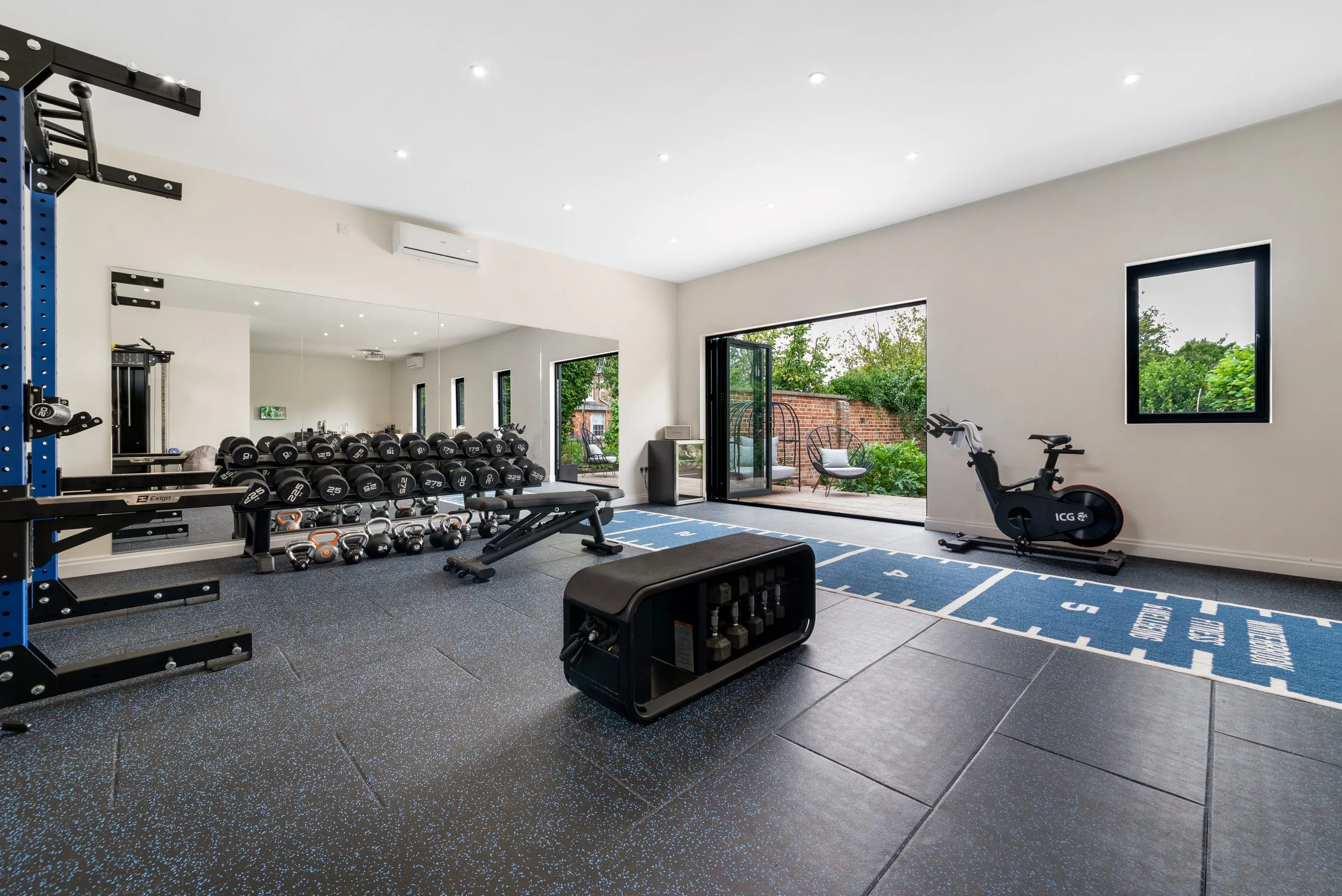
These projects show how bespoke garden buildings can be tailored for practical, creative and workshop-led uses, with the quality and flexibility needed for a premium cycling space.
A tailored workshop garden room showing how a dedicated building can be designed for practical tasks, storage and year-round use while still achieving a refined, premium finish.
View project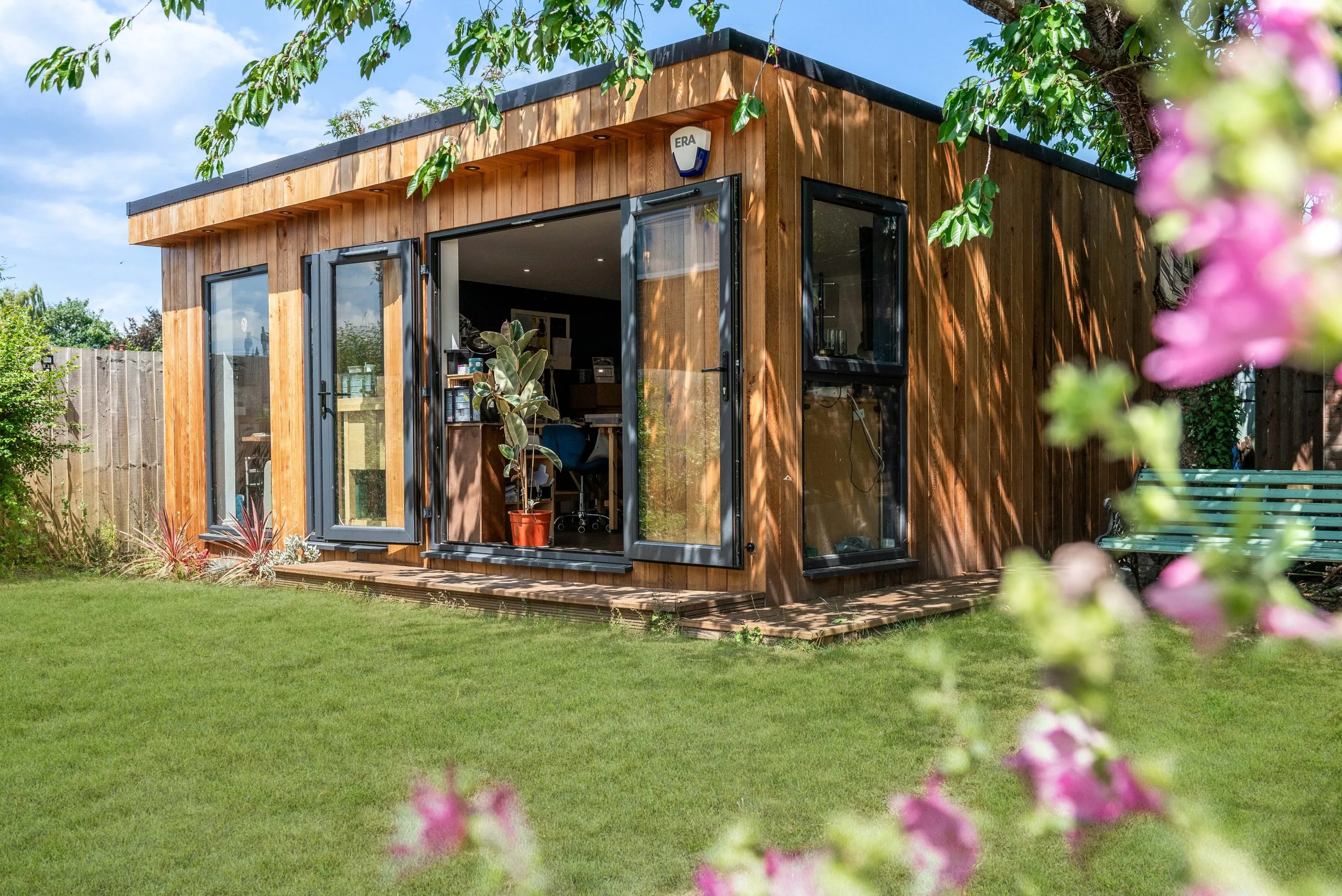
This specialist workshop project highlights the value of excellent lighting, comfort, storage and attention to detail when creating a garden room for precise hands-on work.
View project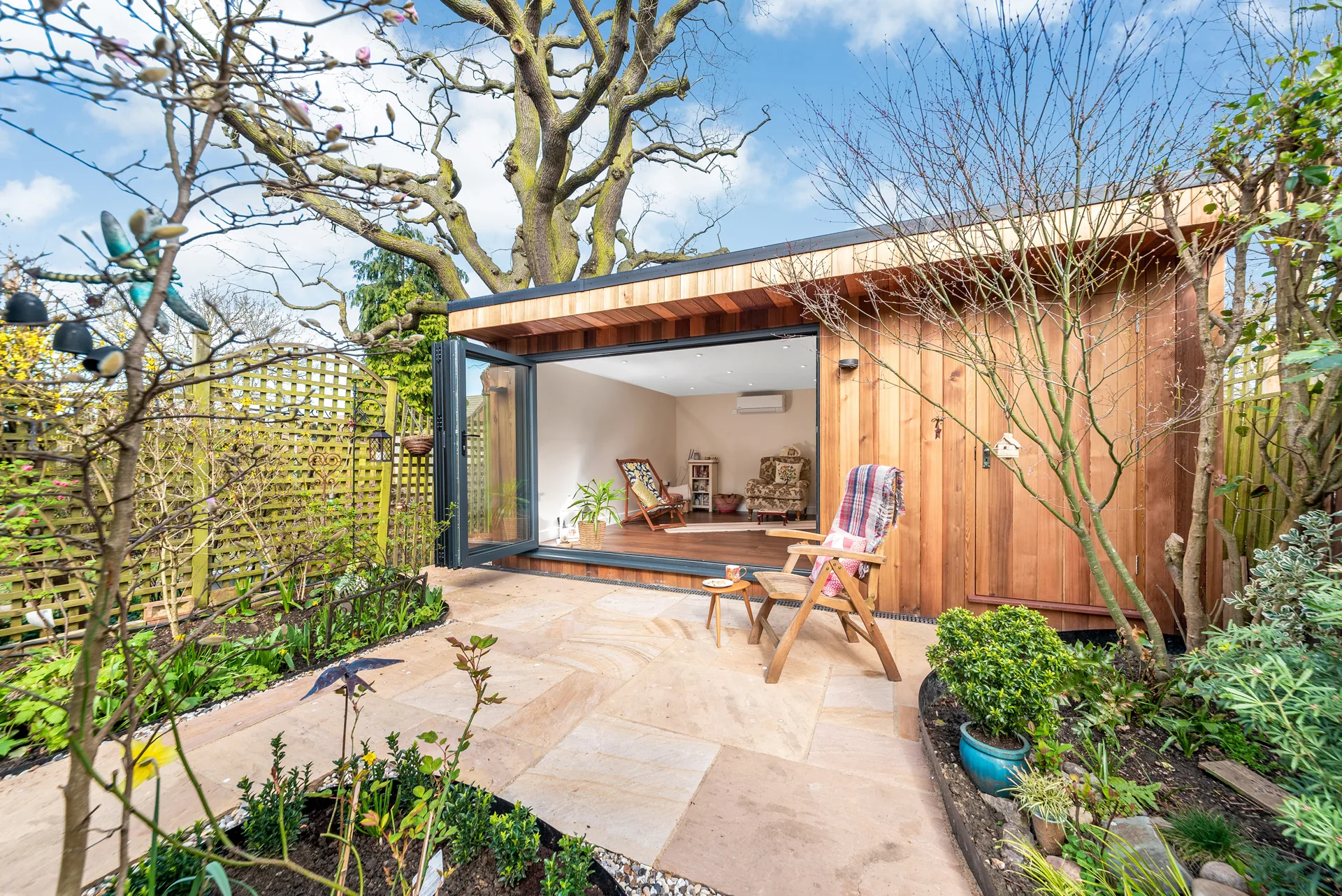
A practical and attractive garden building demonstrating how hobby space and storage can be brought together in one bespoke design, ideal inspiration for a cycling workshop brief.
View project