
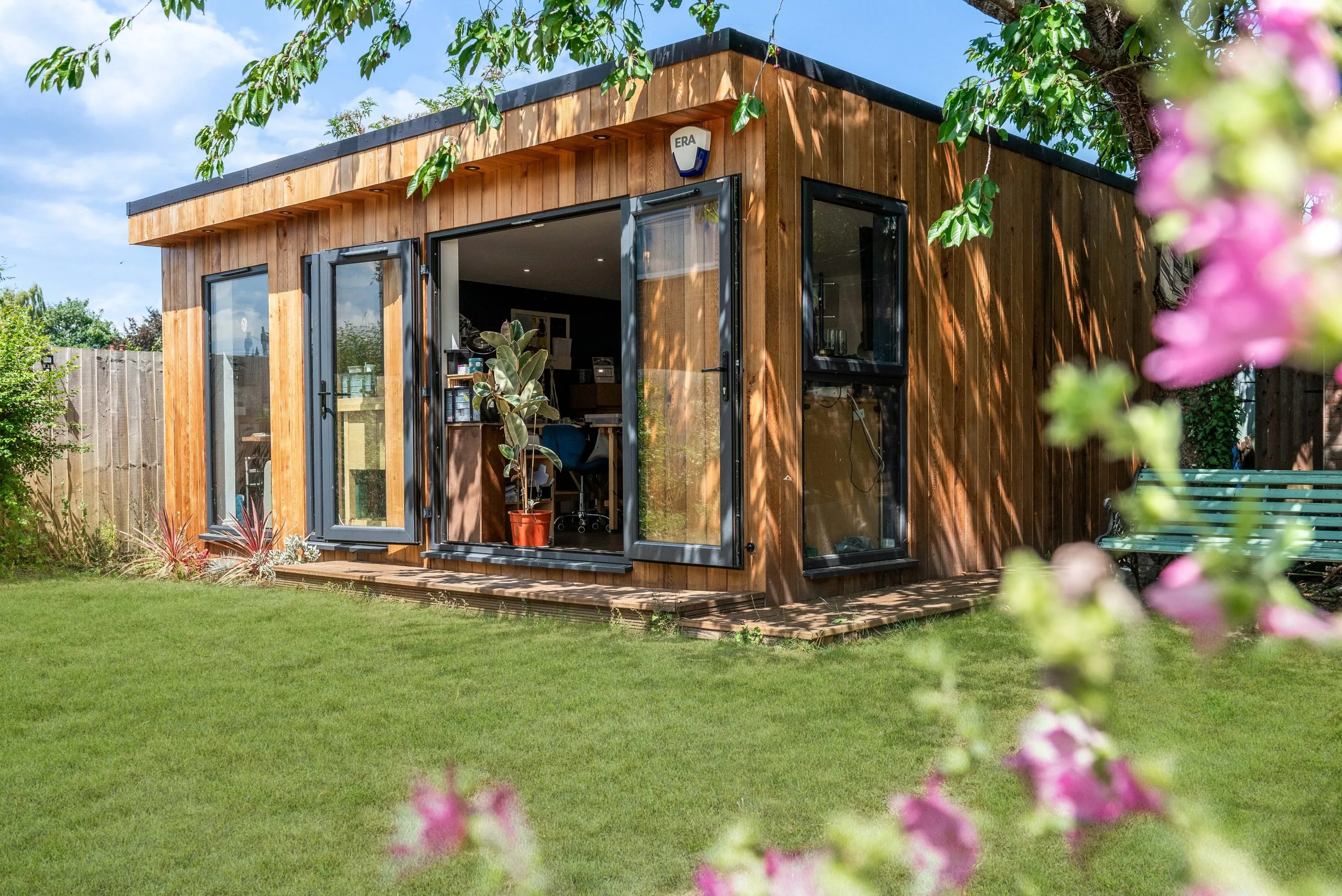
Jewellery Workshop Garden Room
A refined bespoke garden room created for detailed jewellery work, showing how a premium garden building can support specialist craft, organisation and focused making at home.
View project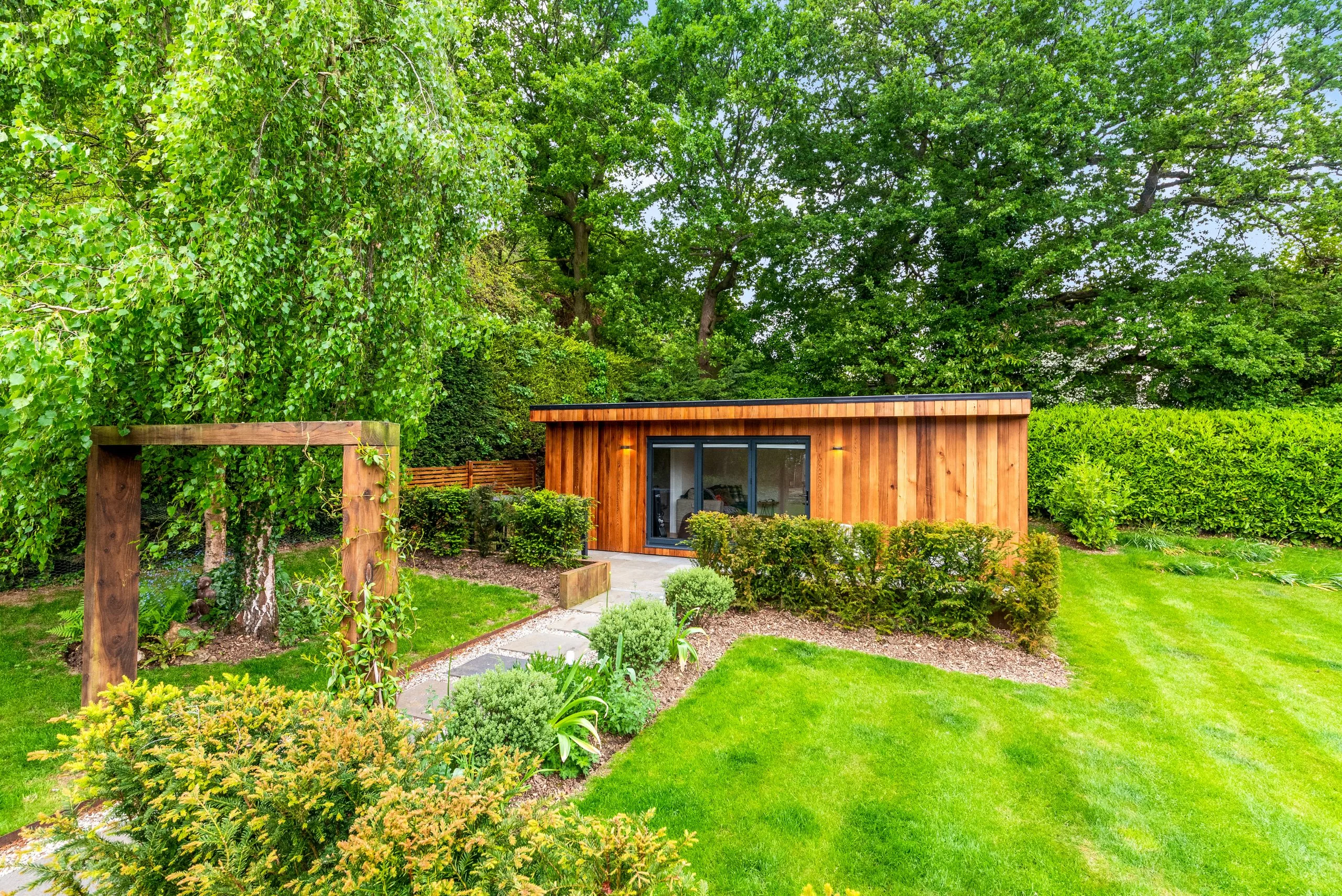
A good craft room is not just a spare table with a daylight bulb.
It is a place where paper can stay flat, tools have a permanent home, half-finished work does not need to be packed away at dinner time, and the space itself makes you want to begin. For many crafters, model makers, artists, textile hobbyists and paper artists, a bespoke garden room is the difference between “finding time” for a hobby and having a proper creative studio at home.
A Hawksbeck craft garden room can be designed around the way you actually work: long benches for cutting and assembly, wall-to-wall storage for materials, strong natural light, warm year-round comfort, wipeable surfaces, display shelving, secure tool storage, clean zones, messy zones and a layout that feels calm rather than cluttered. Whether you make cards, build scale models, sew, paint, scrapbook, restore small items, design jewellery or simply need a beautiful organised room for creative projects, a garden building gives your hobby the space it deserves.
If you are still exploring different ways to use a bespoke garden building, our wider guide to garden room ideas is a useful starting point. This page focuses specifically on how to create a practical, comfortable and inspiring craft room that works beautifully in real life, not just in photographs.
Craft hobbies have a way of spreading. A roll of vinyl becomes a stack of rolls. A few paints become a colour library. Paper needs protecting from damp and creases. Threads, beads, blades, glues, cutting mats, brushes, dies, miniatures, clay, resin, fabric and packaging all need a home. A craft room in the house can quickly become a cupboard, a corner or a compromise.
A bespoke garden craft room solves that by creating a dedicated creative environment separate from the everyday activity of the home. You can leave a project out overnight, shut the door, and return to it exactly as you left it. That matters for detailed hobbies such as model making, paper arts, jewellery making and embroidery, where concentration and continuity make an enormous difference.
Card making, scrapbooking, calligraphy, journalling, printing, cutting and mounting.
Scale models, miniature painting, scenery building, railway layouts and precision assembly.
Sewing, quilting, dressmaking, embroidery, crochet, knitting and fabric storage.
Painting, drawing, collage, resin work, clay, printmaking and creative experimentation.
Beadwork, soldering preparation areas, polishing, photography and packaging.
Stock storage, product photography, order packing and a quiet place to work on commissions.
The best craft rooms are planned in zones. This prevents the room from becoming one large storage area and helps each activity feel easy to begin. Because Hawksbeck garden rooms are bespoke, the internal layout can be shaped around the craft itself rather than forcing your hobby into a standard shell.
This is the centre of the room: the place where the cutting, sewing, painting, assembling or designing happens. For many craft rooms, a generous central table or fixed workbench is more useful than a conventional desk. It allows you to spread materials out, stand up for cutting, work from more than one side, and collaborate with a friend or family member.
For paper craft and model making, a deeper work surface is useful. For sewing and textiles, a long run of bench space can hold machines, overlockers, cutting mats and pressing equipment. For painting or mixed media, it may be better to include a practical wipeable surface and a nearby sink or easy-clean area if your project requires it.
Storage is often the most important part of a craft studio. Shallow storage can be better than deep cupboards because you can see what you own. Full-height cabinetry, open shelves, labelled drawers, pegboards, plan chests, paper racks and concealed cupboards can all be integrated into the design.
A bespoke craft room can include specific storage for:
Many craft rooms need both. A clean zone might be used for paper, photography, laptop work, order packing or delicate assembly. A messy zone might be where painting, sanding, gluing, priming, cutting or clay work happens. Separating the two helps protect materials and keeps the room more pleasant to use.
For example, a model maker may want a sturdy bench for cutting and assembly, a well-lit painting area, a drying shelf and a dust-conscious storage space for finished models. A paper artist may prefer flat storage, a clean cutting surface, excellent task lighting and a printer station. A textile enthusiast may need generous floor space to move fabric around, plus an ironing or pressing point.
Creative work is easier when the light is right. In a craft garden room, glazing can be positioned to bring in natural light without creating glare across a cutting mat, sewing machine, monitor or detailed work surface. Large windows and doors can make the studio feel uplifting, while rooflights or carefully placed side windows may help distribute daylight more evenly.
Artificial lighting should be planned with equal care. A comfortable craft room may include:
If your crafts rely on accurate colour, it is worth discussing lighting temperature and placement early in the design process. The difference between a room that is simply bright and a room that is genuinely good to work in can be significant.
A craft room should not feel like a shed.
If you are going to use the space for long sessions, weekend making, evening commissions or regular hobby time, it needs to be warm, dry, quiet and comfortable throughout the year.
Hawksbeck garden rooms are designed as premium, insulated buildings with a high-quality finish, making them suitable for far more than occasional summer use. For a craft studio, comfort affects not only the person using the room but also the materials stored inside it. Paper, fabric, paints, tools and delicate components all benefit from a stable, dry environment.
One of the biggest advantages of a bespoke garden building is that it can be designed around one main hobby or several complementary activities. Below are practical ideas for different types of craft room, with details that can make each space easier to use.
Paper crafters usually need flat storage, excellent organisation and clean work surfaces. A garden room for paper arts might include shallow drawers for card stock, vertical paper racks, a workbench at standing height, a die-cutting station, a printer area, space for a Cricut or Silhouette machine, and a large central table for laying out designs.
Lighting is especially important for paper crafts because colour matching, cutting accuracy and small embellishments can be difficult in poor light. Avoid placing the main work surface where harsh direct sunlight may fade paper or cause glare.
Model makers often need precision, patience and dust control. A dedicated garden studio can include a close-detail painting desk, magnified task lighting, compartment storage, display cabinets, a cutting and assembly bench, drying shelves and secure storage for paints, adhesives and tools.
If you work with sprays, sanding or materials that create odour or dust, ventilation and zoning need careful thought. You may also want hard-wearing flooring and wipeable surfaces so the room stays smart even with regular use.
Textile crafts benefit hugely from space. A sewing room might include a long machine bench, a large cutting table, full-height cupboards for fabric, open shelving for works in progress, thread storage, a pressing area and enough floor space to move around large pieces of material.
For quilting and dressmaking, being able to leave the project out is a major benefit. Instead of folding fabric away between sessions, you can return to the room and continue without losing momentum.
A jewellery craft room may need a more detailed layout, with good bench lighting, secure tool storage, shallow compartment drawers, photography space, polishing areas, packaging storage and a comfortable place to work on orders. If you sell your creations, the garden room can become a small professional studio as well as a personal creative retreat.
For hobby businesses, it is also worth thinking about broadband, product photography lighting, stock control, postal supplies and a place to sit with a laptop or tablet. The room can be crafted to support the enjoyable side of making and the practical side of running a small creative enterprise.
Some households want a room that can flex between crafts: painting one day, Lego building the next, sewing at the weekend and school projects during holidays. In this case, the layout should prioritise adaptable furniture, robust surfaces, easy-clean flooring and storage that can hide visual clutter quickly.
A mix of open display and concealed cabinetry works well. Open shelving keeps inspiring materials visible, while closed cupboards help the room feel calm when it is not in use.
Craft rooms often use more power than people expect. Sewing machines, heat presses, printers, cutting machines, lamps, glue guns, laptops, chargers, irons, photography lights and small tools all need convenient sockets. Extension leads across the floor are frustrating and can be unsafe, so it is better to plan electrical points around the room from the beginning.
Useful additions may include:
The right size depends on the hobby, the storage required and whether the room is for one person or shared use. A compact garden craft room can work very well if the storage is carefully planned, while a larger bespoke studio gives more freedom for central tables, multiple workstations and display areas.
A smaller garden room can be ideal for card making, journalling, painting, jewellery work, crochet, model painting or one-person creative projects. The key is to use the walls intelligently with vertical storage, deep worktops and fitted cabinetry. A compact studio can feel luxurious if it is calm, bright and uncluttered.
A medium-sized craft garden room allows for a more comfortable work zone, a storage wall and perhaps a separate desk or photography area. This size is often suitable for sewing, paper arts, multi-craft hobbies or a small creative business.
A larger garden building may be appropriate for serious hobbyists, model railway layouts, quilting, teaching workshops, shared family use or makers who need production, stock and packing areas. It can also include a small seating area, WC or kitchenette depending on the specification and permissions.
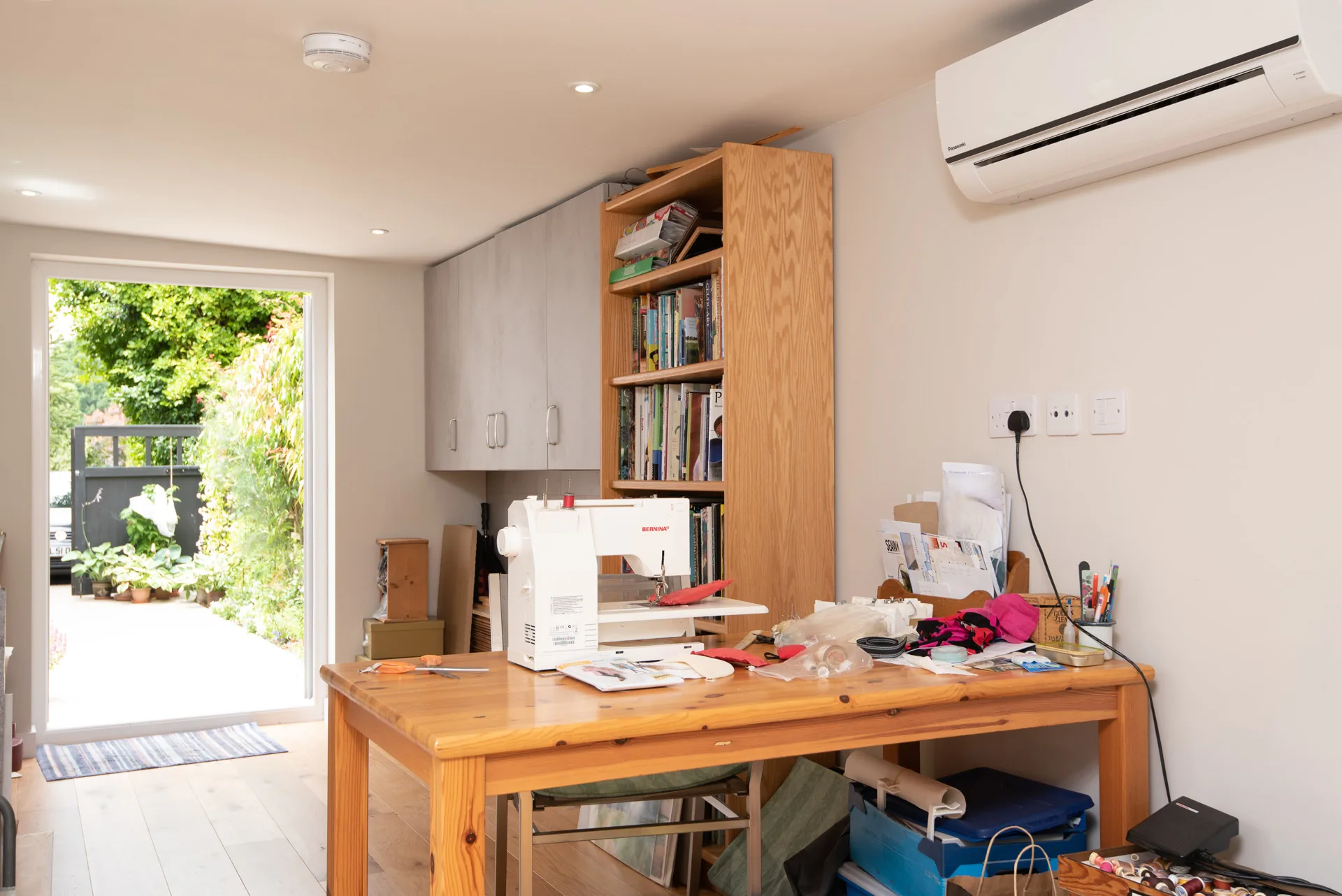
The most beautiful craft room is not necessarily the one with everything hidden away. It is the one where materials are easy to find, easy to use and easy to put back. A bespoke garden room allows the storage to be designed as part of the building, rather than added later as an afterthought.
Good storage reduces friction. If you can see what you own, you are more likely to use it. If everything has a place, the room is more likely to stay enjoyable rather than becoming overwhelming.
Craft rooms need finishes that look premium but can cope with real use. Pins get dropped. Paint can spill. Fabric produces lint. Paper creates offcuts. Clay, glue, resin and sanding dust may all be part of the process depending on the hobby.
For this reason, many craft rooms benefit from practical, easy-clean flooring rather than delicate finishes. Worktops should be selected around the activity: smooth surfaces for paper, heat-resistant considerations for certain tools, robust benches for model making, and comfortable set-ups for sewing or close detail work.
It is worth thinking about how the room will age. A beautifully designed craft studio should still feel good after years of creative projects, not only on the day it is finished.
Yes, provided it is designed as a proper insulated garden building rather than a lightweight summerhouse. For a craft room, year-round use is especially important because many hobbies are enjoyed in the evenings, in winter or whenever family life allows time.
A high-quality garden room should feel comfortable in January as well as July. It should protect materials from damp, provide suitable heating and maintain a stable environment. This is particularly important for paper, textiles, timber, paints, glues, electronics and precision equipment.
Many garden rooms can be built under permitted development rights, but this depends on factors such as size, height, position, use, location and whether your property has any restrictions. A craft room used for personal hobbies will often be more straightforward than a building used for visitors, teaching, retail or full commercial activity, but every property is different.
If you plan to run a creative business from the garden room, teach workshops, meet clients or store significant stock, it is sensible to discuss this early. Hawksbeck can talk through the practical considerations and help you understand what may be suitable for your site and intended use.
BudgetThe cost of a craft garden room depends on the size, specification, groundworks, glazing, access, electrics, heating, internal finish, storage, plumbing requirements and any specialist features. A simple compact craft studio will naturally cost less than a large multi-zone creative workshop with extensive cabinetry, premium glazing and additional facilities.
As a broad planning guide, many premium craft garden rooms sit in the small-to-medium garden room range, often starting from around the high £20,000s to £30,000s for a compact, well-specified building. A more generous bespoke craft studio with upgraded finishes, substantial glazing, heating, electrics and tailored internal features may fall in the £40,000 to £60,000+ range. Larger luxury garden buildings, complex designs or highly specified creative workshops can exceed this.
These figures are only a guide because Hawksbeck buildings are bespoke. The best approach is to begin with the way you want to use the craft room, then shape the size and specification around your priorities. If storage, lighting and comfort matter more than additional floor area, the design can reflect that. If the space needs to support a hobby business or multiple creative zones, the budget can be planned accordingly.
List your machines, paper sizes and fabric stash, and we can plan the benches and storage wall around them before the building takes shape.
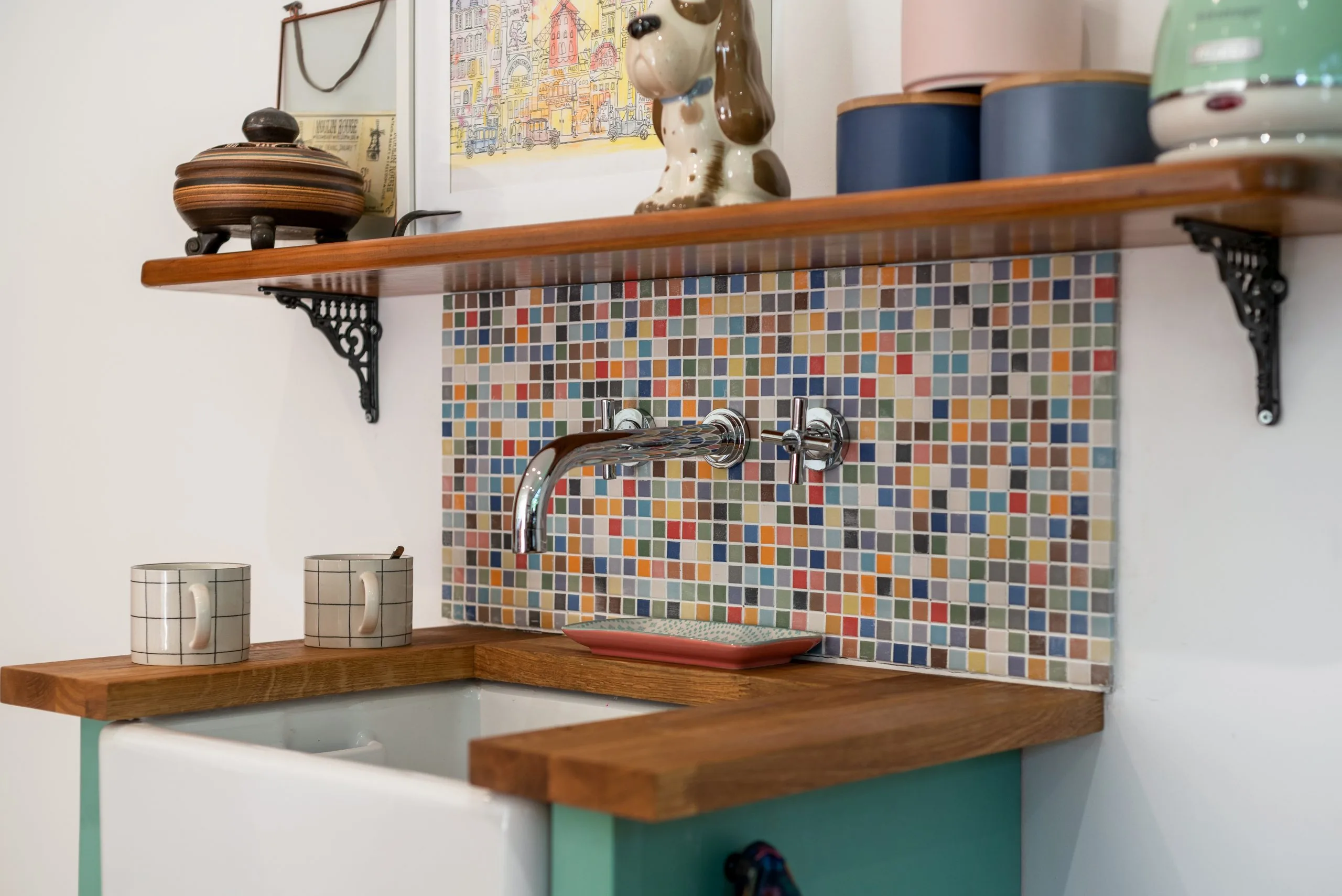
A practical craft room does not need to feel utilitarian. The most rewarding spaces combine organisation with atmosphere. A garden studio should make you feel calm, inspired and ready to create.
Consider details such as a wide glazed entrance that frames the garden, a comfortable reading chair, display shelving for completed work, a warm interior palette, feature lighting, a picture rail, a sink if suitable, integrated music, or a small refreshment point for long creative sessions. These are the details that turn a garden building into a personal retreat.
Many makers begin with a hobby and gradually find themselves taking commissions, selling online or preparing for craft fairs. A garden room can provide the separation and organisation needed to take that next step without renting a studio elsewhere.
A craft business garden room might include a making area, stock storage, product photography wall, packing bench, printer station, label storage and a small desk for admin. It can help keep the house free from boxes and supplies while giving the business a more professional rhythm.
If you expect clients, students or customers to visit, the design and planning considerations may differ from a private hobby room. Access, parking, insurance, permissions, welfare facilities and business use should all be reviewed before the design is finalised.
Before choosing the size or style of the building, it helps to think carefully about your daily workflow. These questions can shape a more useful design:
The answers will influence window positions, lighting, power, storage, furniture, heating and every other detail that makes the room work properly.
A craft room needs more thought than a standard garden office. It must support detailed work, protect materials, provide reliable comfort and reflect the personality of the person using it. Hawksbeck’s bespoke approach means the building can be designed around your creative life: from the way you store your tools to the way the room looks from the house.
Instead of adapting your hobby to a pre-set layout, you can create a premium garden room with the right proportions, finish, light and practical features from the beginning. The result is a creative space that feels intentional, beautifully built and genuinely enjoyable to use.
Yes. Built-in storage, benches, shelving and practical furniture can be planned as part of the overall design. This is particularly useful for craft rooms because storage requirements are often very specific.
Depending on the site and specification, plumbing may be possible. A sink can be useful for painting, clay, mixed media and general clean-up, although it will affect cost and may involve additional planning and service considerations.
A high-quality insulated garden room is much better suited to paper, fabric, paints and equipment than a basic shed or summerhouse. Stable temperature, dryness, ventilation and security are all important for protecting craft materials.
Yes. Many craft rooms are designed as flexible creative studios. The key is to plan zones and storage so the room does not become cluttered or difficult to reset between activities.
Absolutely. A small desk area can be included for admin, design work, online orders, video tutorials or general home working. Many people like having a room that supports both creative and practical tasks.
If your craft supplies are taking over the dining table, spare room or garage, a bespoke garden craft room can create a permanent, beautiful and highly organised space for the work you love. From compact creative retreats to spacious hobby workshops, Hawksbeck can design and build a premium garden room around your exact needs.
Tell us how you create, what you need to store, how you like to work and what would make the space feel special. We can help turn that into a garden building that is practical, comfortable and inspiring every day of the year.
Whether it is a card-making corner or a quilting workshop, the first conversation is about how you make, not how big the building is.
From a jewellery workshop to a quiet creative retreat, these projects show making spaces shaped around a particular craft or creative routine.
A refined bespoke garden room created for detailed jewellery work, showing how a premium garden building can support specialist craft, organisation and focused making at home.
View project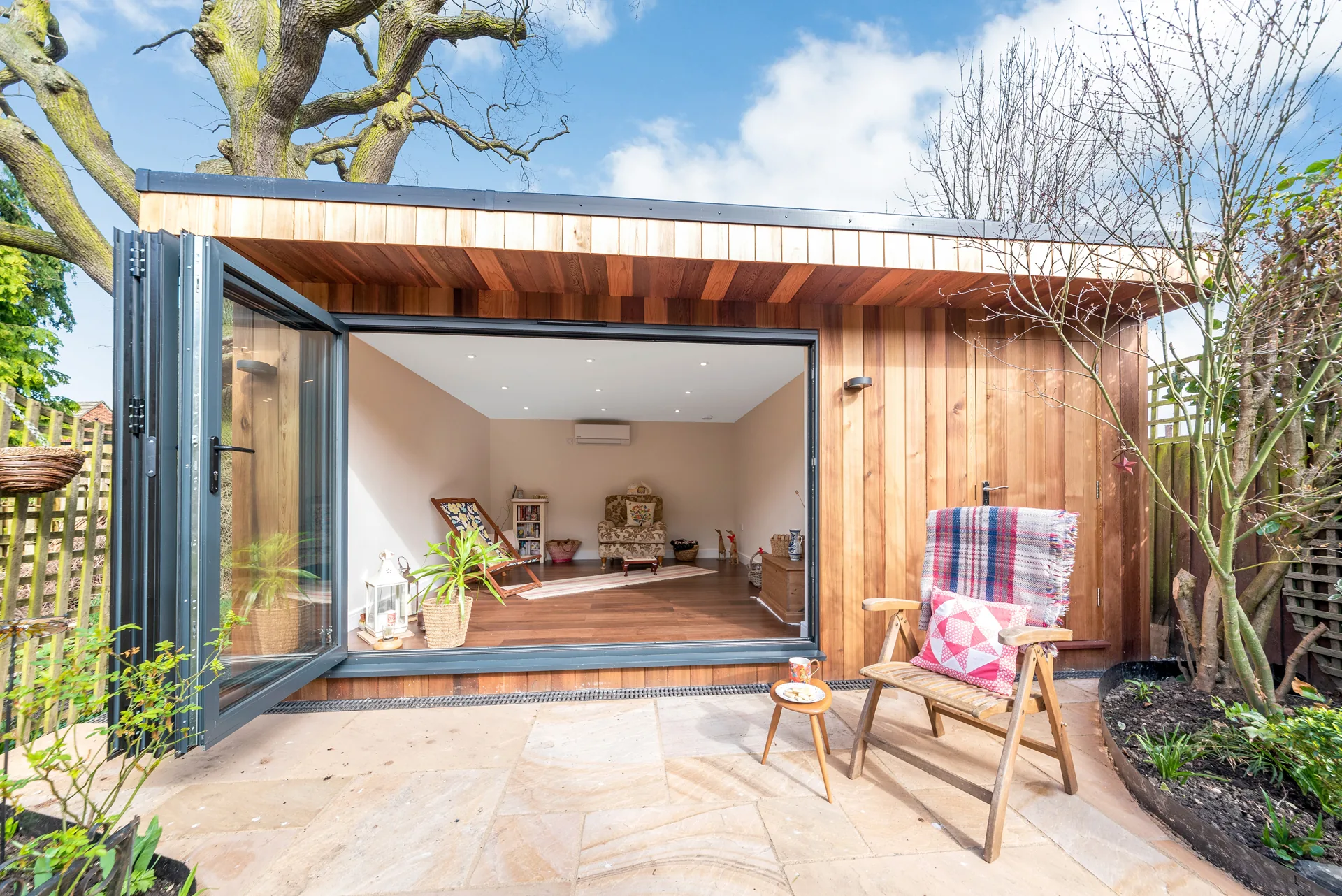
This creative studio retreat demonstrates how a garden room can become a calm, inspiring place for artistic work, quiet concentration and personal creative time away from the house.
View project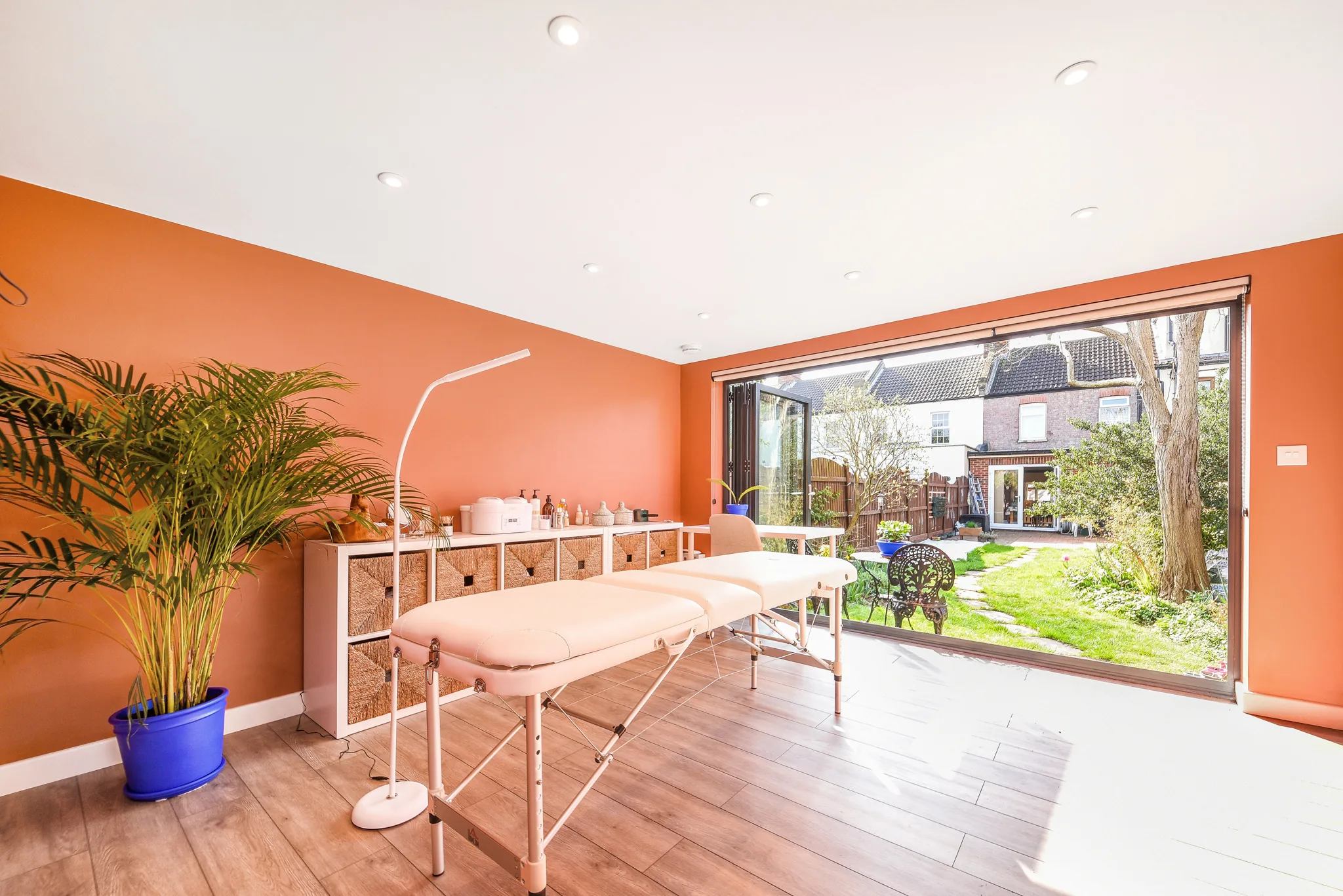
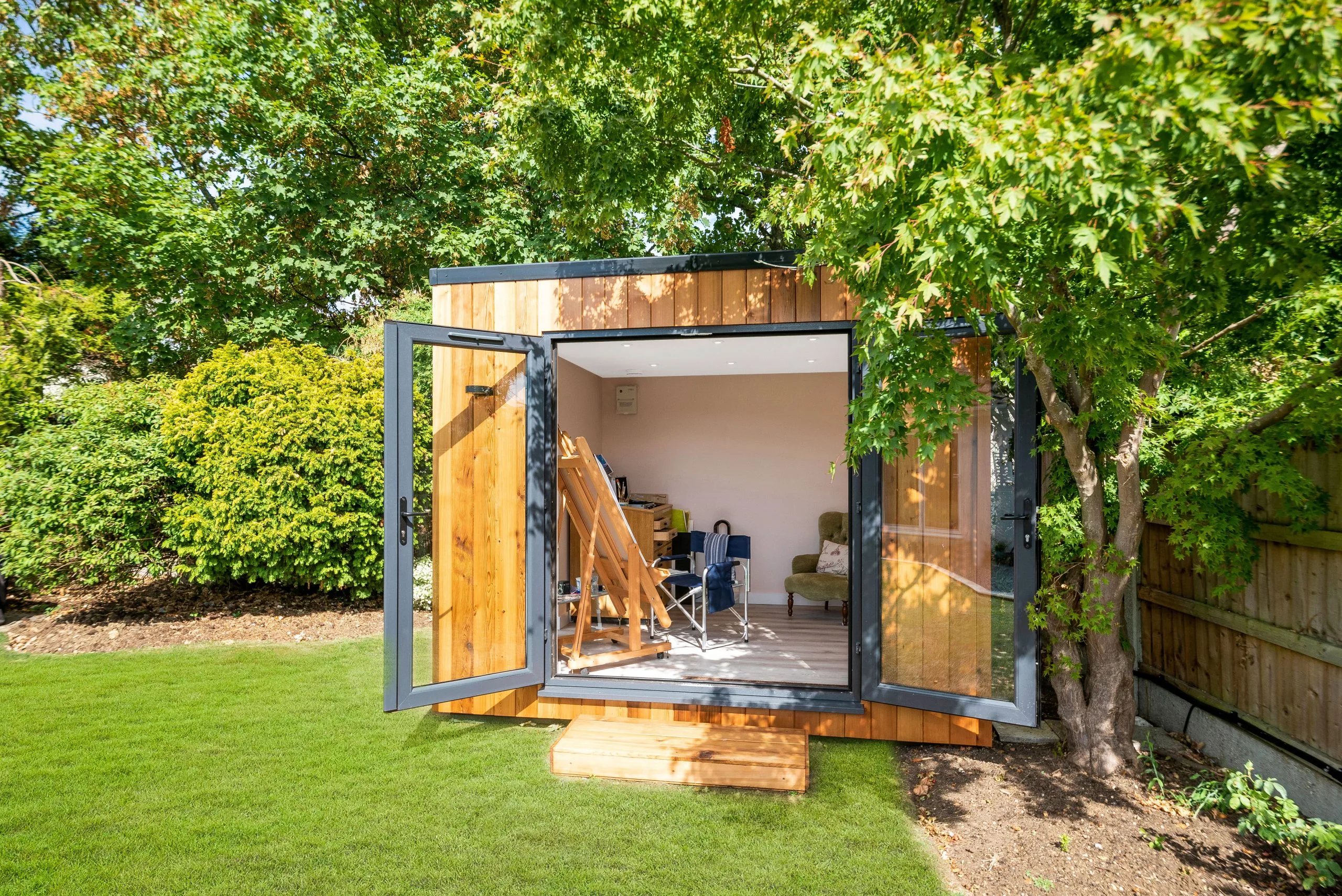
A charming hobby studio showing how a bespoke garden building can provide a dedicated space for creative projects, practical storage and year-round enjoyment in the garden.
View project