
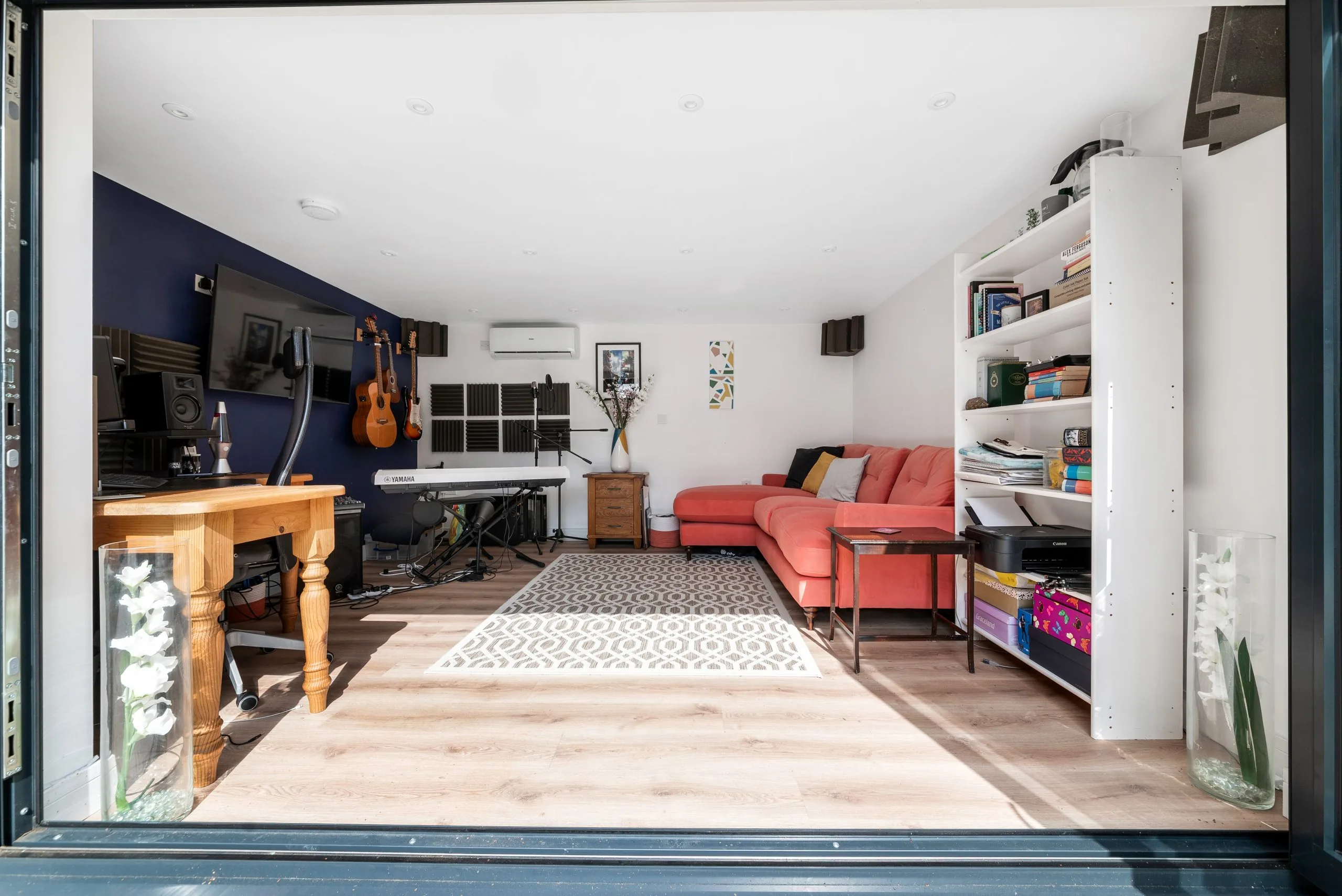
Luxury Garden Music Studio, Colchester
A premium garden music studio showing how a bespoke building can create a dedicated creative space with comfort, privacy and a refined finish for serious music use at home.
View project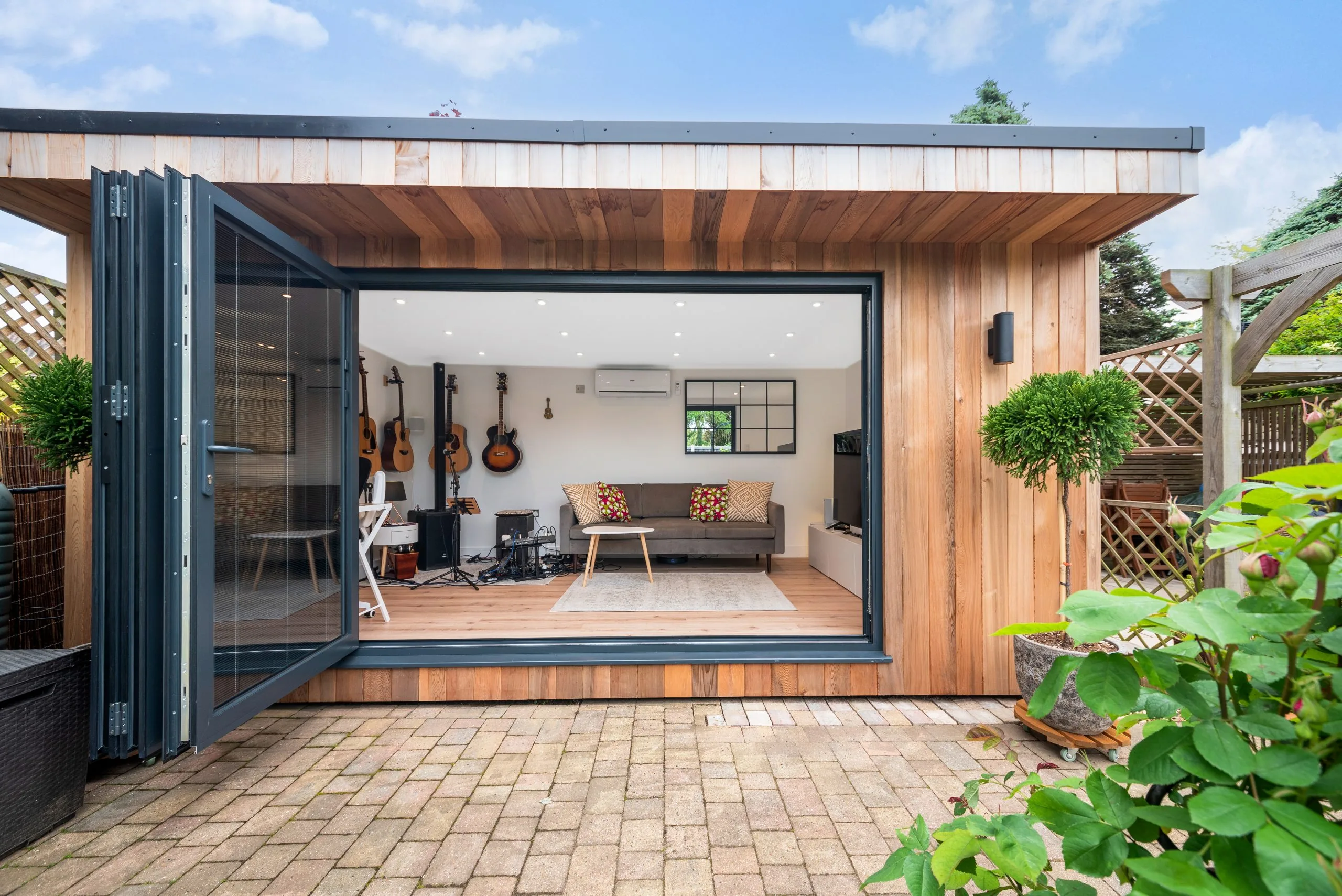
A serious DJ setup behaves differently when it has a room of its own. The monitors can be positioned properly, cables stop taking over the house, late-night ideas are easier to capture, and the space can be tuned around the way you actually mix, record and produce. A bespoke garden room can become a private DJ studio that feels separate from day-to-day life, without needing to rent a commercial unit or compromise a room inside the house.
For DJs, producers, vinyl collectors and electronic musicians, the best garden building is not simply an empty room with power. It needs thoughtful acoustic control, robust electrics, reliable ventilation, comfortable working light, secure storage, a practical equipment bench and a layout that supports long sessions without fatigue. Done well, it becomes a luxury creative space that is enjoyable to use every week of the year.
A garden room gives you something that is difficult to achieve inside the home: separation. That separation is useful creatively and practically. You can leave your setup connected, protect expensive equipment from family traffic, keep your record collection in one dedicated space, and move between listening, recording, admin and downtime without dismantling everything at the end of the day.
For many clients, the appeal is not just sound. It is the feeling of walking into a purpose-built creative environment. A studio at the end of the garden can be designed to feel focused and immersive, while still matching the architecture, landscaping and finish of a premium home.
Decks, controller, CDJs, mixer, turntables, monitors and laptop remain ready to use.
The room can be arranged around mixing, production, livestreaming, recording or teaching.
Insulation, heating, cooling and lighting make the studio usable throughout the year.
The studio is physically separate from bedrooms, living rooms and home offices.
Ideal if you film content, host clients, teach DJ lessons or record sessions.
Expensive gear, vinyl and computers can be housed in a dedicated, lockable building.
The layout of a DJ studio should be driven by your habits, not just by the size of the garden. A vinyl-focused room needs different storage, vibration control and desk depth compared with a compact digital production space. A DJ who livestreams sets needs camera positions, lighting angles, cable paths and a visually considered background. Someone who produces and mixes for long hours needs careful monitor placement, screen positioning and an ergonomic workstation.
Before deciding on dimensions, it helps to list what the space needs to support:
Because Hawksbeck garden buildings are bespoke, the room can be designed around these requirements from the beginning. That means socket locations, cable management, lighting zones, door positions and the internal arrangement can all be planned before the build reaches your garden.
Two phrases often get mixed together when people plan a garden room DJ studio: soundproofing and acoustic treatment. They are related, but they solve different problems.
Soundproofing is about reducing sound transfer between the studio and the outside world. In a garden building, this matters if you want to reduce disturbance to neighbours or limit how much low-frequency energy escapes when monitors are running at a reasonable level.
Acoustic treatment is about improving the sound inside the room. It helps control reflections, flutter echo, standing waves and bass build-up, so your mixes translate more accurately to cars, headphones, clubs and other speaker systems.
A good DJ studio should consider both. A beautiful garden room can be comfortable and premium, but without the right acoustic thinking it may still have problem reflections, boomy corners or an inaccurate listening position. The earlier acoustic control is considered, the more attractive and integrated the finished result can be.
Garden rooms used for music benefit from a balanced approach to acoustic control. The goal is not to create a dead, uncomfortable box. For DJing and production, the room should feel controlled, clear and enjoyable, with enough energy to make mixing exciting.
For a luxury finish, acoustic treatment can be incorporated as part of the interior scheme. Fabric-wrapped panels, timber slat details, concealed bass trapping and feature wall finishes can make the room look intentional rather than improvised.
The right size depends on your setup and whether the room is purely for DJing or also for production, listening, teaching and storage. A compact DJ room can work well if it is planned carefully, but more space gives better flexibility for speaker placement, circulation and acoustic treatment.
| Studio Type | Typical Use | Design Notes |
|---|---|---|
| Compact DJ booth studio | Controller, mixer, laptop, small monitors | Efficient bench layout, cable management and focused lighting are essential. |
| DJ and production room | Decks, studio monitors, computer, MIDI keyboard, storage | Needs a more considered listening position and additional bench depth. |
| Vinyl DJ studio | Turntables, mixer, record storage, listening area | Requires strong storage planning, stable surfaces and vibration awareness. |
| DJ studio with content area | Livestreaming, filming, teaching, guest sessions | Benefits from lighting zones, attractive backgrounds and flexible open floor space. |
| Premium multi-use music studio | DJing, production, recording, meeting clients | Can include separate zones, built-in cabinetry and a highly finished interior. |
If you are exploring other ways to use a bespoke garden building, our main garden room ideas guide covers a wide variety of practical and luxury uses.
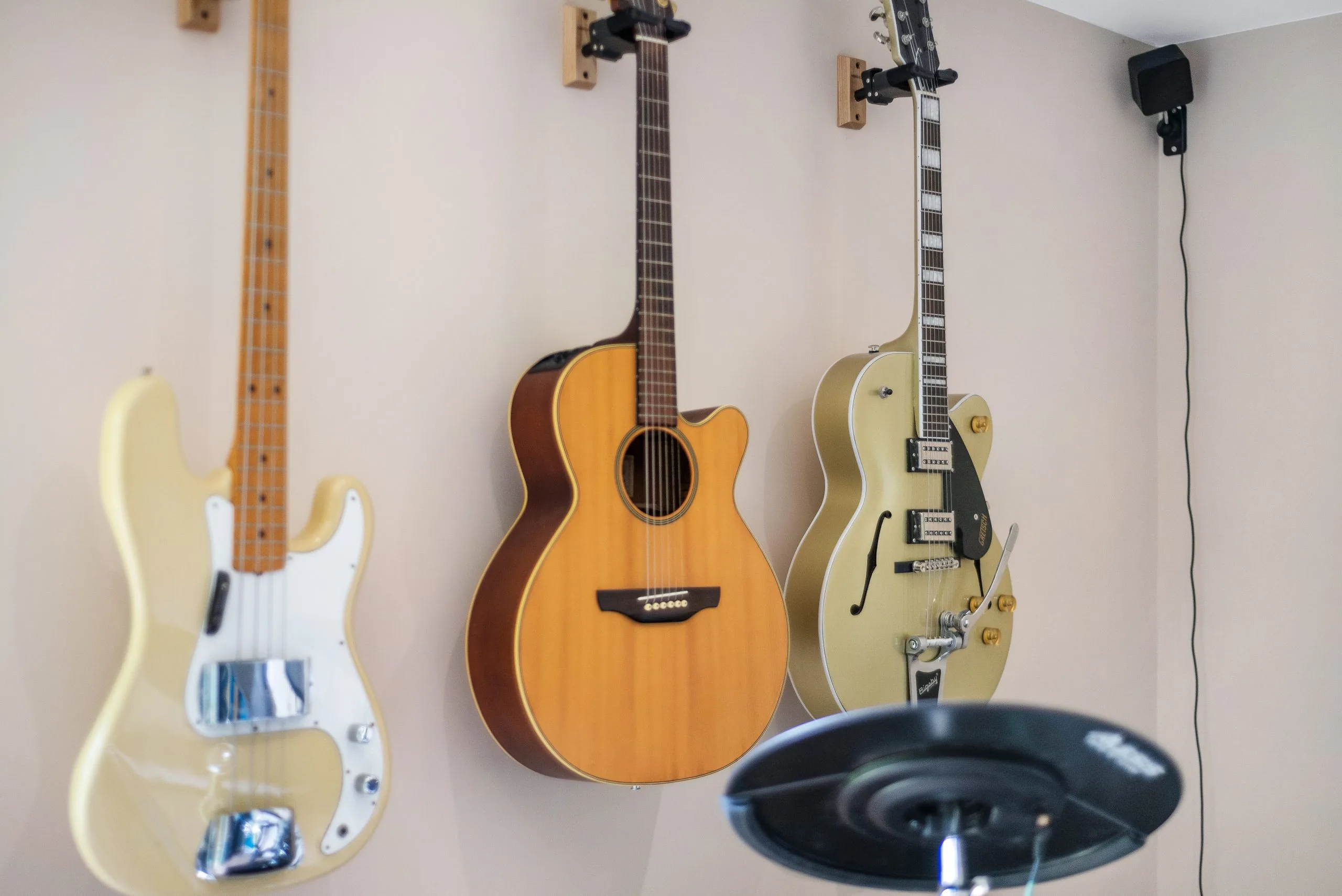
The equipment bench is the heart of the room. Getting it right makes the studio feel professional from the first day. Getting it wrong leads to awkward monitor positions, trailing cables, poor posture and clutter.
A bespoke DJ studio can include a made-to-measure bench or cabinetry arrangement designed around your exact equipment. This is especially useful if you have a combination of turntables, CDJs, controller, mixer, production keyboard, audio interface, rack units, effects pedals or outboard gear.
DJing while standing usually needs a different height to seated production work.
Equipment, cable clearance and monitor stands all need room.
Concealed cable runs keep the studio cleaner and easier to maintain.
Computers, amplifiers and rack equipment can generate heat.
The bench should feel stable, especially for turntable use.
Leaving space for future upgrades prevents the room becoming outdated too quickly.
For a high-end look, the equipment wall can be designed as a feature rather than an afterthought. Integrated LED lighting, timber finishes, concealed power, floating shelves and acoustic panels can all be combined into one consistent interior.
A DJ studio has more technical requirements than a standard garden office. It may need multiple cleanly positioned sockets, data points, dedicated circuits, USB charging, lighting controls, external sockets and reliable internet. Planning this early prevents the need for visible extension leads or awkward retrofit work later.
Integrated sound can also be considered as part of the build. Some clients want a main studio monitor setup only, while others may want a secondary listening system, wall-mounted speakers, integrated cabling for future upgrades or a discreet audio route to an outdoor entertaining area. The right specification depends on how you plan to use the garden room day to day.
Watch how Hawksbeck buildings come together, then imagine the bench, monitors and record shelves set out inside one.
DJ studios are often used in concentrated bursts: late evenings, long weekend sessions, mix preparation before events, recording deadlines or creative work after the house has gone quiet. Comfort is not a luxury extra. It affects how long you can work and how accurately you listen.
A well-built garden room should feel stable and comfortable in different seasons. Insulation, heating, glazing, ventilation and shading all play a role. Because audio equipment produces heat, and because acoustic upgrades can reduce natural ventilation paths, airflow should be considered carefully. A room that sounds good but becomes stuffy after an hour will not be enjoyable to use.
Lighting has a bigger impact on a DJ studio than many people realise. Bright overhead lighting may be useful for plugging in equipment or sorting cables, but it can feel flat and uninspiring when mixing. The best studios usually combine several layers of light so the room can change mood depending on how it is being used.
For example, you may want clean task lighting over the equipment bench while setting up, subtle warm lighting for evening listening, coloured LED accents for livestreaming, and exterior lighting for safe access back to the house after a late session. If you film DJ sets, lighting positions should be planned with camera angles in mind.
A DJ room can become cluttered quickly if storage is not designed into the space. Vinyl needs strong, accessible storage. Cables need somewhere logical to live. Flight cases, spare needles, headphones, microphones, stands, adapters and hard drives all need a place that does not interfere with the main creative area.
Bespoke storage can make the studio feel calm and premium. Options include full-height cupboards, low record storage, floating shelves, recessed niches, under-bench drawers, lockable cabinets or display shelving for selected records and equipment. For vinyl-heavy studios, the weight of the collection should be considered when planning cabinetry and floor load.
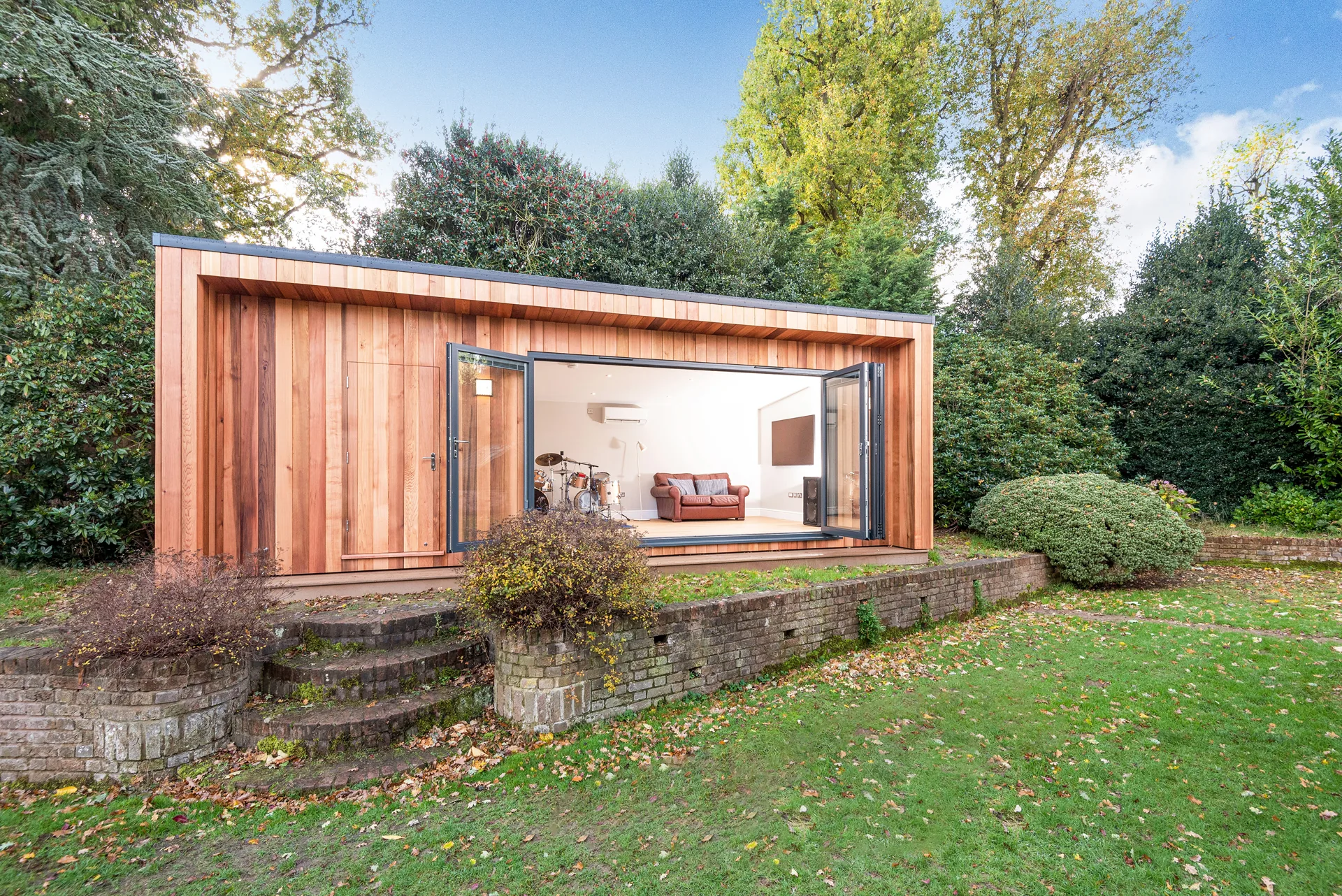
DJ equipment, studio monitors, laptops, audio interfaces and vinyl collections can represent a significant investment. A garden studio should therefore be planned with security in mind, not treated like a casual shed or lightweight outbuilding.
Depending on the project, security considerations may include high-quality doors and locks, secure glazing choices, external lighting, alarm integration, cameras, smart access, discreet positioning, strong construction and careful landscaping around the building. The aim is to create a private, robust space that looks refined while giving you confidence that your equipment is properly protected.
Many garden rooms can be built under permitted development, but this depends on the property, the size and height of the building, its position in the garden and any local restrictions. Music use can add another layer of practical consideration because positioning the room well may help manage sound, privacy and access.
Important placement questions include:
Because each property is different, it is sensible to discuss the intended use early. A DJ studio may need different decisions from a gym, office or garden lounge, particularly if you are concerned about sound transfer.
BudgetPricing depends on size, specification, access, finishes, services, acoustic requirements and the amount of bespoke internal work involved. A straightforward premium garden room suitable for creative use will cost less than a full DJ and production studio with enhanced acoustic design, integrated equipment benches, upgraded electrics, heating and cooling, specialist glazing and fitted storage.
As a broad guide, many high-quality bespoke garden rooms sit in the tens of thousands. For a DJ studio, it is sensible to allow more budget than you would for a simple office because the technical details matter. A compact, well-specified DJ garden room may start from around £35,000 to £45,000+, while a larger or more advanced DJ and production studio with acoustic upgrades, bespoke cabinetry and premium finishes may be closer to £50,000 to £90,000+. Larger luxury music studios or dual-purpose buildings can exceed this depending on the brief.
These figures are only a guide. The advantage of a bespoke approach is that the quote can be shaped around your priorities. Some clients invest more in acoustic performance and equipment infrastructure; others prioritise glazing, exterior finish, cabinetry or a multi-use layout. Hawksbeck can discuss the right specification for your garden, your equipment and your budget.
Turntables, CDJs, monitors, flight cases, a few thousand records: tell us what is coming into the studio and we can plan the bench, power and storage around it.
A DJ studio should not have to look like a black box full of exposed foam.
With a bespoke build, technical performance and interior design can work together. Acoustic features can be integrated into wall treatments. Storage can be made part of the architecture. Lighting can highlight equipment and finishes. Glazing can frame the garden without overwhelming the listening environment.
This is where a premium garden building offers real value. The room can be built as a place you are proud to show people, not just somewhere to hide your equipment. It can feel like a private members’ listening room, a clean production suite, a boutique DJ booth or a relaxed creative retreat depending on your taste.
A vinyl-focused studio needs stable turntable placement, serious record storage and comfortable browsing space. Low-level lighting, timber finishes and inviting seating can create a room that feels part studio and part private listening lounge.
This layout is usually centred around studio monitors, a computer workstation, MIDI keyboard and acoustic treatment. The aim is translation: mixes should sound reliable beyond the room. Symmetry, reflection control and a comfortable seating position are key.
For DJs creating video content, the background matters. The building can include a feature wall, concealed LED lighting, camera mounting points and hardwired internet. Storage can keep the set visually clean while still keeping equipment close.
If you teach beginners or run one-to-one sessions, the layout should allow two people to work comfortably around the equipment. Additional seating, screen sharing, clear lighting and good cable management make lessons smoother.
Some clients want a more immersive space with darker finishes, mood lighting, powerful monitoring and a social area. This can work well for private practice, small listening sessions or preparing sets before events.
A garden DJ studio can also include a compact desk for admin, bookings, content editing and emails. With the right zoning, the room can switch between creative work and business tasks without feeling compromised.
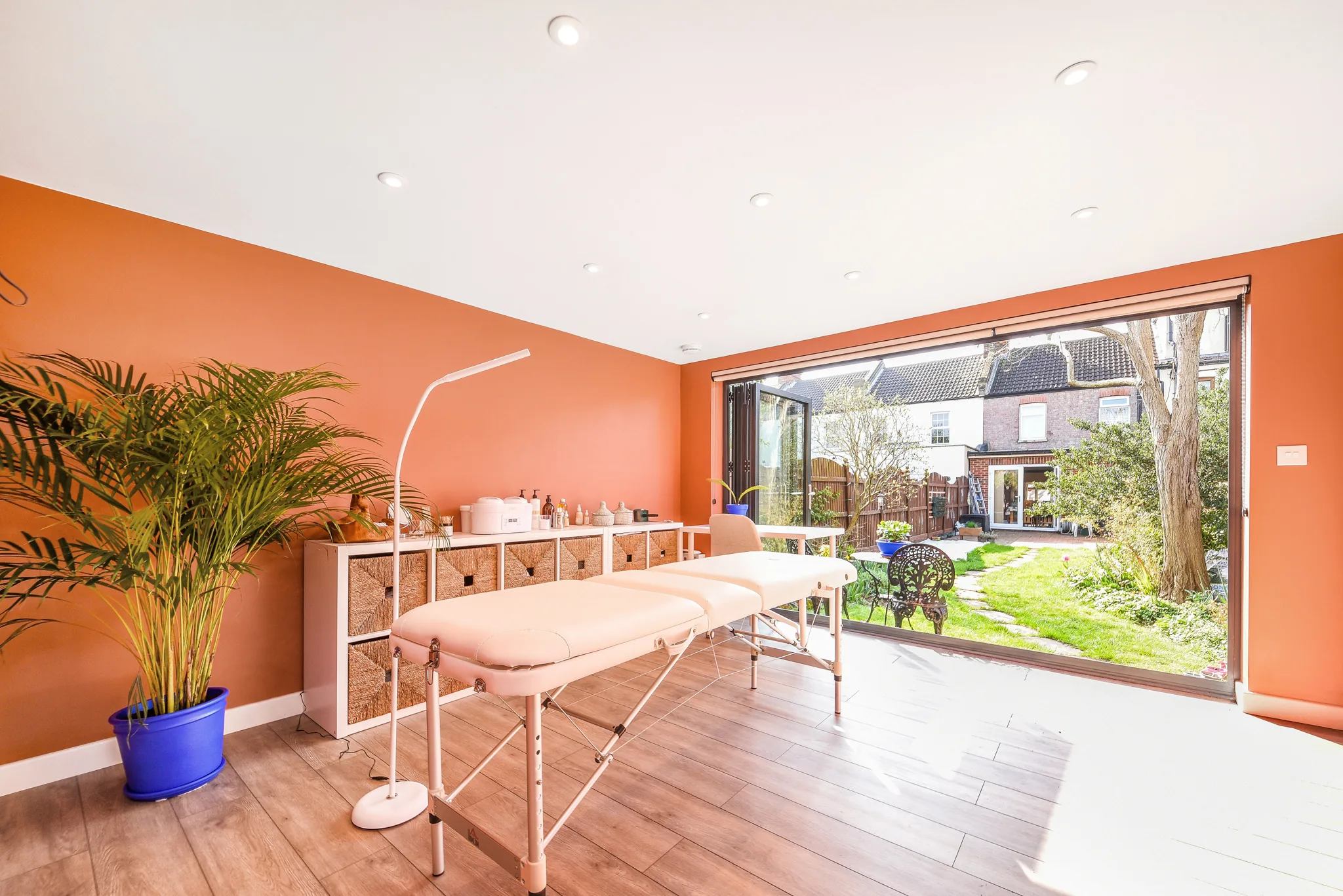
A garden room DJ studio can be exceptional, but only if the technical details are considered early enough. These are some of the most common issues to avoid:
Before you begin the design process, it helps to answer a few practical questions. These will make the brief far clearer and help shape the right building:
The strongest garden DJ studios are personal. They reflect the way you listen, the way you perform and the way you create. For one client, that may mean a clean production room with precise monitor placement and subtle finishes. For another, it may mean a vinyl-led retreat with warm lighting, heavy storage and a comfortable place to enjoy records. For another, it may be a polished content studio designed for filming, teaching and building a brand.
Hawksbeck’s bespoke approach makes it possible to design around those details. From acoustic control and integrated sound to equipment benches, storage, lighting and premium exterior finishes, the building can be shaped around both the technical requirements and the atmosphere you want to create.
Yes, if it is properly insulated and specified for year-round use. Heating, cooling, ventilation and good-quality construction all help create a room that remains comfortable through changing seasons.
Complete soundproofing is difficult in any building, especially where doors, windows and ventilation are required. However, sound transfer can be significantly reduced with the right construction, layout and specification. The level required depends on your volume, equipment and proximity to neighbours.
Acoustic requirements vary by project. Some studios need simple reflection control, while others benefit from more detailed acoustic planning and integrated treatment. This can be discussed as part of the design brief.
Yes. A bespoke garden room can include made-to-measure benches, record storage, cupboards, shelving, equipment recesses and cable routes designed around your exact setup.
Many garden rooms fall under permitted development, but this depends on your property and the proposed building. Size, height, location and local restrictions all matter, so it is best to check the details for your specific site.
Yes. For livestreaming, it is worth planning hardwired internet, lighting, camera angles, cable routes, visually appealing backgrounds and enough space around the decks for filming.
A compact setup can work in a modest garden room, but a more comfortable DJ and production studio usually benefits from additional width and depth for speaker placement, storage and movement. The best size depends on your equipment and intended use.
Whether you mix on vinyl, produce late into the night or film sets for an audience, we can design the acoustics, bench and storage around the way you work.
A DJ studio shares a lot with these music rooms: dedicated space for equipment, comfort for long sessions and a finish built for regular creative use.
A premium garden music studio showing how a bespoke building can create a dedicated creative space with comfort, privacy and a refined finish for serious music use at home.
View project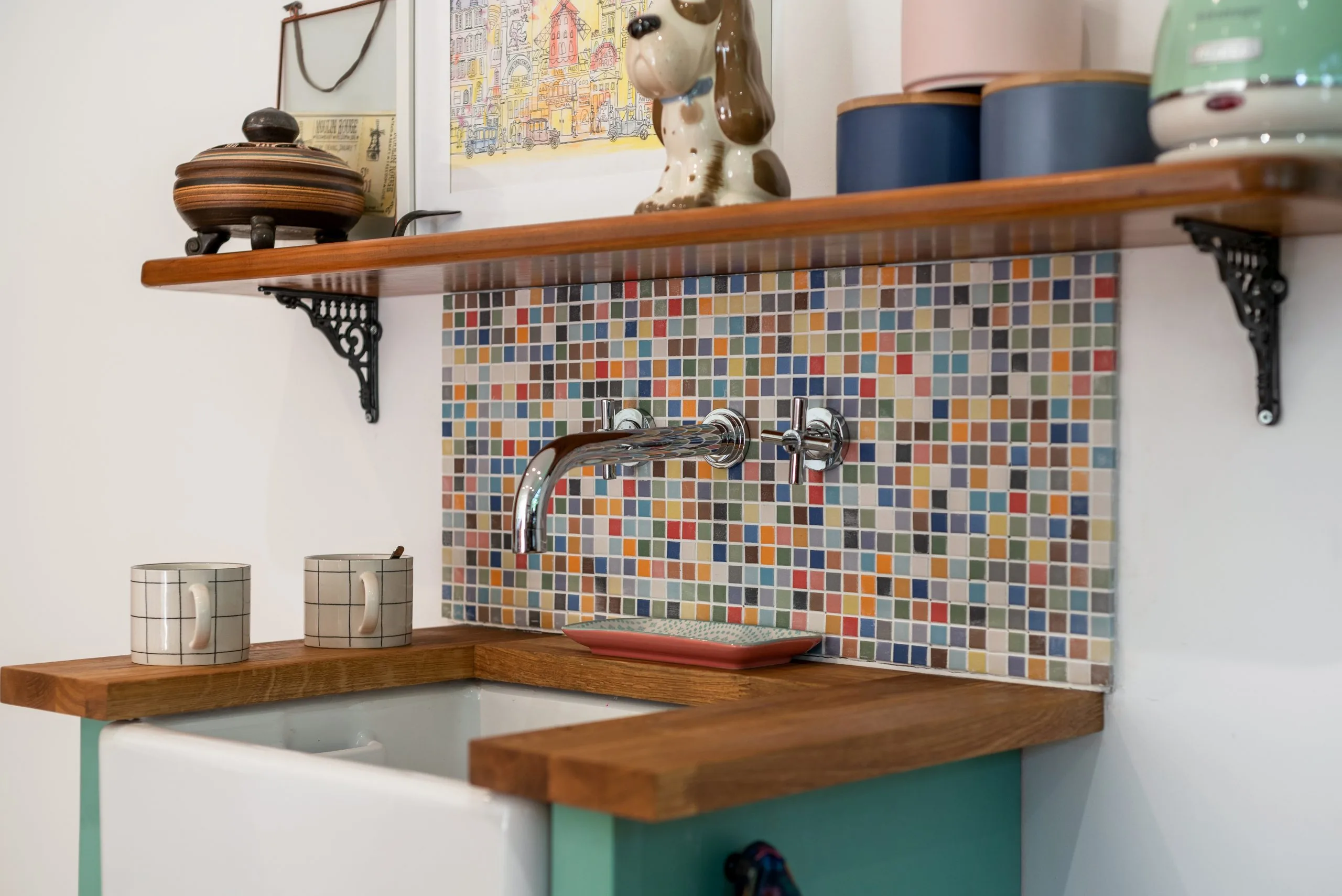
This music studio project demonstrates the value of a purpose-built garden room for focused creative work, with a layout and specification designed around regular use.
View project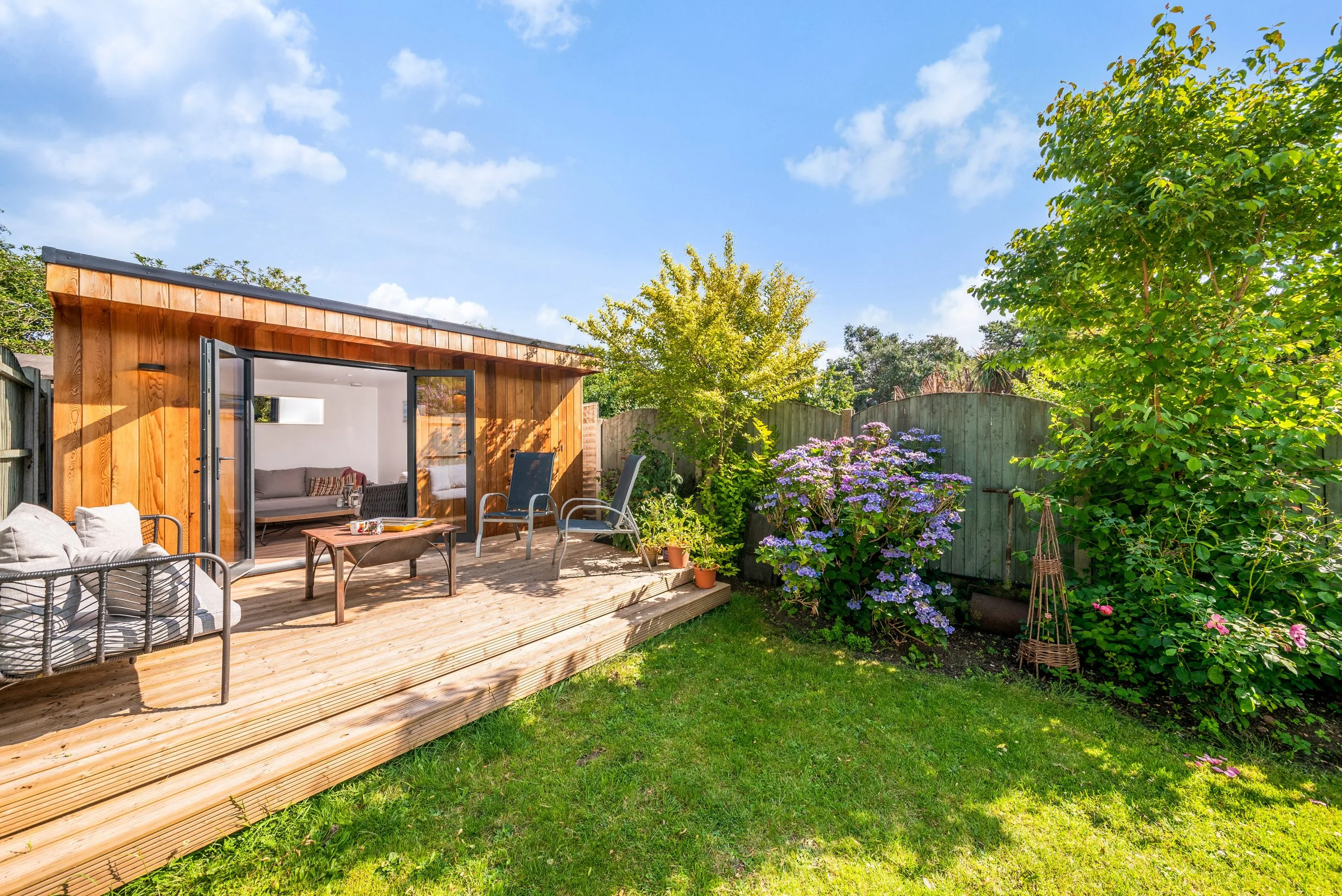
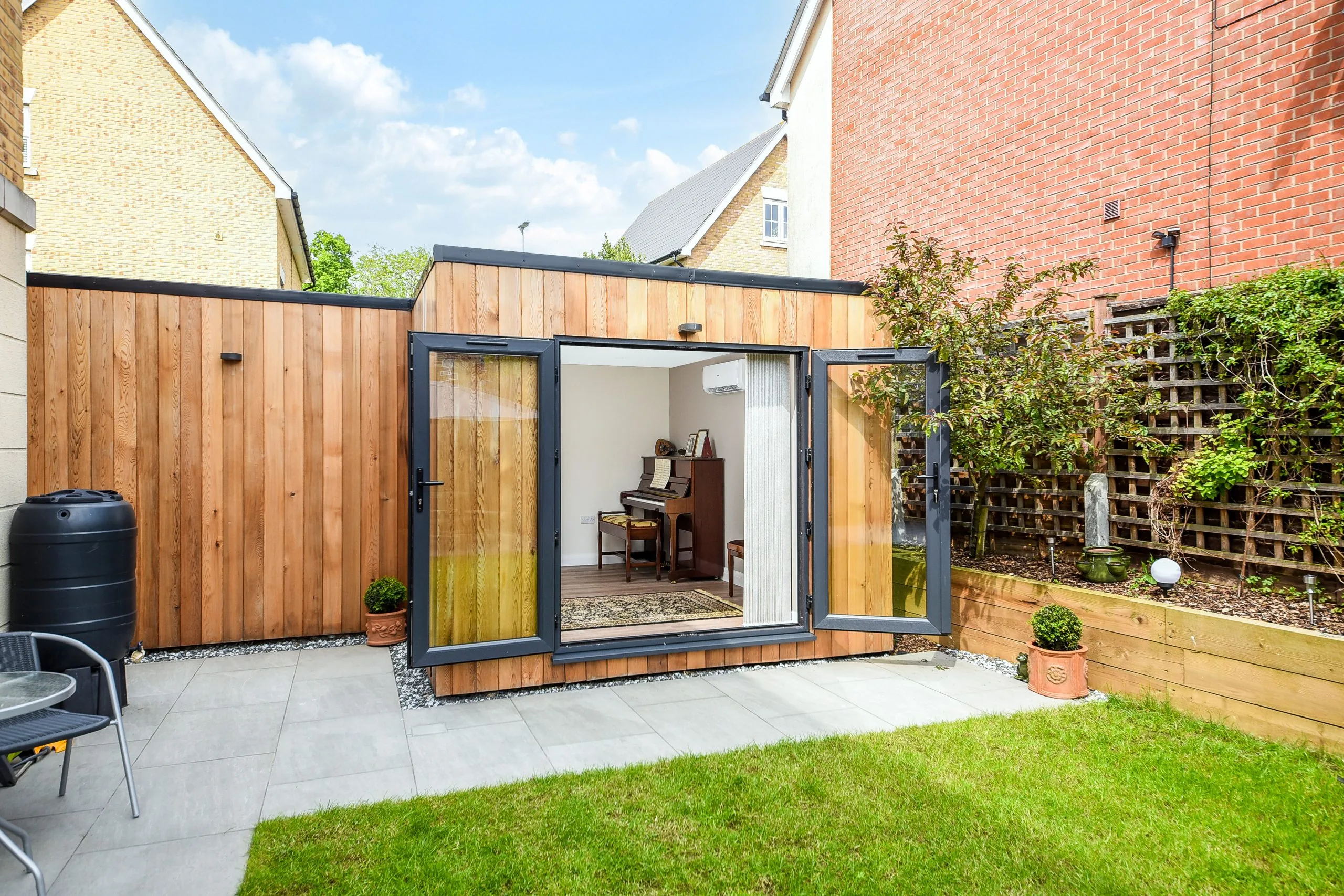
A bespoke Brentwood garden music studio highlighting how a premium garden building can be tailored for music, equipment, comfort and a professional finish at home.
View project