
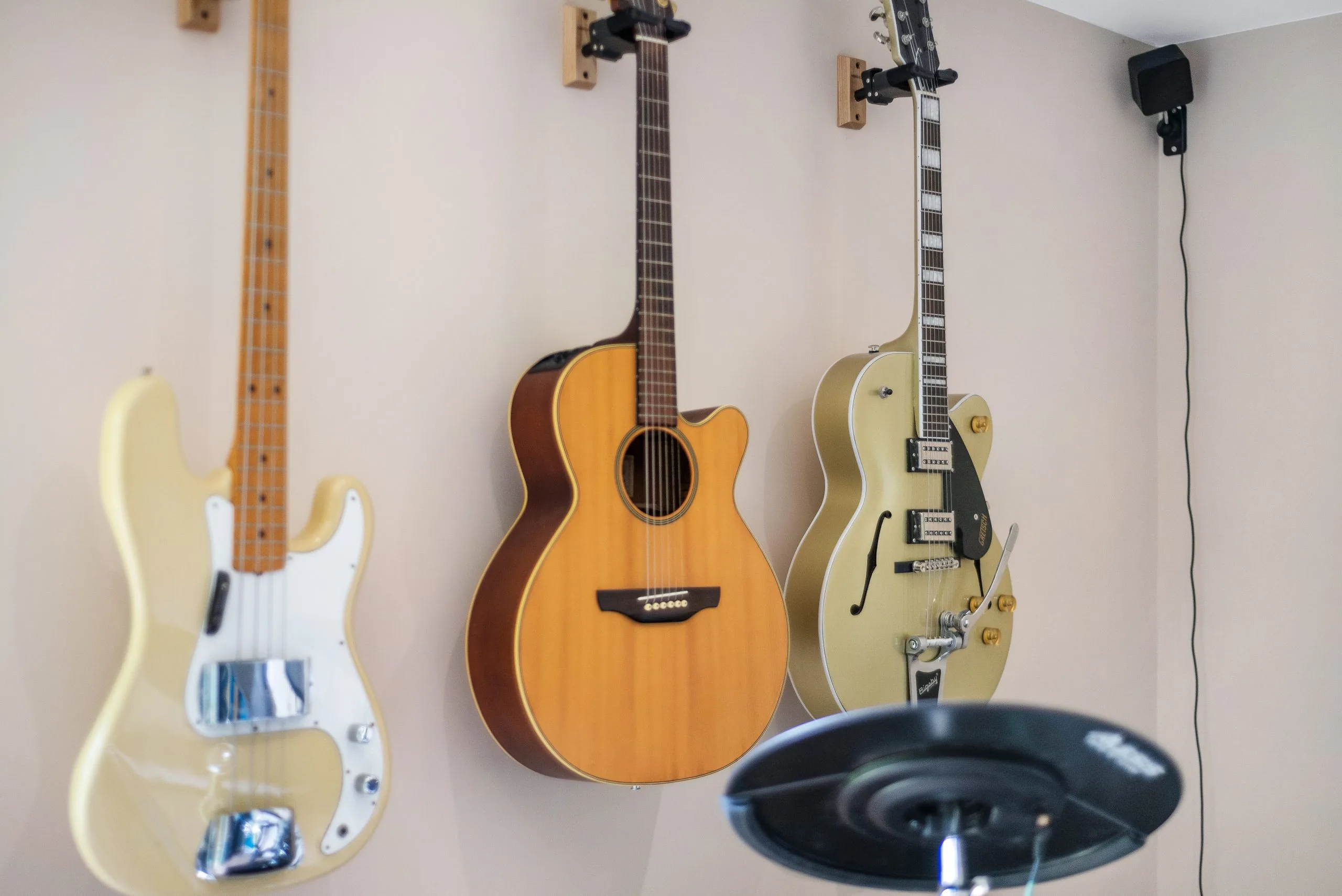
Drummer’s Garden Studio, Shenfield
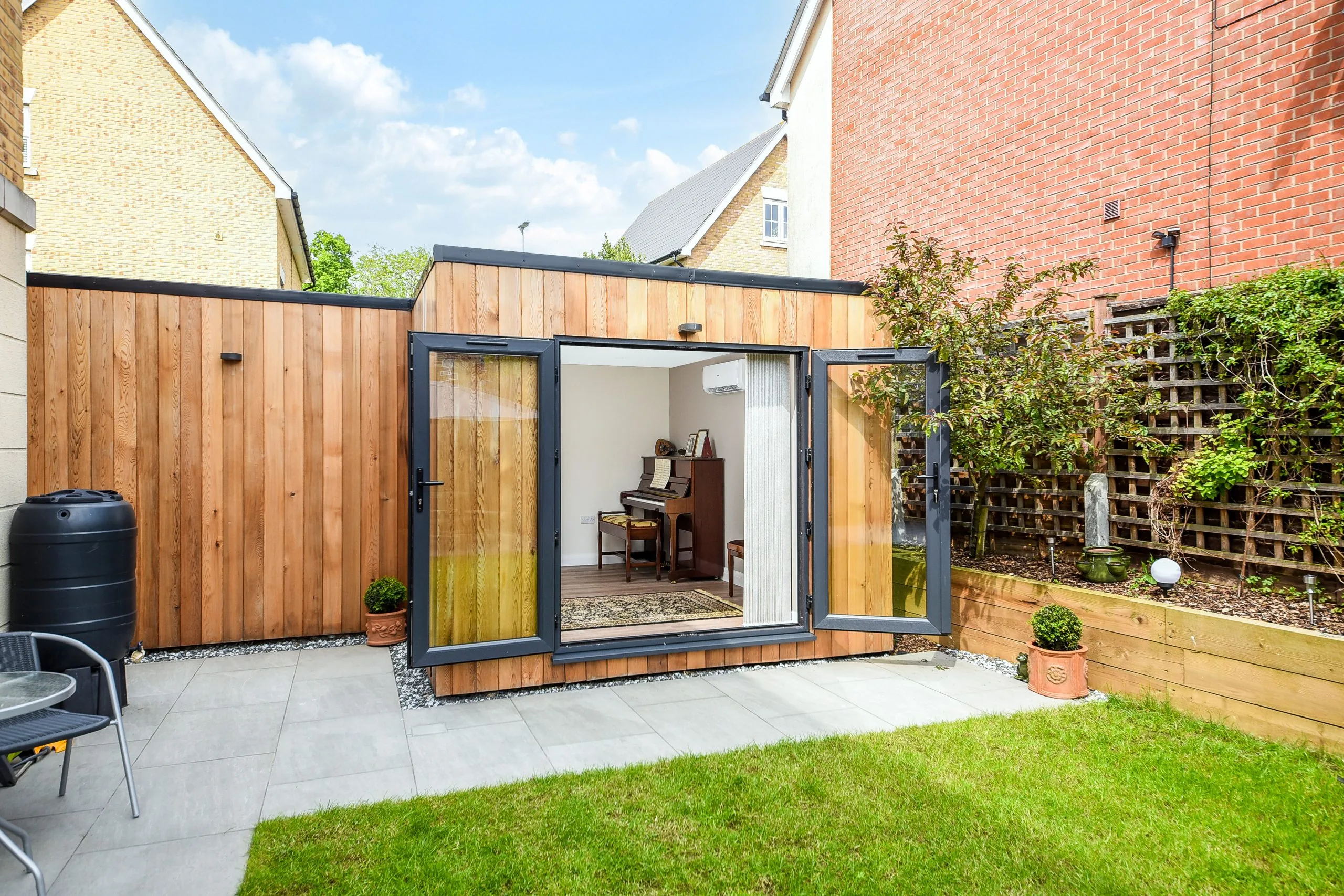
A dedicated garden studio created for drum practice, showing how a bespoke building can provide a comfortable, focused and practical space for serious musicians at home.
View project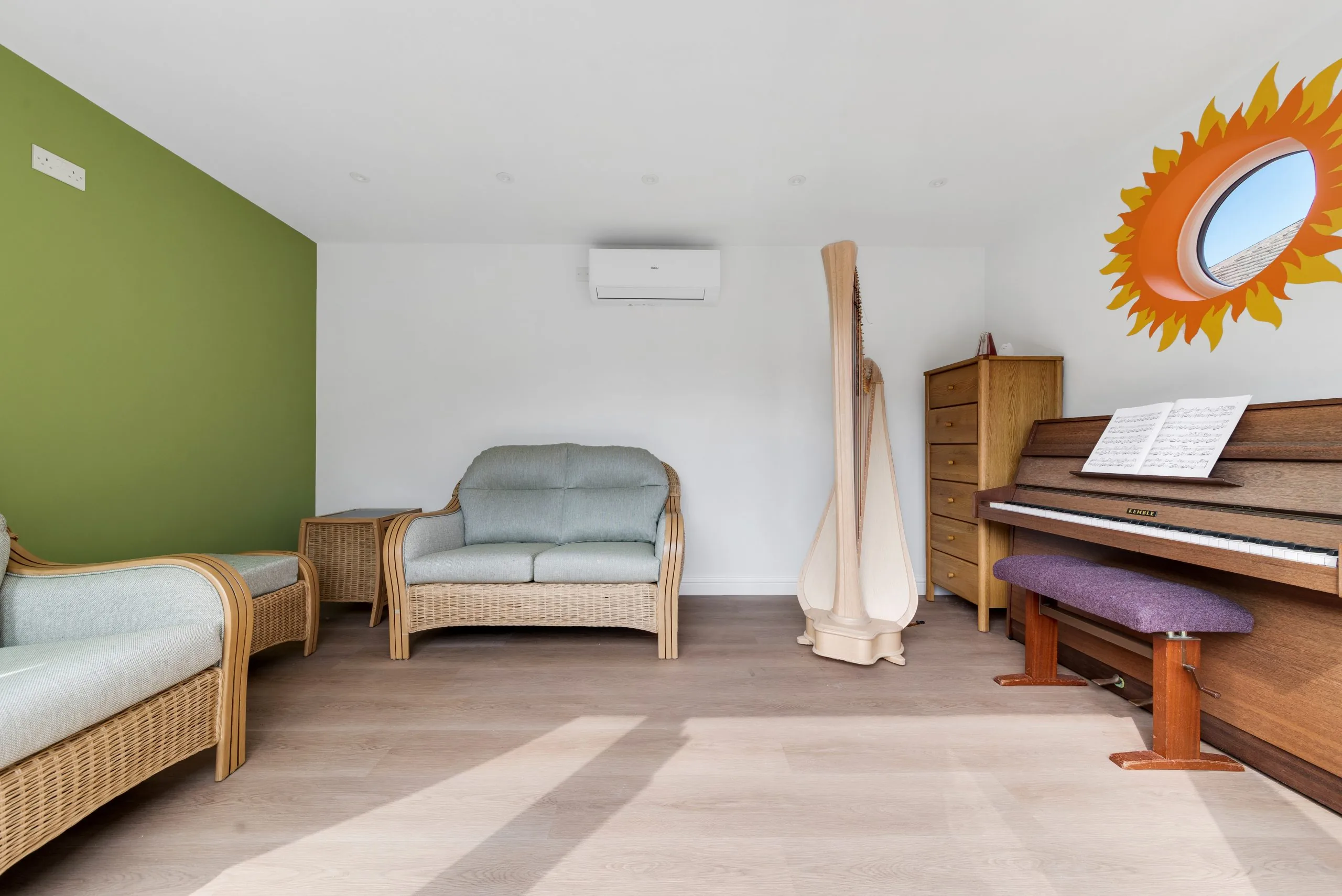 Garden drum room ideas
Drums are one of the hardest instruments to accommodate at home. They are loud in the obvious way, but they also create low-frequency energy that travels through floors, walls and structural connections. A spare bedroom can quickly become a source of tension. A garage often feels cold, flat and uninspiring. Hiring a rehearsal room eats into practice time and usually limits when you can play.
A bespoke garden drum room solves a very specific problem: it gives you a dedicated, comfortable, properly planned space where you can practise, record, teach, rehearse or simply play without the rest of the house revolving around your kit. For drummers, producers, parents of young musicians and serious hobbyists, the difference is not just convenience. It is the ability to use the space freely, frequently and year-round.
A drum room needs to do more than contain a kit. It has to feel good to play in, manage sound sensibly, stay ventilated with the doors closed, provide reliable power for amplification or recording equipment, and be designed around how you actually use the space.
Because Hawksbeck garden rooms are bespoke, the layout, structure and internal specification can be developed around your needs from the outset. That might mean a compact practice room for one acoustic kit, a larger music studio with space for guitar amps and keyboards, or a high-spec acoustic garden building designed for playing, recording and content creation.
If you are still comparing possible uses for your building, our main garden room ideas guide is a useful place to explore the wider possibilities.
Browse the GuideA standard insulated garden room can be excellent for working, relaxing or exercising, but drums introduce a different set of demands. The design has to consider sound transmission, room acoustics, heat build-up, access, floor strength and equipment storage.
Reducing the amount of sound that escapes the building, especially through doors, glazing, roof junctions and structural weak points.
Making the room sound controlled and enjoyable rather than harsh, boxy or painfully reflective.
Keeping fresh air moving when doors and windows need to stay closed during practice.
Allowing for amps, mixers, interfaces, powered monitors, lighting, heating and future equipment.
Creating a room you want to spend time in, not a glorified shed with a drum kit inside.
For a drummer, the small details matter. Where the kit faces, how cymbal reflections behave, whether the floor feels solid under double kick work, where microphones and cables can be placed, and how quickly the room becomes hot during a long rehearsal can all affect how often you use the space.
SoundThe word “soundproof” is used a lot online, but it is worth being precise. True soundproofing is extremely difficult, particularly with acoustic drums, because low frequencies and impact energy travel through structure.
A better and more honest way to describe a well-designed drum room is sound-controlled.
That means the building is designed to reduce sound leakage significantly while also improving the sound inside the room. The goal is not marketing language; it is practical performance. A drummer needs a room that works in real life, with realistic expectations and the right specification for the site.
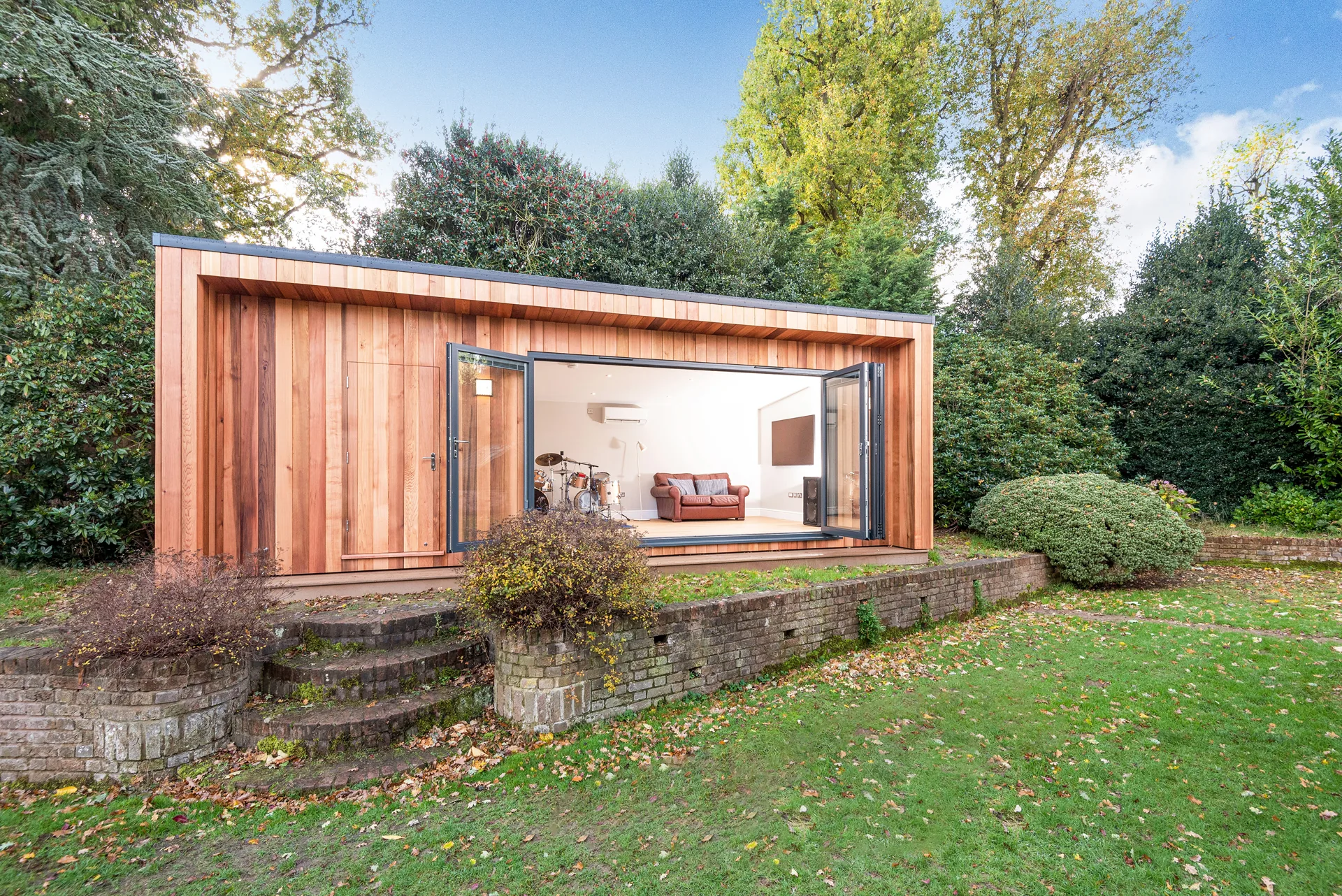
Sound isolation is about limiting the amount of noise that leaves the garden room. This can involve careful wall, floor and ceiling build-ups, high-quality insulation, attention to air gaps, upgraded doors and glazing, and reducing weak points where sound can escape.
Acoustic treatment is about how the room sounds internally. Drums produce fast transients, strong cymbal reflections and low-end build-up, so panels, bass traps, absorptive surfaces and diffusion can all be considered depending on the room size and intended use.
There is also the human side: where the building sits in the garden, how it is oriented, how close neighbouring properties are, what times you plan to play, and whether you need a room for light practice, heavy rock sessions or recording work.
There is no single correct size for a drum room. A five-piece kit, a compact electronic kit, a teaching setup and a full recording room all need different amounts of space. However, it is almost always better to allow more space than the footprint of the kit itself.
| Use | Typical considerations | Space needed |
|---|---|---|
| Solo drum practice | Acoustic kit, stool, music stand, storage and comfortable movement around the kit. | Compact to medium garden room. |
| Teaching room | Space for tutor and student, second kit or practice pad station, waiting/storage area. | Medium layout with clear circulation. |
| Band rehearsal room | Drums, guitar amps, bass amp, PA, microphones, seating and cable routes. | Larger garden building with enhanced sound control. |
| Recording studio | Drum position, microphones, control desk, monitor placement, acoustic treatment and equipment storage. | Bespoke studio layout, sometimes zoned. |
A common mistake is to design the room around the kit alone. Once cymbal stands, mic stands, amps, acoustic panels, shelving, seating and cables are added, a room can feel tight very quickly. During the design stage, it is useful to map out the actual equipment you use now and the equipment you may add later.
Because a Hawksbeck building is made to suit the customer, a drum room can be planned in several ways. The right layout depends on whether you want the room to be purely functional, studio-like, luxurious, or multi-purpose.
This is ideal for drummers who want a reliable place to play without setting up and packing down. The kit can stay in position, sticks and accessories can be stored neatly, and the room can be designed with a simple, focused layout.
If you record drums, podcasts, online lessons or video content, the room needs more planning. Microphone placement, cable routes, monitor position, computer location and background appearance all become important.
A recording-focused garden drum room might include discreet cable management, dedicated sockets where you need them, dimmable lighting, acoustic wall treatment, controlled reflections and space for a workstation or small control area.
Not every drum room is built for a professional musician. Many are for families who want to support a young drummer without turning the whole home into a rehearsal space. In this case, comfort, supervision, resilience and flexibility matter.
The room can be designed so it works for drums now but could also become a study room, studio, gym, teen den or hobby room in the future. That flexibility is one of the biggest advantages of investing in a high-quality bespoke building rather than adapting a temporary outbuilding.
When amps, speakers and vocals are involved, the specification usually needs to work harder. The room needs enough floor area for musicians, good ventilation, carefully planned power, acoustic control and suitable finishes that cope with regular use.
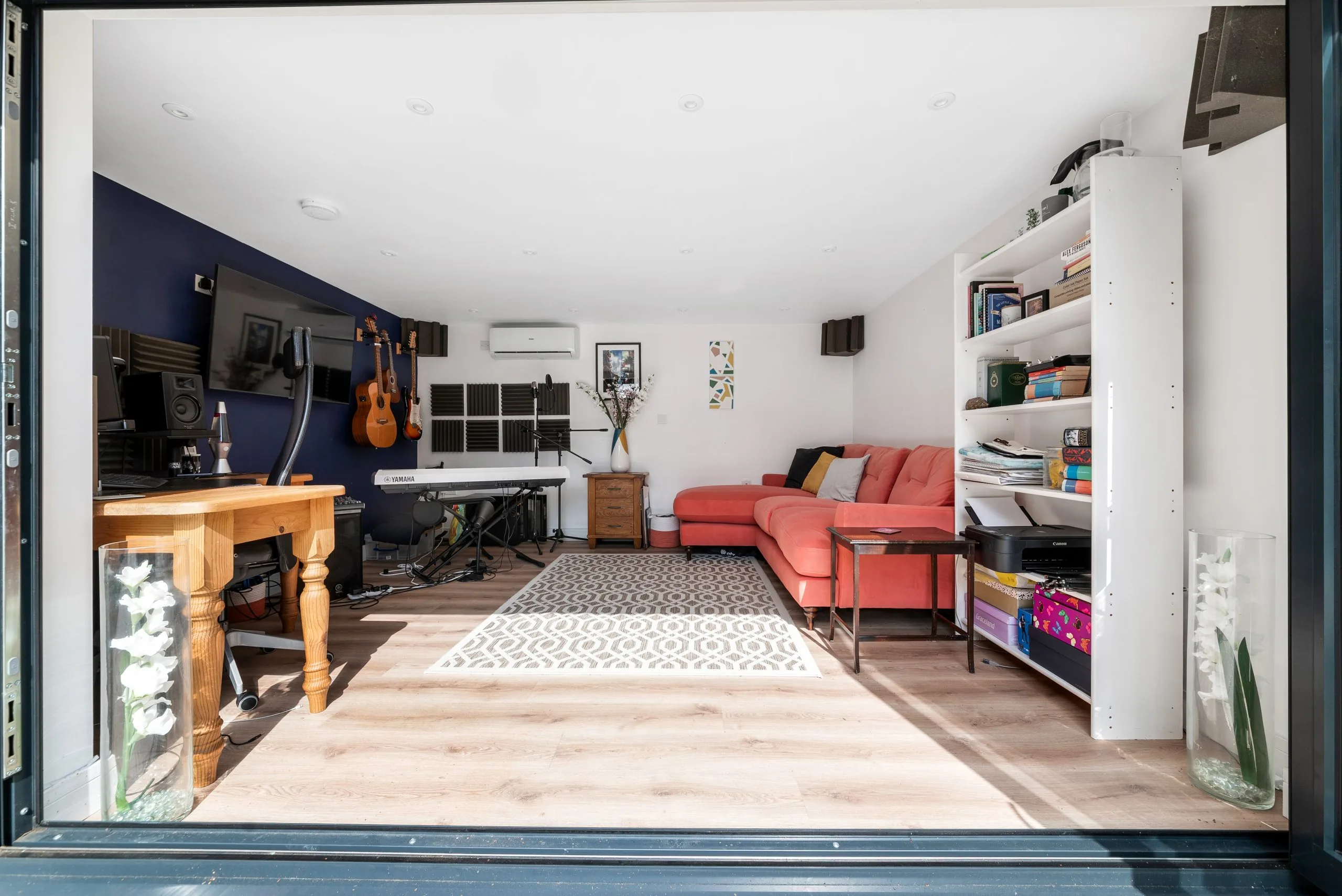
Tell us who plays, how loud the sessions get and when they happen, and we can help you shape a rehearsal room around the band rather than the other way round.
A drum room is physical. Even a short practice session can raise the temperature quickly, especially if the room is well sealed for sound control. Opening doors and windows may not always be desirable, so ventilation should be thought about early.
Good ventilation helps the room stay fresh, reduces stuffiness, protects equipment and makes longer sessions far more comfortable. Depending on the design, this may involve carefully positioned ventilation, heating and cooling options, and a layout that avoids dead corners where air does not circulate well.
This is particularly important for drummers who plan to record or practise for long periods with the doors closed. A beautiful studio that becomes uncomfortable after 20 minutes will not be used as much as it should be.
Glass is often one of the most attractive features of a luxury garden room, but in a drum room it needs careful consideration. Large areas of glazing can look fantastic and bring in natural light, yet glass can also be a weak point for sound control and internal reflections.
The answer is not always to remove glazing. It is to specify it intelligently. The right balance may include high-performance doors and windows, careful orientation away from sensitive boundaries, reduced glazing on certain elevations, blinds or curtains, and internal treatment that controls reflections.
For some clients, a more enclosed studio-style room is the right answer. For others, natural light and a garden view are part of what makes the room enjoyable. The benefit of a bespoke approach is that you do not have to accept a generic layout designed for a home office.
Drummers often start with a kit and quickly add more: sample pads, in-ear systems, speakers, laptop, interface, camera, microphones, metronome, charging points, mood lighting and maybe a wall-mounted screen. Planning electrics properly at the beginning keeps the room cleaner, safer and more usable.
Worth watching with your kit’s footprint in mind, along with the amps and stands you may add later.
The cost of a garden drum room depends heavily on size, finish, site access, level of sound control, glazing, doors, electrical specification, heating, ventilation and internal acoustic treatment. A basic garden room and a serious drum-ready acoustic studio are not the same product, so it is important to budget for the performance you need.
As a broad guide, premium bespoke garden rooms typically sit in the tens of thousands, with more involved large-scale or higher-specification buildings increasing from there. For a drum room, it is sensible to allow for additional investment above a standard specification because sound control, ventilation, acoustic treatment and equipment-focused electrical planning all affect the final design.
A compact, high-quality practice room may be achievable at the lower end of a bespoke garden room budget, while a larger drum and rehearsal studio with enhanced acoustic measures, upgraded doors or glazing, premium finishes and a more complex electrical/ventilation package can move significantly higher. Many serious music-focused garden buildings may fall roughly in the £40,000 to £90,000+ range, although this is only an indicative guide. Large, luxury, highly customised or technically demanding studio projects can exceed this.
The best way to approach pricing is to decide what the room must achieve. Occasional practice? Daily acoustic drums? Teaching? Recording? Full band rehearsals? Once the brief is clear, the specification can be shaped around your priorities and budget rather than adding expensive features that do not improve how you use the space.
A strong brief makes the design better. Before starting, it is worth thinking through the practical details of how the room will be used.
A drum room should be robust, but it does not have to feel industrial. With the right design, it can be a refined, inspiring space that feels like part of your home rather than an isolated box at the end of the garden.
Timber tones, clean joinery, quality flooring and well-chosen wall finishes can make the room feel calm and personal. This matters because the environment affects how much time you want to spend there.
Drum equipment can quickly look untidy if there is nowhere for it to go. Built-in storage, shelving and cubby spaces can keep spare heads, sticks, cables, cases and accessories organised without making the room feel cramped.
Bright lighting is helpful for tuning, maintenance and teaching, but softer lighting can make practice and recording more enjoyable. Dimmable or zoned lighting can change the atmosphere instantly.
The outside of the building should still complement the garden and the property. A premium music room does not need to look like a studio bunker. It can be contemporary, elegant and carefully integrated into the outdoor space.
Yes, if it is designed properly. A Hawksbeck garden building can be built for year-round comfort, with insulation, heating, lighting and ventilation considered as part of the specification. This is essential for a drum room because equipment does not respond well to damp, cold or unstable conditions, and neither do musicians.
Year-round usability is one of the reasons a purpose-built garden room is so different from a converted shed or garage. The aim is to create a proper room: comfortable in winter, usable in summer, visually appealing and suitable for regular use.
Many garden rooms can be built under permitted development rights, but this depends on the property, location, size, height, position and intended use. A drum room also raises practical neighbour considerations because of noise, even when the building is designed to control sound.
It is always worth checking the specifics before committing to a design. If the building is close to boundaries, unusually tall, very large, intended for business use such as teaching, or located at a listed property or within a designated area, additional advice may be needed.
The design stage should consider both the formal planning position and the practical reality of how the room will be used. A well-positioned, well-specified drum room is much easier to live with than one placed without considering surrounding homes.
Some customers want a room solely for drums. Others want a hybrid space that can work as a studio, office, media room or gym when the kit is not in use. Both approaches can work, but they should be designed differently.
A dedicated drum room can prioritise acoustic control, equipment layout and durability. A multi-purpose room may use smarter storage, movable acoustic treatment, more domestic finishes and a layout that still feels spacious when the kit is not the main focus.
The advantage of bespoke design is that you can plan for the role the room plays in your life now and how it might change. A child’s drum practice room today might become a music production room, sixth-form study space, work studio or entertainment room later.
A drum room is not a standard garden office with a kit placed inside. It needs a more thoughtful brief, a higher level of specification and a design process that takes sound, comfort and equipment seriously.
Hawksbeck creates premium bespoke garden rooms and buildings, which means the room can be tailored around the way you play, the garden you have, the finish you want and the performance you need. From compact practice spaces to luxury music studios, the building can be designed to feel permanent, comfortable and beautifully finished.
The result is a space that encourages you to play more often, keeps equipment ready, reduces disruption inside the house and adds a valuable, flexible building to your property.
If you are considering a drum room, the most useful first step is to discuss what you need the building to achieve. The specification for a casual practice room will differ from a drum recording studio or rehearsal space, and that difference has a direct impact on size, cost and acoustic design.
Whether you already have a clear brief or are still exploring options, Hawksbeck can help shape a bespoke garden building around your music, your garden and your long-term plans.
Daily practice, lessons or full band rehearsals: we can talk through the size, sound control and budget your drum room will need.
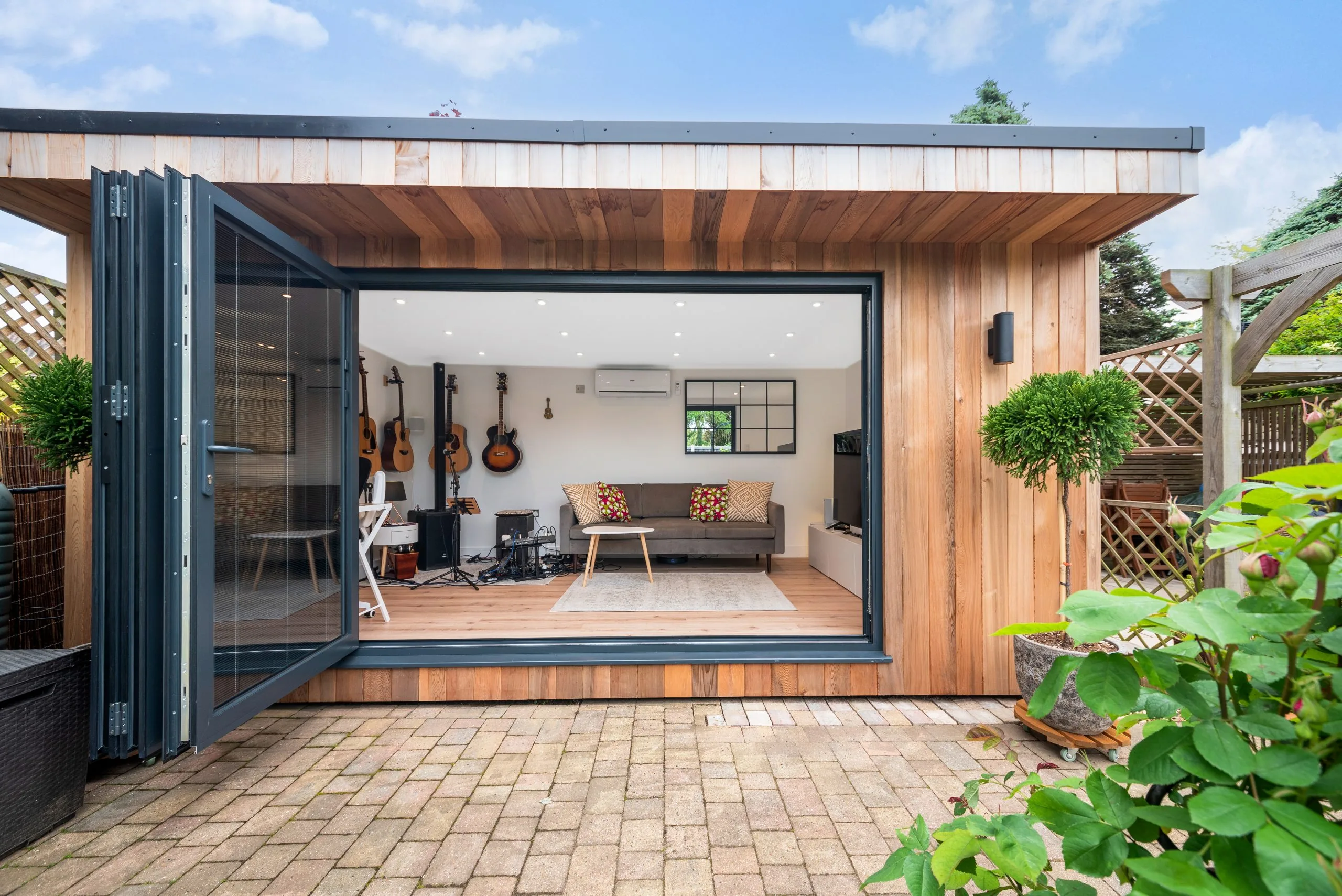
One drummer’s studio and two music rooms, each planned around practice, comfort and the people who play in them.
A dedicated garden studio created for drum practice, showing how a bespoke building can provide a comfortable, focused and practical space for serious musicians at home.
View project
A bespoke music room designed to feel both inspiring and comfortable, with the flexibility needed for creative work, practice and year-round enjoyment.
View project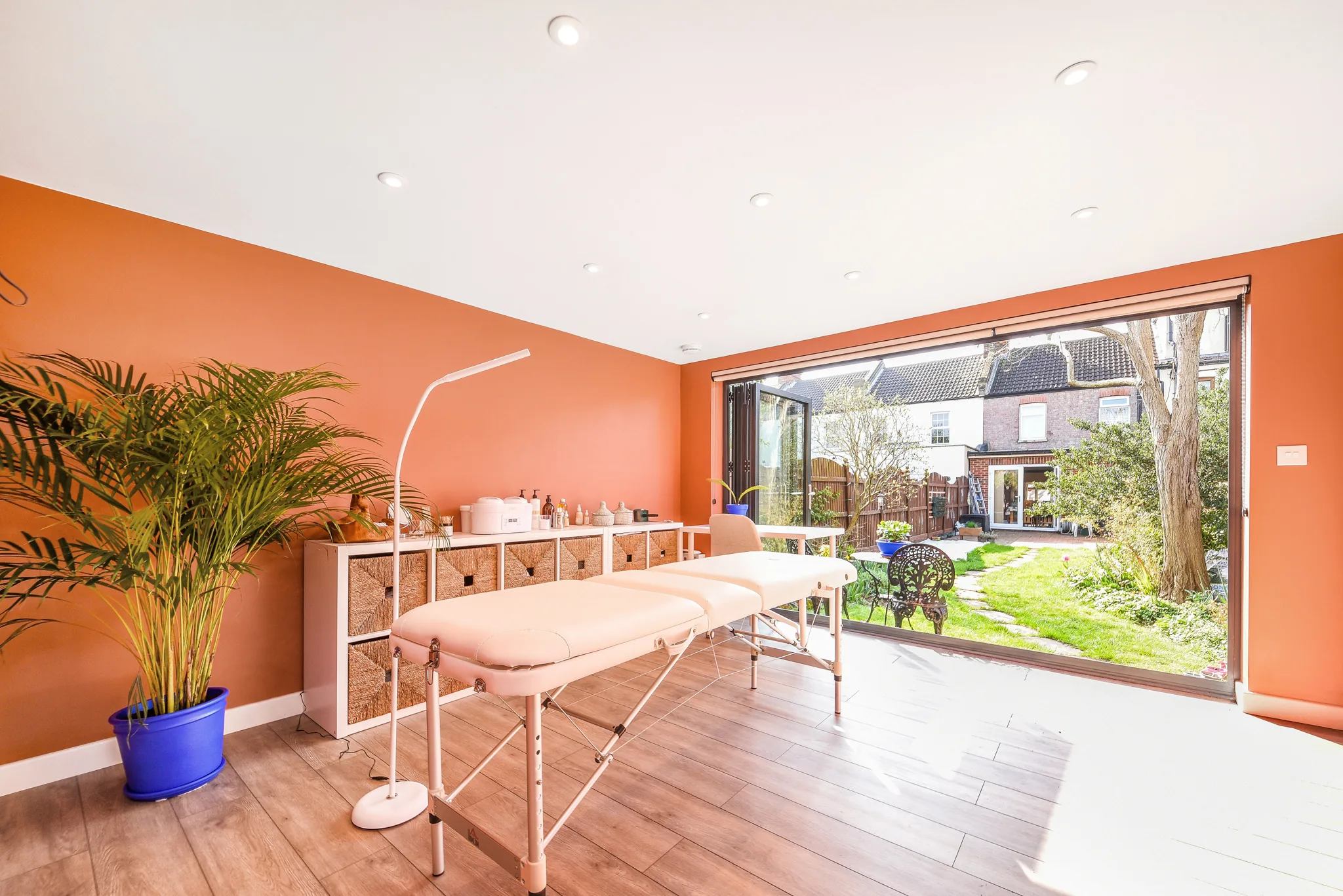
A premium garden music studio demonstrating how high-quality design, comfort and a tailored specification can create a refined space for musicians and creatives.
View project