A piano is not just another piece of furniture to place in a spare room. It reacts to temperature, humidity, floor stability, sound reflection, background noise and the way the room feels when you sit down to practise.
A well-designed garden piano room gives the instrument a calm, controlled setting and gives the player something just as important: a space that invites regular playing without the interruptions of the main house.
For a child learning scales, an accomplished pianist preparing for exams, a composer who needs space to think, or a household where music is part of everyday life, a bespoke garden room can become a properly considered piano room rather than a converted corner. At Hawksbeck, the advantage is that the building can be designed around the piano, the player and the garden from the beginning.
Many homes have a piano in a dining room, hallway or living area because that is where space happens to be available. The difficulty is that those rooms are rarely designed for music. Hard floors, large windows, changing household temperatures, open-plan layouts and daily interruptions can all affect the playing experience.
A bespoke garden piano room allows you to create a more intentional environment. It can be detached enough from everyday activity to feel focused, but close enough to the house for convenient daily use. It can be warm in winter, comfortable in summer, well lit, carefully positioned and built to suit the type of piano you own.
Useful design priorities usually include:
Stable internal conditions to help protect the piano from extremes of heat, cold and humidity.
A strong, level floor structure suitable for an upright, baby grand or grand piano.
Acoustic consideration so the room sounds pleasant rather than harsh, boomy or overly dead.
Good separation from the house so practice can happen without dominating family life.
Comfortable natural light without placing the piano in direct sun for long periods.
Space for music storage, seating, recording equipment or teaching, depending on how the room will be used.
If you are comparing different ways to use a detached garden building, our wider guide to garden room ideas is a useful starting point, but a piano room deserves its own level of planning because of the instrument’s sensitivity and the importance of sound.
Designing around the piano, not just the room
The piano should normally be the first object considered in the layout, not the last. The size, weight and type of piano influence the proportions of the room, the floor specification, door access, placement of windows, heating choices and how much acoustic absorption may be needed.
Upright piano room
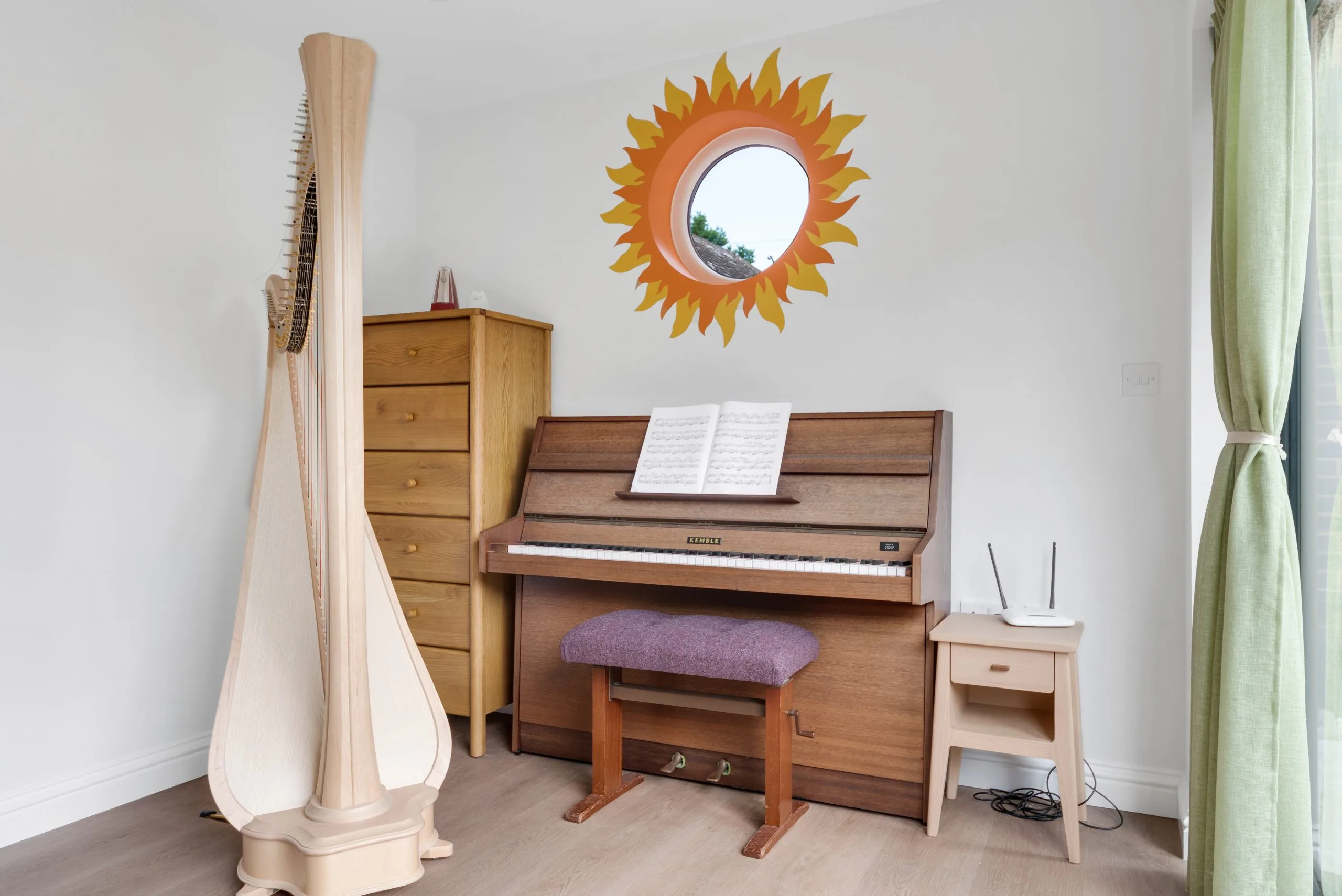
An upright piano can work beautifully in a more compact garden room, particularly if the space is intended for practice, lessons, songwriting or as a peaceful music retreat. Even with an upright, it is wise to avoid designing the room too tightly. The player needs enough room to sit comfortably, open the piano, access the pedals freely and move around without the space feeling like a storage room.
A practical upright piano room might include:
A defined piano wall away from direct sunlight.
Built-in music storage or shelving.
A small sofa or armchair for listening.
Discrete heating and ventilation to maintain comfort.
Soft finishes or acoustic panels to stop the room sounding too bright.
Baby grand or grand piano room
A grand piano needs a more generous plan. The lid direction, the curve of the instrument, bench position, circulation space and listening area all matter. A grand piano also becomes the visual centrepiece of the room, so glazing, finishes and lighting can be designed to frame it beautifully.
For a baby grand or grand piano, we would typically look at:
Clear delivery access from the front of the property to the garden building.
Door positioning and opening widths that allow safe installation.
A floor structure designed with the piano’s weight and point loads in mind.
A room size that gives the instrument space to breathe acoustically.
Lighting that helps with reading music without glare on polished surfaces.
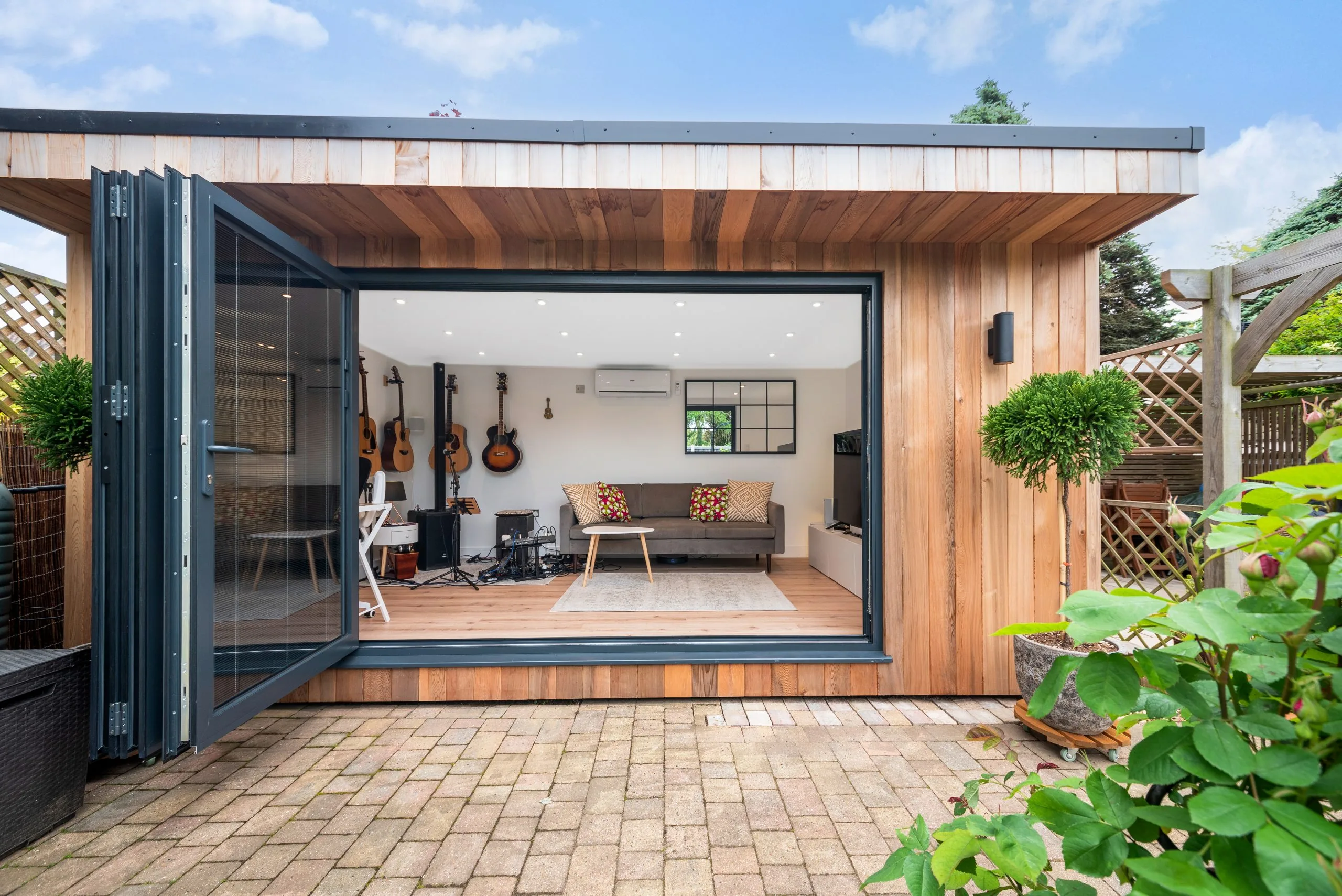
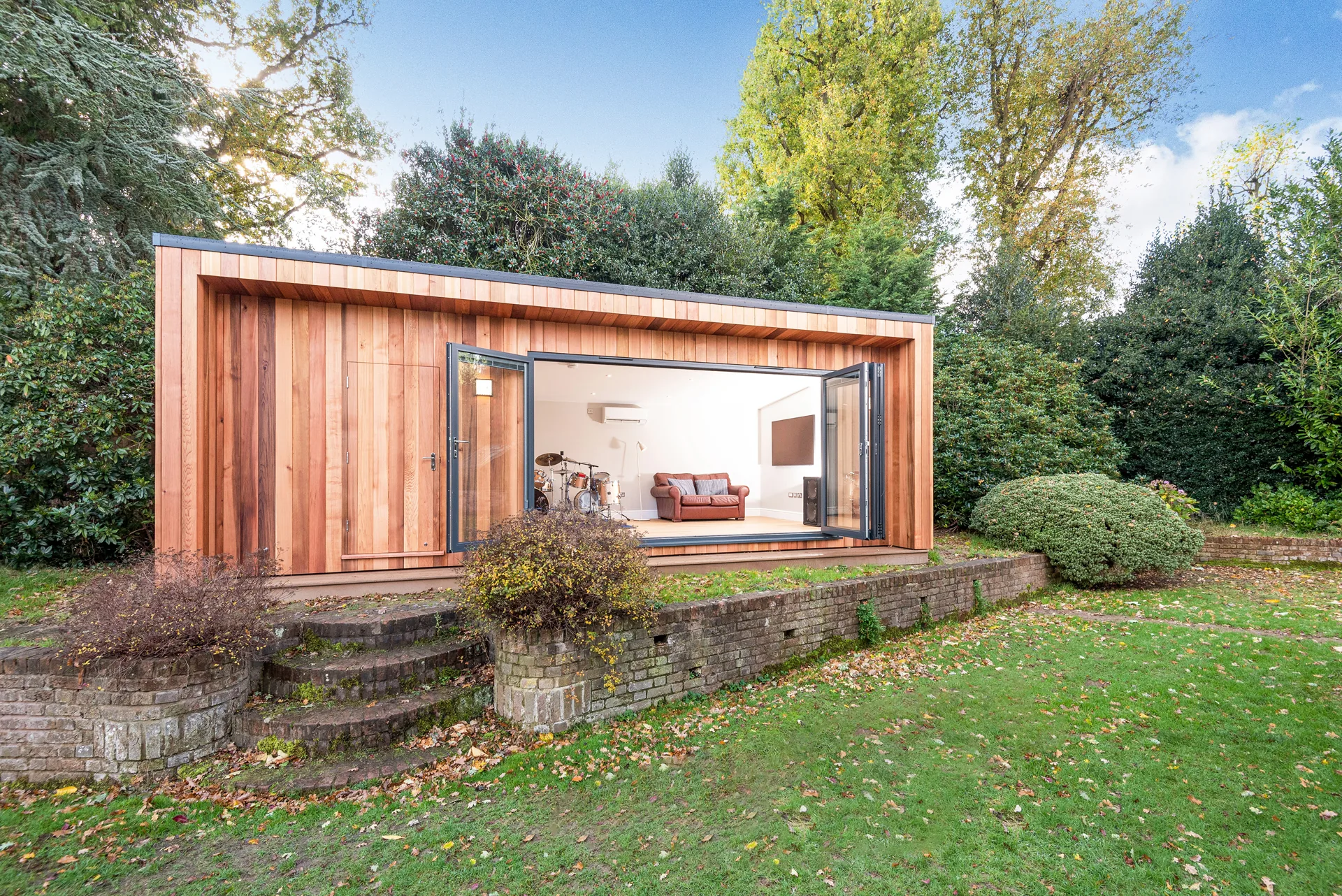
A contemporary exterior can sit quietly in the garden while the plan inside is drawn around the piano.
Climate stability: protecting your piano throughout the year
Pianos are made from materials that move and respond to their environment. Timber, felt, leather, glue, metal strings and soundboards can all be affected by changes in temperature and humidity. A cold, damp outbuilding is unsuitable for a quality piano; a properly built, insulated garden room is a very different proposition.
A Hawksbeck piano room can be specified to feel like a genuine extension of the home, with insulation, heating, glazing and ventilation planned for year-round use. The aim is not to create a sealed box, but a comfortable, stable environment where the instrument is not exposed to avoidable extremes.
Temperature control
Consistent heating is preferable to occasional blasts of heat after long cold periods. A piano will generally be happier in a room that remains within a comfortable living temperature range rather than one that fluctuates dramatically between icy and overheated. The heating approach can be discussed as part of the build specification, taking into account how often you play and whether the room will be used every day.
Humidity awareness
Humidity is often overlooked, yet it is one of the most important factors for a piano. Very dry air can cause timber components to shrink, while excessive damp can create swelling, sticking keys or tuning instability. The room design should allow the space to be ventilated sensibly while remaining well insulated and weather protected.
For particularly valuable instruments, you may also wish to use a dedicated humidity monitoring system or piano humidity control equipment recommended by your piano technician. The garden room itself provides the high-quality envelope; specialist piano care can then fine-tune the environment further.
Positioning away from direct sun
Large areas of glass look stunning in a garden room, but a piano should not sit in direct sunlight for prolonged periods. Sun can affect tuning stability, fade finishes and create temperature hotspots. This does not mean the room must be dark. It means the glazing, rooflights, blinds and piano placement should be planned together.
Acoustics: making the room enjoyable to play in
A piano room should not be acoustically lifeless, but it should not be painfully reflective either. The best practice rooms tend to have a controlled, natural sound: enough liveliness to make playing rewarding, enough softness to prevent harsh reflections and fatigue.
Because garden rooms are often built with clean lines, glazing and smooth surfaces, acoustics need to be considered early. The right approach depends on the piano, room size, ceiling height, flooring, furniture and whether the space is for private practice, teaching, recording or performance.
Common acoustic issues in piano rooms
Excessive brightness: too many hard surfaces can make the piano sound sharp and tiring.
Boominess: small rooms can exaggerate lower frequencies, especially with a powerful instrument.
Flutter echo: parallel hard walls can cause distracting reflections.
Sound leakage: if other people are nearby, the room may need additional acoustic thought.
Over-treatment: too much absorption can make the piano feel flat and uninspiring.
Practical ways to improve the sound
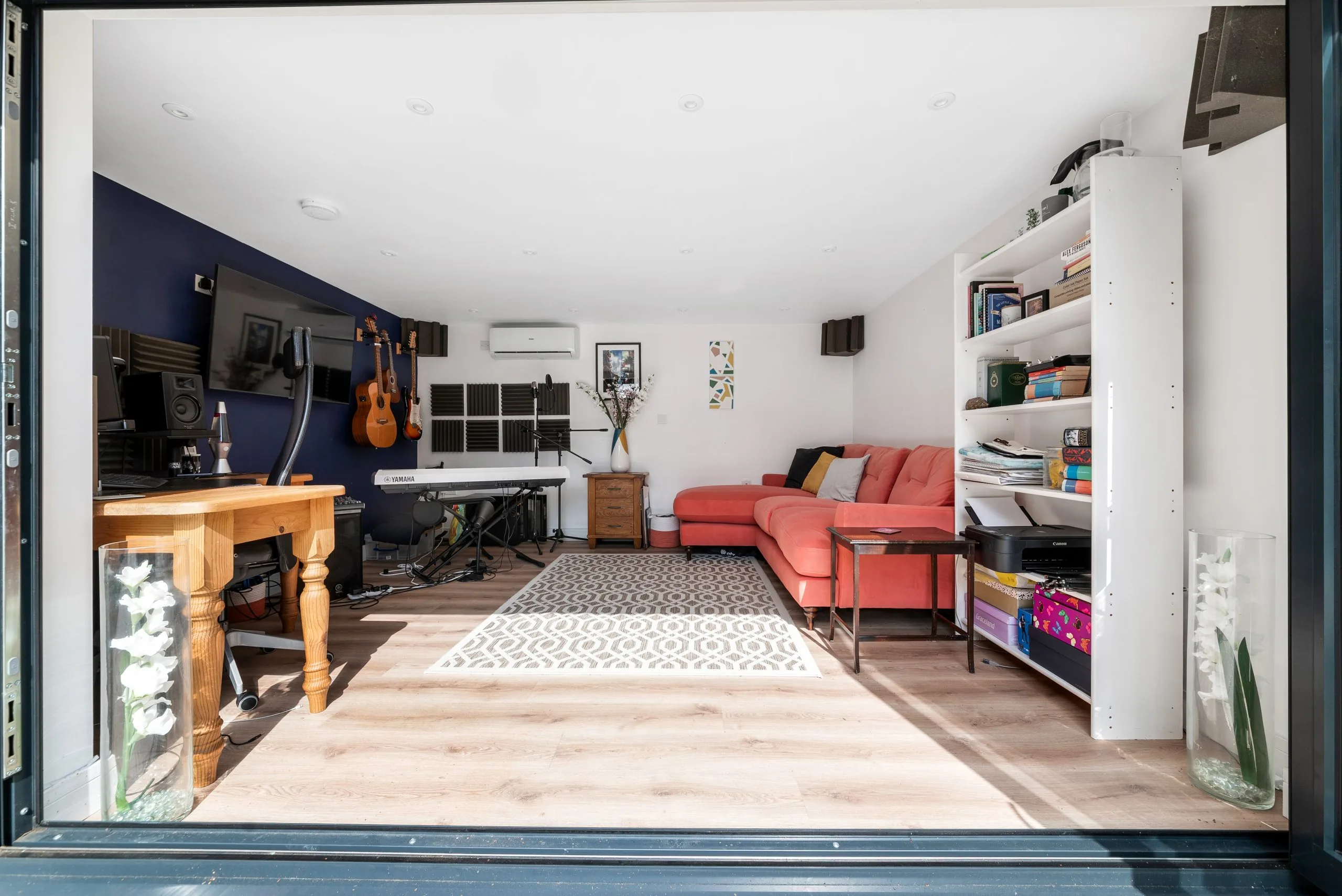
Acoustic comfort can often be improved with a blend of room design and interior choices. Depending on the brief, this might include acoustic wall panels, a carefully chosen floor finish, curtains or blinds, upholstered furniture, bookcases, rugs, ceiling treatment or bespoke joinery that breaks up reflections. The goal is to create a room that flatters the piano without making the space look like a technical studio unless that is the desired aesthetic.
Design element
Why it matters in a piano room
Possible approach
Floor
Affects stability, comfort and reflected sound.
Strong construction, level finish and possible rug placement for acoustic softening.
Glazing
Brings light but can create reflections and temperature gain.
Consider orientation, shading, blinds and keeping the piano away from direct sun.
Walls
Parallel hard surfaces can make the room ring.
Acoustic panels, artwork-style absorption, shelving or textured finishes.
Ceiling
Influences how open and resonant the room feels.
Consider height, lighting and discreet acoustic treatment where appropriate.
Furniture
Helps balance sound and determines how the room is used.
Add seating, storage and soft furnishings without overcrowding the piano.
Sound insulation: keeping practice comfortable for everyone
There is an important distinction between room acoustics and sound insulation. Acoustics are about how the piano sounds inside the room. Sound insulation is about reducing how much sound travels outside the room. A piano can be powerful, particularly when played with the lid open or during repetitive practice, so the level of sound control should be discussed honestly at the design stage.
If the garden is detached from neighbouring properties and the piano is mainly played during normal daytime hours, a well-built insulated garden room may be sufficient for many households. If the room will be used for teaching, advanced practice, evening playing, recording or more intense musical use, then additional acoustic measures may be worth considering.
Factors that influence sound transfer include:
The distance between the garden room, main house and neighbouring properties.
The orientation of doors and windows.
The amount and type of glazing.
The wall, floor and roof build-up.
Ventilation routes.
The type of piano and typical playing volume.
For serious sound reduction, the specification becomes more specialist. That may involve enhanced wall build-ups, acoustic glazing, careful sealing, heavier doors, isolated layers and ventilation strategies that do not compromise performance. Because Hawksbeck buildings are bespoke, these requirements can be explored properly rather than forcing a music brief into a standard garden room package.
Practising in the evenings, or teaching after school?
Tell us when the piano is played and how close the neighbours are, and we can talk through how far the sound specification needs to go.
The most successful piano rooms feel effortless when you use them. You can enter without awkward manoeuvring, sit naturally at the instrument, place music nearby, adjust lighting easily and enjoy the garden without feeling exposed. Achieving that simplicity requires well-considered planning.
Where should the piano go?
In many cases, the piano should sit against an internal wall or in a position protected from strong sunlight, radiators, draughts and daily knocks. For a grand piano, the orientation of the lid can influence both sound projection and how the instrument presents visually when you enter the room.
Rather than placing the piano directly in front of the largest window simply because it looks dramatic, it is usually better to balance the view with instrument care. You may want natural light to the side, a garden view from the bench, or a calm backdrop that does not distract during practice.
How much space do you need?
The right size depends on the instrument and the intended use. A focused upright practice room can be relatively compact, while a grand piano room with seating, storage and teaching space needs more generous proportions. If the piano room will also be used for singing, violin, cello, recording, composition or online lessons, this should be included in the brief.
As a rough guide, think about space for:
The piano and bench.
Comfortable movement around the instrument.
A music stand or side table if required.
Storage for sheet music, books and accessories.
Seating for a teacher, parent or listener.
Recording equipment, microphone stands or speakers if relevant.
Access for delivery and tuning
A piano room has one logistical requirement that a yoga studio or home office may not: the instrument has to get inside safely. Access should be considered before the building is finalised. Door widths, garden paths, thresholds, steps, gates and turning space all matter. A professional piano mover can advise on the practicalities, and the garden room design can be coordinated accordingly.
Doors, paths and thresholds
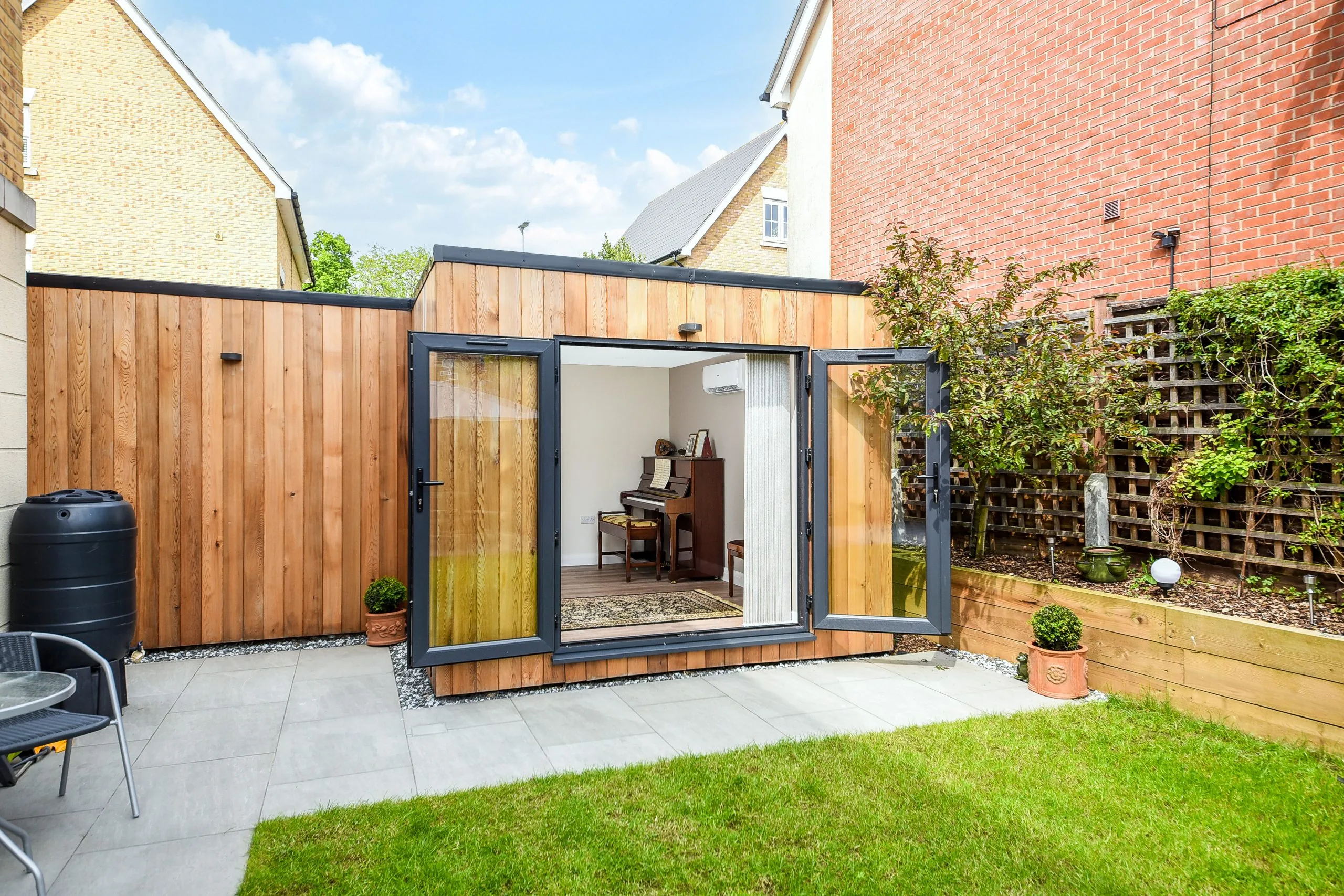
Hawksbeck buildings in use across different gardens; for a piano room, the route from gate to door matters as much as the room itself.
How the room is used
A room for practice, teaching, writing or recording
Not every piano room is used in the same way. A bespoke build allows the space to match the rhythm of the household and the level of musical activity.
Private practice room
A private practice room should feel calm and uncomplicated. It may only need the piano, good lighting, storage, a comfortable temperature and enough acoustic treatment to make daily practice enjoyable. The focus is concentration: a space where scales, repertoire and technique can be worked on without the distractions of family life.
Piano teaching room
If lessons will take place in the garden room, the layout needs to account for teacher and student movement. There may be space for two benches or a side chair, a small desk, music storage, waiting space for a parent, Wi-Fi for online resources and a welcoming entrance. Lighting, heating and acoustics become even more important because the room may be used for longer blocks of time.
Composition and songwriting studio
A piano room can also become a creative writing space. In that case, the brief may include a desk, monitors, keyboard controller, audio interface, shelving, soft lighting and acoustic treatment suitable for recording vocals or demos. The room can still look like a luxury garden building rather than a technical control room, but the infrastructure can be planned from the start.
Small performance or listening room
Some clients want a room that can host a small number of guests for informal performances. This usually calls for a larger footprint, flexible seating, controlled lighting and careful acoustic balance. It is a lovely use of a garden building: intimate, separate from the house and atmospheric during evening recitals.
Interior details that make a piano room feel special
A piano room should support concentration, but it does not need to feel plain. The quality of the interior can make the space more enjoyable to visit every day. Finishes, lighting and storage should be selected for long-term comfort as much as appearance.
Lighting for reading music
Good lighting is essential. Natural light is valuable during the day, but evening practice needs carefully positioned artificial light. Downlights alone may create shadows on sheet music, while harsh overhead lighting can feel clinical. A layered approach often works best, combining general lighting with task lighting near the piano and softer ambient lighting for relaxation.
Storage for sheet music and accessories
Music rooms easily become cluttered if storage is not planned. Bespoke joinery can provide space for sheet music, exam books, metronomes, headphones, cables, recording equipment, spare strings, cleaning cloths and teaching materials. Closed storage keeps the room calm; open shelving can also help acoustically by breaking up flat wall surfaces.
Seating and comfort
A single piano bench may be enough for some users, but many piano rooms benefit from an armchair, small sofa or a pair of occasional chairs. This makes the room more comfortable for listening, teaching, reading or taking a break between practice sessions. Soft seating also contributes to a more balanced acoustic environment.
Finishes that suit the instrument
The piano is likely to be the visual anchor. A polished black grand piano may call for calm, warm finishes that stop the space feeling stark. A traditional upright may suit timber tones and classic detailing. A contemporary digital hybrid piano may work beautifully in a clean, minimalist interior. Because the building is bespoke, the finish can be aligned with both the instrument and the style of your home.
Where to position a piano garden room in the garden
The position of the building affects convenience, sound, sunlight, privacy and the view from both the piano bench and the house. A garden piano room does not always need to sit at the far end of the garden; sometimes a closer, more integrated position makes daily use far more likely.
Useful questions include:
Will the room be used early in the morning or late in the evening?
Do you want the shortest possible walk from the house?
Where is direct sunlight strongest during the day?
Which direction avoids overlooking or being overlooked?
How close are neighbouring properties?
Can the piano be delivered to that part of the garden safely?
Would the room benefit from a terrace or covered entrance?
The answers shape the orientation, glazing, door positions and overall design. They also help determine whether the room should feel like a hidden retreat, a visible garden feature or a discreet continuation of the home.
Does a garden piano room need planning permission?
Many garden rooms can be built under permitted development rights, but this depends on the property, location, size, height, intended use and placement within the garden. A piano room used for personal practice will often be treated differently from a building used as a substantial business premises, such as a full-time teaching studio with regular visitors.
Important planning considerations can include:
The overall height of the building.
Distance from boundaries.
How much of the garden is covered by outbuildings.
Whether the property is listed or in a designated area.
Whether the use is incidental to the main house.
Any potential noise considerations if the room will be used heavily.
Hawksbeck can discuss the likely route for your project and help you understand whether permitted development may apply or whether a planning application should be considered.
How much does a bespoke garden piano room cost?
A piano room is usually more involved than a simple hobby room because the specification may need to account for weight, climate stability, acoustics, glazing choices, access and interior detailing. The final cost depends on the size of the building, level of finish, site conditions and how far the acoustic specification needs to go.
As a broad guide, a high-quality bespoke garden room suitable for an upright piano and comfortable year-round practice will typically sit in the premium garden room price bracket rather than the entry-level market. A compact, well-finished room may start from the lower end of the Hawksbeck range, while larger piano rooms, grand piano spaces, teaching studios or enhanced acoustic builds are likely to increase significantly.
For planning purposes, many clients should expect a professionally designed and built garden piano room to be a substantial investment, commonly ranging from the tens of thousands into higher bespoke project budgets. A more compact practice room may be closer to the starting range, while a luxury grand piano room with enhanced acoustics, premium glazing, bespoke joinery, specialist finishes and a larger footprint could be considerably more.
The most useful way to approach price is to define the musical brief first:
What type of piano will be housed in the room?
Is the room for occasional playing, daily practice or professional use?
Do you need enhanced sound insulation?
Will lessons, recording or small performances take place?
How much seating and storage should be included?
Are you aiming for a simple practice space or a luxury music retreat?
Once those answers are clear, Hawksbeck can guide you towards a suitable size, specification and budget. You can also explore our range page for an overview of available options and starting points.
What to include in your brief
If you are considering a garden room for a piano, a detailed brief helps the design process enormously. You do not need to know the technical solution in advance, but it is useful to describe how the room will be used and what matters most to you.
Before speaking to Hawksbeck, it may help to note:
The make, model and approximate dimensions of the piano.
Whether it is an upright, baby grand, grand, digital, hybrid or multiple instruments.
How often the piano is played.
The usual playing times.
Whether the player is a beginner, advanced student, teacher or professional musician.
Whether the room needs to accommodate additional instruments.
Whether you have concerns about neighbours hearing the music.
Whether recording equipment or online teaching technology will be used.
Your preferred interior style.
Your ideal budget range.
This information allows the building to be designed as a proper music environment rather than a generic room that happens to contain a piano.
Common mistakes to avoid
A piano room is a rewarding project, but small decisions can have a big impact on comfort and instrument care. These are some of the most common mistakes worth avoiding.
Putting the piano wherever it looks best in a photograph
A piano placed in front of full-height glass may look impressive, but if it receives strong sun or fluctuating temperatures, it may not be the right position. Visual impact and instrument care need to be balanced.
Forgetting about access
If the piano cannot be moved into the building easily, the design needs revisiting. Delivery access, thresholds and door openings should be considered early.
Assuming insulation and soundproofing are the same
A well-insulated room is more comfortable, but sound insulation is a separate design issue. If reduced sound transmission is important, it must be specified intentionally.
Making the room too small
Pianos need air around them, and players need comfort. A room that is technically large enough for the instrument may still feel cramped once seating, storage and movement are considered.
Ignoring lighting
Reading music comfortably is essential. A beautiful room can become frustrating if shadows fall across the score or the lighting is too harsh for evening practice.
Why choose Hawksbeck for a bespoke piano room?
A piano room asks more from a garden building than basic extra space.
It needs craftsmanship, comfort, design judgement and an understanding that the room has to perform every day, in every season. Hawksbeck garden rooms are created to suit the client, the property and the intended use, which is exactly what a musical space needs.
With a bespoke approach, you are not restricted to a fixed layout or a standard interior. The size, shape, glazing, doors, finishes, heating, lighting, storage and acoustic considerations can all be discussed around the instrument and the way you want to play. The result is a room that feels personal, practical and luxurious, while giving the piano a stable and respectful home.
Whether you want a peaceful upright piano practice room, a garden music studio for teaching, or a beautifully finished grand piano retreat, Hawksbeck can help shape the idea into a refined, usable and long-lasting building.
From the first measurement of the piano to the last rug
Send us the instrument’s dimensions and the route it will take into the garden, and we will start shaping a room that suits both the piano and the person playing it.
Frequently asked questions about garden piano rooms
Can you keep a real acoustic piano in a garden room?
Yes, provided the garden room is designed and built to a high standard with proper insulation, heating, ventilation and protection from weather extremes. A piano should not be kept in a basic shed or uninsulated outbuilding. For valuable instruments, you may also want advice from a piano technician on humidity monitoring and maintenance.
Will a garden piano room stay warm enough in winter?
A premium garden room can be designed for year-round use, including winter practice. The key is to create a comfortable internal environment rather than relying on occasional heating after the room has become very cold. Heating and insulation should be considered together.
Can the room be soundproofed?
It can be acoustically enhanced and designed to reduce sound transfer, but the level of sound reduction depends on the specification. Full soundproofing is a specialist goal and usually requires additional construction measures. If neighbour noise or professional use is a concern, this should be part of the brief from the beginning.
Is a garden piano room suitable for teaching?
Yes, a garden room can make an excellent piano teaching space. You will need to consider access, parking, waiting space, insurance, planning implications, sound transfer, lighting, heating and the layout for teacher and student. A bespoke design can account for these practicalities.
How large should a garden piano room be?
The right size depends on the piano and how the room will be used. An upright practice room can be more compact, while a grand piano, teaching space or performance-style room will need a larger footprint. It is usually worth allowing more space than the piano’s dimensions alone suggest.
Can I include other uses in the same room?
Yes. Many clients combine a piano room with a reading space, home office, composing desk, recording area, yoga corner or relaxing garden retreat. The important thing is to prioritise the piano’s environmental and acoustic needs before adding secondary uses.
Relevant Hawksbeck music room case studies
Music rooms in Shenfield, Colchester and elsewhere in Essex, each planned for comfortable playing in every season.
A beautifully considered music room project showing how a premium garden building can provide a calm, comfortable and creative space for playing, practising and enjoying music at home.
This Colchester music studio demonstrates the value of a bespoke approach when a garden room needs to feel refined, practical and suitable for focused musical use throughout the year.
A dedicated music studio project highlighting how a detached garden building can be tailored for creative use, comfort and separation from the main home.