
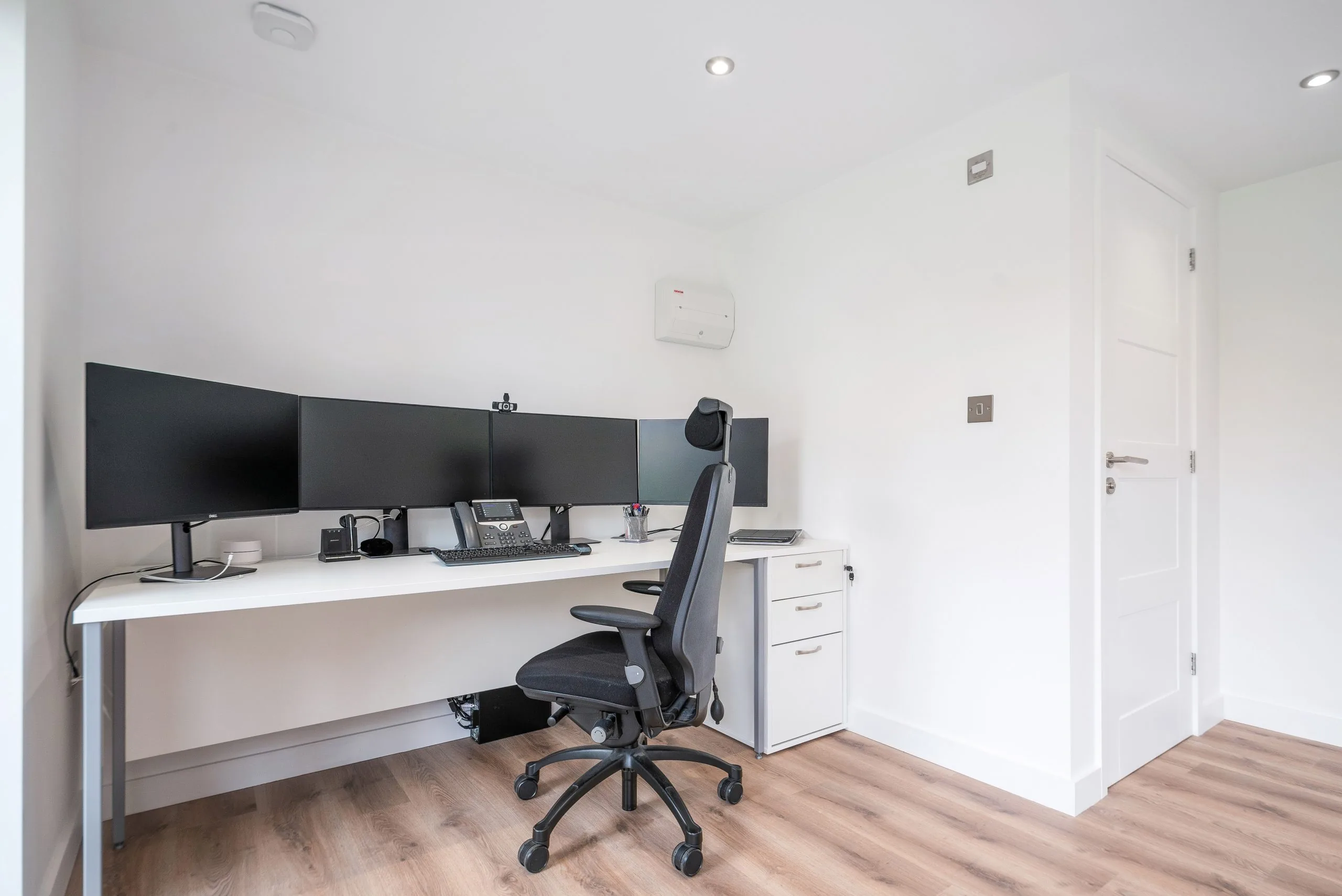
Garden Annexe With Kitchen
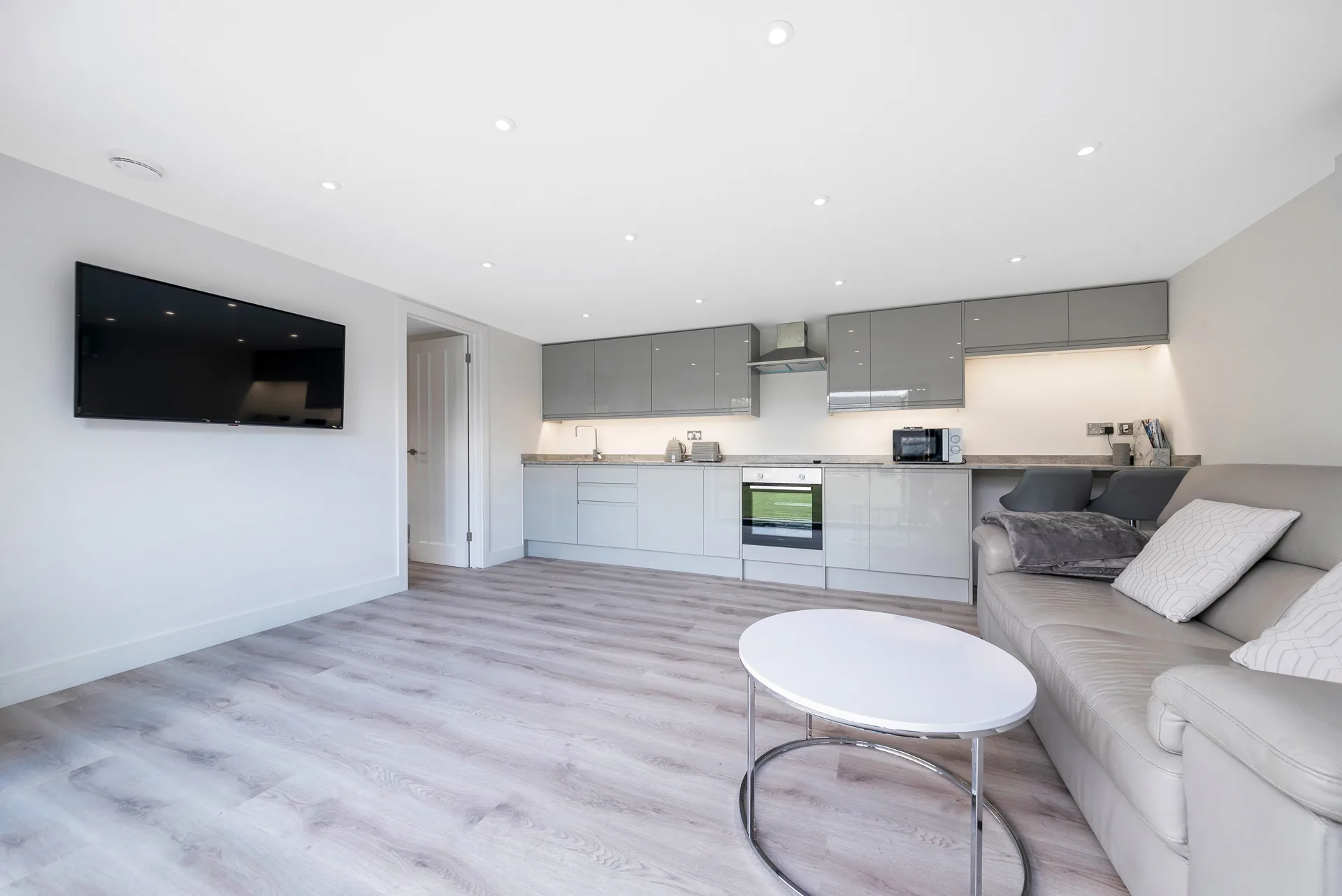
A useful example of how a garden building can incorporate proper kitchen facilities, comfortable living space and a high-quality finish for a self-contained, practical and beautifully resolved design.
View project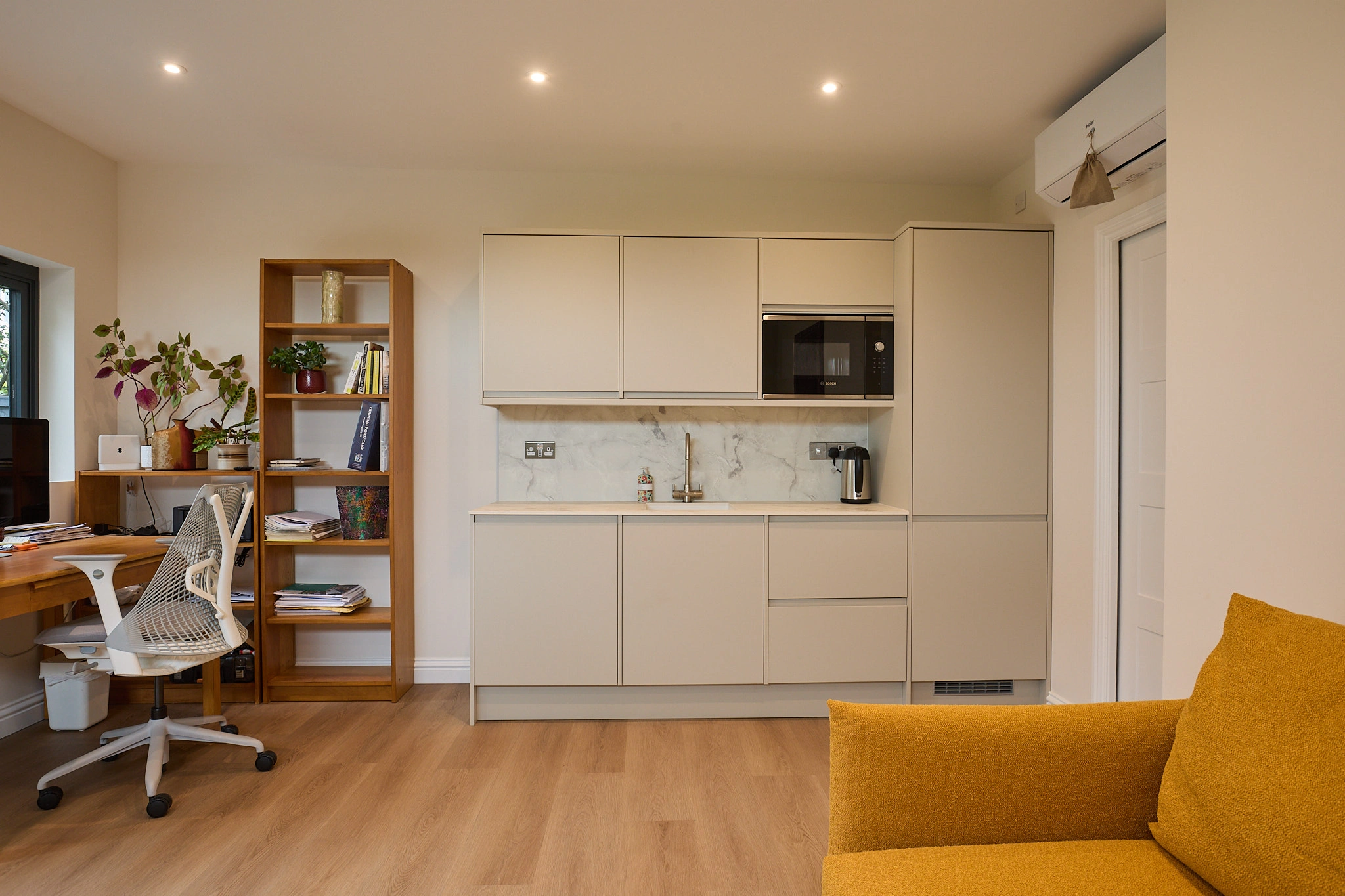
The best pizza evenings have a rhythm to them: dough resting on the worktop, toppings laid out within reach, the oven coming up to temperature, friends gathered close enough to chat but not so close that the chef has no room to move. A bespoke garden room pizza kitchen turns that moment into a proper destination in the garden, with the comfort of an indoor entertaining space and the atmosphere of cooking outdoors.
Rather than treating a pizza oven as an add-on, the strongest designs make it the reason the room exists. The oven, preparation run, storage, seating, lighting, ventilation, access to the house and view into the garden all need to work together. Done well, it becomes much more than a place to make pizza: it is a garden entertaining room for relaxed lunches, summer evenings, winter gatherings, family birthdays and informal dining throughout the year.
A pizza kitchen needs the sociability of a dining room, the practicality of a working kitchen and the durability of an outdoor entertaining area. A standard room rarely gives you all three. A bespoke garden building can be planned around the way you actually want to cook, host and use the space, instead of forcing the oven, fridge and seating into whatever layout happens to fit.
For many homeowners, the appeal is that a garden pizza kitchen can sit slightly away from the main home. Guests naturally drift towards it, smoke and cooking smells are kept away from the kitchen indoors, and the garden becomes part of the experience. It can feel like a private restaurant, a summer kitchen, a wine bar, a family entertaining room or a relaxed weekend retreat depending on how it is designed.
As part of a wider collection of garden room ideas, a pizza kitchen is one of the most enjoyable because it combines daily lifestyle value with genuine wow factor. It is practical enough to use often, but special enough to make ordinary evenings feel like an occasion.
LayoutThe most successful pizza kitchen garden rooms usually start with four zones:
The oven zone – where the pizza oven sits, with safe clearances, suitable ventilation and heat-resistant surrounding materials.
The preparation zone – a generous worktop for stretching dough, chopping ingredients, assembling pizzas and plating food.
The storage and appliance zone – refrigeration, drawers, cupboards, wood storage, gas bottle storage if applicable, bins and cleaning supplies.
The social zone – informal dining, bar stools, a banquette, lounge seating or a flexible table that can move as needed.
This simple sequence matters because pizza cooking is fast. Once the oven is ready, you do not want to be turning around constantly, crossing the room with hot trays or looking for toppings in several different places. A well-planned layout lets one person cook while others sit nearby with a drink and feel part of the process.
The oven is the centrepiece, so it is worth deciding early what type of pizza cooking you want. Different ovens affect the layout, ventilation, services and materials around them.
A wood-fired oven gives the most traditional experience: the smell of the fire, the visible flame and the theatre of cooking at high temperature. It can be a beautiful feature in a garden entertaining room, especially when paired with natural stone, brick, polished concrete, timber or dark contemporary finishes.
However, a wood-fired oven needs careful planning. You need somewhere dry and convenient to store logs, a safe flue route, appropriate fire-resistant construction around the oven and good airflow. It may also require more cleaning and management than other options.
A gas oven is often a practical choice for regular use. It heats up quickly, offers easier temperature control and removes the need to handle logs. For families who want the pizza kitchen to be convenient on a Friday evening, gas can be a sensible option.
Gas appliances need to be specified and installed correctly, with safe ventilation and access for maintenance. If bottles are used, storage must be carefully considered and should never feel like an afterthought.
Electric pizza ovens can work well where convenience, clean operation and simple controls are important. They can be particularly suitable for covered or semi-indoor kitchen designs where wood smoke is not desirable. The electrical specification needs to be discussed at design stage because high-performance ovens can require dedicated circuits.
A built-in oven can look seamless and luxurious, but it commits the space to a particular arrangement. A freestanding oven can offer more flexibility, particularly if you want the room to serve multiple purposes. In a bespoke Hawksbeck build, the surrounding cabinetry, worktops and ventilation can be tailored to suit either approach.
A pizza kitchen is not the same as a standard garden lounge with a countertop added later. Pizza ovens generate serious heat, and some produce smoke, steam, ash or combustion gases. That makes ventilation one of the most important design considerations.
Depending on the oven and final design, the solution may include roof-level extraction, a suitable flue, opening doors, louvre panels, mechanical ventilation or a semi-open arrangement that allows air to move naturally. The aim is to keep the room comfortable for guests, protect the building fabric and make cooking feel effortless rather than smoky or overheated.
Fire-resistant boards, non-combustible surfaces, safe separation distances and robust detailing around the oven area should all be considered. A premium finish should never come at the expense of practical performance. In fact, the best luxury garden rooms are the ones where the technical details have been quietly resolved, so the finished space feels calm, clean and easy to use.
Pizza making can be messy in the best possible way. Flour, oil, tomato sauce, ash, herbs, dough trays and hot tools all need surfaces that are easy to clean and durable enough for regular entertaining.
Popular worktop options include:
Flooring also needs attention. It should be stable, easy to clean and suitable for the level of garden traffic you expect. Guests may be walking in from lawns, patios, pools, outdoor kitchens or children’s play areas, so the floor needs to handle more than slippers and soft furnishings.
A pizza kitchen becomes far more enjoyable when everything has a proper place. Without enough storage, the room quickly fills with sacks of flour, pizza peels, paddles, trays, chopping boards, bottles, bins and spare crockery. Bespoke cabinetry allows the storage to be designed around the way you host.
Useful storage ideas include:
Good storage also changes how often you use the room. If you have to carry everything from the house every time, it becomes a special-occasion space. If the essentials are already there, the garden pizza kitchen becomes part of normal home life.
A pizza oven may be the headline feature, but the supporting appliances can make the room feel complete. The goal is not to copy a full indoor kitchen unless you need one. It is to include the items that reduce trips back to the house and make hosting smoother.
Plumbing adds cost and complexity, but it can transform usability. If the pizza kitchen is positioned some distance from the house, a sink becomes especially valuable. Drainage, water supply and frost protection should be discussed early so they can be integrated neatly.
The dining arrangement sets the tone of the whole space. Some pizza kitchens are designed like a relaxed chef’s table, with guests sitting at a bar facing the oven. Others work better with a central table, banquette seating or a lounge arrangement that spills out onto a patio.
For informal pizza nights, a generous bar counter is one of the most effective options. It keeps guests close to the cooking without blocking the chef’s movement. A dining table is better if you want longer meals with salads, sharing plates, wine and desserts. Banquette seating can be a clever way to maximise space along one wall, particularly in a narrower garden building.
If the garden room opens onto a terrace, you may want the seating to work both inside and outside. Wide doors, level thresholds and coordinated flooring can help the room feel connected to the garden, so summer evenings are not divided between “inside” and “outside”.
Finished Hawksbeck buildings on film, worth watching with your own oven, bar and seating plan in mind.
A major advantage of a high-quality garden room over a simple outdoor kitchen is year-round comfort. A well-insulated, beautifully finished building can be used on damp autumn evenings, bright winter afternoons, early spring weekends and long summer nights.
For a pizza kitchen, year-round usability depends on more than insulation. Think about:
For guests when the oven is not running or when the social area is away from the cooking zone.
So the room remains comfortable once the oven is hot.
For prep work, dining and atmosphere after dark.
If the room has large areas of glazing and catches strong sun.
To avoid cold draughts directly across seated guests.
For moving between the room, patio and garden in poor weather.
The best result is a room that feels cosy in February and open in July.
That flexibility is where a bespoke approach is particularly valuable.
Lighting has to do two jobs: it must be practical enough for food preparation and atmospheric enough for entertaining. A single bright ceiling light will rarely create the right feeling.
A layered lighting scheme might include:
External lighting is easy to underestimate. If guests are walking from the house to the garden room with drinks or plates, safe and attractive pathway lighting makes the whole experience feel more considered.
StyleA pizza kitchen does not need to look rustic unless that is the style you love. Because the room is bespoke, the design can match your home, garden and entertaining style.
Think slimline glazing, clean cabinetry, stone surfaces, dark metal details and concealed lighting. This style works beautifully for modern homes and gardens where the pizza oven is treated as a sculptural feature rather than a traditional hearth.
Limewashed textures, pale stone, terracotta tones, timber shelving, herbs, relaxed seating and soft lighting can create the feel of a private Italian courtyard. This can be especially effective when the garden room opens onto a planted terrace.
A bar counter, wine fridge, open shelving, statement oven and comfortable stools can make the room feel like a boutique pizzeria or private dining space. It is a strong option for homeowners who entertain often.
Durable finishes, booth seating, wipe-clean flooring, integrated storage and a generous table create a room that works for children, teenagers and relaxed family weekends. The space can still feel premium, but the layout is more forgiving.
If you do not want the space to be only for pizza, the room can include media, lounge seating, games storage, a bar area or a flexible dining table. The oven remains the focal point, but the building is useful even when nobody is cooking.
Costs vary significantly because the structure, size, specification, access, groundworks, glazing, internal finishes, services and kitchen elements can all change the final price. A simple garden office is not directly comparable with a fully equipped pizza kitchen, because cooking spaces usually require more detailed planning, more services and more durable finishes.
As a broad guide, a premium bespoke garden room suitable for entertaining will often begin in the tens of thousands, with more substantial and highly specified Hawksbeck buildings moving upwards depending on size and complexity. For a pizza kitchen concept, it is sensible to treat the building and the kitchen specification as connected parts of the same budget:
For budgeting, many clients considering a bespoke pizza kitchen should expect it to sit above a basic garden room price because of the oven, ventilation, kitchen installation, electrics, possible plumbing, worktops and fire-safe detailing. Depending on the brief, a complete project can range dramatically, and a high-specification luxury build can be a significant investment. The most accurate route is to discuss the intended use, must-have features and site conditions so the design and quotation are aligned from the start.
If you already have a preferred pizza oven, appliance list or kitchen style, these details are useful early in the conversation. If not, the design process can help you decide what level of specification makes sense for your lifestyle and budget.
Many garden rooms can fall within permitted development, but a pizza kitchen needs careful consideration because use, height, position, services, flues and proximity to boundaries may affect what is appropriate. Planning rules can vary based on your property, location and previous alterations.
Building regulations may also become relevant depending on the size, sleeping use, drainage, electrical work, cooking appliances, insulation, fire safety or proximity to boundaries. If the building includes plumbing, substantial electrics, a kitchen installation or a flue, it is important that everything is designed and installed correctly.
For a premium project, it is far better to address these matters at the design stage than to compromise the build later. A garden pizza kitchen should feel exciting, but it is still a structure with heat, services and long-term use to consider.
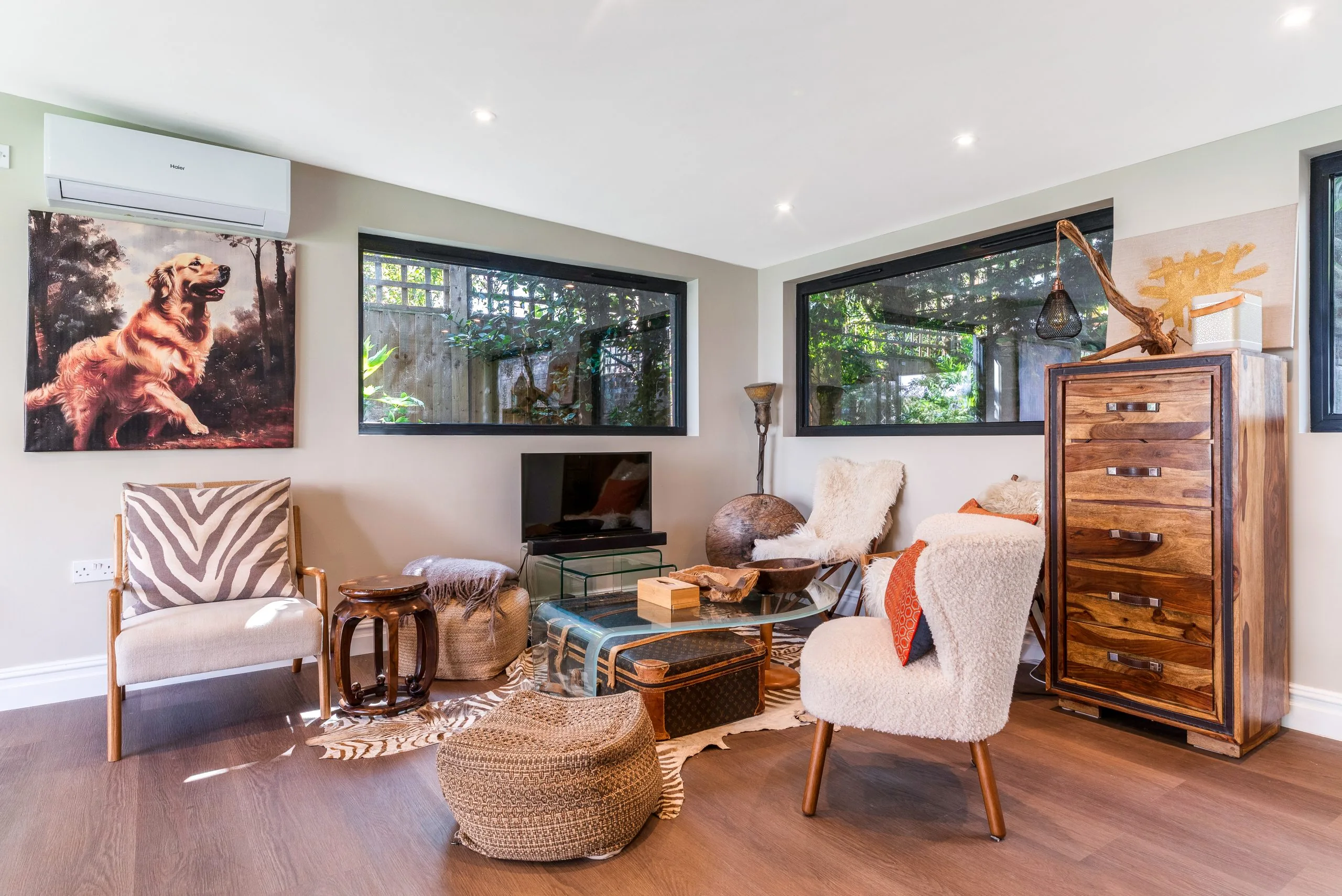
The ideal position depends on how you use your garden. Close to the house is convenient for carrying food, drinks and tableware, especially if the garden kitchen does not include a sink or dishwasher. Further down the garden can feel more like a destination and may work beautifully if you want separation from the main home.
Questions worth asking include:
Because a pizza kitchen is often used for entertaining, the approach to the building matters. A considered path, planting, lighting and terrace can make the room feel integrated rather than simply placed at the end of the lawn.
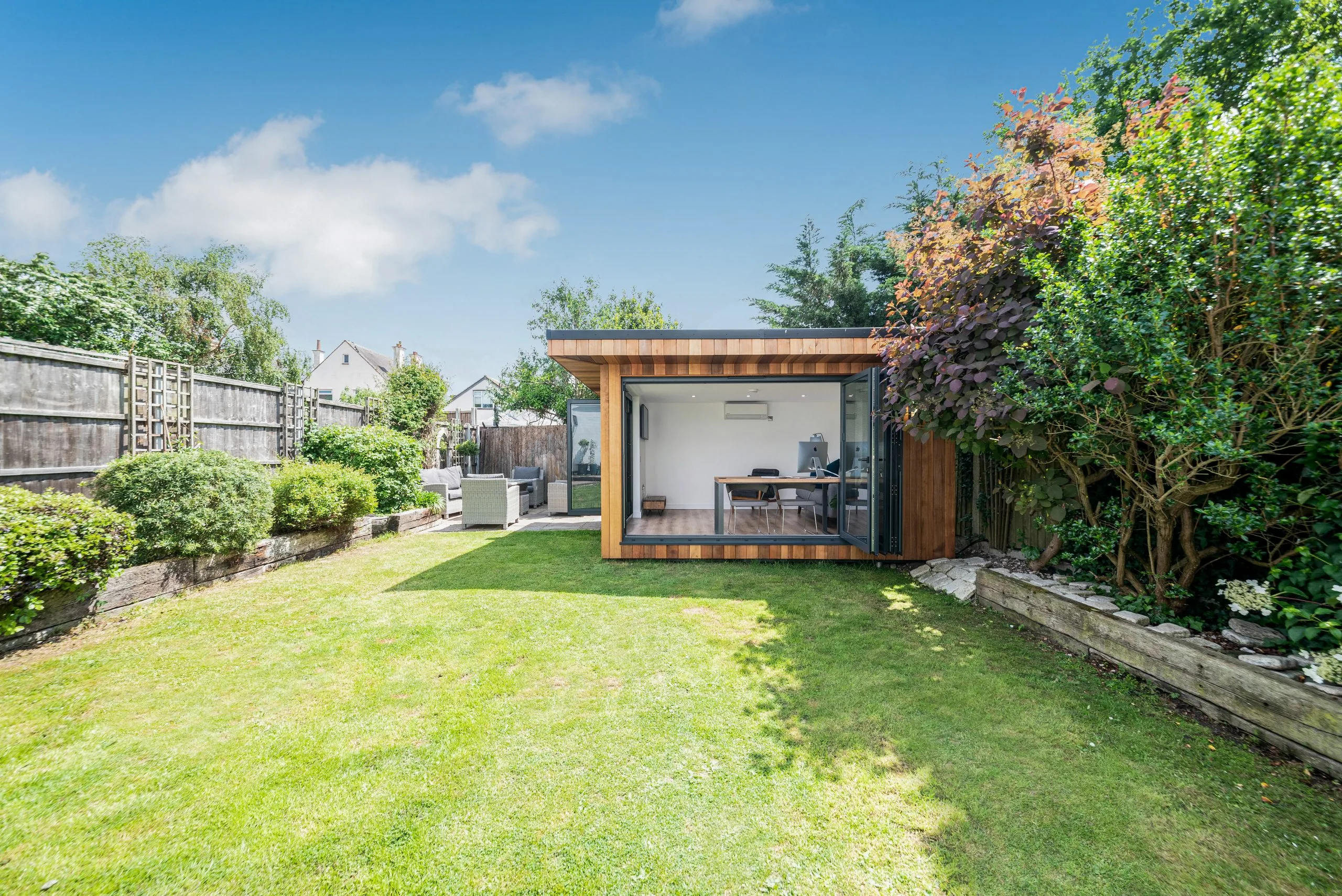
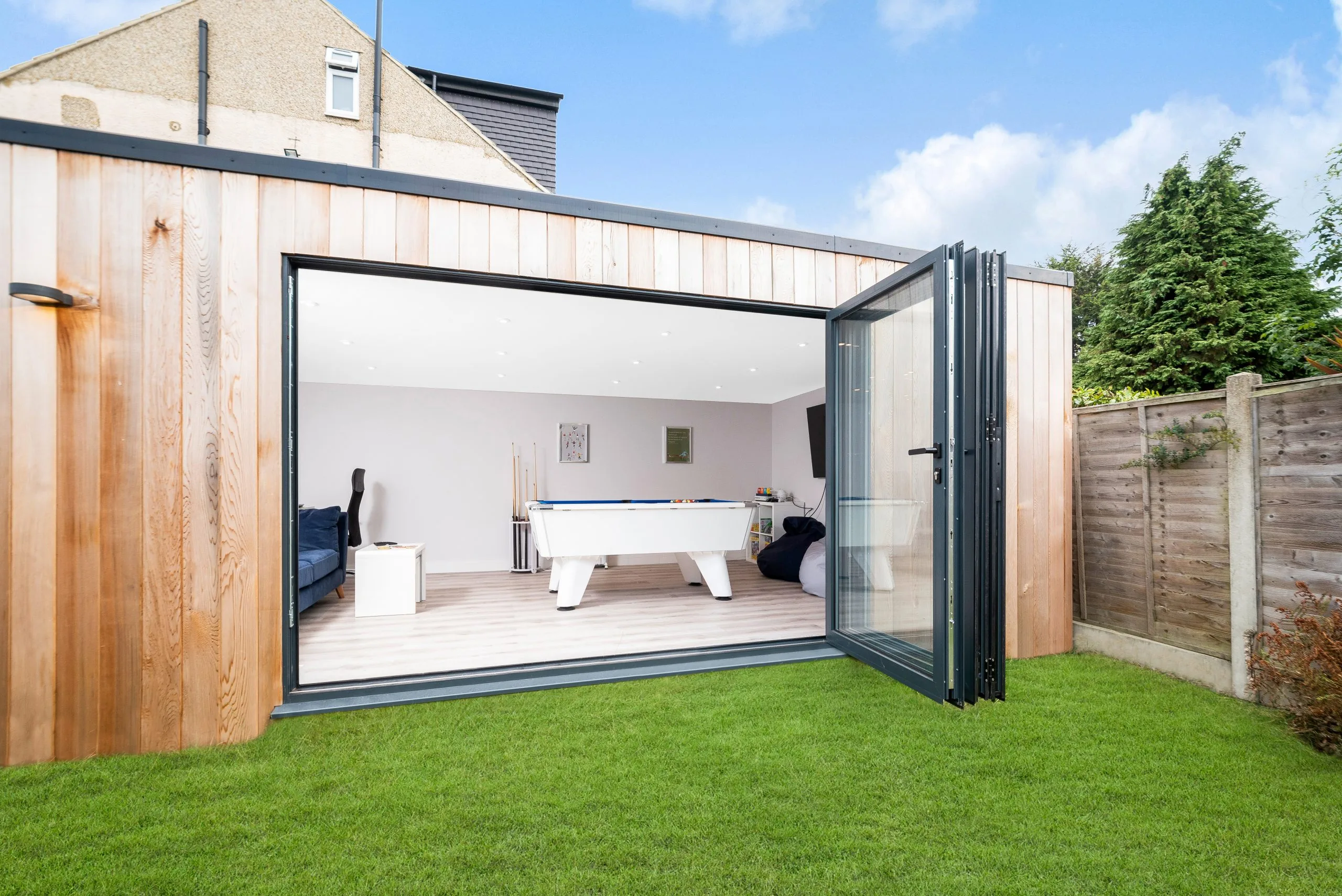
A pizza kitchen garden room should not feel boxed in. Glazing, doors and terrace design can make a huge difference to how sociable the space feels. Large sliding or bifold doors can open the room to the garden in warmer months, while a covered canopy or overhang can protect the threshold in changeable weather.
An outdoor counter or serving ledge can also work well, allowing food and drinks to pass easily between the kitchen and patio. If you often host larger groups, think about where people will stand while pizzas are being made. Everyone naturally gathers near the oven, so the design should allow for that without blocking the cooking area.
For a more luxurious feel, the materials inside and outside can be coordinated. Stone, porcelain paving, timber cladding, dark aluminium, warm lighting and planting can all help the building feel like a complete garden destination.
A pizza kitchen seems simple until you start using it. The difference between a good room and a frustrating one often comes down to small practical details.
Not enough worktop space: pizza preparation needs more room than many people expect.
Poor extraction: smoke, heat and smells can make the room uncomfortable if ventilation is not planned properly.
Insufficient storage: utensils, trays, fuel, ingredients and cleaning items quickly accumulate.
Seating too close to the oven: guests want theatre, not excessive heat or awkward circulation.
No clear place for dirty items: even a small sink or concealed clearing area can make hosting easier.
Underestimating power needs: fridges, lighting, heating, ovens, sound systems and appliances all need proper electrical planning.
Ignoring winter use: a room designed only for summer may not deliver the year-round value you expect.
Choosing finishes purely for looks: pizza kitchens need surfaces that can cope with heat, flour, oil and regular cleaning.
Once the fundamentals are right, there are many ways to make a pizza kitchen feel exceptional. Some are practical, while others are about atmosphere and detail.
These details are where a bespoke design becomes particularly rewarding. You can decide whether the room should be a chef-led cooking space, a relaxed family hub, a grown-up entertaining room or a multi-purpose garden building with pizza at its heart.
For many homeowners, a pizza oven and bar belong together. The bar does not have to be large; even a compact run with a drinks fridge, glass storage and a small sink can transform the way the room is used. It gives guests somewhere natural to gather while food is being prepared and reduces traffic back to the house.
If the room will host adults in the evening, consider a bar-height counter facing the garden, a wine fridge, low-level lighting and comfortable stools. If it is more family-focused, a lower counter with flexible seating may be more useful. A bespoke layout means the bar can be scaled to the room rather than squeezed in as an afterthought.
A pizza kitchen asks more of a garden building than a simple sitting room. It needs to look beautiful, perform properly, handle heat and cooking activity, store everything neatly and feel comfortable for guests. Hawksbeck’s bespoke approach allows the building to be planned around those demands from the beginning.
Your design could include a compact pizza and drinks room for weekend use, a fully specified garden kitchen with dining, or a larger entertaining building that combines cooking, lounging, music, media and outdoor living. The structure, layout, glazing, doors, finishes, services and interior detailing can all be tailored to suit the way you want to use the space.
If you are considering a garden room for a pizza kitchen, the most useful first step is to think about your ideal evening. How many people are there? Is someone cooking while others sit at a bar? Are children running in and out from the garden? Is it a summer lunch or a winter dinner? Those answers shape the design far more effectively than simply choosing a size from a plan.
Bring us your oven of choice, your guest list and the corner of the garden you have in mind, and we will design the room around them.
Before starting your project, it can help to create a simple brief. Use these questions to clarify what the space needs to achieve:
The clearer the brief, the easier it is to design a garden room that feels natural to use from the first evening.
Real projectsThree projects worth studying for the kitchen facilities, hard-wearing finishes and calm detailing a garden pizza room draws on.
A useful example of how a garden building can incorporate proper kitchen facilities, comfortable living space and a high-quality finish for a self-contained, practical and beautifully resolved design.
View project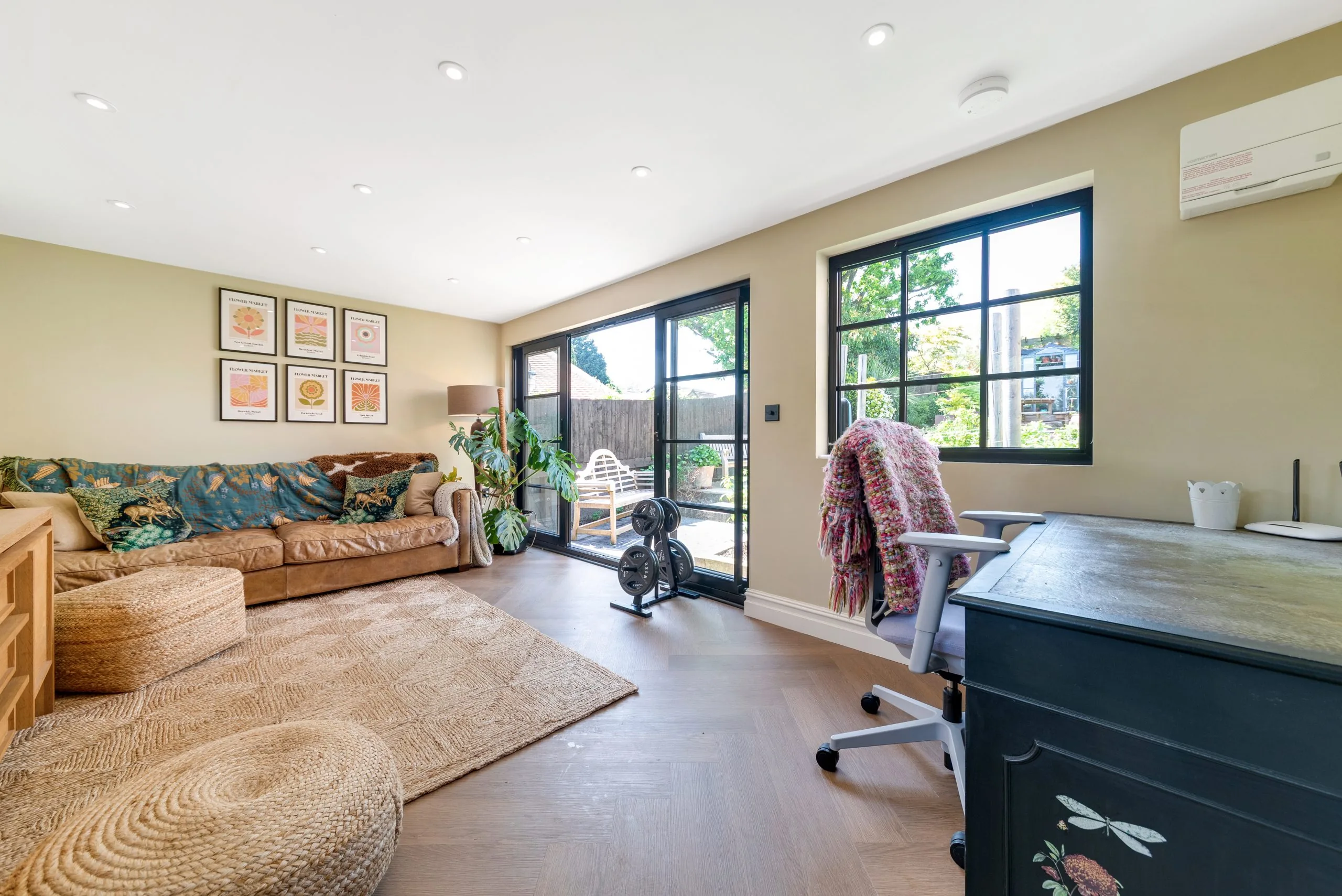
This project highlights the value of a carefully designed garden room with a calm atmosphere, refined detailing and a layout tailored to the client’s exact requirements.
View project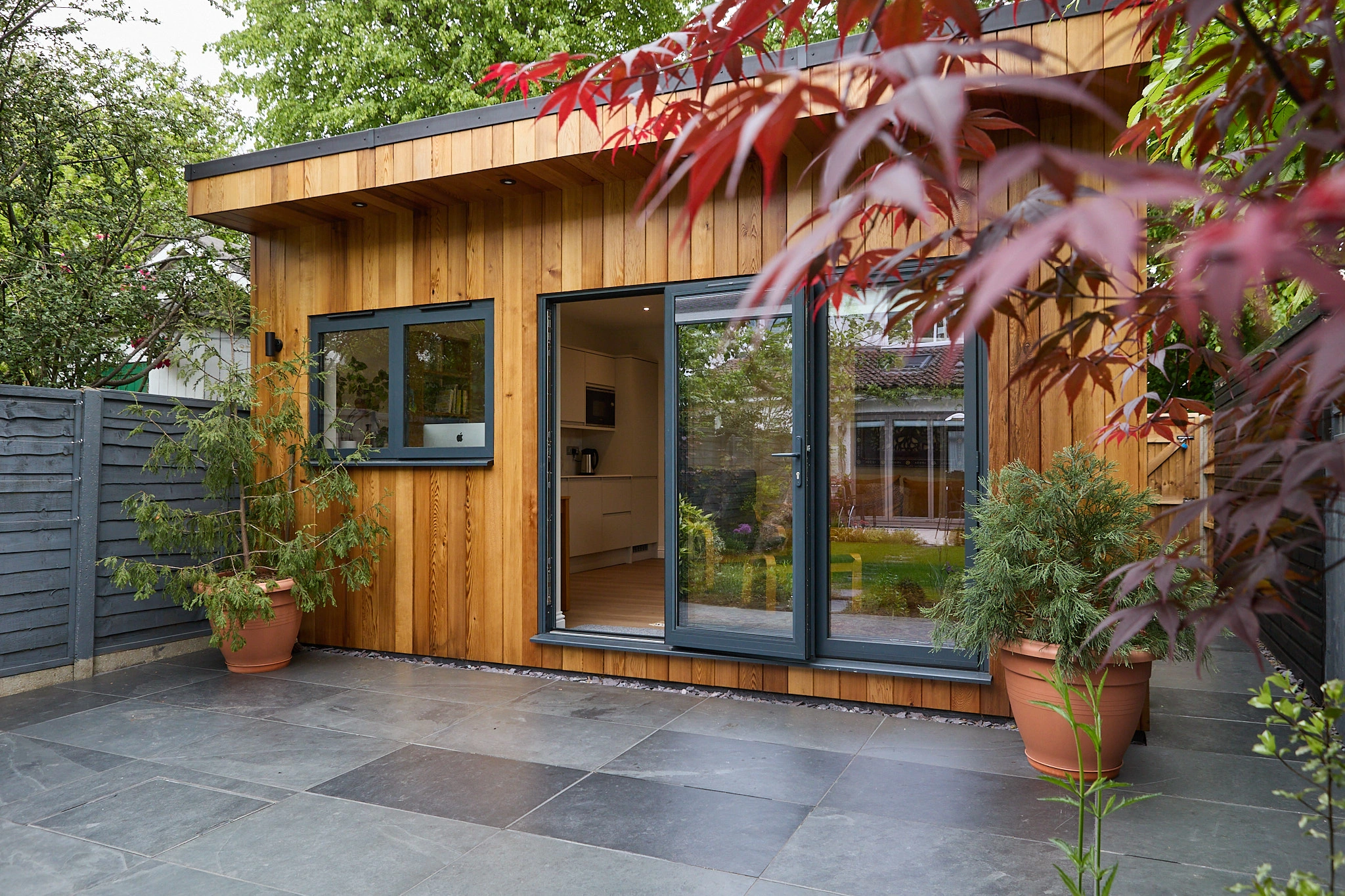
A strong reference for anyone considering a garden entertaining room with integrated kitchen facilities, showing how practical features can be combined with a contemporary premium finish.
View project