
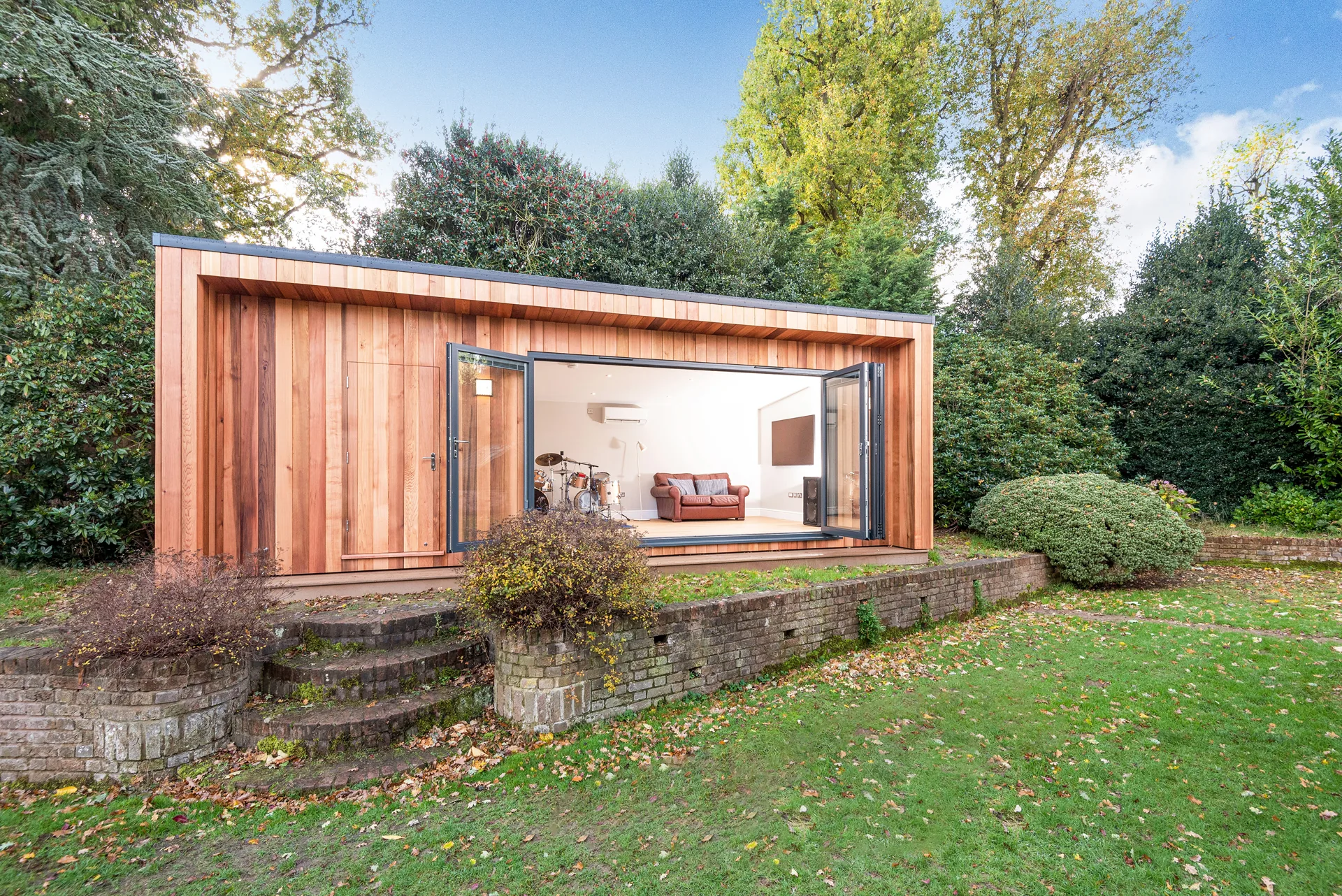
Garden Games Room & Recording Studio, Northwood
A bespoke garden building showing how leisure, creativity and recording can be brought together in one beautifully finished space at home.
View project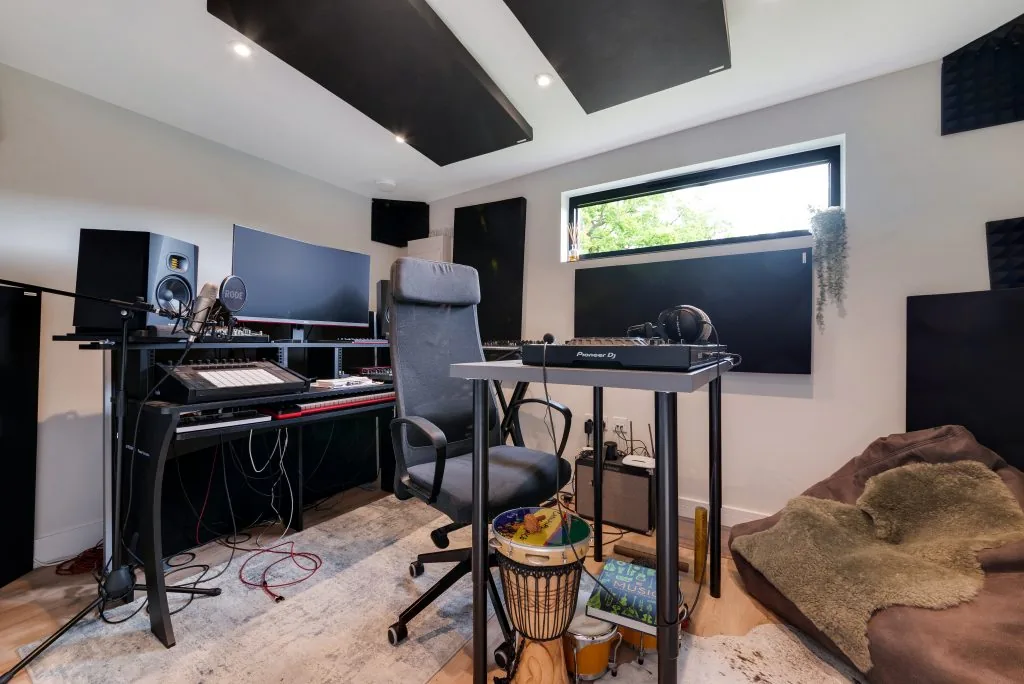
A podcast recorded at home should still sound like it came from a proper studio.
The voice needs warmth, the room needs control, the background needs to look considered on camera, and the space has to be comfortable enough for long interviews, edits, retakes and content days. A bespoke garden room can do all of that beautifully, provided it is designed around sound from the beginning rather than treated as an ordinary office with a microphone added later.
A Hawksbeck garden room for a podcast studio can be designed as a private recording room, interview suite, video podcast set, editing workspace, voiceover booth or multi-purpose media studio. Because each building is bespoke, the size, layout, acoustic specification, glazing, electrics, internal finishes, storage and appearance can all be tailored around the way you actually create content.
Podcasting is one of those uses where a room has to perform in several ways at once. It is not only about having a quiet place to speak. The room needs to feel calm, look professional, support technical equipment, manage heat from lights and hardware, and keep recordings consistent from one episode to the next.
A well-designed garden podcast studio gives you separation from the main house without the daily cost or inconvenience of hiring an external studio. You can record early in the morning, film long-form interviews, edit late in the evening, keep equipment set up permanently and create a recognisable backdrop for your brand.
If you are still comparing possible uses for a bespoke garden building, our wider guide to garden room ideas is a useful place to explore how flexible these spaces can be.
Two different jobsThis is one of the most important points when planning a garden room podcast studio. People often use the word “soundproofing” when they actually mean two different things:
Helps reduce sound travelling in or out of the studio. This matters if you are near a road, railway, neighbours, family activity or external plant noise.
Improves the quality of sound inside the room. This helps control echo, flutter, boominess and harsh reflections so voices sound clear and controlled.
For podcasting, both can matter. A room might be quiet from the outside but still sound boxy on a microphone. Equally, a room might have good wall panels and soft furnishings but still pick up lawnmowers, rain, traffic or children playing nearby. The best result comes from designing the building envelope, room shape, materials, ventilation and internal finishes as one complete studio environment.
A solo voiceover booth needs a very different layout from a four-person video podcast studio. Before deciding on exact dimensions, it helps to think about your recording format, your guests and how much of the room will appear on camera.
A compact garden studio can work extremely well for solo audio recordings, narration, online courses, webinars and editing. The focus is usually on microphone position, desk ergonomics, acoustic control and screen placement. A smaller footprint can still feel luxurious when the interior is planned carefully, with built-in storage, hidden cabling and a comfortable editing station.
For a host and guest format, the room needs enough space for two comfortable seats, two microphone arms or stands, a central table, cameras, lights and movement around the set. It is worth planning sightlines early, especially if you want the video version of your podcast to look polished rather than improvised.
A three or four-person podcast needs more generous proportions. You will need comfortable circulation, balanced acoustics across multiple voices, sufficient power, and camera angles that do not feel cramped. This type of studio often benefits from a wider garden room, feature wall, carefully placed glazing and layered lighting.
Video raises the importance of background design, lighting control and visual consistency. A bespoke garden building allows you to create a permanent set with shelving, brand colours, wall finishes, signage, acoustic panels, display lighting and a camera-friendly backdrop that does not have to be dismantled after every episode.
The best garden podcast studios are not overcomplicated, but they are carefully thought through. Small design decisions can have a large effect on the quality of the finished space.
Hard, flat surfaces create reflections. In podcasting, those reflections can make voices sound distant, hollow or amateur. Acoustic treatment can be incorporated into the interior design so the studio performs well without looking like a temporary foam-lined room. Options may include fabric-wrapped acoustic panels, timber acoustic slats, ceiling rafts, diffusers, soft wall finishes and carefully selected flooring.
The construction of the studio should be considered in relation to the surrounding noise environment. A garden in a quiet village may not need the same level of sound isolation as a property near a main road. Wall build-up, insulation, doors, glazing and sealing details all influence the end result. For serious recording, the weak points are usually gaps, lightweight doors, untreated glass and noisy ventilation, so these should be assessed at design stage.
A podcast studio can become warm quickly, particularly if you are using lights, computers and multiple people in a compact room. Opening a window during recording is rarely ideal, because microphones will pick up birds, traffic, aircraft, neighbours and the weather. A comfortable year-round studio should therefore include suitable heating, cooling and ventilation plans, with attention paid to noise levels from any equipment.
If you film episodes, lighting should not be an afterthought. A good video podcast setup may need ceiling lighting, soft key lights, accent lighting, background lighting and enough power points to avoid trailing extension leads. Window placement also matters. Natural light can look beautiful, but it can also change during a recording and create inconsistency between episodes.
Podcast setups often involve more equipment than people expect: microphones, audio interface, mixer, laptop, monitor, cameras, chargers, lights, headphones, teleprompter, speakers, network equipment and storage drives. A bespoke studio allows sockets, data points and cable routes to be planned around your equipment rather than added awkwardly later.
The interior should support the content you want to create. Some brands prefer a clean, minimal set with textured walls and concealed storage. Others want shelving, books, plants, artwork, neon signage, product displays or a darker studio feel. The important thing is to design depth into the frame, so your background looks intentional on camera.
A good podcast studio often needs storage for tripods, lenses, cables, additional microphones, batteries, memory cards, lighting stands, props and guest equipment. Built-in cupboards, low cabinets or concealed shelving help preserve the premium look of the room while keeping production equipment close at hand.
There is no single perfect size, because the right footprint depends on the type of podcast, the number of guests and whether video is involved. The guide below gives a practical starting point.
| Studio type | Typical size guide | Best suited to |
|---|---|---|
| Compact voice studio | Approx. 3m x 3m to 4m x 3m | Solo podcasting, voiceover, online teaching, editing and narration. |
| Two-person podcast studio | Approx. 4m x 3m to 5m x 3.5m | Host and guest interviews, audio podcasts and compact video podcasting. |
| Video podcast studio | Approx. 5m x 4m to 6m x 4m | Camera setups, lighting, feature wall, guest seating and more generous set design. |
| Multi-use media studio | Approx. 6m x 4m and above | Podcasting, filming, editing, content creation, meetings and occasional office use. |
As a general rule, it is better to allow slightly more space than the minimum if you plan to film. Cameras, lighting stands and guest seating can make a room feel smaller very quickly. A little extra depth can make the difference between a flat-looking shot and a professional studio image.
Not sure whether your format needs a compact voice studio or a full video set? Send us your recording setup and we will suggest a footprint.
Talk to UsMicrophones reveal the room.
Even an excellent microphone can sound disappointing in a poorly controlled space, while a considered room can make a modest setup sound far more professional. When designing a garden room for podcasting, the aim is usually to create a controlled voice environment rather than a completely dead room.
Too much echo makes speech unclear. Too much absorption can make the room feel unnatural and uncomfortable. The right balance depends on the size of the space, the surface finishes, the number of people recording and the desired tone of the show.
A podcast studio is often part workspace, part stage. The camera does not need to see the whole room, but it does need to see the right part of it. A bespoke Hawksbeck garden room gives you the opportunity to shape that view from the start.
For a video podcast, the most effective interiors often use depth, texture and controlled contrast. Instead of placing guests against a blank wall, the layout can include a feature backdrop set away from the seating position. This helps create separation between the subject and the background, which immediately makes the image feel more professional.
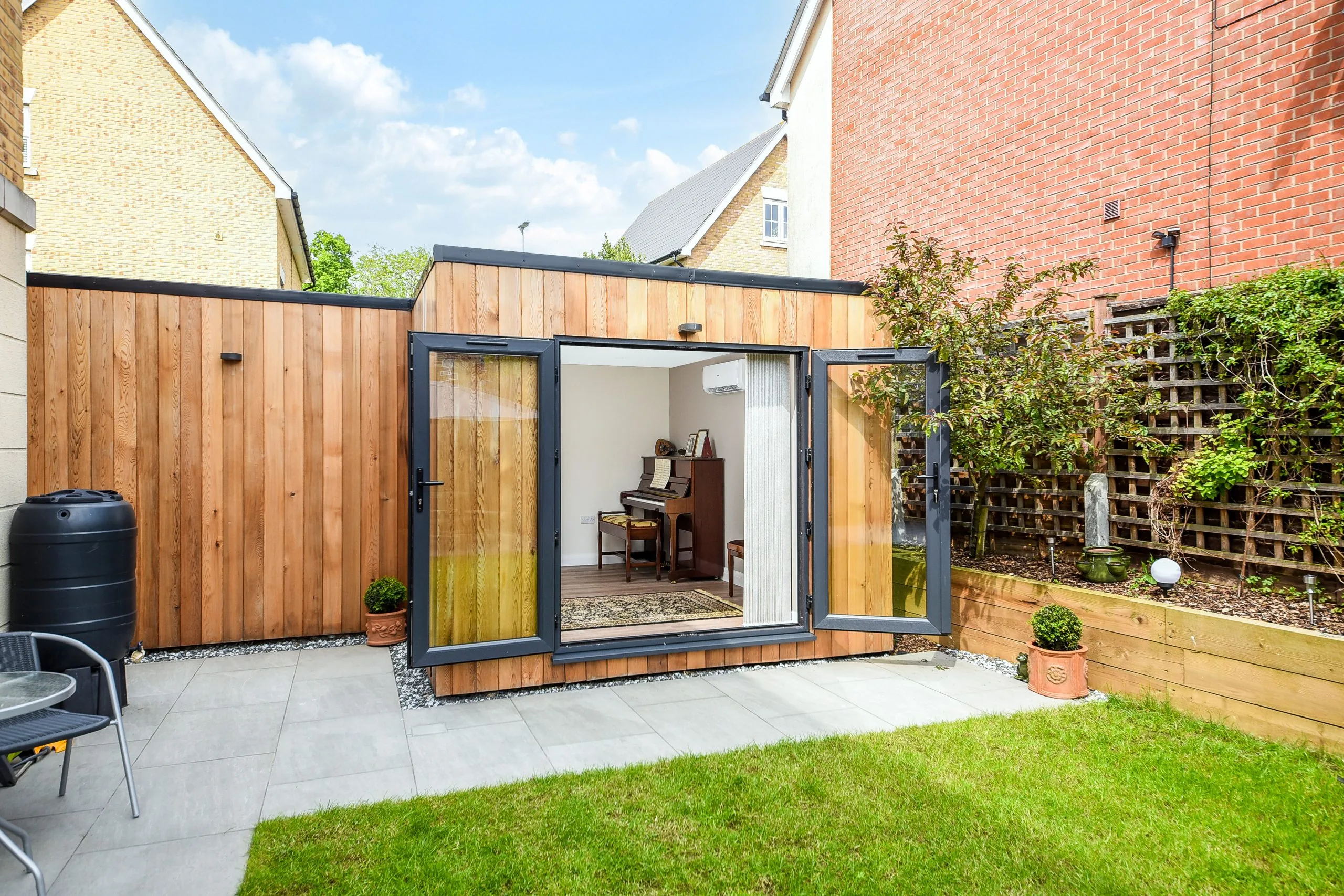
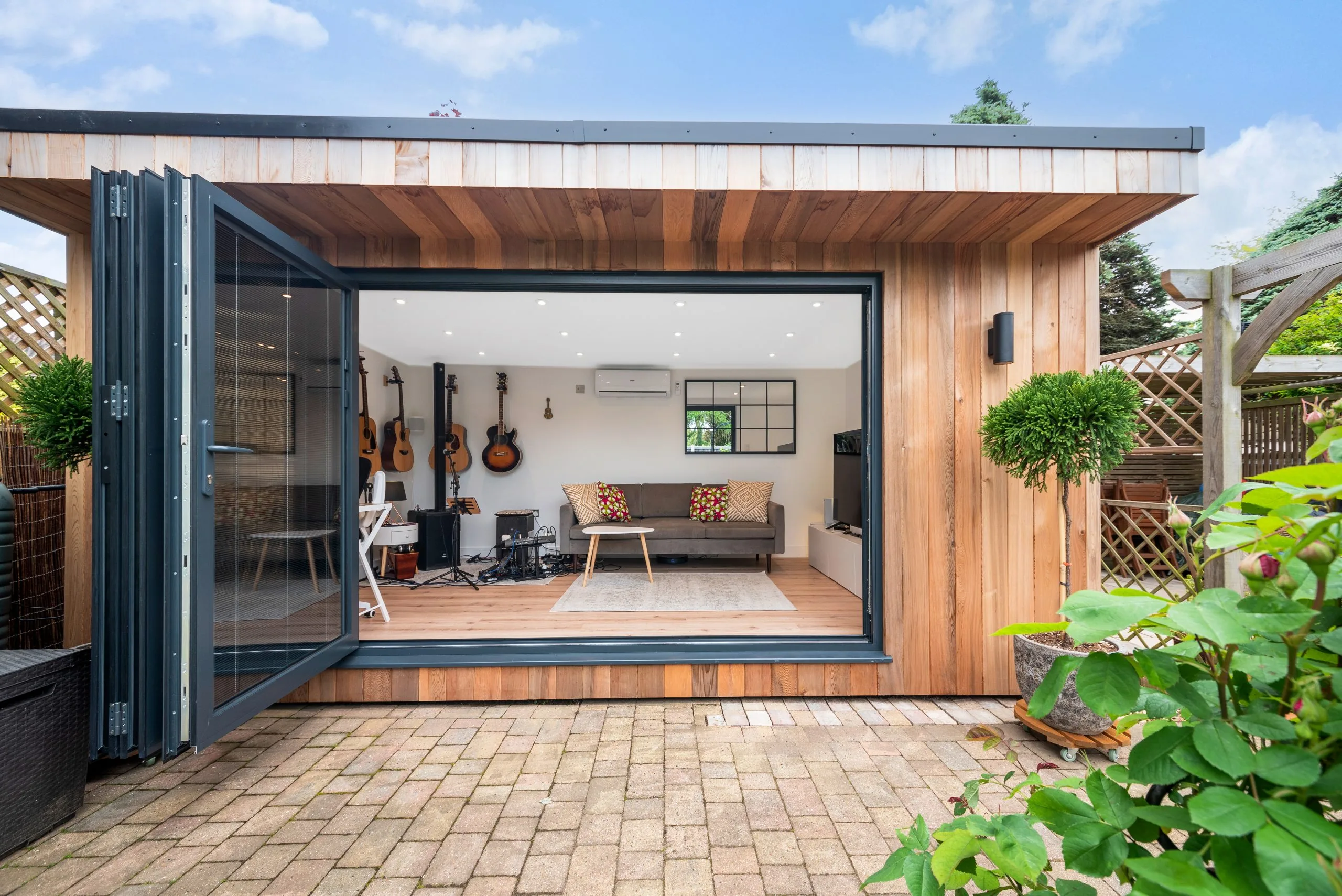
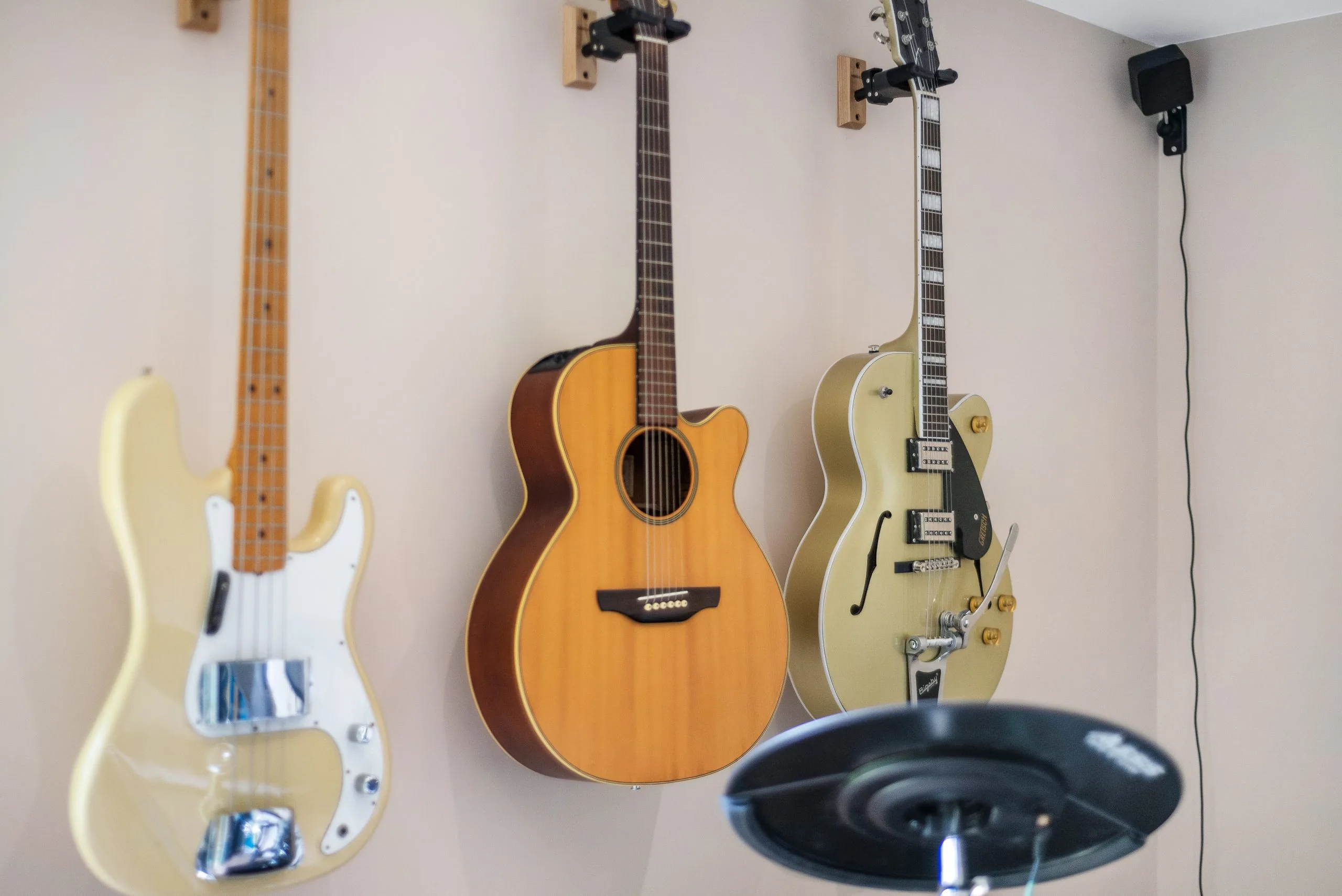
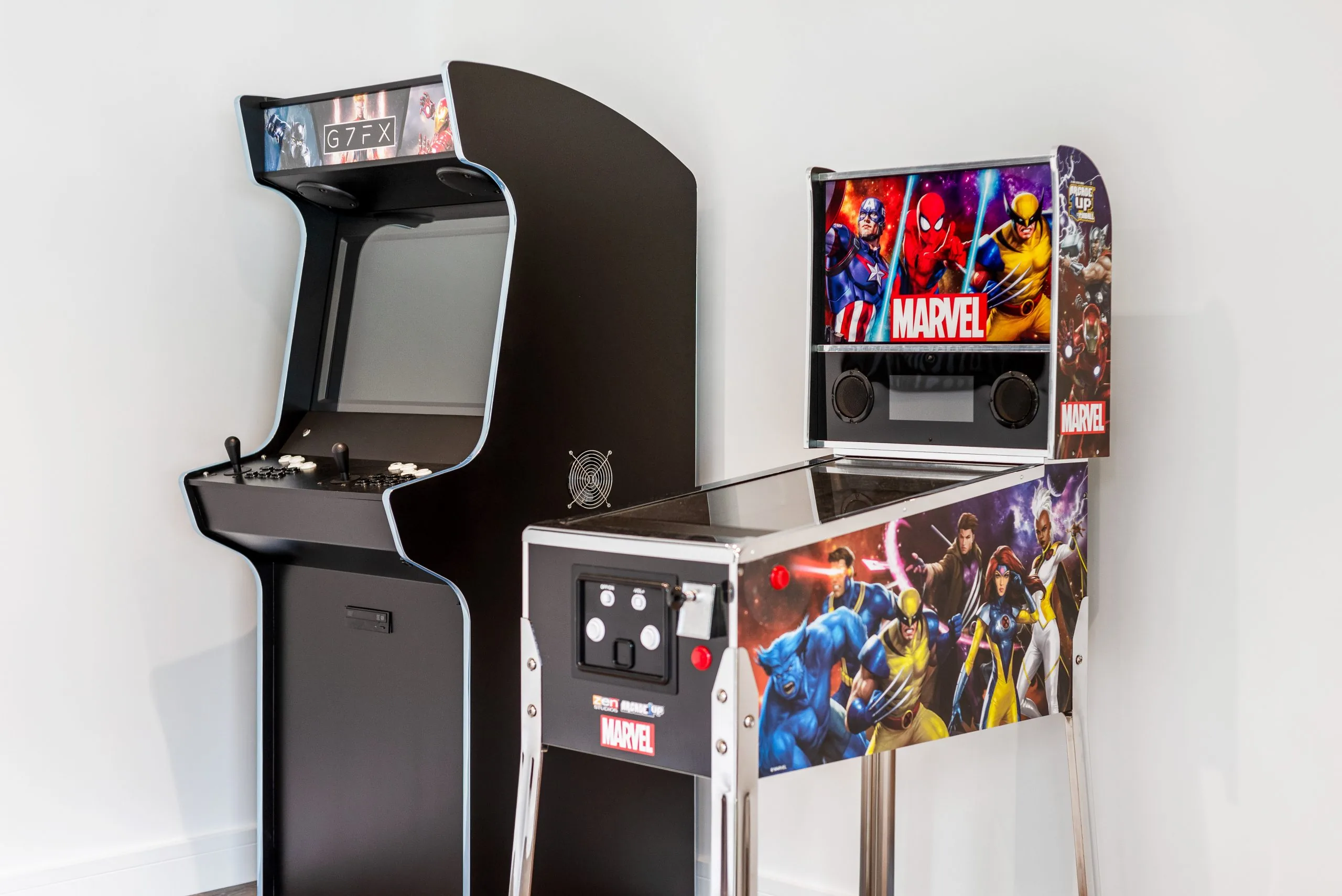
Yes, and this is one of the biggest advantages of choosing a bespoke garden building. A podcast studio can be designed to work as a focused office, music practice room, content creation space, consultation room, gaming room, editing suite or quiet retreat. If the room may need to change function in future, that can be considered in the design.
For example, a business owner might use the space for podcasting twice a week, client video calls most mornings and editing in the evenings. A family might want a studio that also works as a music room or games room. A content creator might need filming space, storage, desk space and a comfortable lounge setup in one building. Bespoke design makes those combinations far easier to achieve.
Many garden rooms can be built under permitted development, but this depends on factors such as size, height, position, boundaries, property type and how the room will be used. A podcast studio will often be possible without a full planning application, but it should still be assessed properly before work begins.
Things to consider include:
If clients, guests or interviewees will regularly come to the property, parking, access and neighbour considerations are worth discussing early. The goal is to create a studio that works beautifully in everyday use, not just on paper.
Pricing depends heavily on the size, specification and acoustic requirements. A straightforward premium garden room from the Hawksbeck range will usually cost less than a fully equipped podcast or recording studio because the latter may need upgraded acoustic design, additional electrics, specialist internal finishes, ventilation considerations, lighting plans and more detailed internal fit-out.
As a broad guide, a compact high-quality garden room suitable for office-style podcasting may start from the low-to-mid £30,000s depending on specification. A dedicated podcast studio with acoustic treatment, upgraded electrical planning and a more considered interior will often sit in the region of £45,000 to £80,000+. Larger video podcast studios, interview rooms or multi-use media buildings with premium external finishes, bespoke interiors, enhanced sound control, glazing choices and complex services can exceed £80,000 to £120,000+.
These figures are only a guide. Every project is bespoke, and the final cost can change significantly depending on groundworks, access, size, finish, acoustic performance, heating and cooling, glazing, doors, internal joinery, lighting, data, decoration and any specialist studio requirements. The most reliable way to price a podcast studio is to talk through how you record, what equipment you use and what level of acoustic performance you expect.
You do not need to know every technical detail before speaking to Hawksbeck, but a little preparation helps shape a better studio. If you are planning a garden room podcast studio, it is useful to think about the following:
The most successful podcast studios are the ones that remove friction. You walk in, switch on, sit down and record. The microphones are in place. The lights are ready. The room temperature is comfortable. The background is tidy. There are enough sockets. The sound is consistent. Nothing has to be rebuilt around the dining table or packed away into cupboards after each session.
That is where a bespoke garden room becomes more than an outbuilding. It becomes a purpose-built creative environment that supports better content, saves time and gives you a professional space at home.
Common questionsIt depends on what is around you. Sound isolation keeps noise from roads, neighbours or the family out of the recording, while acoustic treatment controls echo and boominess inside the room, and most podcast studios benefit from both being planned together.
A solo voice studio can work from around 3m x 3m, a two-person interview room from around 4m x 3m, and a video podcast set is usually closer to 5m x 4m or 6m x 4m. If you film, allow a little more depth than the minimum.
Many garden rooms fall under permitted development, but height, boundary distance, outbuilding coverage, listed status and whether guests will visit commercially all affect this, so the site should be assessed properly before work begins.
Yes. A bespoke studio can be laid out so the set stays assembled while a desk zone handles video calls, editing and everyday work, and it can be adapted into a music room, games room or creative space later.
If you want a private podcast studio, video podcast room, interview space or acoustically treated recording studio in your garden, Hawksbeck can design and build a garden room around the way you work. From compact solo studios to larger multi-person media rooms, your building can be planned for sound, comfort, equipment, appearance and long-term flexibility.
Whether you already have a clear studio concept or are still exploring what is possible, we can help you turn the idea into a premium garden building that feels considered from the first recording.
Tell us your format, your guest count and whether you film, and we will plan the acoustics, power and backdrop around it.
Three studio-led builds that show how recording, music and leisure have been planned into finished Hawksbeck garden rooms.
A bespoke garden building showing how leisure, creativity and recording can be brought together in one beautifully finished space at home.
View project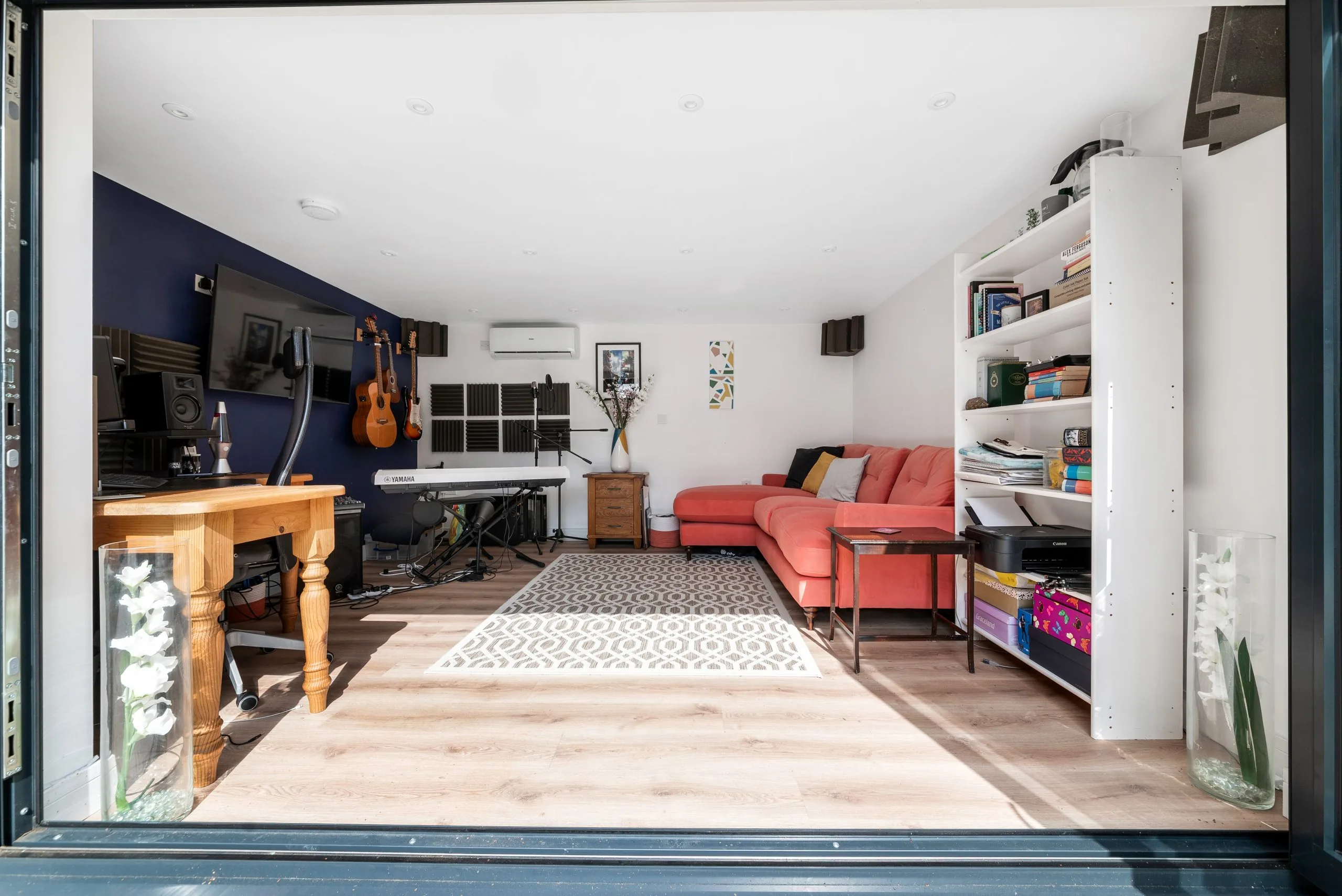
This project demonstrates the value of a purpose-designed studio environment, with the comfort, finish and flexibility expected from a premium Hawksbeck garden room.
View project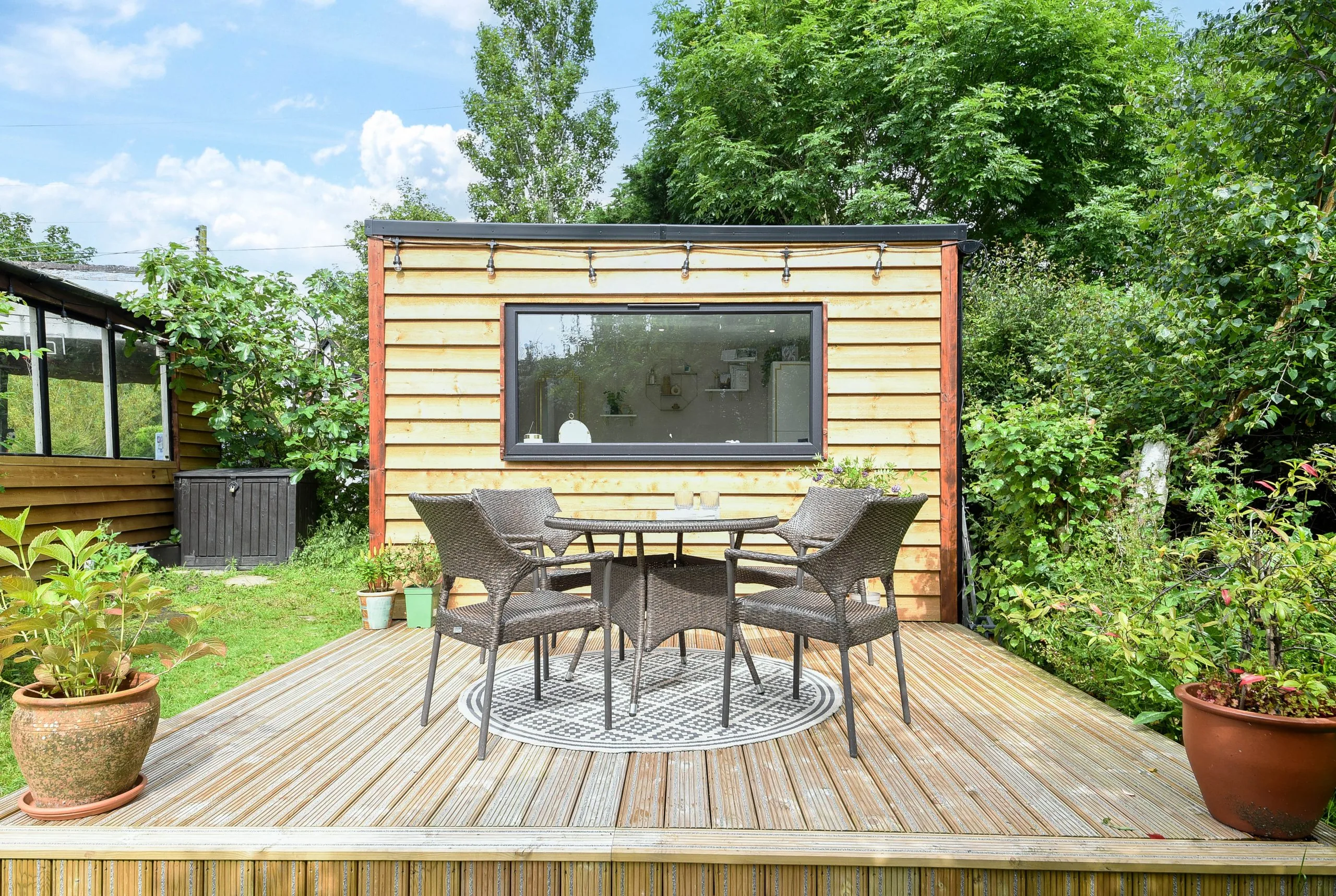
A tailored studio build showing how a garden room can be adapted for sound-focused creative work while still feeling refined, comfortable and suitable for year-round use.
View project