
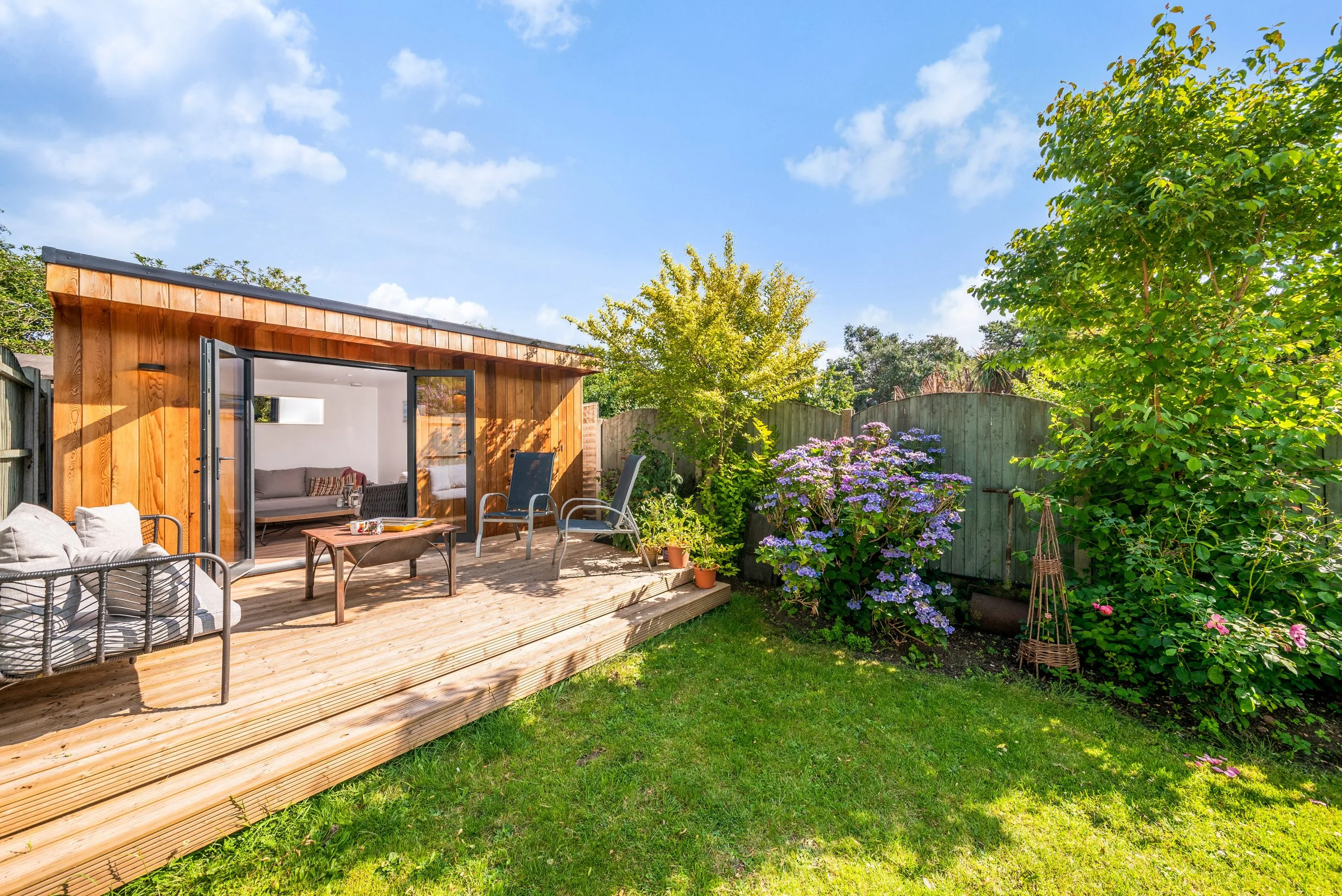
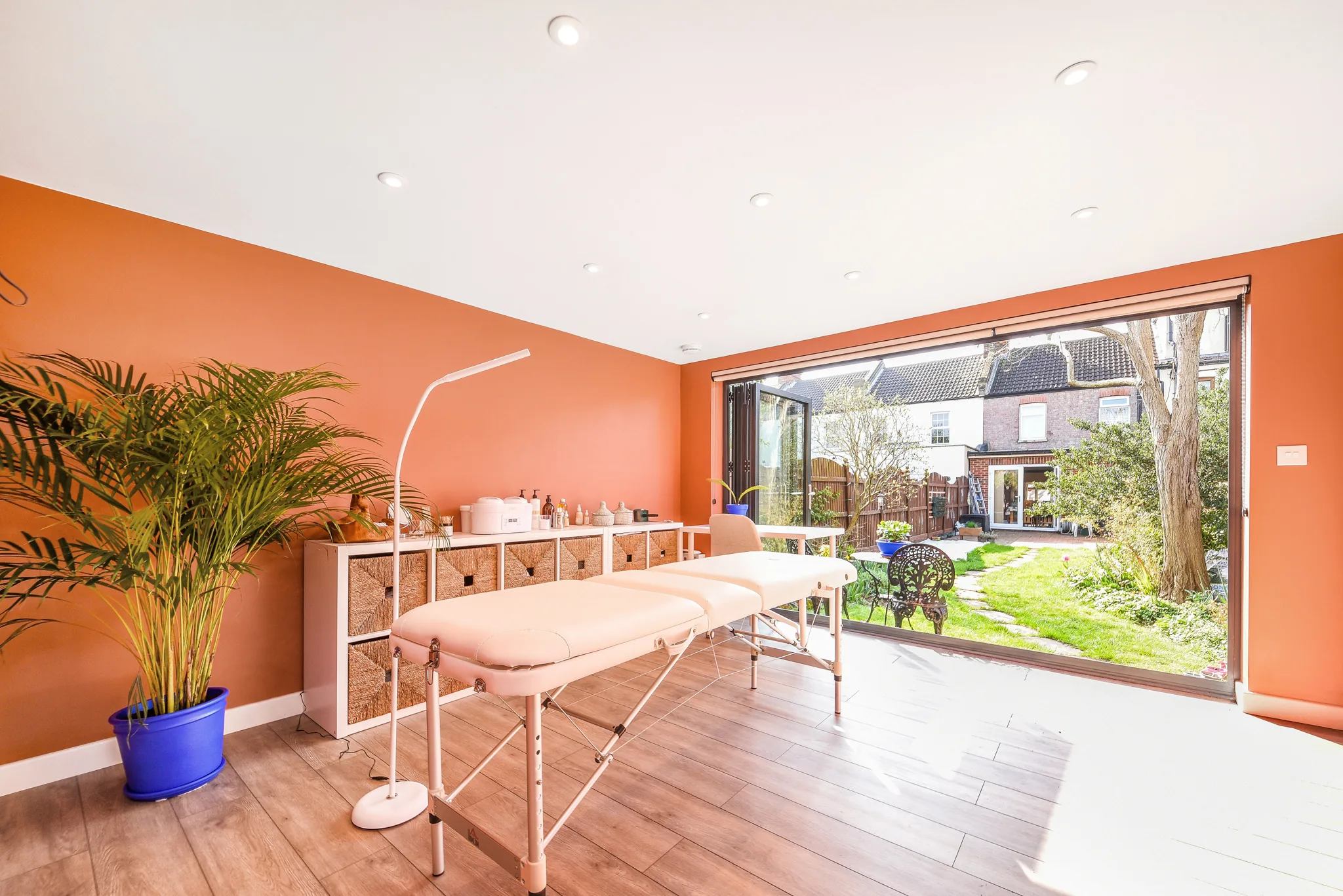
Creative Studio Retreat, Chelmsford
A tailored garden studio project showing how a premium building can become a calm, creative retreat with the flexibility to support focused work, production and year-round use.
View project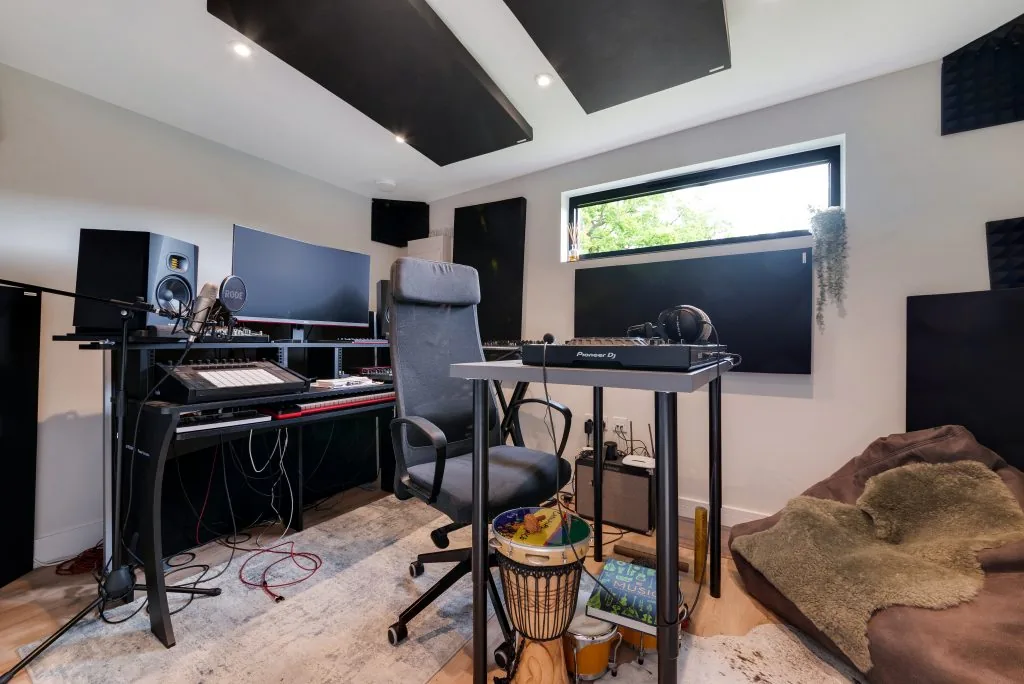
A serious content studio has to work harder than a spare bedroom with a ring light. It needs to look good on camera, stay quiet when you are recording, feel comfortable during long edits, hide the messy parts of production, and still be a beautiful garden building when you are not filming. A bespoke Hawksbeck garden room can be designed around the way you create, whether that is YouTube filming, product photography, podcasting, livestreaming, client content days, coaching videos, course production, editing, social media reels or a mix of everything.
The advantage of taking content creation into the garden is not simply gaining extra space. It is separation.
A dedicated studio gives you a controlled environment where lighting, background, acoustics, storage and equipment can stay set up. No packing away tripods before dinner, no recording around household noise, no relying on a corner of a room that never quite feels on-brand. With a bespoke design, your studio can be created as a working production space first, then finished with the same premium detail expected of a luxury garden room.
Content creation rewards consistency. The more friction there is between an idea and pressing record, the less often content gets made. A garden content studio solves a lot of the small problems that slow creators down: poor light, awkward backgrounds, family interruptions, bad acoustics, nowhere to leave kit, not enough sockets, trailing cables and rooms that are too hot or too cold to work in properly.
A purpose-built garden studio can be planned so your most common tasks are effortless. If you film talking-head videos, the camera, key light and backdrop positions can be designed into the room. If you photograph products, you can include worktops, shelving, controlled daylight and blackout options. If you livestream, you can prioritise wired internet, sound control, clean backdrops and a professional presenting area. If you edit for hours at a time, comfort, ventilation, desk position and screen glare become essential parts of the design rather than afterthoughts.
For more inspiration on the different ways a bespoke building can be used, see our wider guide to garden room ideas.
By content type“Content studio” can mean very different things depending on how you work. A beauty creator recording tutorials needs a different layout from a brand photographer shooting products. A podcaster needs a quieter, more acoustically controlled space than someone producing short-form reels. A course creator might need a teleprompter-friendly filming line, presentation wall and editing desk, while a small agency may need a flexible studio for client shoots.
Because Hawksbeck garden rooms are bespoke, the layout does not have to be forced into a generic box. The building can be designed around your shooting distances, equipment, storage needs, lighting preferences and the level of finish you want clients or collaborators to experience.
For video creators, the most useful studio is one where the main camera angle is always ready. That means thinking about depth, focal length, furniture placement and background design from the start. A room that is too shallow can make it difficult to achieve a flattering shot, especially if you want some background blur. A deeper garden room gives you more flexibility to separate the subject from the backdrop and create a polished, professional look.
Useful design features for a filming studio can include:
A photography-focused garden room benefits from clear working surfaces, good circulation space and lighting control. Product photography often needs room for backdrops, props, packaging, reflectors and multiple light stands. If you photograph larger products, furniture, interiors, clothing or lifestyle content, the room may need a more open-plan arrangement and a clean section of wall or floor that can be used repeatedly.
For photographers and e-commerce businesses, bespoke features might include a long prep bench, concealed storage for props, durable flooring, ceiling-mounted options for backdrops, and wall finishes that work well with your brand colours. Depending on your style, glazing can be positioned to bring in beautiful natural light, or reduced and controlled if you prefer a fully artificial lighting environment.
Audio quality is often what separates amateur content from professional content. A garden room used for podcasting, voiceover or livestreaming should be planned with sound in mind. While no typical garden room is automatically a recording booth, the specification can be developed to reduce distractions and create a much better recording environment than most rooms inside the home.
Important considerations include where the building sits in the garden, how much external noise you need to manage, whether you record alone or with guests, and whether you need a permanent desk-based setup. Acoustic treatment can then be considered as part of the interior design, with soft furnishings, wall panels, rugs, curtains or specialist finishes used to reduce echo and improve clarity.
Editing requires a different kind of comfort. You may spend far longer at the desk than you do filming. For this reason, an editing-focused garden studio needs excellent heating, cooling, lighting and ergonomics. The desk position should avoid screen glare, sockets should be placed exactly where they are needed, and the room should be calm enough for focused work.
A dedicated editing suite is also a practical choice for creators who want to separate filming from post-production. One end of the garden room can be used for filming or photography, while the other becomes a comfortable desk area for editing, planning, client calls and content scheduling.
The right size depends on what you shoot, how much equipment you own, and whether the room will be used by one person or a small team. A compact creator studio can work well for solo filming, editing and social media production, but video and photography spaces often benefit from more depth than people expect.
As a rough guide:
If filming is the priority, do not only think in square metres. Think about camera-to-subject distance, ceiling height, lighting placement and where equipment will live when it is not in use. A slightly larger or better-proportioned room can make the studio much easier to use every day.
Lighting is one of the biggest design decisions for a content creation garden room. Lots of glazing can make the space feel bright and inspiring, but uncontrolled daylight can be frustrating when filming. Clouds move, exposure changes, colour temperature shifts and one side of your face can look completely different from the other.
The best solution depends on your content style. A lifestyle creator may want beautiful natural light and a soft, relaxed atmosphere. A course creator or livestreamer may prefer a more controlled environment with blinds and consistent artificial lighting. A product photographer may want both: attractive daylight for creative work, plus blackout options for repeatable commercial shoots.
Glazing can be positioned to support the way you film rather than simply to look good from the garden. Doors and windows can be planned so they do not sit directly behind your main camera angle unless that is intentional. Internal finishes can also be selected to bounce, soften or control light depending on the look you want.
A content studio should not sound like an empty box. Hard floors, plastered walls and large areas of glass can create reflections that make speech sound harsh or echoey. The good news is that many acoustic improvements can be designed in without making the room feel like a technical recording booth.
Depending on the level of audio performance you need, your studio might use a combination of:
If you record podcasts, voiceovers or training videos, it is worth discussing this early so the room can be specified with sound in mind. The aim is not just to block noise; it is to create a studio that makes your voice sound clear, warm and professional.
Creative studios use more power than a standard home office. Cameras, chargers, LED panels, computers, monitors, audio interfaces, teleprompters, hard drives, speakers, routers and climate control all need reliable planning. A beautiful room quickly becomes frustrating if there are not enough sockets in the right places.
For a content studio, it is sensible to plan:
These details may not be the first thing viewers notice, but they are often what make the studio easy to use every day.
Many creators now use their space not only for personal content, but also for client work. A garden content studio can double as a premium meeting space, brand shoot location, interview room or workshop setting. That makes the finish particularly important. The building should feel considered from the moment someone walks through the door.
Hawksbeck’s bespoke approach allows the exterior and interior to be aligned with your brand. A calm, minimal studio may suit one creator; a warmer, more characterful interior may suit another. Some clients want a clean, gallery-like setting for photography. Others want a comfortable lounge-style filming area that feels natural on camera. With the right design, the garden room becomes part of your brand experience, not just a place to store equipment.
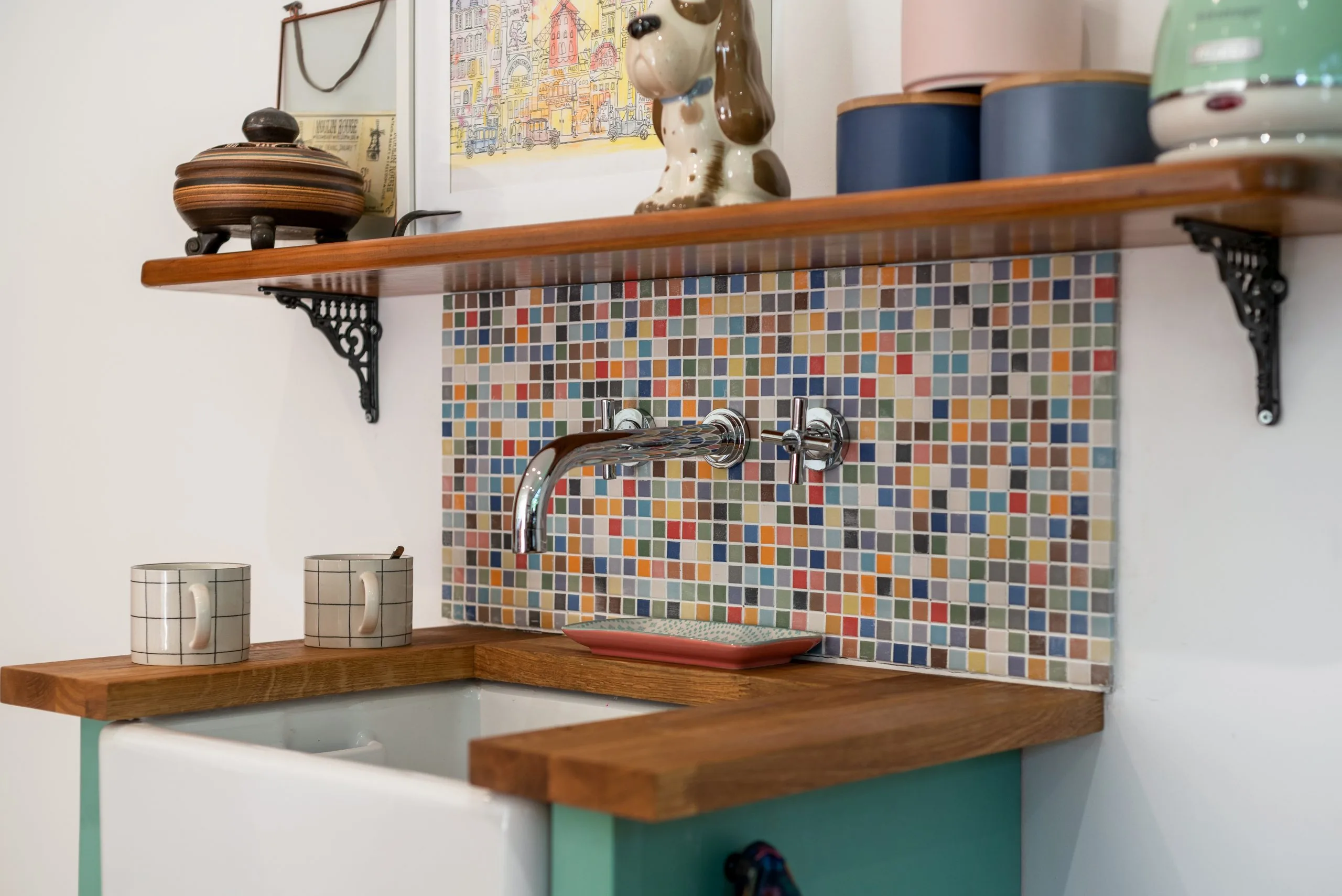
Finishes, glazing and interiors from across the Hawksbeck range, the raw material for an on-brand backdrop.
Because every creator works differently, the best layout is the one that supports your routine. Here are a few practical ways a bespoke garden studio could be arranged.
A compact but highly organised space with a desk at one end, a fixed filming wall at the other, concealed storage and a small refreshment area. This layout suits YouTubers, coaches, consultants, educators and founders who create regular talking-head videos, reels, webinars or online course content.
An open central area with flexible backdrop positions, work surfaces, prop storage and controlled lighting. This is ideal for product brands, stylists, makers, florists, artists, e-commerce businesses and photographers who need a clean, repeatable production environment.
A quieter, acoustically considered room with comfortable seating, flattering lighting and subtle camera angles. Storage can be included for microphones, stands, headphones and recording equipment, while the interior can be styled to create a premium on-camera setting.
A balanced layout for creators who need both production space and focused desk work. One zone is designed for filming or photography; another is set up as an editing suite, planning area or client workspace. This is often the most practical option for small businesses and full-time creators.
Tell us what you film most and what you are tired of packing away, and we will shape a studio where pressing record takes seconds.
Content equipment multiplies quickly. Even a simple setup can include cameras, lenses, lights, tripods, reflectors, microphones, cables, memory cards, props, backdrops, packaging, notebooks and hard drives. Without proper storage, the studio becomes hard to use and difficult to keep camera-ready.
Built-in or carefully planned storage can make the room feel calm and efficient. Cupboards can hide less attractive equipment. Open shelving can become part of the backdrop. A dedicated charging area can stop batteries and cables spreading across the desk. Tall storage can be used for stands and rolls of backdrop paper. If you create product content, deeper storage may be needed for props, stock and packaging materials.
Storage is rarely the most glamorous part of a studio brief, but it is one of the most useful.
The aim is to make the practical parts disappear so the creative parts are always ready.
A studio that only works in mild weather is not good enough for a professional creator. Insulation, heating, ventilation and cooling should all be considered so the room remains comfortable through winter shoots, summer editing days and long recording sessions under lights.
Long-form filming can be surprisingly warm once lights, computers and people are in the space. In winter, you need a room that warms efficiently and feels comfortable enough for detailed work. A well-specified Hawksbeck garden room can be designed for year-round use, giving you a reliable creative environment rather than a seasonal outbuilding.
Many garden rooms can be built under permitted development, but it depends on the size, height, position, location and intended use. If the building is used as a normal home studio or office, the process is often straightforward, but assumptions should never be made. If your studio will involve regular client visits, employees, commercial photography sessions or anything that may affect neighbours, it is sensible to discuss the project carefully at the start.
Hawksbeck can talk through the practical considerations and help you understand what may be required for your particular garden, building size and intended use.
BudgetThe cost of a garden content studio depends on the size, specification, access, groundwork, glazing, finishes and technical requirements. A simple creator room with a desk and filming wall will usually cost less than a larger production studio with enhanced sound considerations, extensive glazing, premium interior finishes, multiple zones and more complex electrics.
As a broad guide, many premium Hawksbeck garden rooms sit from the lower tens of thousands upwards, with larger and more highly specified bespoke buildings often moving into a significantly higher investment level. For a content creation studio, a realistic starting point is often in the region of a well-specified garden office, while more advanced filming, photography or multi-use studio spaces can vary considerably depending on the brief.
Typical factors that influence price include:
The best way to understand cost is to start with how you want to use the space. A bespoke proposal can then balance the studio features you need with the level of luxury and finish you want.
When planning a garden room for content creation, it can help to separate “must-haves” from “nice-to-haves”. The most valuable features are usually the ones that remove friction from your day-to-day workflow.
A content studio is more personal than most rooms because it has to fit both your creative workflow and your visual identity. Hawksbeck’s strength is in creating premium, bespoke garden buildings that do not feel standardised. The room can be tailored to how you shoot, how you edit, how you store equipment and how you want the space to feel when you step inside.
That might mean a beautifully minimal studio for a consultant or course creator. It might mean a warm, relaxed interview space for a podcaster. It might mean a practical but elegant room for product photography, social media content and brand shoots. The common thread is that the building is designed properly from the outset, rather than adapted later with compromises.
If your content is part of your business, your studio should support the quality of that business. A bespoke garden room can give you a permanent, professional production space at home while adding a striking, long-lasting feature to your property.
No typical garden room is automatically a recording booth, but the specification can be developed to reduce distractions, and acoustic treatment such as panels, rugs and soft furnishings can be designed in to reduce echo and improve clarity.
It depends on what you shoot and how much kit you own. Video and photography spaces often need more depth than people expect, so think about camera-to-subject distance, ceiling height and lighting placement rather than square metres alone.
Many garden rooms can be built under permitted development, but it depends on size, height, position, location and use. Regular client visits, employees or commercial shoots are worth discussing carefully at the start.
If you already know the kind of content you want to create, the next step is to translate that into a practical design brief. Think about what you film most often, what equipment needs to stay set up, whether you need client space, how much storage you need, and which parts of your current setup slow you down.
From there, Hawksbeck can help shape a garden room that is comfortable, premium, practical and designed around your creative process.
Three studio and office buildings already handling focused work, production days and client visits.
A tailored garden studio project showing how a premium building can become a calm, creative retreat with the flexibility to support focused work, production and year-round use.
View project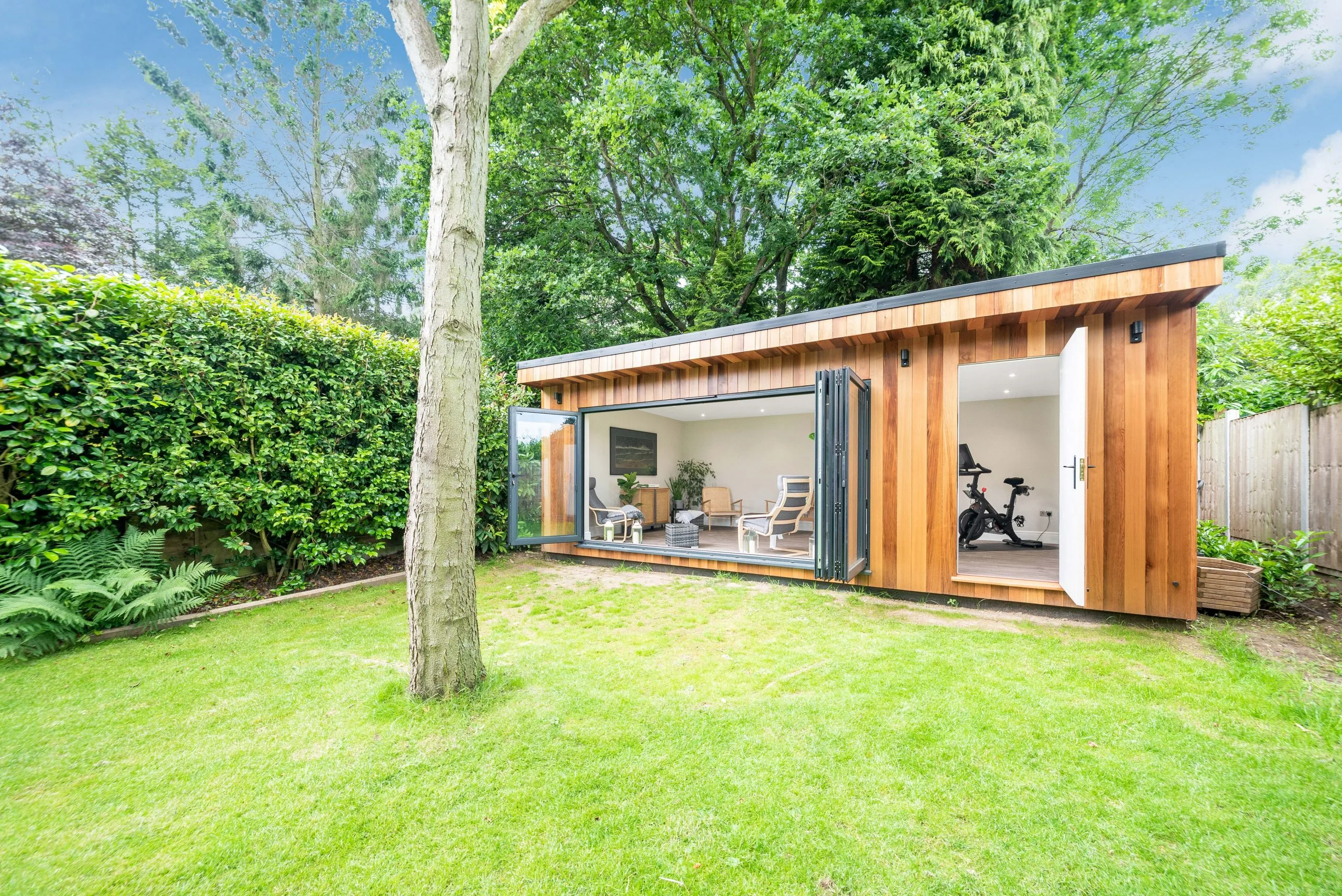
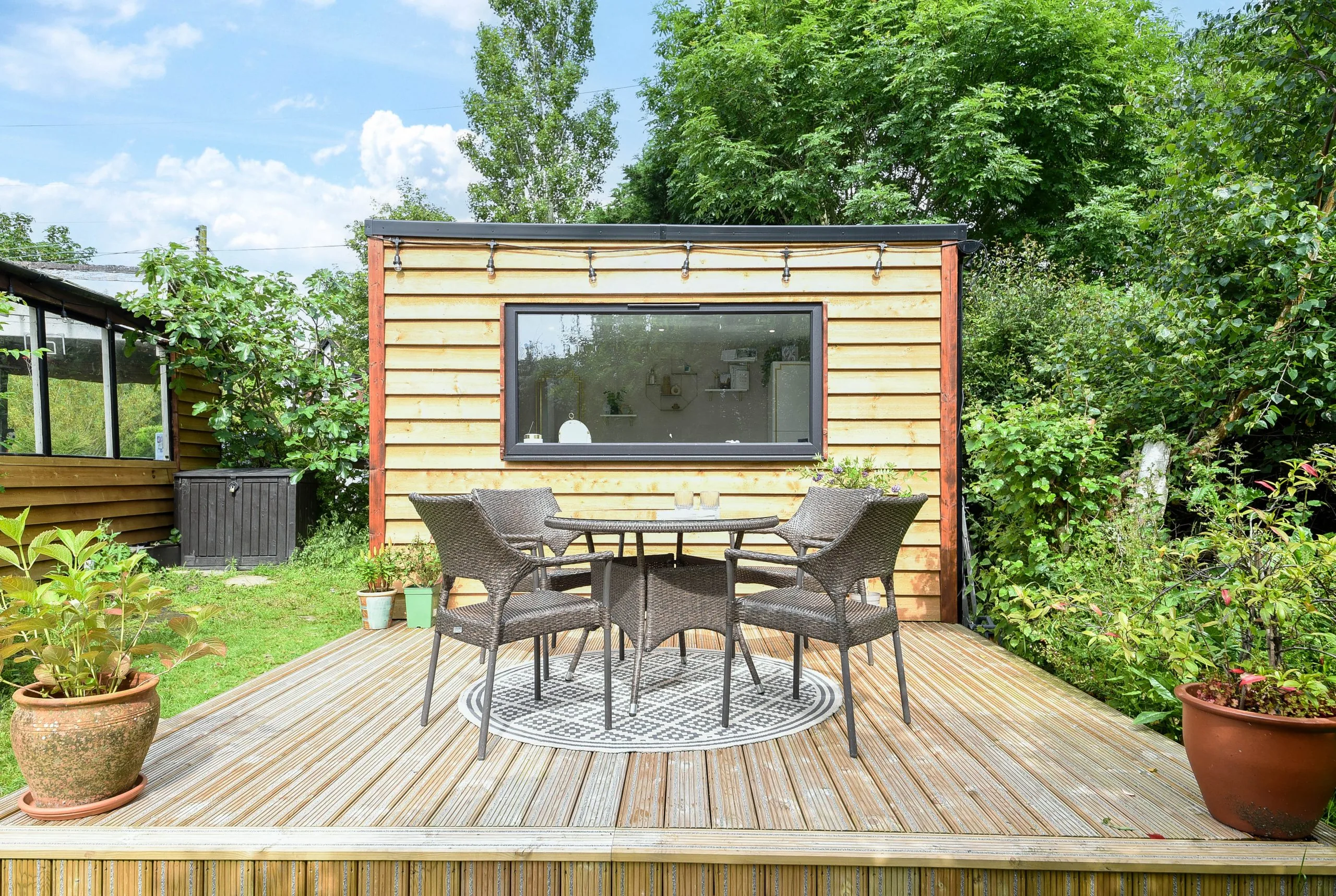
This studio office demonstrates the value of a bespoke layout for clients who need a refined, practical and comfortable space separate from the main home.
View project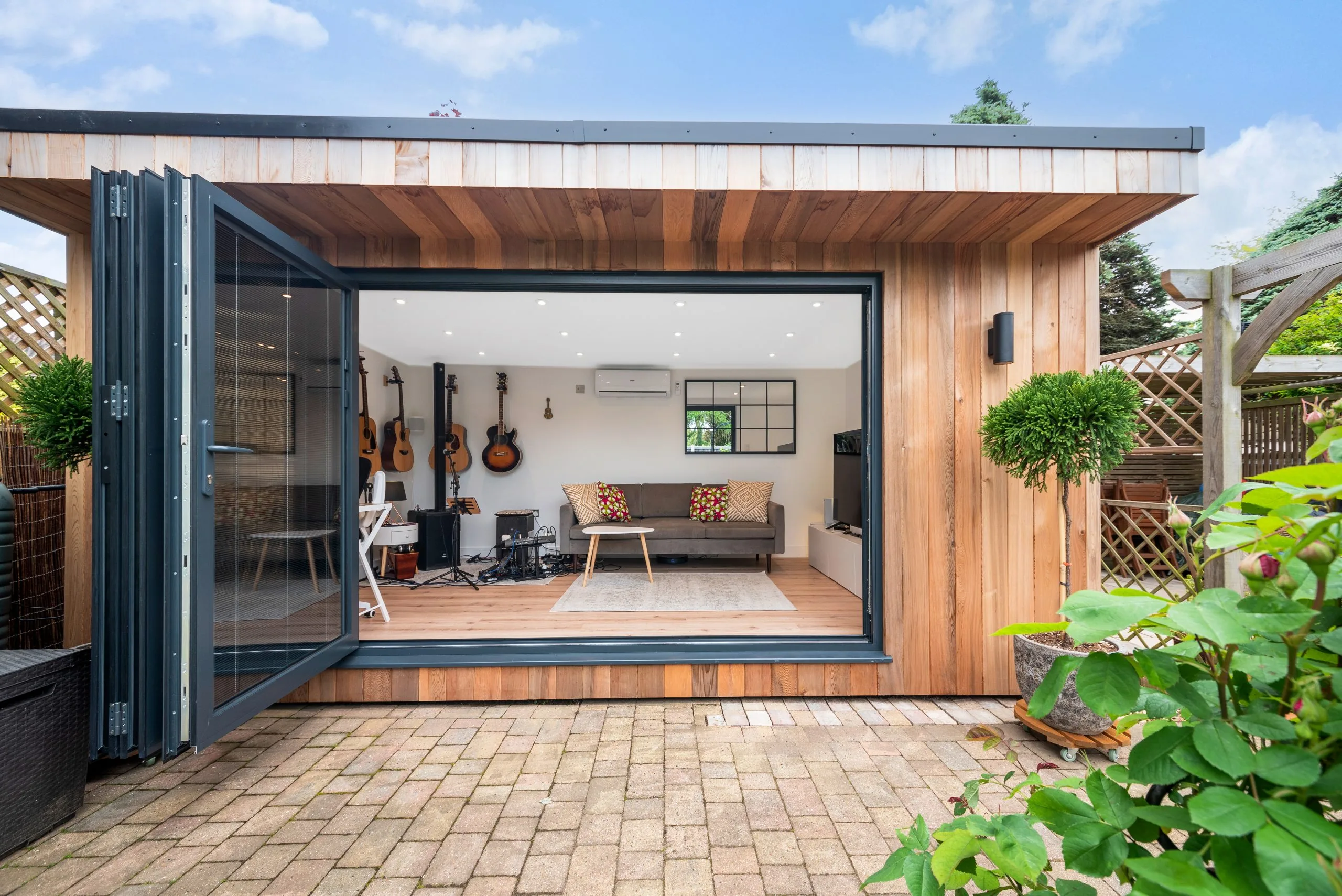
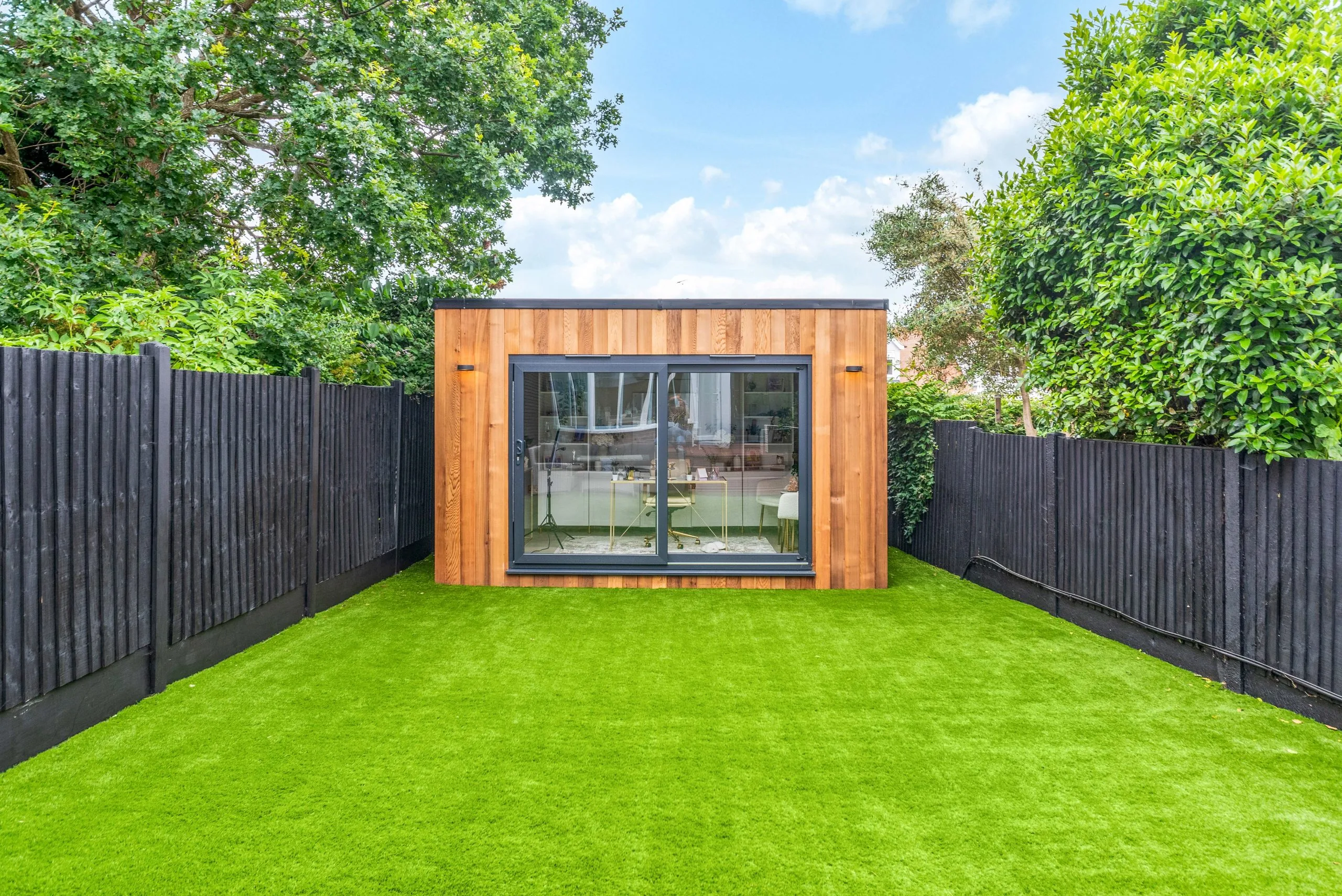
A premium office and studio garden room illustrating how Hawksbeck buildings can be adapted for professional work, creative use and a beautifully finished home environment.
View project