Purpose-Built Garden Rooms for a Private Tuition Room
A private tuition room needs to feel calm within seconds. Not domestic, not clinical, not like a spare bedroom that has been cleared in a hurry, but a focused, well-planned teaching space where a child, teenager or adult learner can sit down, concentrate and make progress. For tutors working from home, a bespoke garden room can create that separation beautifully: close enough to be convenient, far enough from the house to feel professional.
For one-to-one tuition, exam coaching, language lessons, music theory, SEND support, online tutoring or small-group teaching, the best garden tuition rooms are designed around more than just a desk and two chairs. They consider acoustics, lighting, internet stability, storage, privacy, safeguarding, comfort and the way students arrive and leave. That is where a bespoke Hawksbeck garden building can become a serious asset for a tutoring business, not simply an attractive extra room in the garden.
One-to-one room
Often around 3m x 3m to 4m x 3m
Paired lessons
Often around 4m x 3m to 5m x 3m
Small groups
Often around 5m x 3m to 6m x 4m+
If you are still comparing possible uses for a bespoke garden building, our wider guide to garden room ideas may help you see how flexible the space can be. This page focuses specifically on private tuition rooms: what to include, what to avoid, what size to consider and how a premium specification can make day-to-day teaching easier.
Why a garden room works so well for private tuition
Teaching from inside the house can work for a while, but it rarely feels ideal long term. Hallways, family noise, doorbells, pets, kitchens and shared living spaces all interrupt the professional atmosphere you are trying to create. A garden tuition room gives you a dedicated place for work, which can be particularly valuable if you tutor several students each week.
The separation also helps your students.
Walking into a purpose-built room sends a subtle but important message: this is a place for learning.
It helps create routine, reduces distraction and gives parents confidence that lessons are taking place in a considered, well-maintained environment.
A professional setting: ideal for private tutors who want clients to feel they are entering a proper teaching studio, not a corner of the home.
Better concentration: fewer interruptions from household noise, screens, family members or general domestic activity.
Flexible teaching formats: suitable for one-to-one tuition, paired lessons, revision groups, online sessions or hybrid learning.
Improved organisation: built-in storage can keep books, worksheets, tech, stationery and teaching resources in one place.
Year-round usability: a high-quality insulated building can stay comfortable through winter mornings, summer afternoons and evening lessons.
Clearer work-life boundaries: when the final student leaves, you can close the door and return home properly.
Designing the right layout for one-to-one and small-group lessons
The best layout depends on how you teach. A maths tutor preparing pupils for GCSEs may need a whiteboard wall, desk space and room for textbooks. A language tutor may prefer a softer arrangement with a round table, screen and conversational seating. A primary tutor might need activity storage, adaptable surfaces and a more welcoming interior. The point of a bespoke garden room is that the space can be planned around your teaching style rather than forcing you to adapt to a standard box.
For one-to-one tuition
A compact but well-planned garden room can be highly effective for one-to-one teaching. You will usually want enough space for a main teaching desk or table, two comfortable chairs, storage, a display or whiteboard area and circulation space so the room never feels cramped. The layout should allow you to sit alongside the student when reviewing work, opposite them for discussion, or facing a board or screen when explaining a topic.
For small-group tuition
If you teach two to six students at a time, the design needs to think more carefully about sightlines, table shape, storage and movement. A central table can work well for collaborative learning, while a wall-facing bench arrangement may suit exam preparation or independent study. For premium small-group tuition, the room should feel calm and spacious enough that students are not distracted by being too close to one another.
For online and hybrid tutoring
Many tutors now switch between in-person and online sessions throughout the week. In that case, your garden room should include a strong internet solution, flattering lighting, controlled acoustics and a tidy professional backdrop. A built-in desk facing a considered wall finish or shelving unit can instantly improve how you appear on video calls.
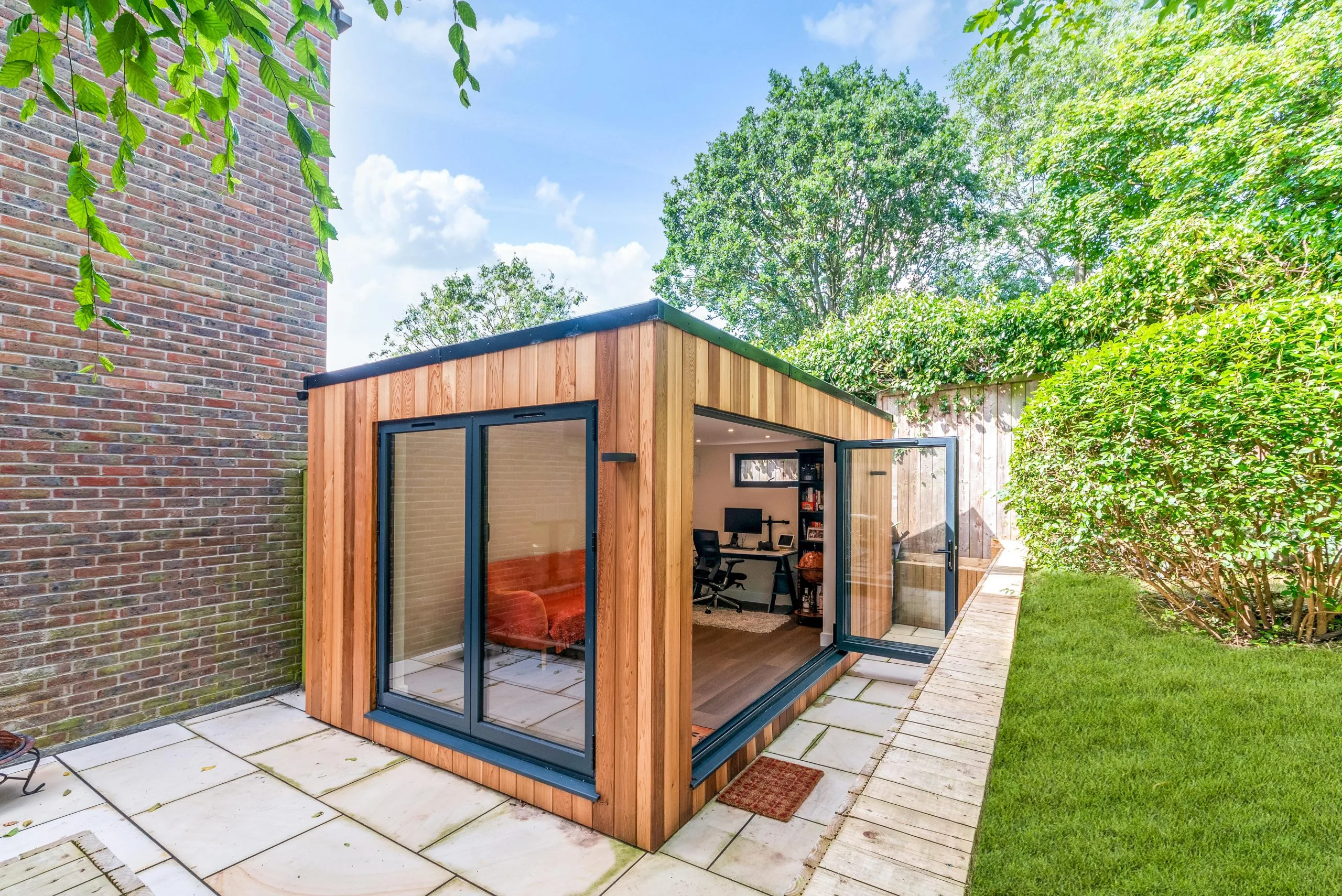
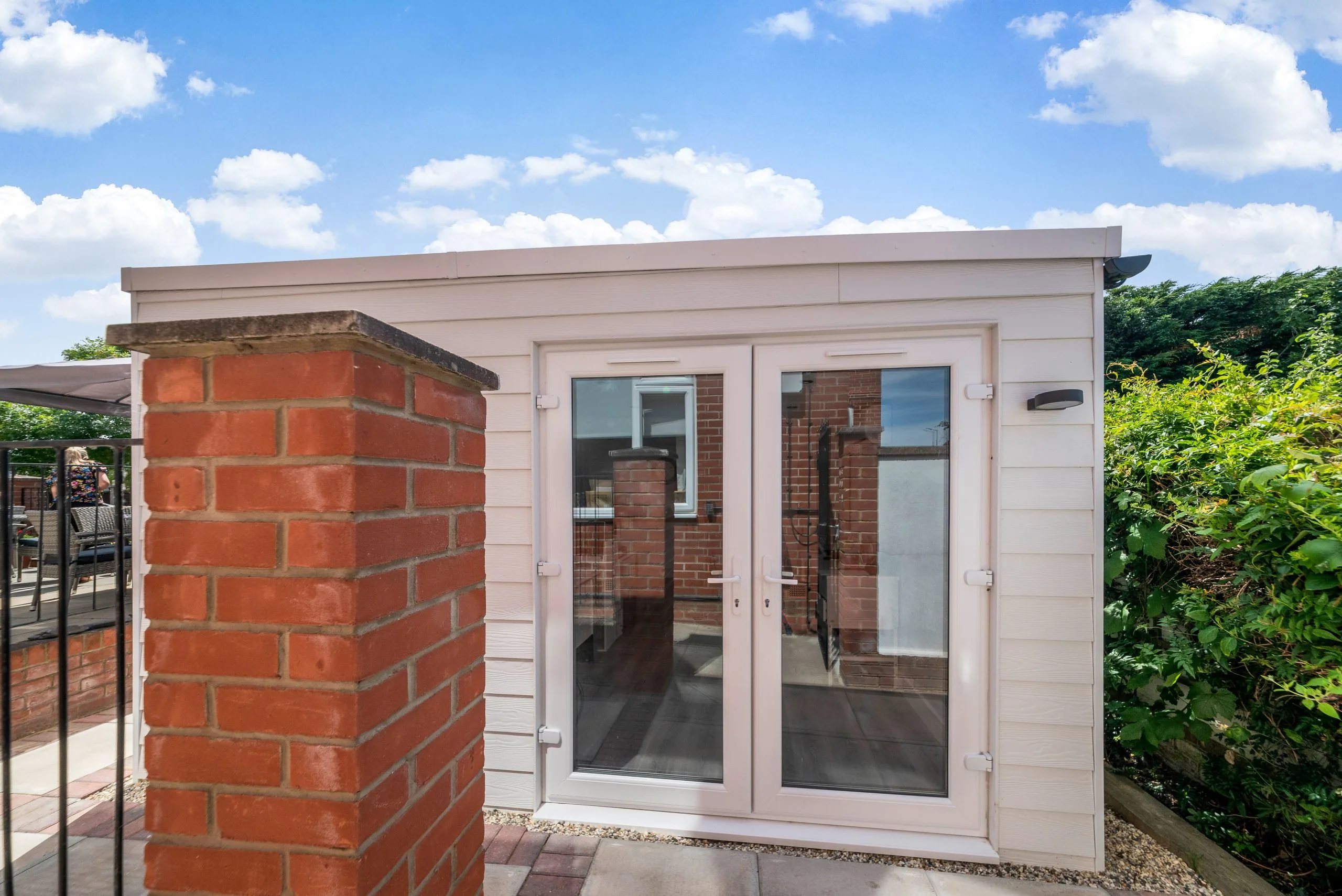
A finished exterior and a clear way in tell parents the lesson happens somewhere purpose-built.Glazing positions can be chosen with the whiteboard and screen wall in mind.
How big should a private tuition garden room be?
There is no single perfect size, but there are sensible starting points. A private tuition room needs to be large enough for focused teaching, yet not so oversized that it loses the quiet, concentrated feel that many students benefit from. It also needs to suit your garden, access, budget and the number of learners you teach at once.
Teaching use
Typical space requirement
Design notes
One-to-one tuition
Often around 3m x 3m to 4m x 3m
Enough for a desk or table, two chairs, shelving, whiteboard and comfortable movement.
One-to-two or paired lessons
Often around 4m x 3m to 5m x 3m
Allows a larger table, additional chair space and better separation between learners.
Small-group tuition
Often around 5m x 3m to 6m x 4m+
Useful for revision groups, homework clubs or subject-specific workshops.
Tuition plus waiting/storage area
Usually a larger bespoke footprint
Can include a small lobby, coat storage, resource cupboards or a parent waiting point if appropriate.
For many tutors, the most successful solution is not necessarily the largest room, but the most intelligently planned one. A narrower room with a full-height storage wall and a carefully positioned window may work better than a larger space with poor desk placement and glare on screens.
Furniture and interior features that make teaching easier
A premium private tuition room should support the way lessons actually happen. That means thinking through the small details: where paper goes, how you plug in a laptop, how you display examples, where coats are placed, whether students can see the board clearly and how easily you can reset the space between appointments.
Desks, tables and work surfaces
The desk arrangement sets the tone of the room. A large rectangular table is useful for exam papers, books and note-taking. A round or oval table can feel more collaborative and less formal, which may suit younger learners or language tuition. A built-in desk can be excellent for online teaching, particularly where the camera angle, lighting and background are planned from the start.
Storage for teaching resources
Private tutors often accumulate more materials than they realise: textbooks, folders, flashcards, stationery, tablets, printed worksheets, assessment papers and subject-specific equipment. Built-in cupboards, shelving and concealed storage can keep the room looking calm and professional. For students, a tidy teaching space often feels less overwhelming and easier to focus in.
Whiteboards and display areas
A well-positioned whiteboard can make a tuition room much more effective. It should be easy to see from every seat without awkward turning, and it should not be placed where glare from glazing makes it difficult to read. Some tutors prefer magnetic boards, pinboards, acoustic display panels or a combination of all three.
Comfortable but purposeful seating
Chairs need to be comfortable enough for an hour-long lesson but supportive enough for concentration. If you teach younger children, adjustable seating may be worth considering. If you work with older students or adults, a more refined studio-style interior can help justify a premium tuition fee and reinforce the quality of your service.
Internet, power and technology
Strong internet is one of the most important features of a modern garden tuition room. Even if most of your teaching is face to face, you may still use online learning platforms, digital worksheets, video resources, cloud storage, booking systems or payment software. If you teach remotely, internet reliability becomes essential.
A bespoke specification can include suitable power points, data options and planning for your equipment. Depending on the site and your requirements, this might include hardwired internet, Wi-Fi enhancement, discreet cable routes, charging points, external lighting, smart controls, security equipment and carefully placed sockets so you are not relying on extension leads.
Hardwired connection: often preferable for online lessons and video calls where stability matters.
Multiple sockets: useful for laptops, tablets, printers, lamps, chargers and display screens.
Screen placement: should be considered early so light, glare and cable routes are handled properly.
Printer or scanner space: valuable for tutors who prepare worksheets or mark physical papers.
Discreet lighting controls: helpful for switching between written work, screen-based learning and video calls.
Lighting that supports concentration
Lighting has a direct impact on learning. Too dim and the room feels sleepy. Too harsh and it becomes tiring, especially during evening sessions or close reading. Natural light is valuable, but it should be controlled so it does not cause glare on screens, whiteboards or glossy textbooks.
A layered lighting design is usually best. Ceiling lights provide general illumination, task lighting supports reading and writing, and softer feature lighting can help the room feel welcoming between lessons. If your tutoring often takes place after school, in winter or in the evening, high-quality artificial lighting is particularly important.
Acoustics, privacy and sound control
A tuition room does not need to be silent, but it should feel private. Students are more likely to ask questions, make mistakes and practise aloud if they do not feel overheard. This is especially relevant for language tuition, speech and communication support, music theory, confidence coaching or any subject where learners may feel self-conscious.
Good acoustic planning can also help you teach without raising your voice. Soft finishes, rugs, curtains or blinds, upholstered seating, acoustic panels and considered wall surfaces can all reduce echo. For online tutoring, better acoustics can make your voice clearer and reduce fatigue during back-to-back calls.
Arrival, visibility, reassurance
Creating a safe and reassuring setting for students
If you teach children or teenagers, the tuition room should feel professional, transparent and safe. Practical design choices can support this without making the space feel institutional. For example, glazed doors or well-positioned windows can provide visibility, while blinds can be used sensibly where privacy is needed. External lighting can make arrival and collection safer during darker months.
You may also want to think about how students reach the room. A clear garden path, non-slip surfaces, tidy landscaping, appropriate lighting and a defined entrance can make the experience smoother for parents and students. If lessons are scheduled closely together, a small covered area or simple waiting arrangement may be useful.
Professional tutors should also consider their own policies and obligations, such as insurance, safeguarding procedures, DBS checks where relevant, permissions for running a business from home and any local planning considerations. The building can be designed to support your working practices, but the operational side of tutoring should be checked carefully.
Heating, insulation and year-round comfort
A garden tuition room needs to perform well all year. A cold or stuffy room will quickly undermine concentration, and students will notice if the space is uncomfortable. Premium insulation, quality glazing, efficient heating and ventilation all contribute to a stable teaching environment.
For many tutors, lessons take place after school, at weekends or in the early evening, which means the room needs to be comfortable outside the warmest part of the day. A high-quality garden building can be designed for regular use, rather than occasional summer use only.
A short film of Hawksbeck buildings in use, worth watching with your own weekly timetable of pupils in mind.
Planning a tuition room that feels premium, not makeshift
Parents often choose a tutor because they want a higher standard of attention, support and expertise than their child can receive in a busy classroom. Your teaching space should reflect that. A premium tuition room does not need to be flashy, but it should feel composed, warm, organised and intentional.
Materials matter here. The external finish should complement the garden and the home, while the interior should feel calm enough for learning. Bespoke joinery, elegant flooring, carefully chosen wall colours and good lighting can all elevate the experience. The result is a space that supports your brand as a tutor and feels worth travelling to.
Should a private tuition garden room include a WC?
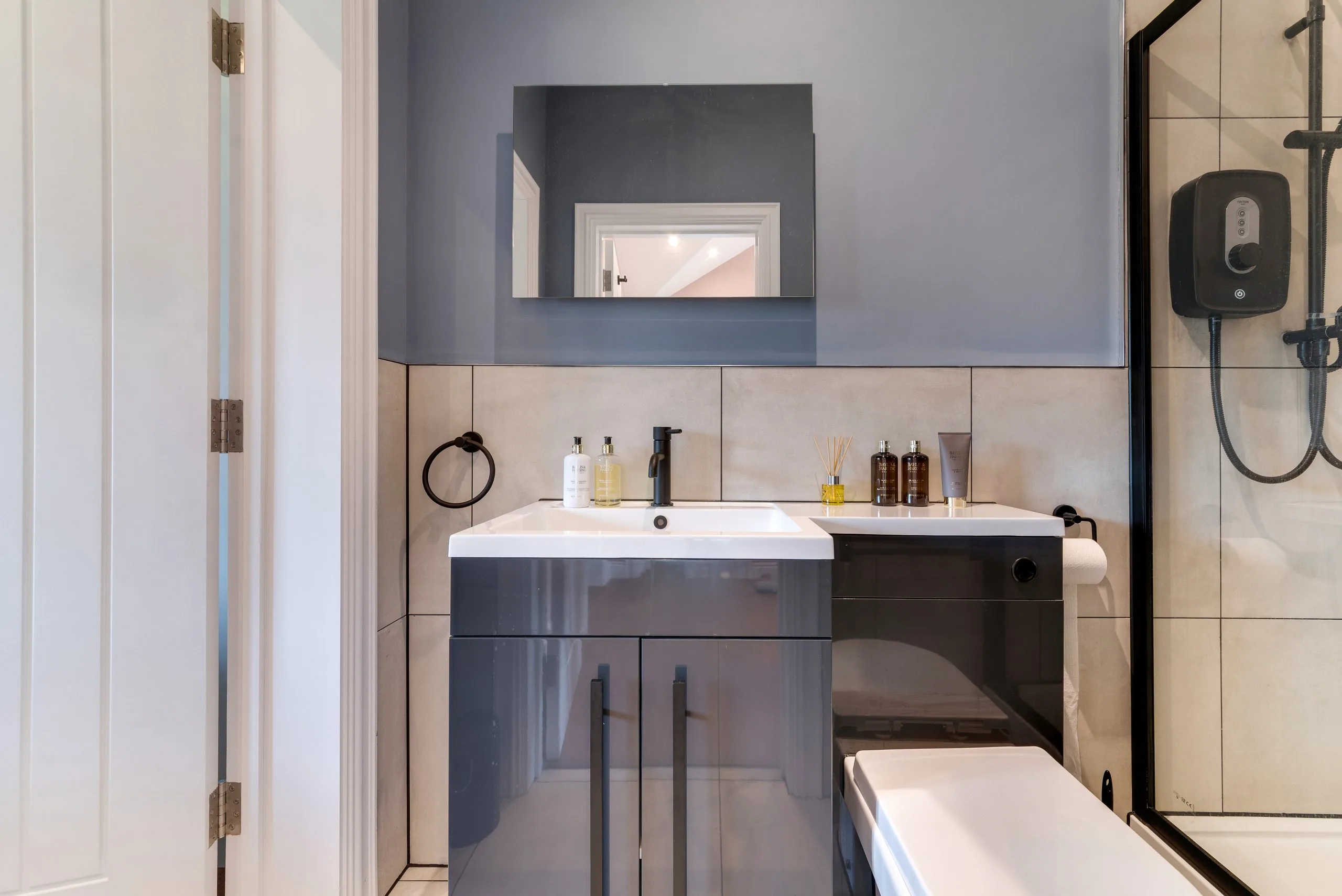
For one-to-one lessons close to the house, some tutors are comfortable without a WC in the garden room. For longer sessions, small groups, adult learners or a more independent professional setup, a WC can be worth discussing. It may affect cost, layout, plumbing, drainage and permissions, but it can make the building feel more complete and reduce the need for students to enter the main home.
The decision usually depends on how you work. If students attend for short lessons and parents remain nearby, a WC may not be essential. If you run workshops, holiday sessions, longer coaching blocks or a larger tutoring business, it may become more valuable.
Can you run a tutoring business from a garden room?
Many private tutors work from home, but it is sensible to check the practical and administrative details before investing in a dedicated teaching space. Depending on your location, the scale of your business and how many students visit, you may need to consider planning rules, insurance, parking, neighbour impact, safeguarding, business rates and mortgage or tenancy conditions.
A quiet one-to-one tutoring setup with limited visitors may be straightforward, while a busier small-group teaching business may require more thought. From a design point of view, the building can be tailored to reduce disruption: good access, suitable lighting, careful positioning, acoustic improvements and a professional entrance can all help the room operate smoothly.
How much does a garden room for private tuition cost?
Pricing depends heavily on size, specification, site access, foundations, glazing, electrics, heating, internal finishes, built-in storage and whether you require extras such as plumbing or a WC. Because Hawksbeck garden rooms are bespoke and built to a premium standard, the most useful way to think about cost is in ranges rather than a single fixed figure.
As a broad planning guide, a small, high-quality one-to-one tuition room may often sit from the lower end of a premium garden room range, while a larger small-group teaching studio with integrated storage, enhanced electrics, data, heating, bespoke finishes and possible plumbing can move significantly higher. Many serious tutoring spaces are likely to be planned in the tens of thousands, with more substantial bespoke buildings reaching considerably beyond that depending on the final design.
For example:
Compact one-to-one tuition room: typically suited to a tutor who needs a desk, two chairs, storage, heating, lighting and strong internet.
Professional tutoring studio: more space for a larger table, whiteboard, built-in cupboards, display screen and a refined client-facing interior.
Small-group teaching building: a larger footprint with multiple student places, enhanced storage, more complex lighting and possibly a WC or lobby area.
The best next step is to discuss how you teach, how many students you see, what your garden allows and the level of finish you want. That way, the budget can be aligned with a building that genuinely supports your work rather than a generic specification.
One pupil at a time, or six around a table? Tell us how your week runs and we will scope the room to match.
Different subjects place different demands on a room. A bespoke building allows the space to be refined for your main teaching style while still remaining flexible enough to adapt in future.
Maths and science tuition
Prioritise a clear whiteboard, desk space for workings, good task lighting and storage for past papers, textbooks and equipment. A screen may be useful for graphing tools, exam platforms and digital demonstrations.
English and humanities tuition
Book storage, calm lighting and comfortable discussion seating can make a big difference. A wall of shelving can create a warm, academic feel while keeping resources close to hand.
Language tuition
Acoustics are particularly important for speaking and listening. A screen, speakers and strong internet can support multimedia learning, conversation practice and online resources.
Primary tuition
You may need more adaptable storage for games, flashcards, manipulatives, reading materials and creative tasks. The room should feel welcoming without becoming visually cluttered.
Exam coaching
A focused, uncluttered layout works well. Good desk space, a clock, quiet surroundings and a professional atmosphere can help students practise under exam-style conditions.
Online tutoring
Plan the camera position, lighting, microphone, acoustic treatment, broadband and backdrop. A purpose-designed online teaching studio can look more professional and reduce technical friction.
Common mistakes to avoid
A garden room for tutoring is a long-term workspace, so it is worth getting the detail right before the build begins. Some of the most common mistakes are easy to avoid with proper planning.
Choosing a room that is too small: a tight space may look acceptable on paper but feel uncomfortable once students, bags, chairs and teaching materials are inside.
Ignoring glare: bright windows in the wrong place can make screens and whiteboards difficult to use.
Underestimating storage: visible clutter can make the room feel less calm and less professional.
Relying on weak Wi-Fi: unstable internet can disrupt online lessons, digital resources and payment or booking systems.
Forgetting arrival and collection: paths, lighting and entrance position matter, especially for evening lessons.
Using domestic furniture only: a premium teaching space benefits from furniture chosen for posture, durability and lesson flow.
Not planning for growth: even if you teach one-to-one now, you may later want to offer paired lessons, workshops or online courses.
How a Hawksbeck private tuition room can be tailored
A Hawksbeck garden room can be designed around the specific way you teach. That might mean a quiet one-to-one studio at the end of the garden, a premium office-style tutoring room beside the house, or a larger teaching building for small groups. Because the building is bespoke, you can think beyond the shell and plan the details that make lessons run smoothly.
Bespoke sizing to suit your garden and teaching format
Premium insulation and finishes for comfortable year-round lessons
High-quality doors and glazing positioned for light, privacy and visibility
Electrical layouts planned for laptops, screens, printers and charging
Options for internet, heating, lighting and smart controls
Built-in storage for teaching resources and student materials
Professional internal finishes that reflect a premium tutoring service
External design that complements your home and garden
The result is a room that can help you teach better, present your business more professionally and make use of your garden in a way that adds real value to daily life.
What size garden room do I need for private tuition?
As a starting point, one-to-one tuition often needs around 3m x 3m to 4m x 3m, paired lessons around 4m x 3m to 5m x 3m, and small groups around 5m x 3m to 6m x 4m+. The best room is the most intelligently planned one rather than simply the largest.
Does a garden tuition room need a WC?
Not always. For short one-to-one lessons with parents nearby it may not be essential, but for longer sessions, small groups or adult learners it can be worth discussing, bearing in mind its effect on cost, plumbing and drainage.
Can a garden room be used for online tutoring as well as face-to-face lessons?
Yes. Hardwired internet, well-placed sockets, flattering lighting, controlled acoustics and a tidy backdrop behind a built-in desk all help a room switch between in-person and online sessions.
What should I check before tutoring from a garden room?
Depending on your location and how many students visit, planning rules, insurance, parking, neighbour impact, safeguarding, business rates and mortgage or tenancy conditions may all be relevant.
Ready to plan a private tuition room?
If you are considering a garden room for private tuition, the most useful starting point is a conversation about how the room will be used. How many students do you teach? Do you work online? Do parents wait nearby? Do you need display space, storage, a WC, a screen, acoustic improvements or a particular style of interior? Once those details are clear, the building can be designed around your lessons rather than around assumptions.
Hawksbeck creates premium bespoke garden rooms for homeowners who want something beautifully made, practical and tailored. For a private tutor, that means a teaching space with the right atmosphere, the right specification and the right details to support students week after week.
Related Hawksbeck case studies
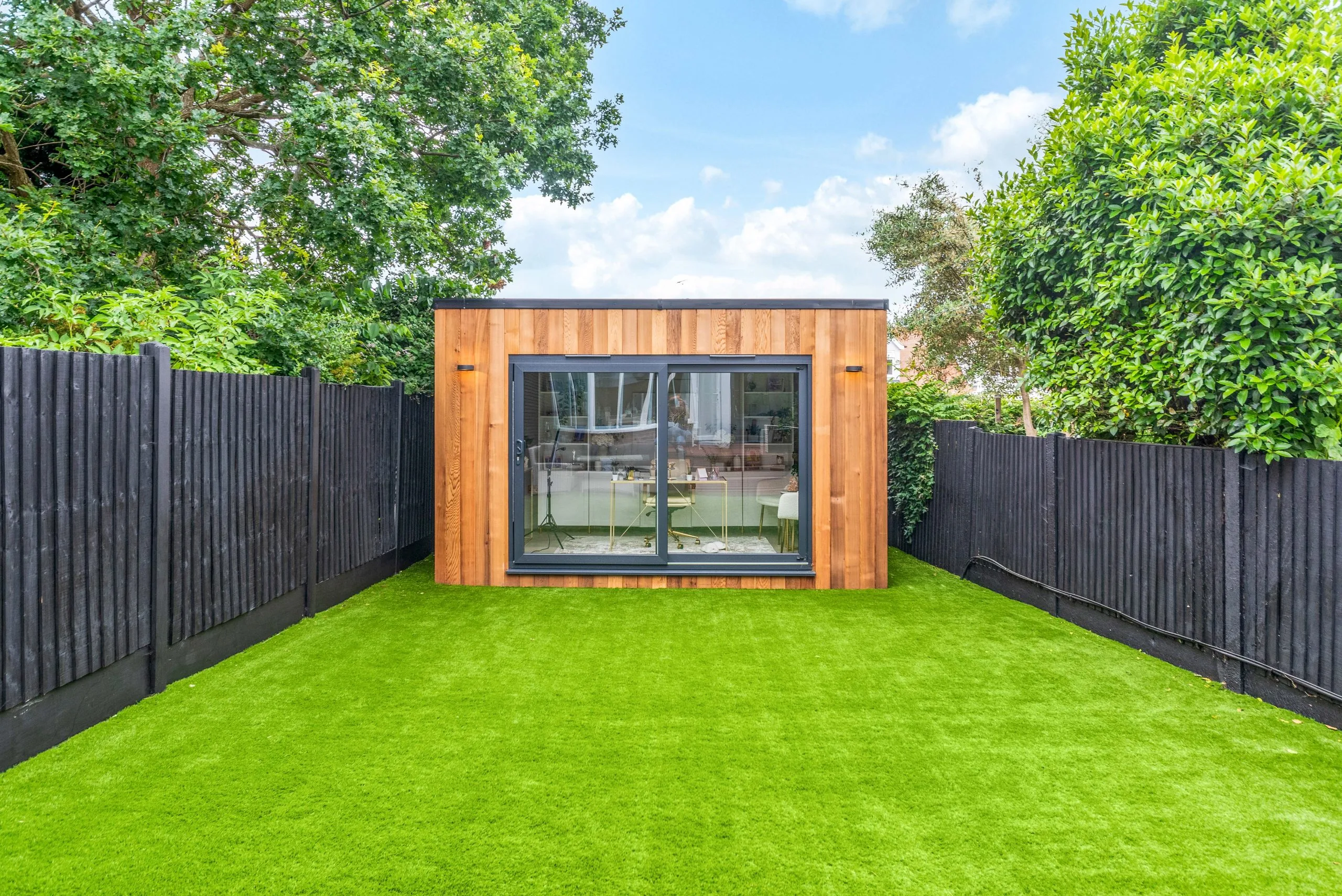
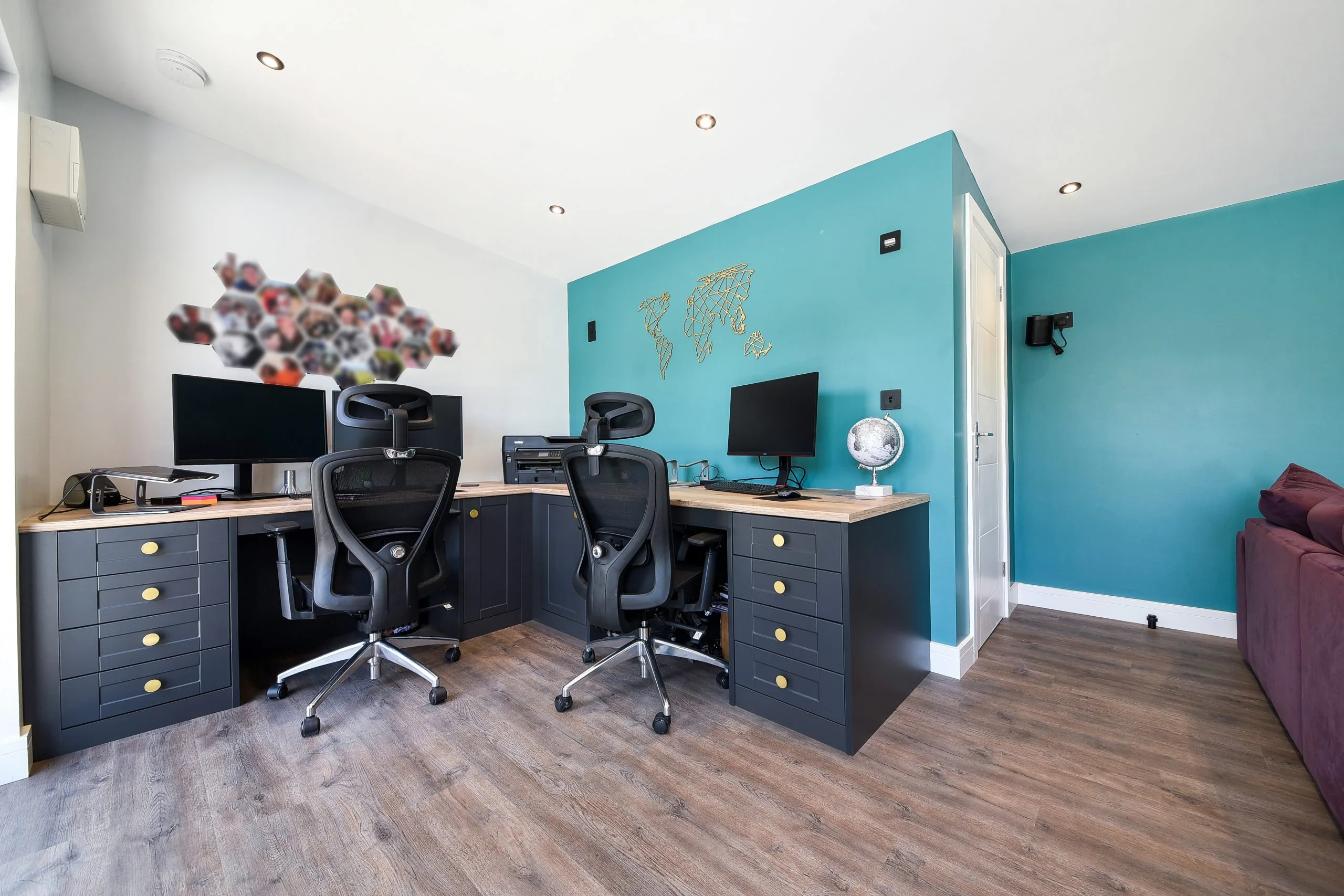
Three calm, well-organised workspaces whose layouts translate naturally into a room for lessons.
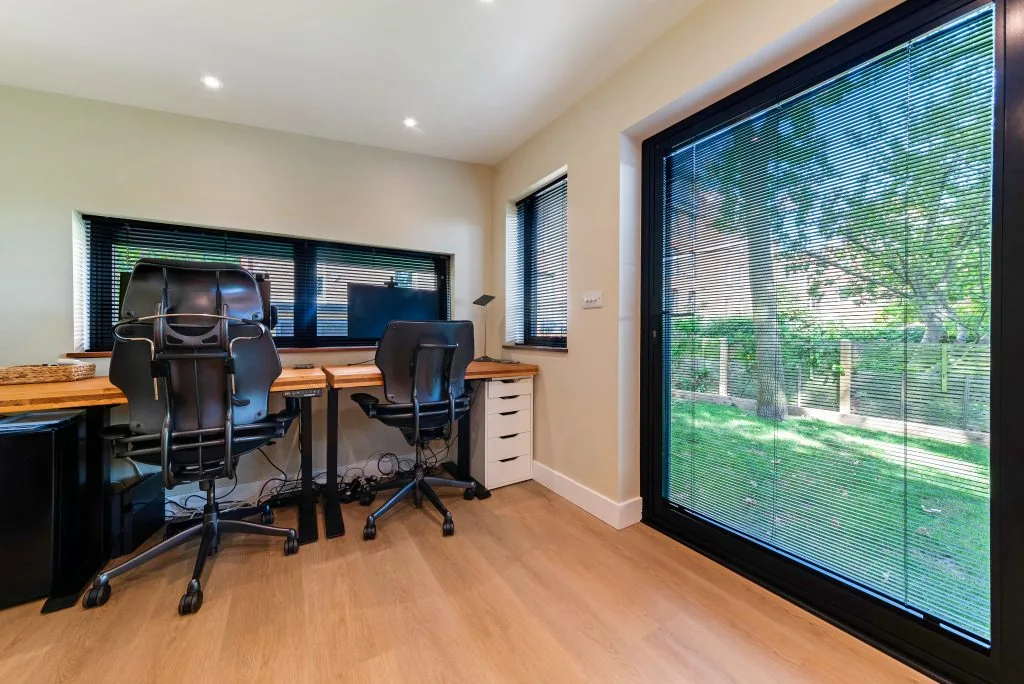
A practical bespoke garden building showing how a refined workspace can include storage, comfort and a professional layout, all highly relevant for tutors who need a calm and organised teaching environment.
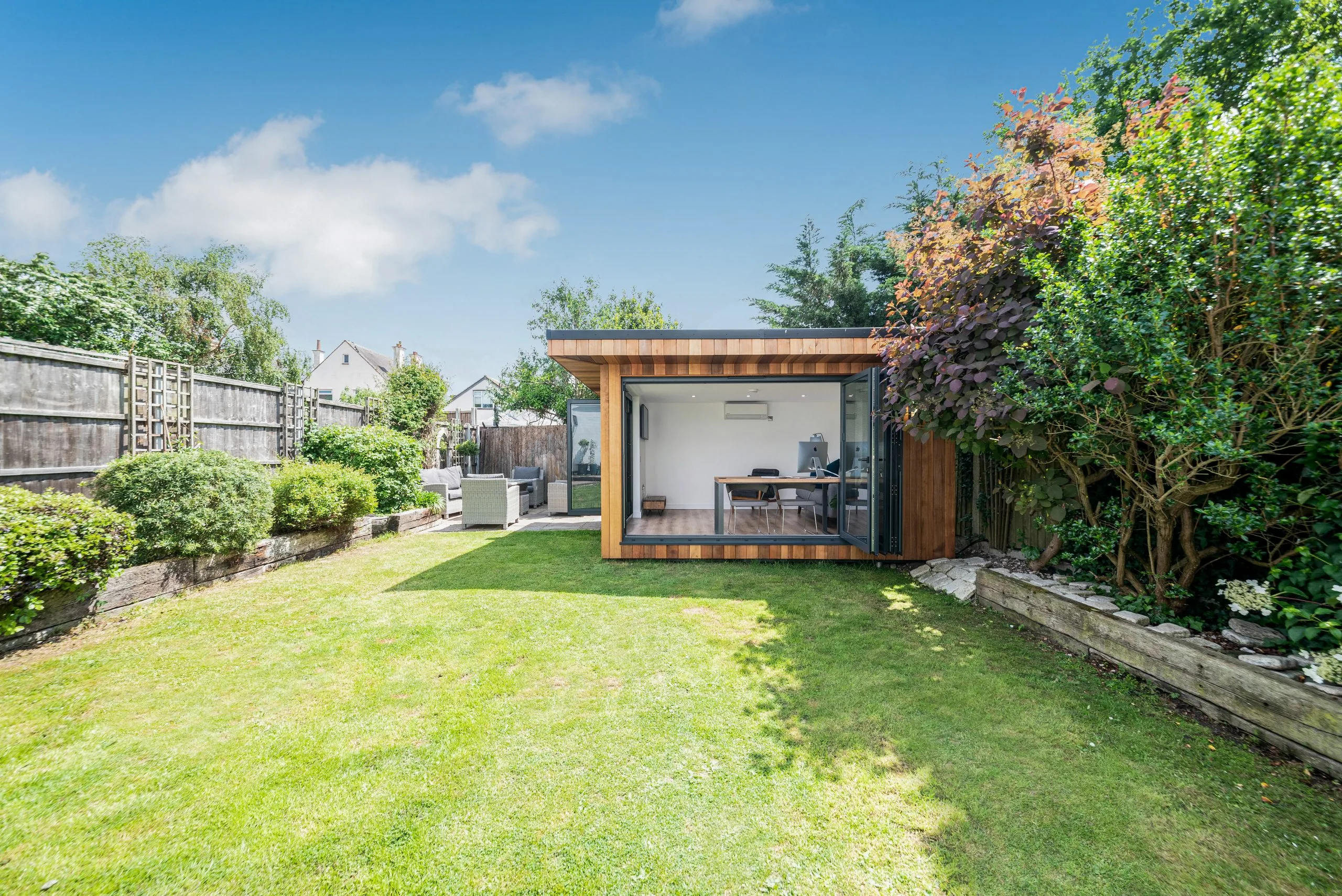
This studio office demonstrates how a premium garden room can become a focused, comfortable and beautifully finished workspace, ideal inspiration for one-to-one tuition or online teaching.
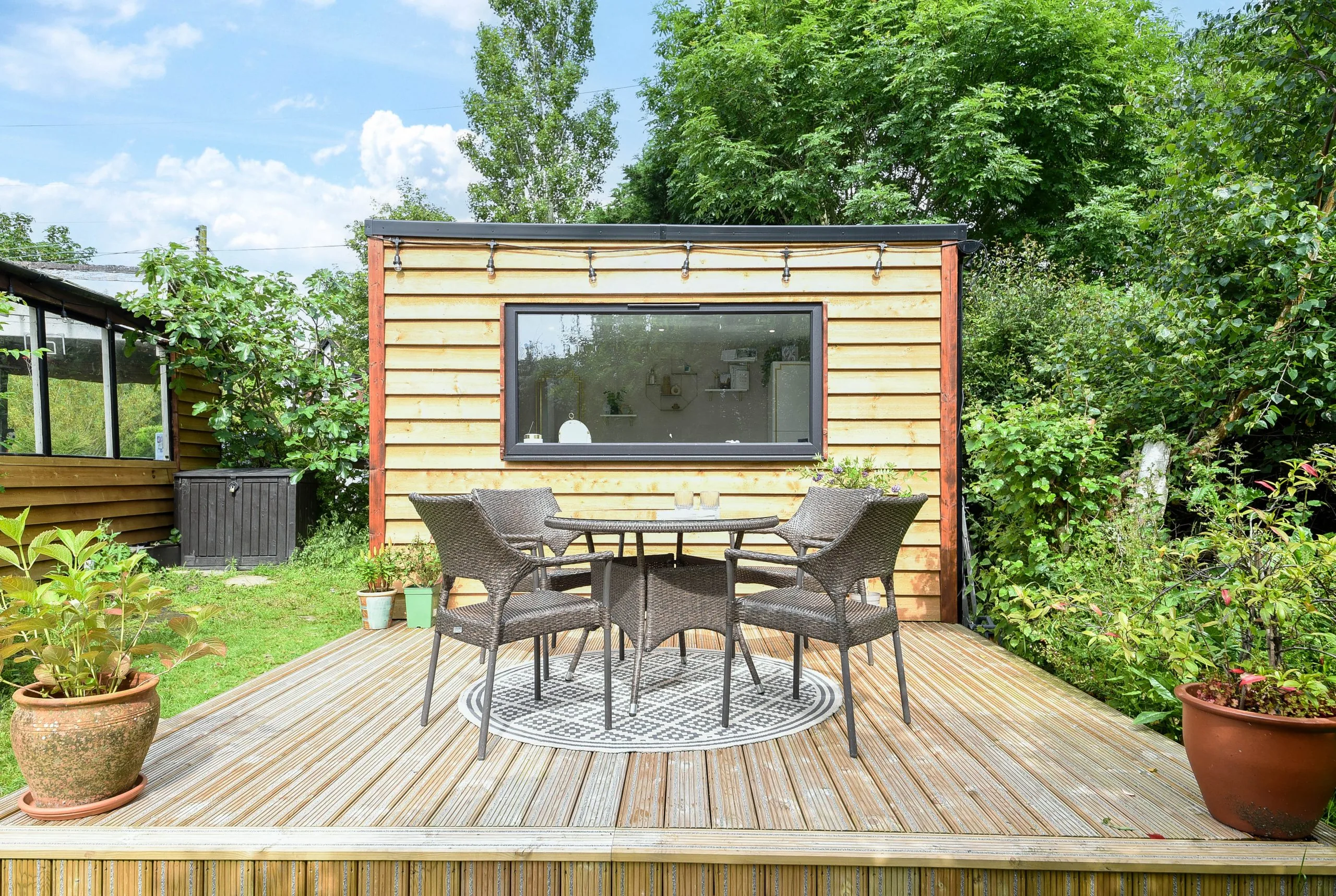
A versatile office studio project that highlights the design quality, comfort and flexibility possible with a bespoke Hawksbeck build, suitable for tutors wanting a dedicated teaching room at home.