

Bespoke Music Room, Shenfield, Essex
A beautifully considered garden music room showing how a bespoke building can create a comfortable, creative and practical space away from the main home.
View project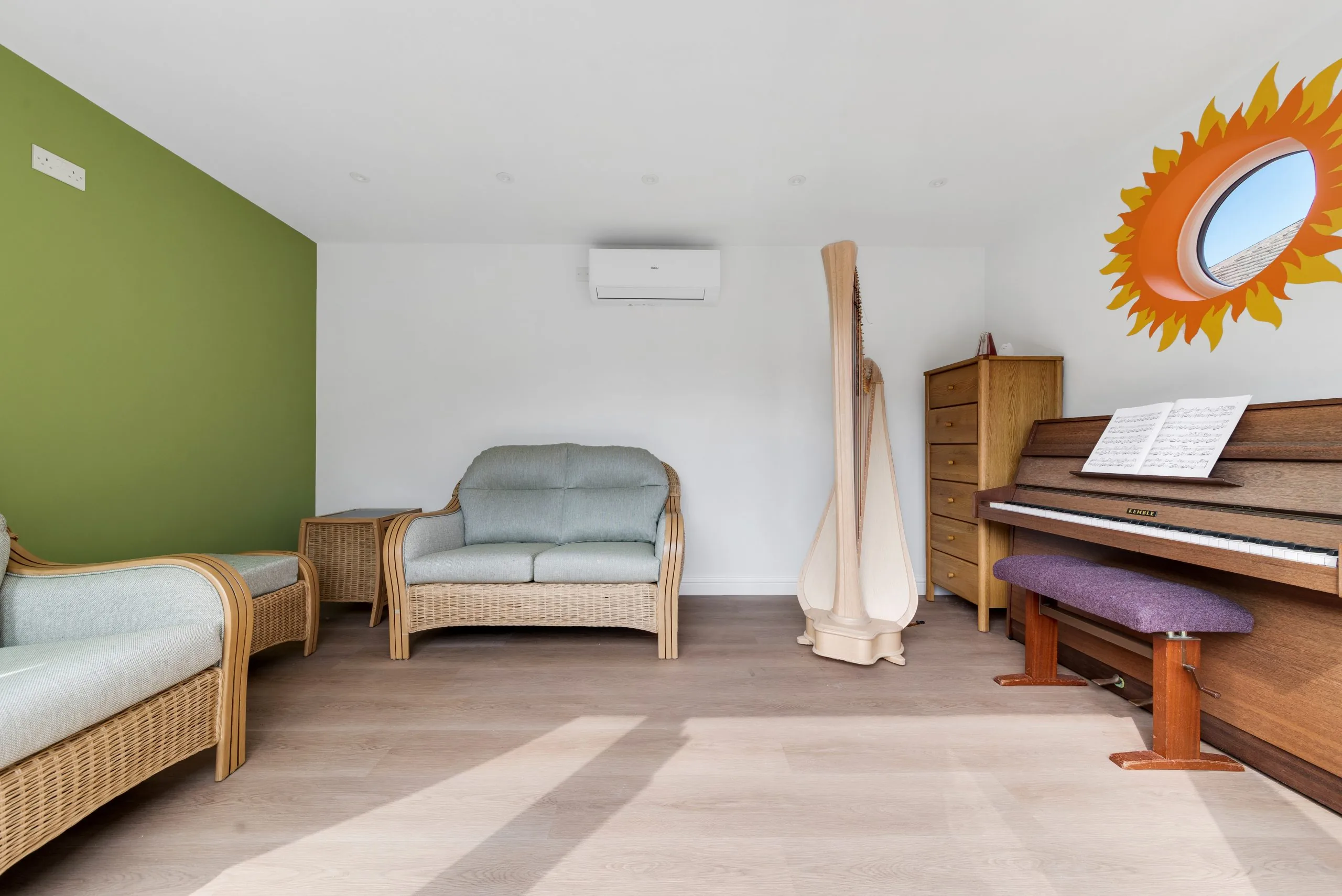
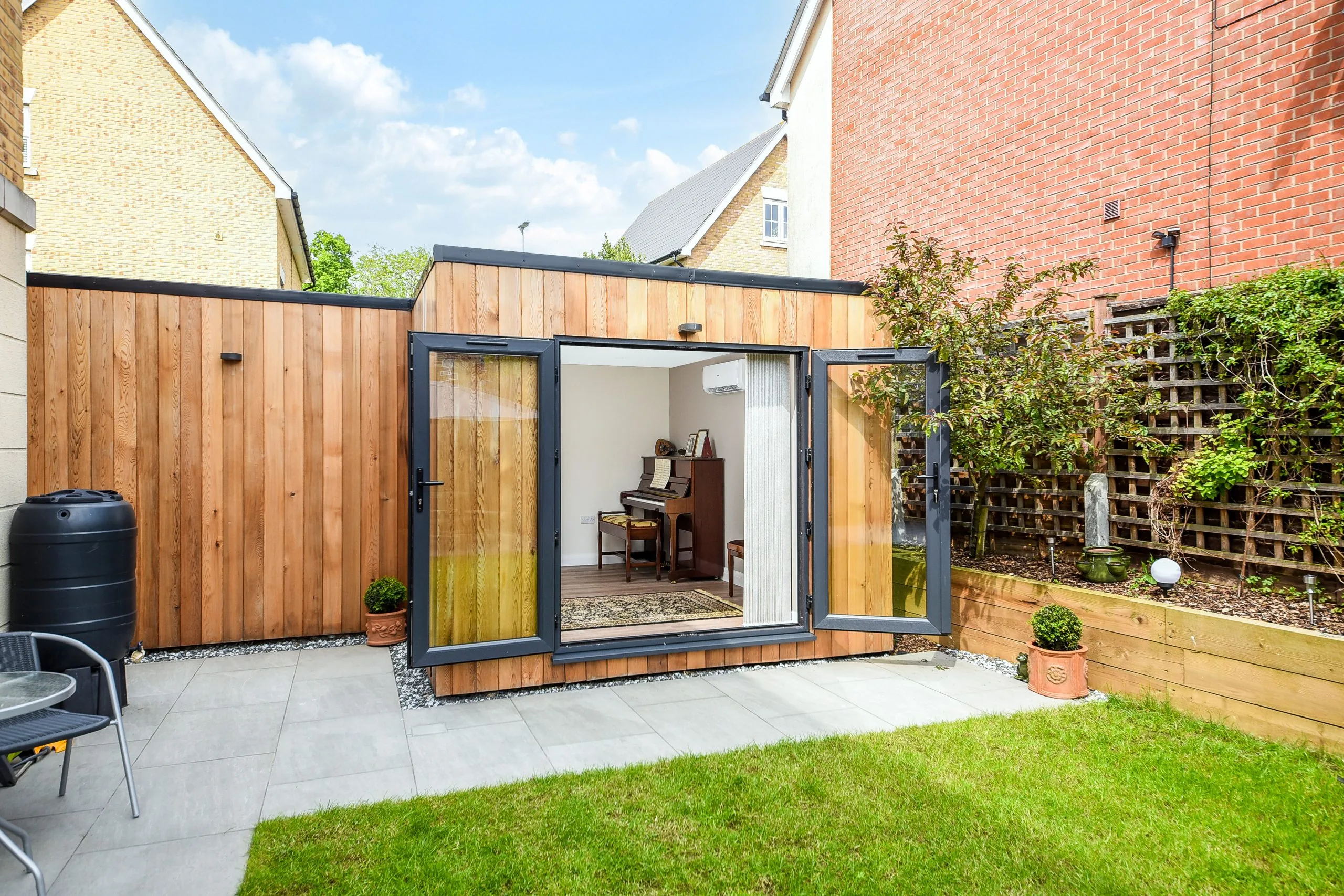
A rehearsal room at home needs to do far more than provide four walls and a power socket.
It has to feel comfortable for long sessions, stand up to drums, amps, keyboards, cases and footfall, give musicians room to move, and be planned with sound in mind from the beginning. For bands, ensembles, singers, producers, teachers or serious hobby players, a bespoke garden room can become the place where practice is easier to arrange, equipment stays set up, and creative momentum is not interrupted by packing everything away at the end of the evening.
The best rehearsal spaces are not simply “quiet rooms”. They are carefully considered environments where layout, construction, ventilation, storage, lighting and finishes all work together. A Hawksbeck garden rehearsal room can be designed around the way you actually rehearse: the number of people, the instruments you use, the volume you play at, how often you practise, and whether the space also needs to work as a recording room, teaching studio, writing room or occasional retreat.
Rehearsing at home often creates one of two problems: either the music takes over the house, or the house gets in the way of the music. Cables trail through living areas, drums are squeezed into spare bedrooms, amplifiers are carried up and down stairs, and sessions are limited by who else is at home.
A dedicated garden rehearsal room gives the music its own address.
Because the building is separate from the main house, it can be designed with a more practical, performance-led layout. You can include stronger flooring, wider access, acoustic upgrades, secure storage, climate control, generous power provision and a layout that is comfortable for a full band rather than adapted from a domestic room. It also means instruments and equipment can remain in position, so a 30-minute practice slot does not begin with 20 minutes of setup.
For many homeowners, this type of building also has wider appeal. It can begin life as a rehearsal room and later adapt into a music studio, office, gym, teen space, entertainment room or creative workshop. If you are still exploring different possibilities, our main guide to garden room ideas shows just how flexible a bespoke building can be.
A rehearsal room has to be planned around use, not just square metres. A solo guitarist or vocalist may need a compact, focused space with excellent internal acoustics and recording capability. A four-piece band needs circulation around a drum kit, amp positions, mic stands, pedalboards, monitors, seating, instrument stands and storage. An ensemble may need a more open layout, a clear central zone and softer acoustic treatment to prevent harsh reflections.
During the design stage, it is worth thinking through the details that make sessions easier:
This is where a bespoke garden building is especially valuable. Rather than choosing a standard room and trying to make music fit afterwards, the structure, openings, finishes and services can be shaped around the rehearsal environment from the start.
Inside and outSound is usually the biggest concern for a garden rehearsal room, but it is important to separate two related subjects: sound isolation and internal acoustics.
Sound isolation is about reducing how much sound leaves the building and how much exterior noise enters. This is especially relevant for drums, bass frequencies, amplified instruments and evening practice. Good isolation depends on the complete building design: wall and roof build-ups, glazing choices, door seals, floor construction, airtightness and ventilation strategy. Weak points matter. A beautifully insulated wall will not perform properly if the door, window or ventilation route allows sound to leak freely.
Internal acoustics are about how the room sounds to the people inside it. A bare, hard garden room can become lively, reflective and tiring, particularly with cymbals, vocals or brass. Acoustic treatment can help control reflections, flutter echo and excessive brightness. Depending on the use, this might include absorptive panels, bass trapping, rugs, curtains, acoustic wall finishes, or a balanced mixture of reflective and absorptive surfaces so the room still feels natural rather than dead.
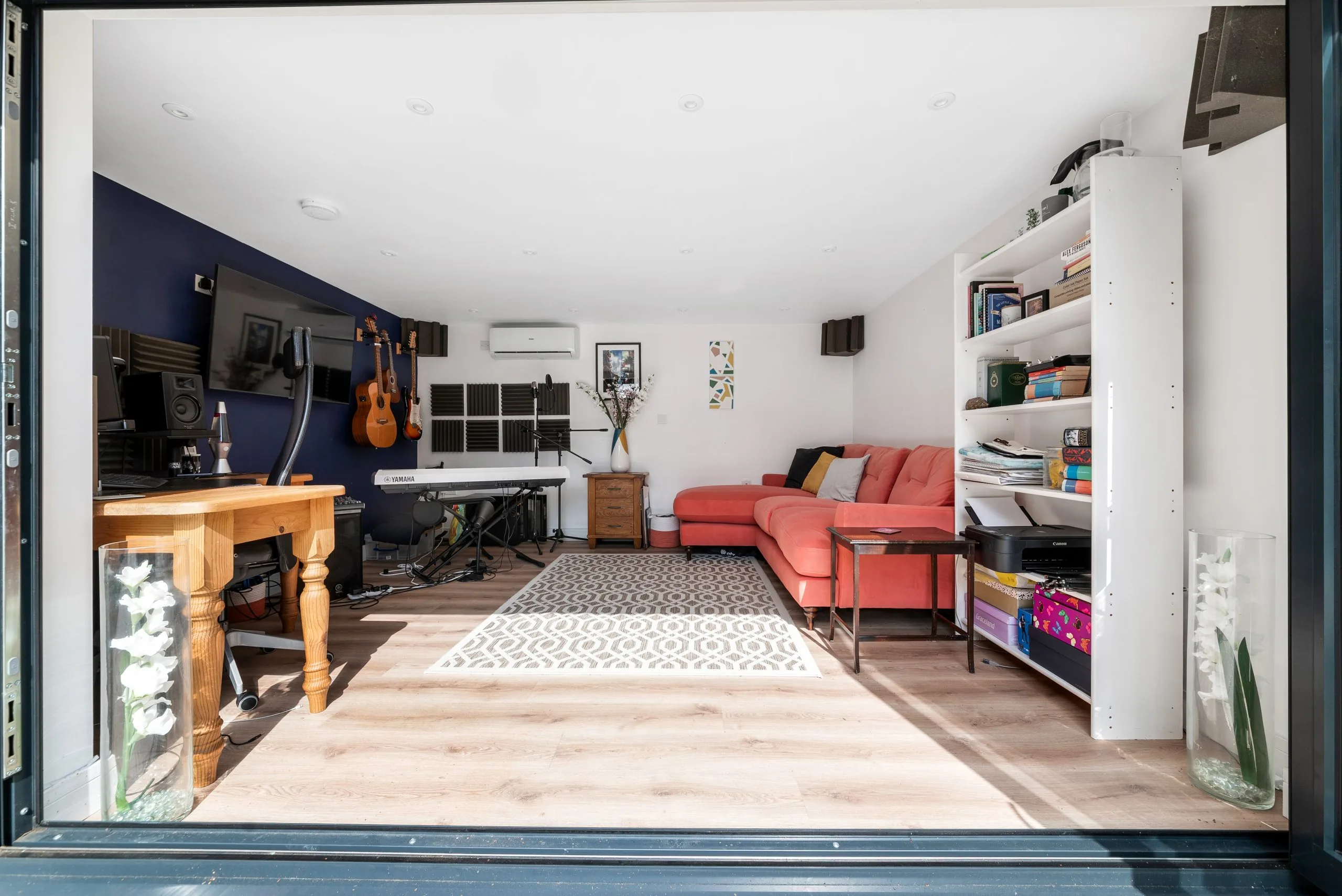
“Soundproof” is a word used often, but in practice it depends on the level of sound, the local environment and the construction specification. A singer-songwriter practising at moderate volume has very different requirements from a rock band with a live drum kit. Low frequencies from bass amps and kick drums are the hardest to control, because they travel through structure and air more easily than higher frequencies.
The sensible approach is to discuss expectations honestly at the start. If the room is for regular full-band rehearsal, the design should be more robust than a general hobby room. That may include upgraded wall and ceiling build-ups, careful door selection, limited glazing, acoustic seals, internal lining options and a ventilation solution that allows fresh air without simply creating a sound path. Hawksbeck can guide you through practical choices so the building is appropriate for how you intend to use it.
A rehearsal room floor has a hard life. Drum hardware, amp cabinets, keyboard stands, flight cases, mic stands and foot traffic can quickly expose weak domestic finishes. The floor also affects comfort and sound. Too hard and reflective, and the room may feel bright and fatiguing. Too soft, and heavy equipment becomes awkward to position.
Popular considerations for a garden rehearsal room include:
For some spaces, a practical hardwearing floor with loose rugs in playing areas gives a good balance. For others, especially drum-heavy setups, additional design measures may be recommended to improve comfort and reduce vibration transfer. The right specification depends on volume, equipment and how the room is used day to day.
A rehearsal room should allow people to hear each other, see each other and move without stepping over cables. This sounds simple, but many practice rooms fail because the layout is treated as an afterthought.
For a typical band rehearsal room, the drum kit often becomes the anchor point. Guitar and bass amps need sensible positions so players are not blasting directly into each other’s ears. Vocalists need space for a mic stand, music stand and monitor position. Keyboard players may need a fixed workstation or flexible setup area. If a recording desk or laptop station is included, it should be positioned where it is easy to reach but not vulnerable to knocks.
For strings, brass, choirs or small ensembles, the room may need a more open central arrangement with storage around the edges. Sightlines matter. So does lighting. A rehearsal space used for reading music needs different lighting from a moody creative studio used for writing and jamming.
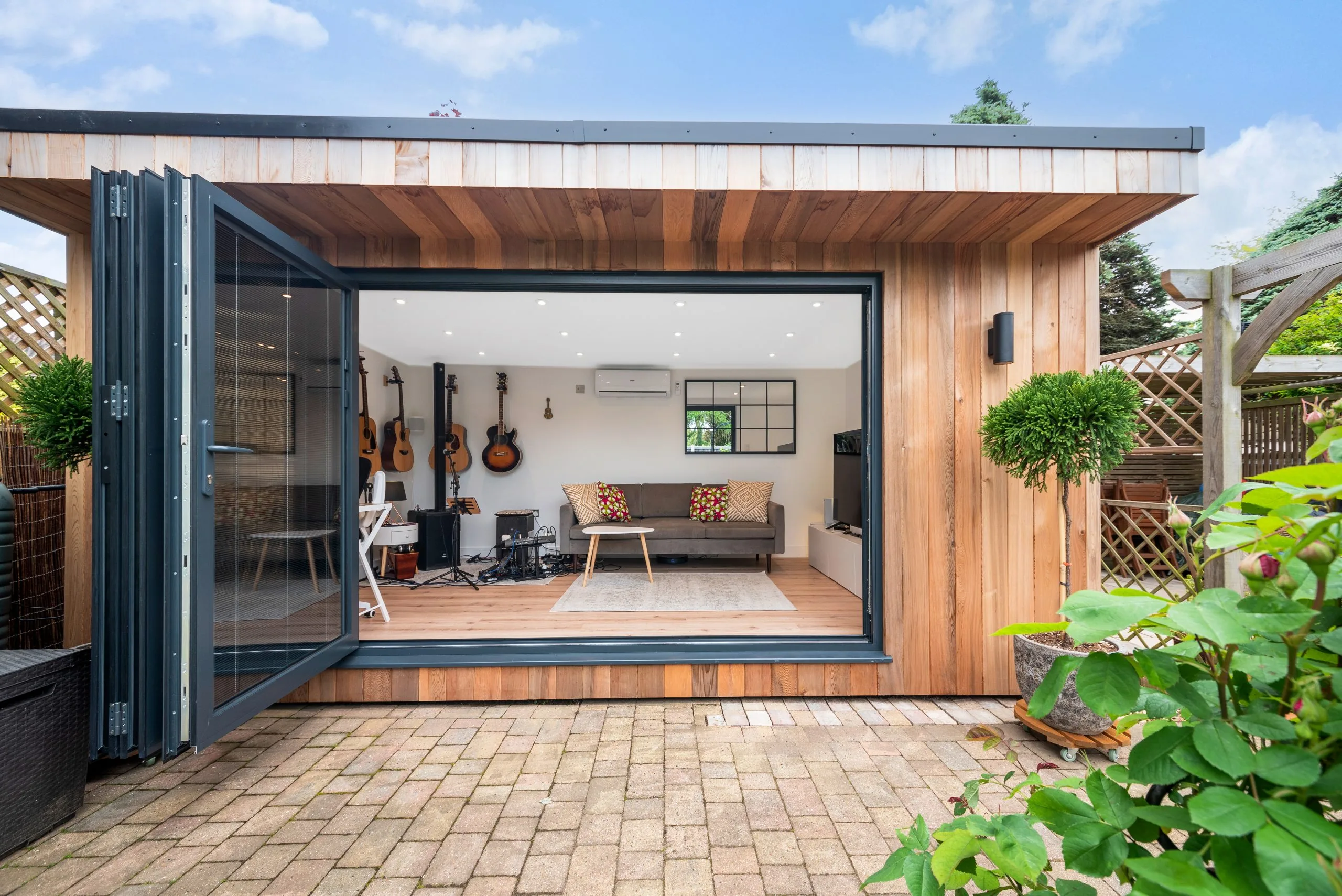
Musicians accumulate equipment. Even a simple rehearsal setup can involve cases, spare leads, stands, pedals, stools, tuners, microphones, sheet music, maintenance tools, percussion, extension cables and cleaning supplies. Without storage, a beautiful rehearsal room can quickly become difficult to use.
Built-in cupboards, high-level shelving, bench storage, wall-mounted guitar racks and dedicated case zones can all be incorporated into the design. If the room will be shared by several musicians or used for teaching, storage becomes even more important. Secure, organised storage keeps the room looking calm and professional while protecting valuable equipment.
Power planning is one of the most practical parts of a garden rehearsal room. Too few sockets will lead to extension leads, trailing cables and compromised layouts. A well-planned electrical design supports the room properly from day one.
Depending on the setup, you may want sockets for amplifiers, pedalboards, keyboards, a PA system, powered monitors, laptop charging, recording equipment, lighting, heating, Wi-Fi boosters and general use. It is often worth placing sockets around the room rather than concentrating them in one corner. Data cabling or strong Wi-Fi provision may also be useful if you stream, teach online, collaborate remotely or run recording software that needs reliable connectivity.
Lighting should be flexible. Bright, even lighting is useful for setup, cleaning and reading music. Softer lighting can make writing sessions and evening rehearsals feel more relaxed. Exterior lighting along the access route is also worth considering, particularly if the building will be used after dark.
A rehearsal room can heat up quickly. Several people, amps, active speakers, computers and closed doors can make the space uncomfortable if temperature and ventilation are not properly considered. This is especially important in a sound-conscious building, because simply opening windows may undermine the acoustic performance you wanted in the first place.
Year-round comfort may include insulation, efficient heating, cooling options and planned ventilation. The aim is to create a space where musicians can practise for longer without the room becoming stuffy, cold or distracting. For vocalists and wind players, air quality and comfort are especially important. For instruments, a stable environment is also beneficial, helping to avoid extremes of temperature and humidity.
The cost of a garden rehearsal room depends on size, specification, acoustic requirements, access, ground conditions, glazing, finishes, electrical design and any additional features such as storage, climate control or recording capability. Because a rehearsal room often needs a more robust specification than a simple garden office, it is sensible to allow for upgrades if you are planning regular band practice or amplified music.
As a broad guide, a high-quality Hawksbeck garden room suitable for creative use may commonly begin from the lower tens of thousands, with many bespoke rehearsal rooms and music-focused buildings sitting somewhere in the region of £35,000 to £80,000+. Larger buildings, premium finishes, more complex layouts and enhanced acoustic specifications can increase the budget significantly. A compact solo practice room or writing space may cost less than a full band rehearsal room with heavier-duty acoustic design, extensive electrics and equipment storage.
The most accurate way to price a rehearsal room is to discuss the intended use in detail. A room for piano practice, vocals and songwriting is not the same as a room for drums, bass and amplified guitars. Hawksbeck can help you understand where to invest, where to keep the design simple, and which features will make the biggest difference to how the space performs.
Many garden rooms can be built under permitted development, but this is not something to assume automatically. Size, height, location within the garden, proximity to boundaries, intended use and property-specific restrictions can all affect what is possible. Listed buildings, conservation areas and unusual plots may require additional checks.
For rehearsal rooms, neighbour consideration is particularly important. Even where planning permission is not required, a responsible design can help avoid future issues. This might mean positioning the building thoughtfully, limiting large areas of glazing facing neighbouring properties, choosing suitable acoustic upgrades, adding planting or screening, and being realistic about rehearsal times and volume levels.
A premium bespoke approach is valuable here because the building can be designed in response to the site, rather than treated as a generic box placed at the end of the garden.
Some clients know they want a straightforward practice space. Others want a building that blends several creative uses. A bespoke garden room can be designed to sit between these categories, giving you a rehearsal room that also works as a recording space, composition room, teaching studio, podcast room or relaxing listening space.
If you want the building to serve several roles, the layout should be planned carefully. A room that tries to do everything without structure can become cluttered. A room designed with zones can feel effortless. For example, one end might be used for drums and amps, while another includes a desk, audio interface, monitors and storage. Sliding or built-in storage can hide equipment when the room is used for listening, meetings or quiet work.
This flexibility is often where a bespoke Hawksbeck building offers long-term value. The space can suit your musical life now while remaining adaptable if your needs change.
If you are planning a garden rehearsal room, it helps to prepare a clear brief before discussing the design. You do not need all the answers, but the following details will make the early conversation more productive:
With this information, the building can be designed as a practical musical environment rather than a general room that later needs compromise.
A rehearsal room should be durable, but it should also be a place you enjoy spending time in. Premium finishes can lift the whole experience: carefully chosen cladding, elegant glazing, warm interior materials, considered lighting, integrated storage and a calm approach to detailing. The result can feel more like a private creative retreat than a converted outbuilding.
Small details make a noticeable difference. A covered entrance helps when carrying equipment in poor weather. External sockets can support outdoor events or maintenance. Discreet security features protect instruments and audio equipment. Acoustic panels can be designed as part of the interior rather than added as an afterthought. Even the position of windows can change the feel of a rehearsal, adding natural light without creating glare or compromising wall space.
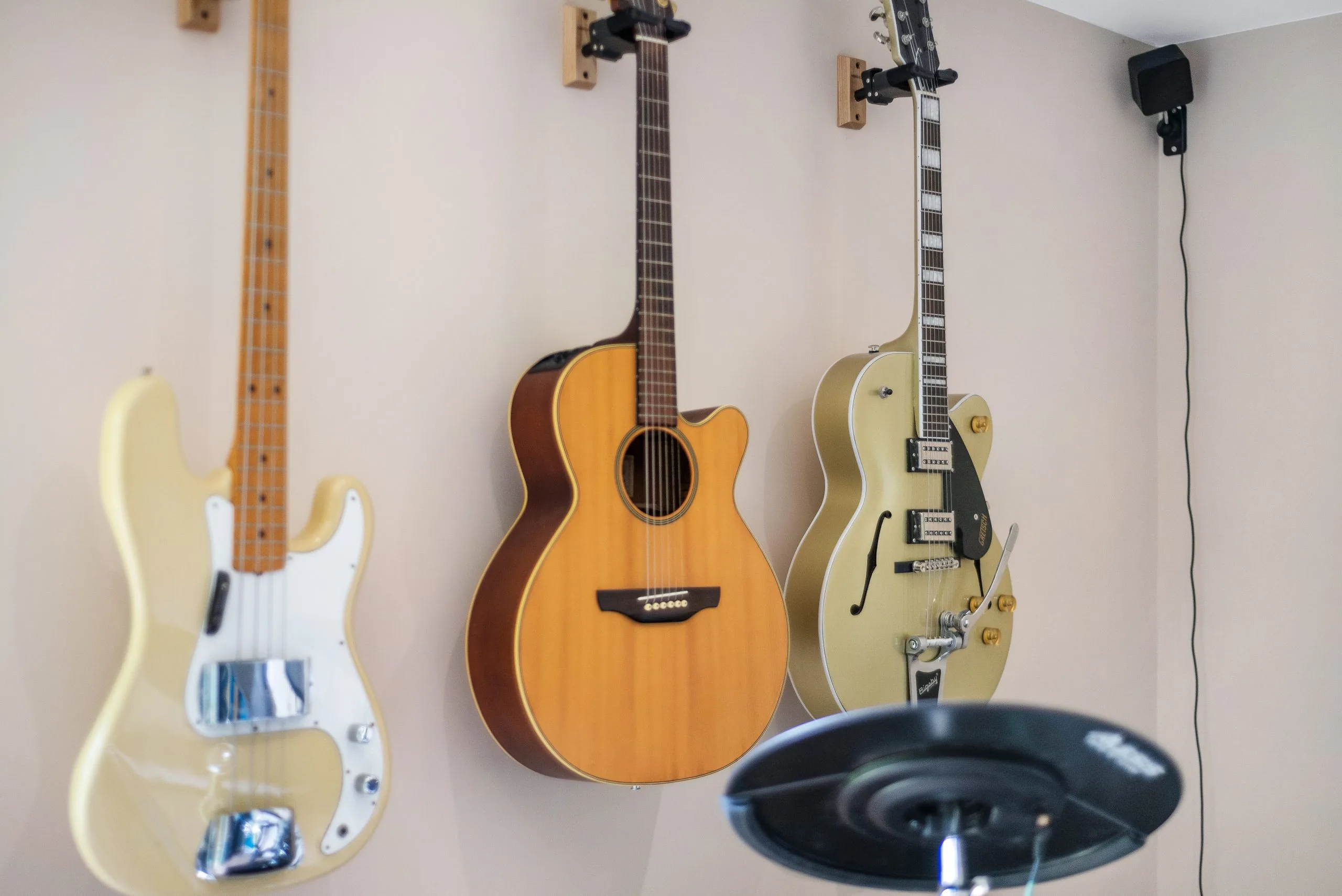
A garden rehearsal room is worth considering if music is a regular part of your life and your current setup is limiting how often or how comfortably you practise. It can reduce setup time, protect equipment, create distance from the main house and give rehearsals a more professional feel. For families, it can also help separate noisy creative time from everyday home life.
It is particularly well suited to:
The strongest rehearsal rooms are designed around the details: the instruments, the people, the volume, the storage, the acoustics and the atmosphere you want to create. Hawksbeck designs and builds premium bespoke garden rooms that can be tailored to music, rehearsal and creative use, with the quality of finish expected from a luxury garden building.
If you are considering a garden rehearsal room, the next step is to talk through how you want the space to work. From there, the size, specification, layout and budget can be shaped around your music rather than forced into a standard design.
A room where the kit stays set up, the amps stay where they belong and the next rehearsal starts the moment you walk in. Let’s talk about yours.
Yes, a garden room can be designed for band practice, but it should be specified properly. Full-band rehearsal usually requires more attention to sound isolation, flooring, ventilation, power and storage than a standard garden room. The design should reflect the instruments, volume and number of people using the space.
Some sound may still be noticeable depending on the volume, specification and site. However, a sound-conscious design can significantly reduce sound escape compared with an untreated room. The most effective approach is to consider acoustic performance from the beginning, including walls, roof, floor, doors, glazing, seals and ventilation.
Yes. Many rehearsal rooms can also include recording features such as workstation space, additional sockets, data cabling, acoustic treatment, monitor positions and storage for microphones or interfaces. If recording quality is a priority, this should be included in the brief early.
The right size depends on use. A solo practice room can be relatively compact, while a band room needs enough space for a drum kit, amps, stands, musicians and circulation. It is usually better to plan the layout around the equipment first, then decide the building size.
With the right insulation, heating, ventilation and security, a garden room can provide a comfortable year-round environment for many instruments and items of equipment. Sensitive instruments may require additional humidity and temperature consideration, especially if they are valuable or delicate.
Three garden buildings designed for making music, each with the comfort and finish a rehearsal room should share.
A beautifully considered garden music room showing how a bespoke building can create a comfortable, creative and practical space away from the main home.
View project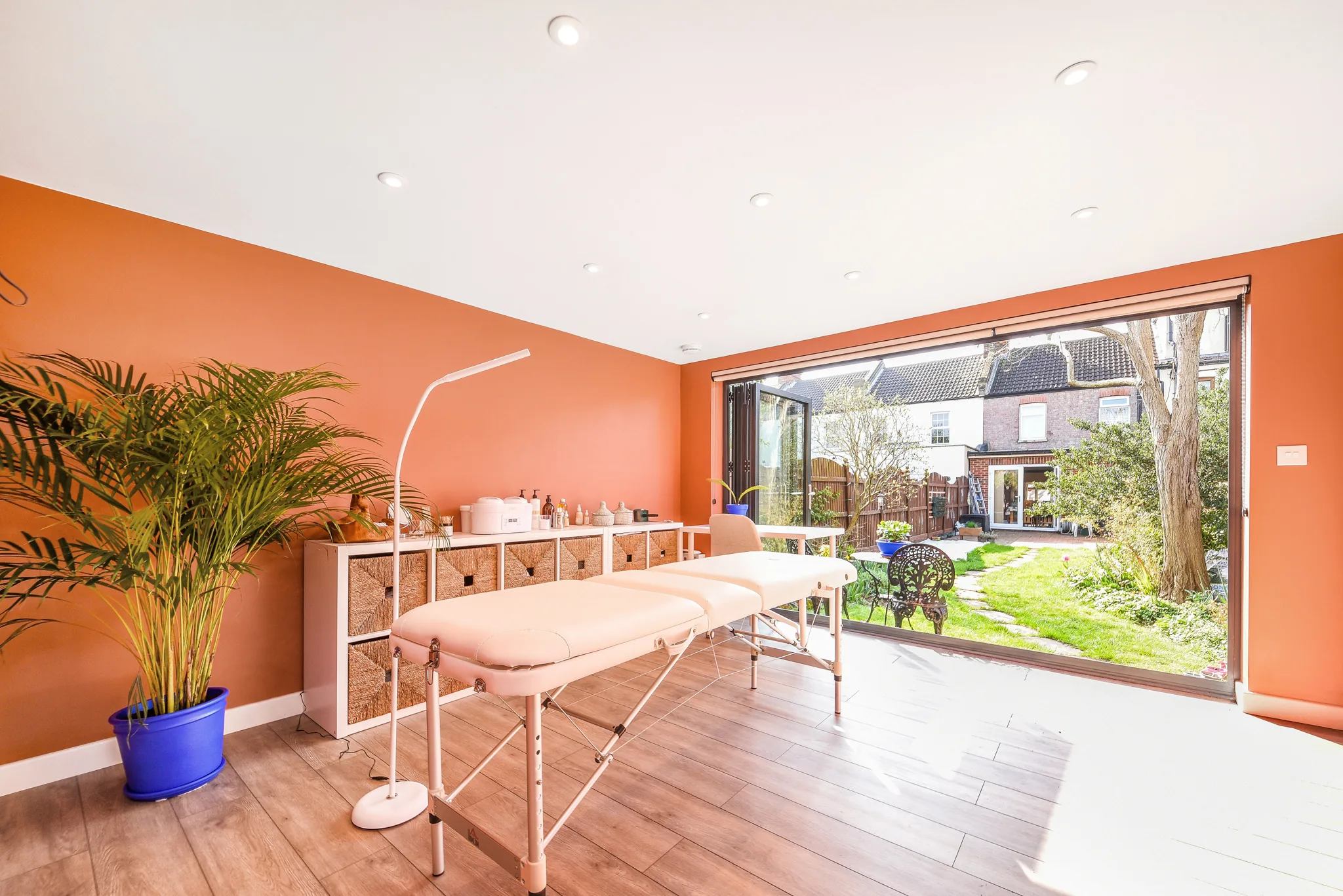
This Colchester project demonstrates the value of a dedicated music space designed with quality, comfort and long-term usability in mind.
View project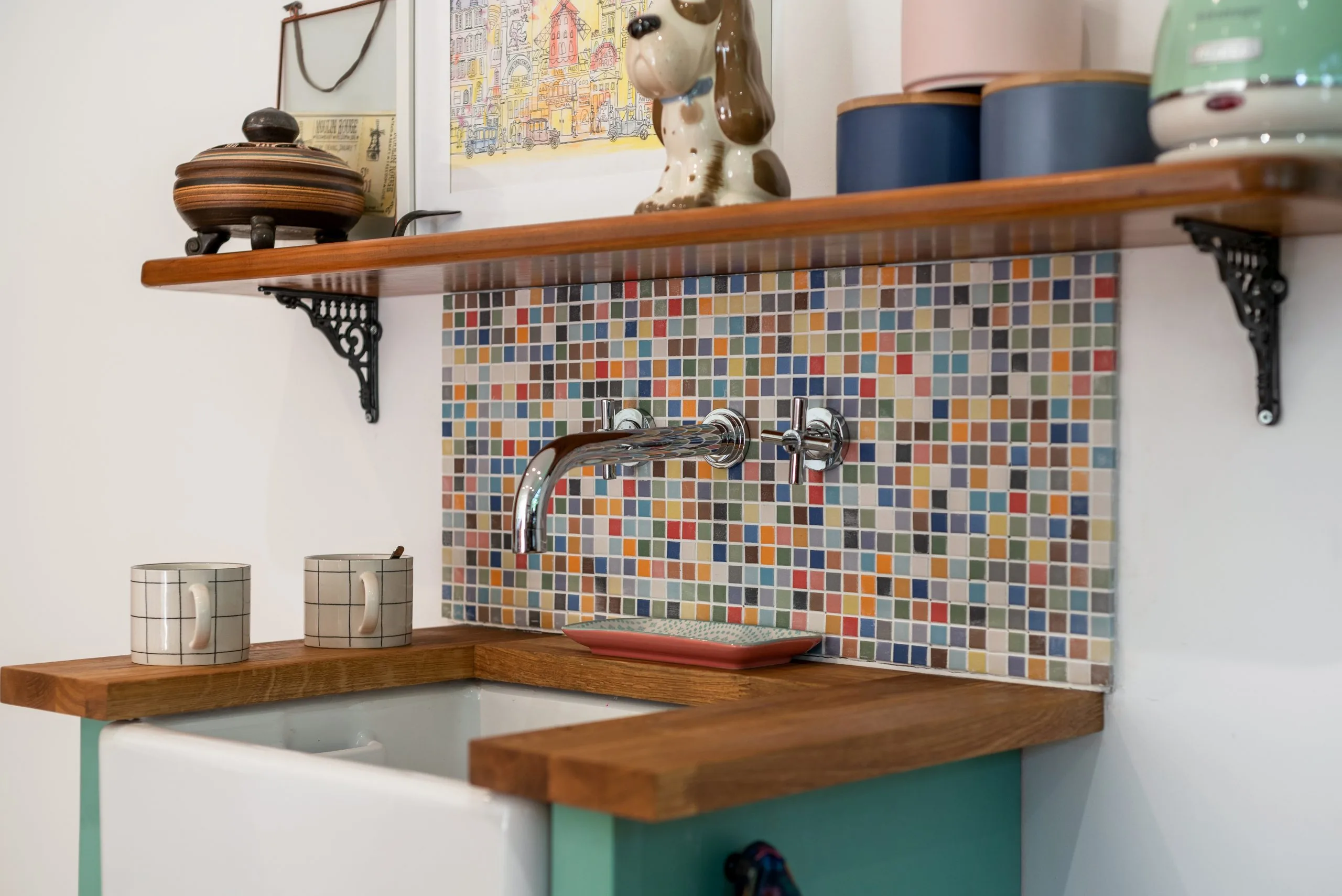
A dedicated garden music studio highlighting how a bespoke Hawksbeck building can support rehearsal, creativity and focused music-making at home.
View project