
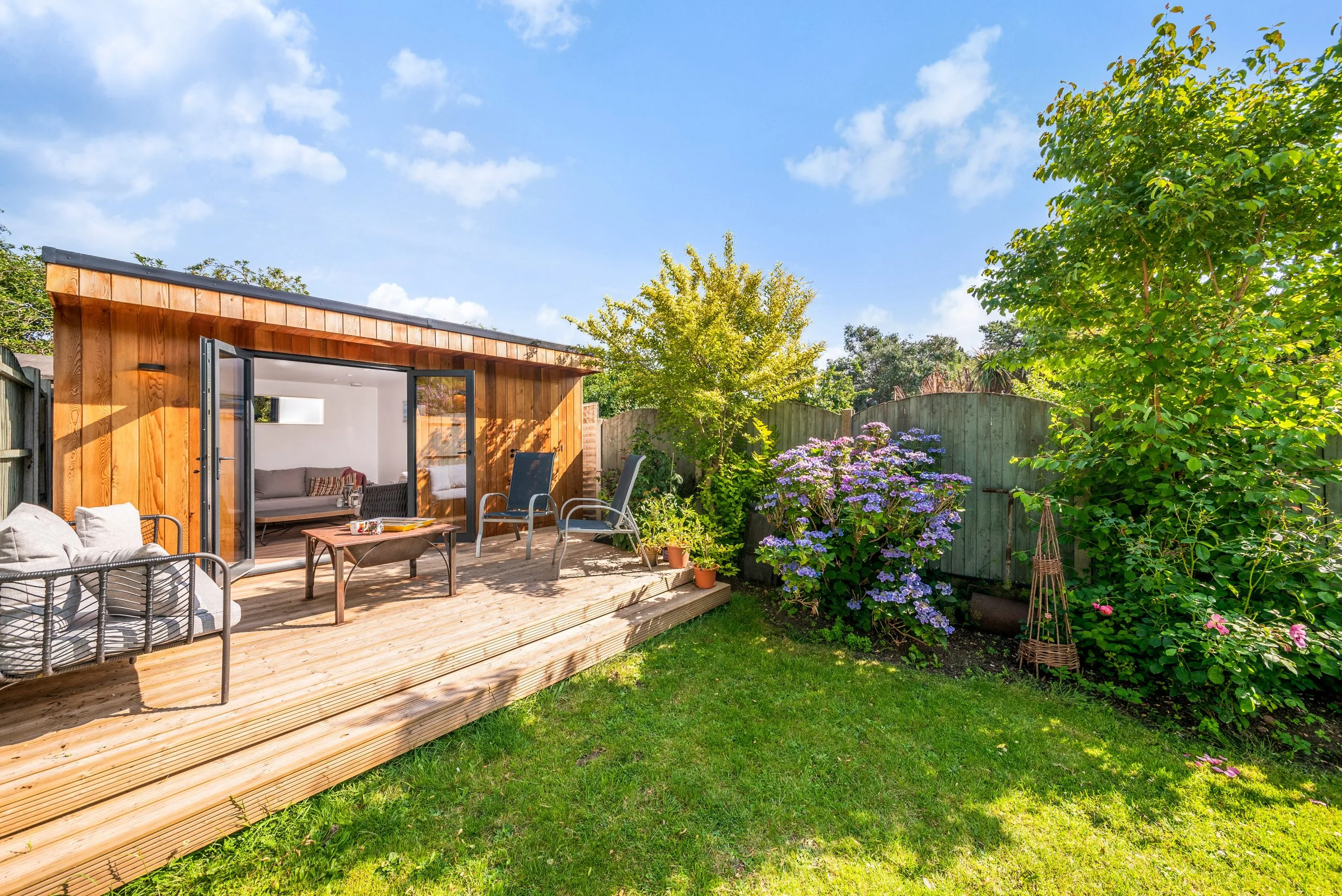
Luxury Garden Studio Room
A refined bespoke garden studio showing how a premium finish, carefully considered glazing and a calm interior can create a beautiful space for focused creative work at home.
View project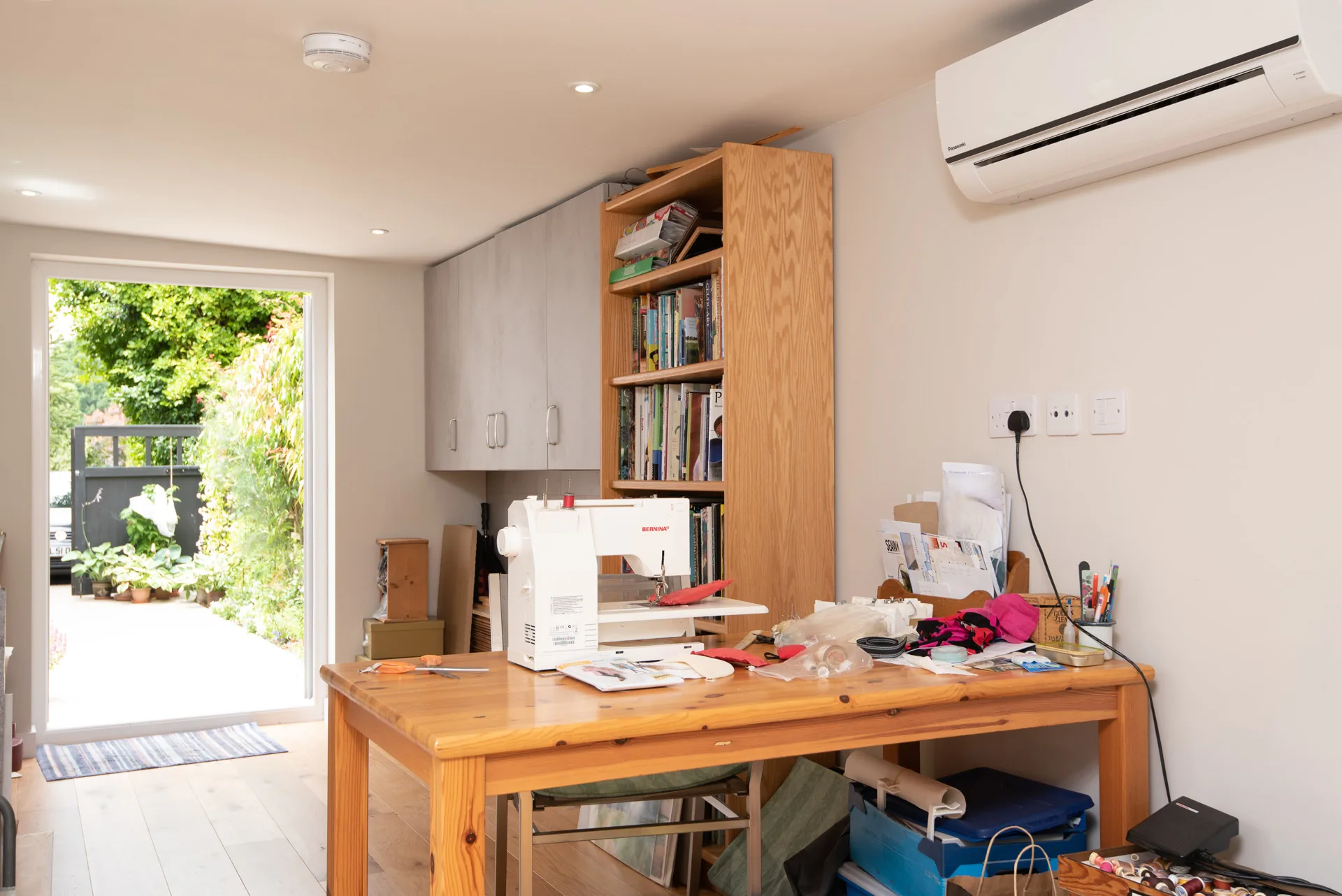
A textile studio has to work harder than a standard hobby room. It needs beautiful natural light for colour matching, enough clear floor space to roll out patterns, stable warmth for delicate fabrics, storage that stops materials taking over, and a layout that lets you move from cutting to stitching to pressing without constantly clearing a dining table.
A bespoke garden room can give sewing, quilting, dressmaking, upholstery, embroidery or textile art a permanent, purpose-designed home just a few steps from the house.
For serious makers, a garden sewing studio is not simply “a spare room in the garden”. It is a bright, organised, insulated workspace where machines can stay set up, fabric can be stored properly, and projects can be paused mid-flow without being packed away at the end of the day. Hawksbeck design and build premium bespoke garden rooms, so the proportions, glazing, electrics, lighting, storage and finish can all be shaped around the way you actually sew, teach, sell or create.
Textile work is uniquely space-hungry. A sewing machine does not need a huge footprint on its own, but fabric, cutting mats, ironing boards, books, thread racks, mannequins, yarn, wadding, boxes, trims, overlockers, embroidery machines and works-in-progress quickly overwhelm a normal room.
The value of a dedicated studio is that every process has its own place.
A well-planned garden sewing studio can give you:
If you are exploring wider options before refining your brief, our main guide to garden room ideas includes many beautiful and practical ways to use a bespoke garden room.
Cut, stitch, pressThe best textile studios are designed around movement. You might start by measuring and cutting fabric, move to pinning, sewing, pressing, fitting, finishing, photographing, packaging or teaching. If those stages are treated as a workflow rather than a collection of furniture, the room feels calm, efficient and enjoyable to use.
For many sewing studios, the cutting table is the single most important item in the room. It needs generous clearance around the edges, good light across the whole surface and enough strength to handle fabric rolls, cutting mats and pattern weights.
Popular cutting table considerations include:
One of the biggest advantages of a garden sewing room is not having to pack machines away. A bespoke design can allow for a main sewing machine desk, overlocker station, embroidery machine space and pressing area to remain ready whenever inspiration arrives.
Machine stations should be planned with plenty of sockets, cable management, excellent lighting and comfortable seating positions. If you use heavy equipment, deeper worktops and reinforced surfaces may be sensible. For embroidery machines, allow space for the hoop movement and avoid squeezing the machine against a wall where the carriage cannot operate freely.
A bright open studio is beautiful, but it still needs structure. For a textile and sewing garden room, we will often discuss zones such as:
With a large table, ruler storage and pin board.
With ergonomic seating, task lights and multiple sockets.
With space for an ironing board, steam generator, sleeve board or heat press.
With shelving, drawers, cupboards or vertical roll storage.
For mood boards, samples, sketchbooks and finished work.
If you run fittings, workshops or private lessons.
This kind of zoning does not always require walls. It can be achieved through furniture placement, lighting circuits, built-in storage, sliding doors, glazing positions and careful proportions.
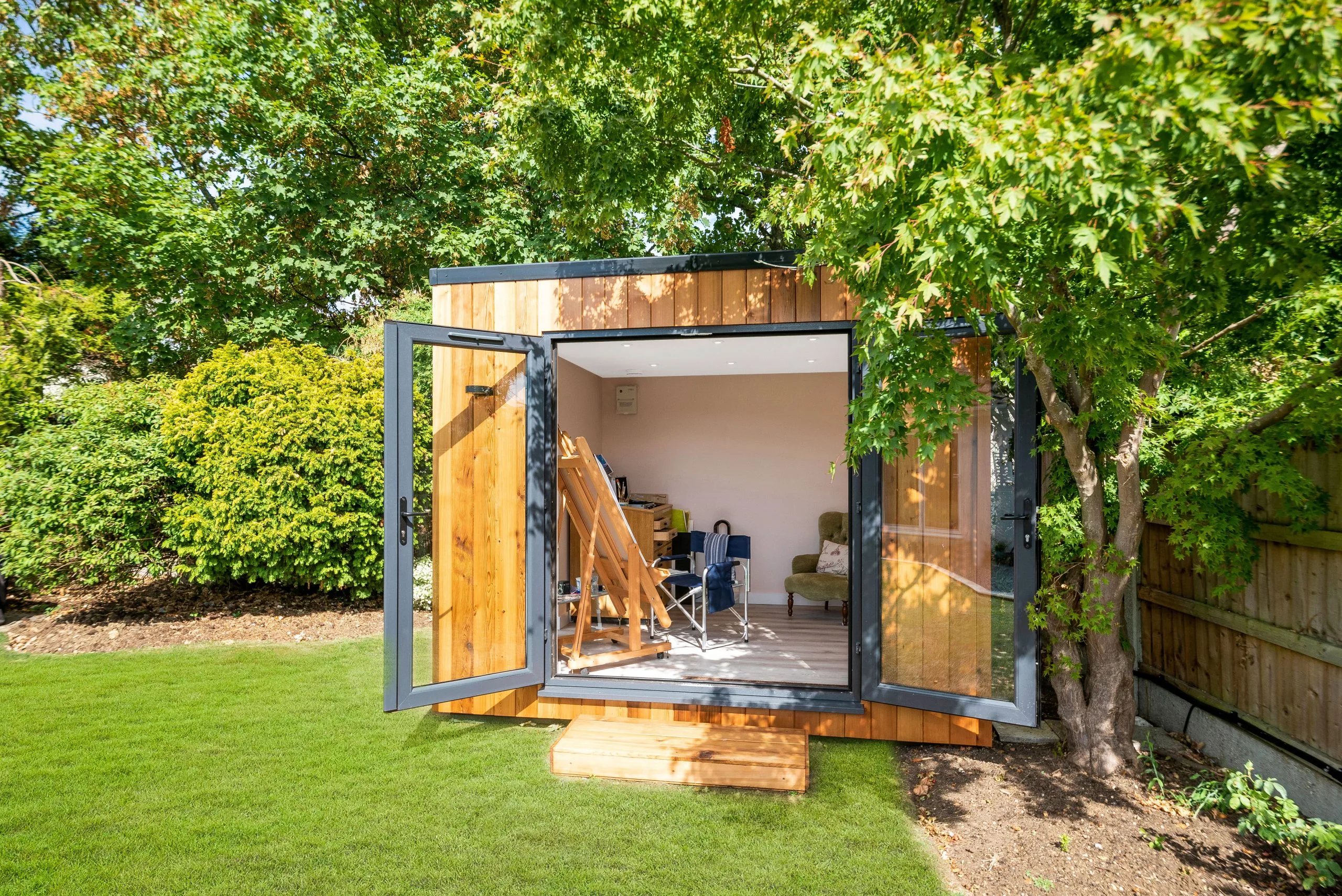
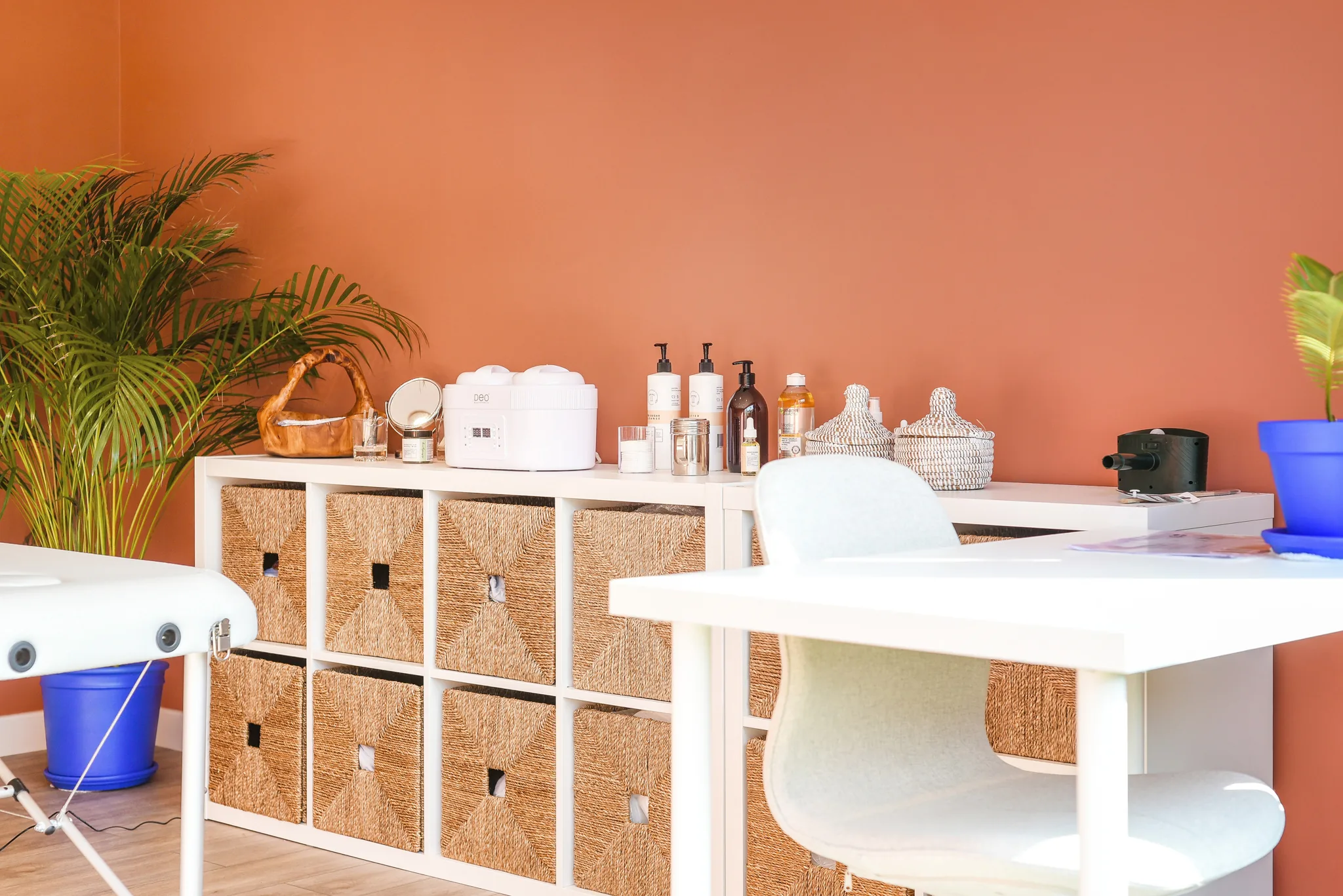
Light is a serious design issue in a textile studio. You may need to distinguish navy from black thread, match lining to fabric, check dye lots, trim fine details or photograph finished pieces. Large glazing can make the space feel inspiring, but it should be balanced with control and comfort.
Key lighting questions include:
For many studios, the ideal is a combination of generous daylight, controllable glare and layered artificial lighting. Ceiling lights provide overall brightness, task lights handle precision work, and softer feature lighting keeps the studio inviting when you are planning, sketching or meeting clients.
Textile storage must be easy to access, but also protective. Fabric can fade, crease, absorb odours or become difficult to find if it is poorly stored. A bespoke garden building gives you the chance to plan storage from the beginning, rather than trying to retrofit cupboards later.
Different makers need very different storage. A quilter may want visible folded fat quarters and deep drawers for wadding. A dressmaker may need hanging space for garments and shelves for folded lengths. An upholsterer or curtain maker may need vertical storage for rolls. A textile artist might need drawers for dyes, threads, fibres, trimmings, papers and mixed media materials.
Useful fabric storage options include:
Small items cause the most clutter. Thread, bobbins, needles, presser feet, rotary cutters, pins, chalk, clips and rulers all need obvious homes. Wall-mounted pegboards, shallow drawers, drawer inserts, magnetic strips and labelled compartments can make the studio quicker to use and easier to reset at the end of each session.
A sewing studio should feel comfortable in January as well as July. If the room is too cold, you will avoid using it. If it overheats, delicate fabrics, adhesives, threads and machines may not be at their best. Hawksbeck garden rooms are designed for year-round use, which is especially important for makers who want a reliable workspace rather than a fair-weather shed.
For a textile studio, we would typically consider:
If you use steam pressing equipment, dyes, textile paints, spray adhesives or heat presses, ventilation becomes even more important. These details should be raised at the design stage so your studio is not only beautiful, but genuinely practical for the work you do.
A textile studio usually needs more sockets than people expect. Machines, irons, lamps, chargers, laptop, printer, heat press, photography lights, speakers, dehumidifier and cutting machines can all compete for power. Extension leads are rarely the best long-term answer in a high-quality workspace.
Think about sockets for:
Socket positions should follow the furniture plan rather than being added generically. For example, sockets at cutting table height can be useful for task lighting or digital tools, while floor sockets may suit a central worktable. If the space will be used for workshops, additional sockets and charging points may make the room far more flexible.
See how a Hawksbeck building takes shape, then picture where your cutting table, machines and fabric shelves would sit inside it.
If your sewing studio is more than a personal hobby space, the design needs to reflect how clients or students will experience it. A premium garden building can create a professional setting for fittings, consultations, private tuition, small group workshops, textile art practice or online content creation.
For a client-facing textile studio, you may want to include:
If you teach, the room may need a different layout altogether. Multiple students need enough space to move safely, good visibility, additional sockets, shared cutting surfaces and storage for class materials. A bespoke approach lets the room serve your business model, not the other way around.
Tell us how clients and students will arrive, sit and be fitted, and we can plan the studio around that visit as well as your own making.
A sewing room floor has to cope with threads, pins, fabric dust, chair wheels and frequent cleaning. Carpet can feel warm, but it may not be the most practical option if pins disappear into the pile or threads cling to the surface. A smooth, durable floor is often better for a working studio.
Good finish choices may include:
The finish does not have to feel clinical. Warm exterior materials, refined interior detailing, considered lighting and premium craftsmanship can create a studio that feels both hardworking and luxurious.
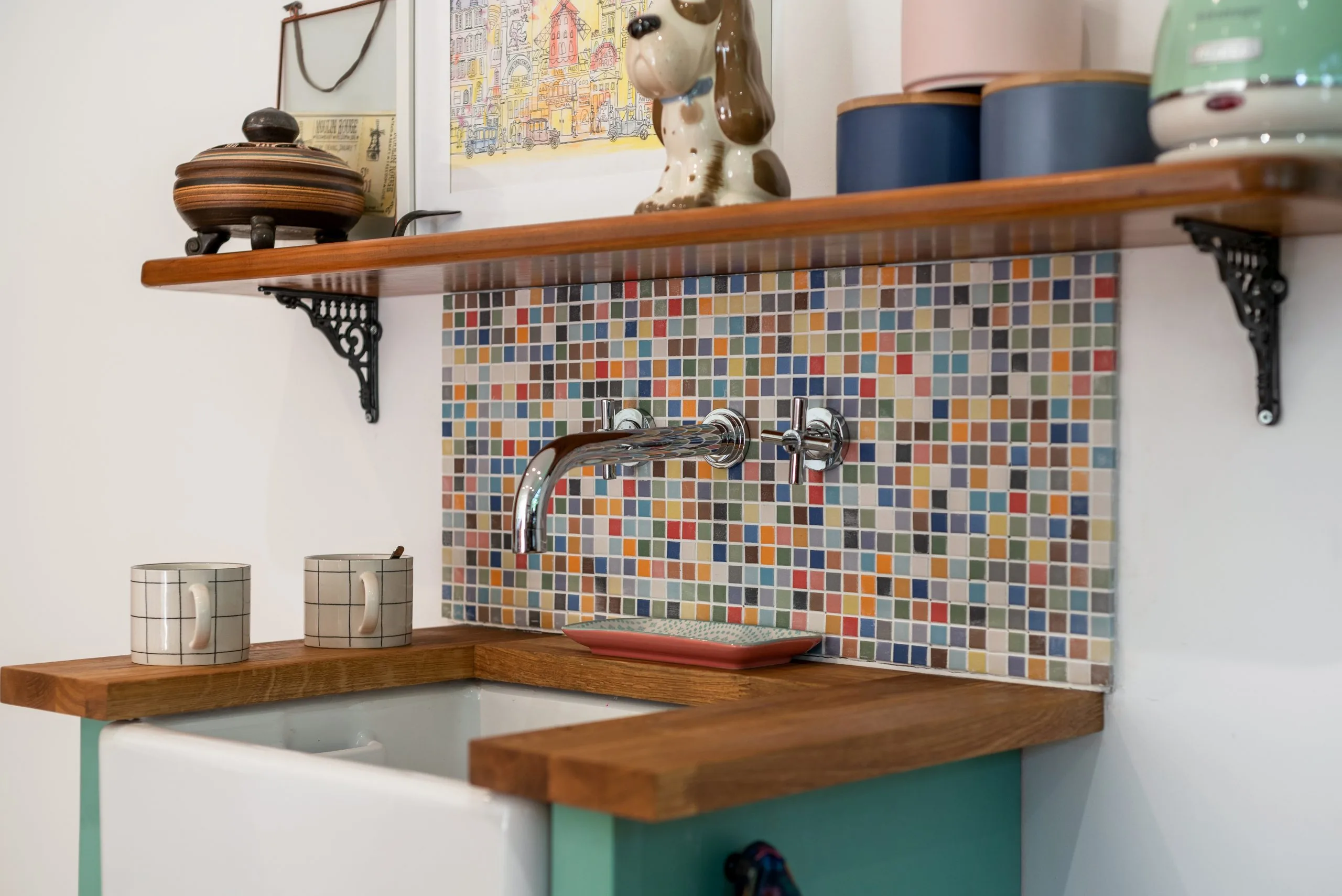
The right size depends on the kind of textile work you do and whether the studio is purely personal or business-focused. A compact maker’s studio can work beautifully if the layout is tight and storage is well planned. A professional sewing, quilting or teaching studio usually benefits from more generous proportions.
| Studio type | Typical use | Planning notes |
|---|---|---|
| Compact sewing studio | One machine station, small cutting table, personal craft storage. | Ideal for hobby sewing, alterations, embroidery or occasional making. |
| Dedicated maker’s studio | Large cutting table, multiple machines, fabric storage and pressing zone. | A strong choice for dressmakers, quilters, textile artists and serious hobbyists. |
| Professional textile studio | Client fittings, workshops, teaching, stock storage, admin and display. | Needs more attention to visitor flow, presentation, storage and electrics. |
| Large multi-use creative building | Textiles plus office, photography, art, showroom or relaxation space. | Best for businesses or households wanting a premium flexible garden building. |
As a simple starting point, list your non-negotiable items first: cutting table size, number of machines, pressing setup, storage volume and whether clients or students need to enter the space. Those details will usually reveal the minimum practical footprint.
A premium textile and sewing garden room is a significant investment, particularly when it is built for year-round comfort, with quality materials, insulation, glazing, electrics and a bespoke internal layout. Pricing depends on size, specification, ground conditions, access, finishes, service connections and any specialist requirements such as enhanced lighting, extra sockets, fitted storage or client-facing features.
As a broad guide, many bespoke garden sewing studios fall into these types of budgets:
For many clients, a realistic starting conversation for a quality bespoke sewing studio is somewhere from around £30,000 to £50,000+, with larger or more highly specified buildings potentially rising considerably beyond that. This is only a guide. The most accurate way to price your studio is to discuss the size of building, how you will use it, the finish you want and the level of practical detail required inside.
It is also worth thinking about value beyond the building itself. A dedicated studio can free up space inside the house, make your creative time more productive, support a home-based business and give you a beautiful environment that encourages you to make more often.
The difference between a pleasant room and a truly excellent sewing studio is often found in the details. These are the choices that reduce friction every time you work.
Before committing to a layout, it helps to answer a few practical questions. They will make your brief clearer and help us design a garden room that feels tailored rather than generic.
A textile and sewing studio should feel personal because no two makers work in exactly the same way. One person may need a serene dressmaking studio with fitting space and beautiful cabinetry. Another may need a lively teaching room with flexible tables and robust storage. Someone else may want a refined garden building that combines sewing, illustration, photography and a quiet place to think.
Hawksbeck’s bespoke approach means your garden room can be shaped around your craft from the start: the light, the flow, the storage, the socket positions, the finishes and the way the room sits within your garden. If you want a bright craft studio with a large cutting table, practical machine stations, fabric storage and carefully planned task lighting, a premium garden room can give your creativity a permanent home.
It depends on the kind of textile work you do and whether clients or students will use the room. Listing your cutting table size, number of machines, pressing setup and storage volume will usually reveal the minimum practical footprint.
A realistic starting conversation for a quality bespoke sewing studio is from around £30,000 to £50,000+, with larger or more highly specified buildings rising beyond that. Size, finish and the practical detail inside all affect the final figure.
Generous daylight with controllable glare, backed by layered artificial lighting: task lights over the machines, cutting table and pressing area, ideally with good colour rendering for accurate fabric matching.
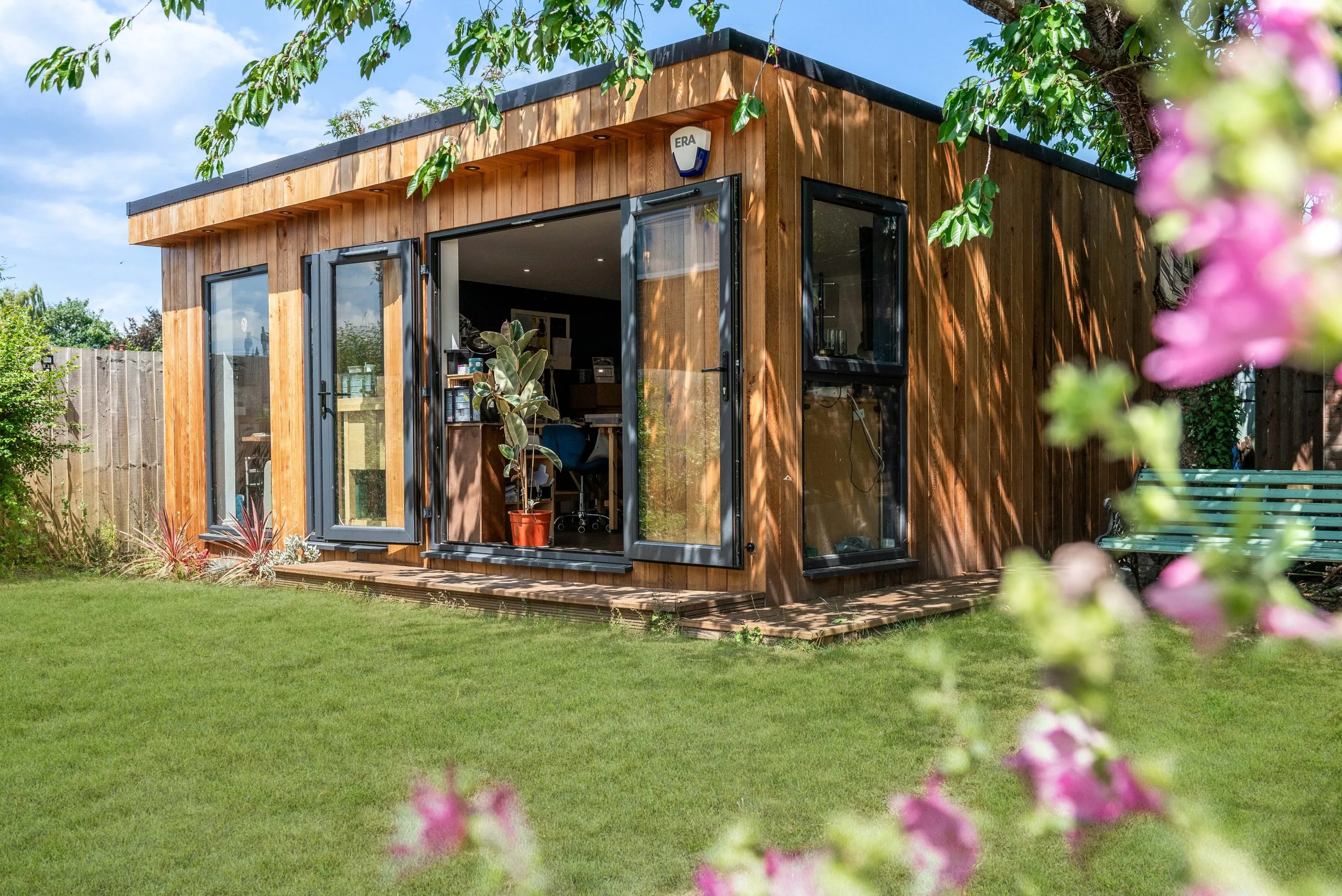
Bring your cutting table size, machine list and a rough idea of your fabric stash, and we will start shaping a studio around them.
None of these was built purely as a sewing room, but each shows the light, calm and year-round comfort a textile studio depends on.
A refined bespoke garden studio showing how a premium finish, carefully considered glazing and a calm interior can create a beautiful space for focused creative work at home.
View project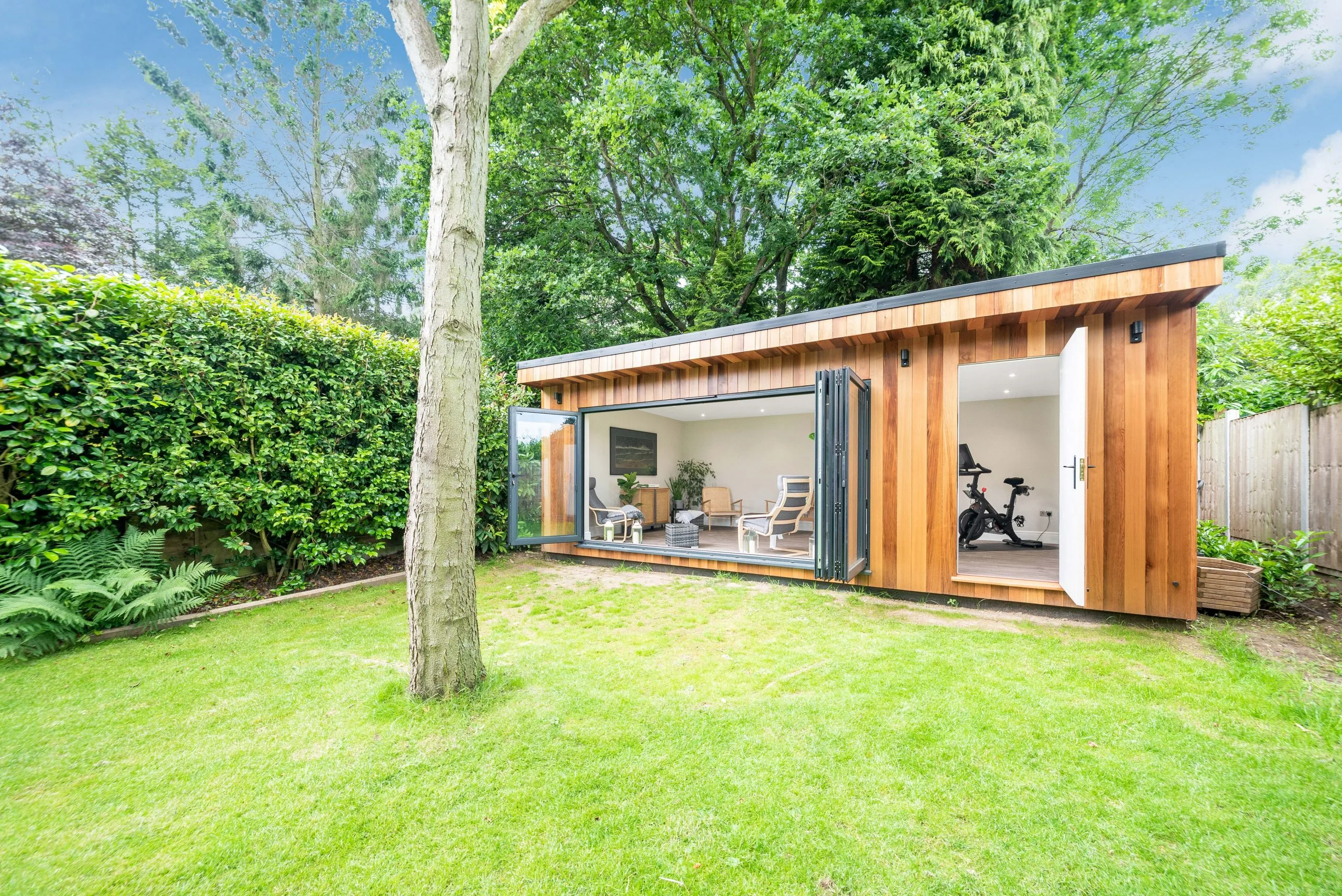
This creative garden studio retreat highlights the value of a dedicated space away from the house, designed to support concentration, inspiration and regular use throughout the year.
View project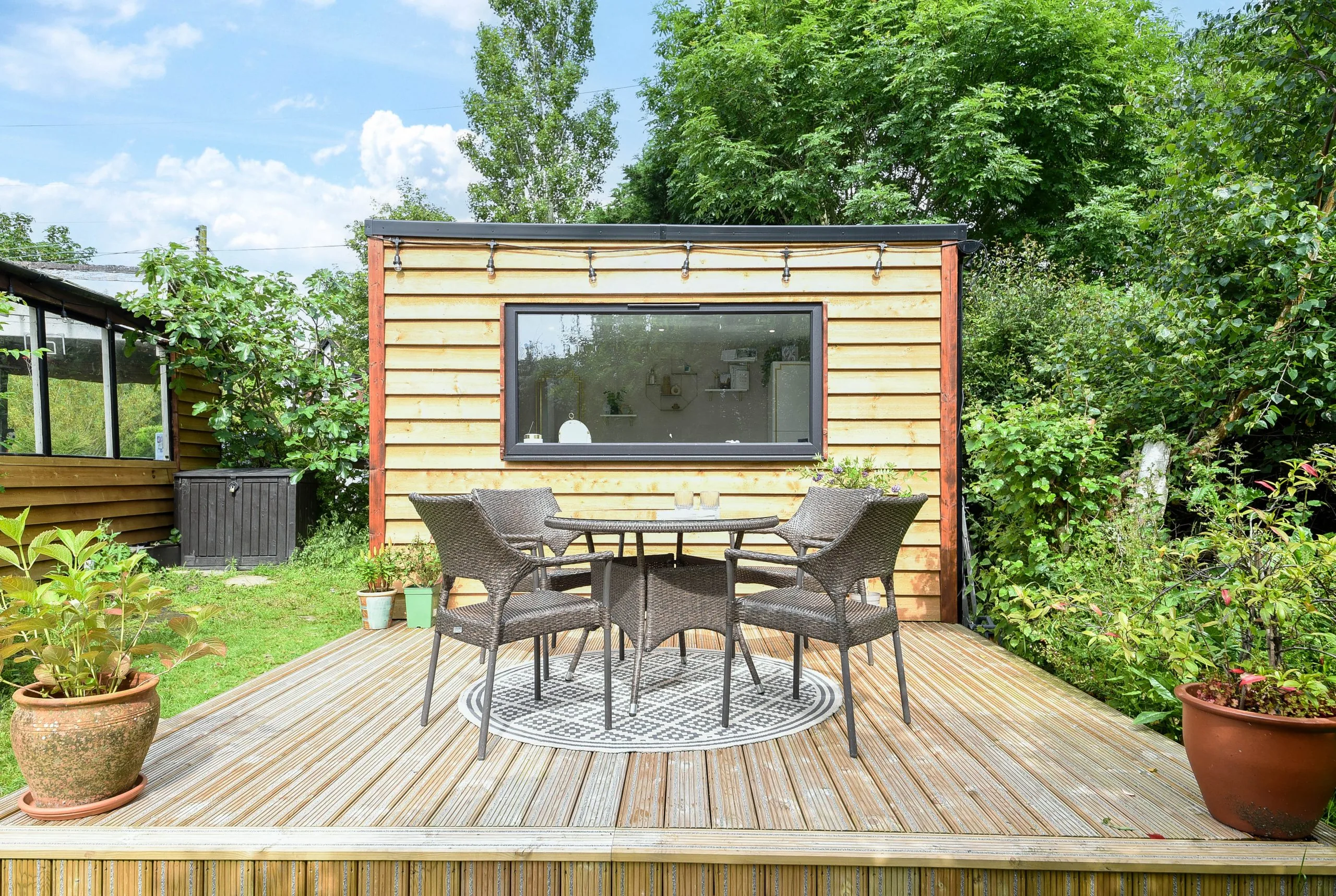
A warm and characterful artist studio demonstrating how a bespoke garden building can become a practical, inviting and highly personal creative workspace.
View project