
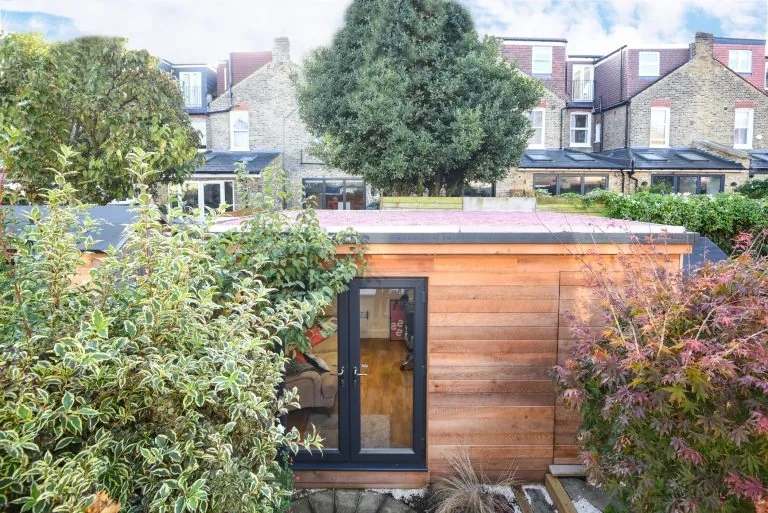
Garden Room Office & Storage, Wimbledon
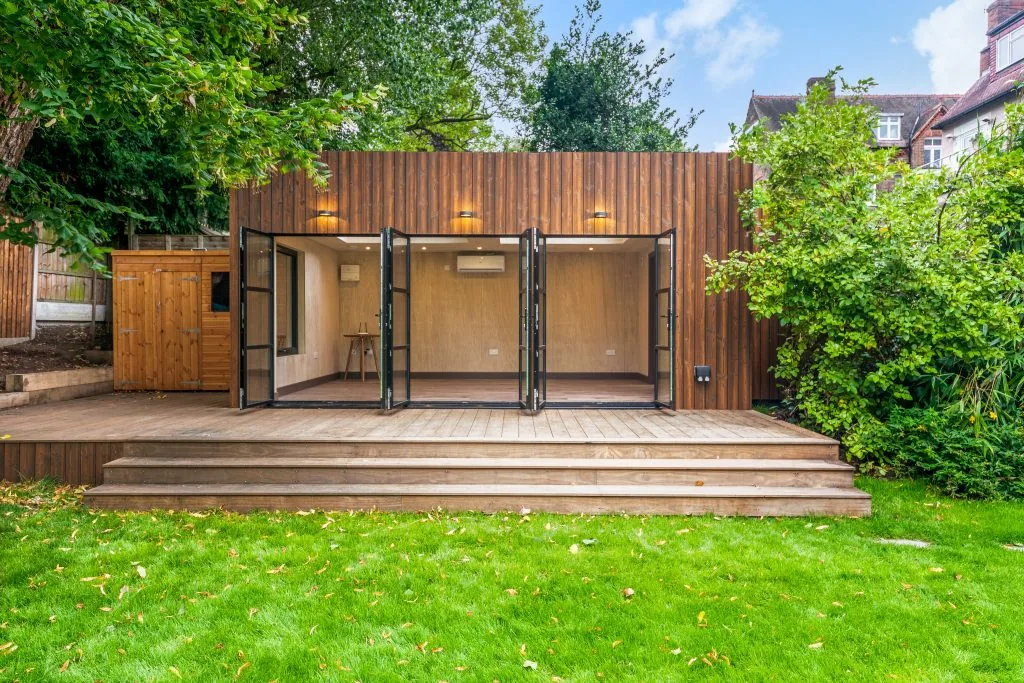
An office during the week and a playroom at weekends, with a bike store and an Irish sedum living roof.
View project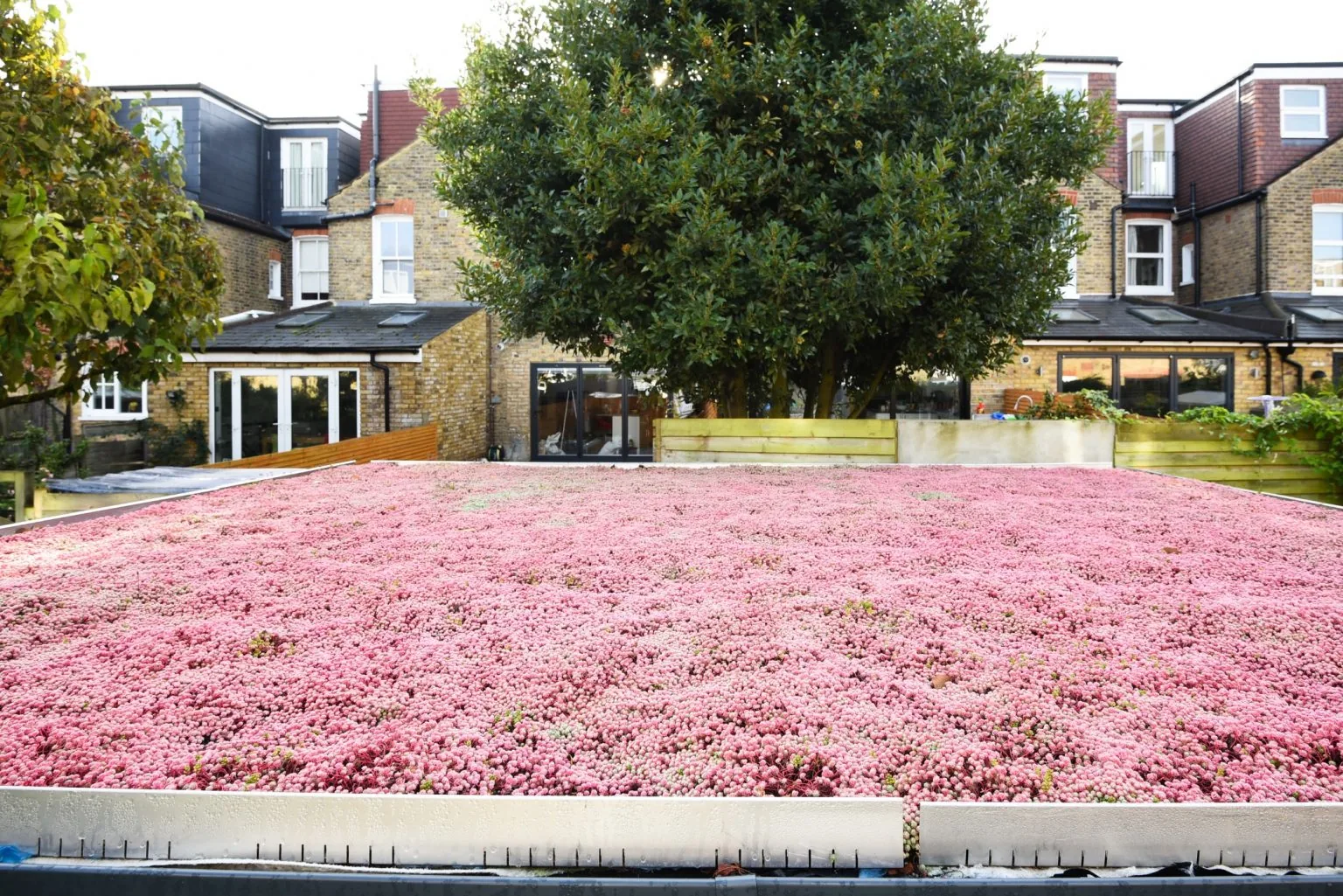
From the house, the roof is often the part of a garden room you see most. A sedum roof turns it into planting.
A green roof, usually planted with hardy sedum, sits on top of the building like a living blanket. It softens the outline of a garden room, gives you a green view from upstairs, and helps with rainwater, wildlife and insulation. We’ve built them on garden offices, gyms and studios in London and Essex, on cedar, black composite and charred-timber buildings alike.
Clients usually come to a sedum roof for one reason and end up valuing it for several.
The owners of a garden office in Wimbledon wanted it to feel part of the garden rather than take it over. The sedum roof gives them a green view from the upstairs windows. In Upminster, the clients chose one so that a balcony they’re planning at the back of the house will look out over uninterrupted green.
A garden room takes up ground that used to be lawn or borders. Planting the roof gives some of it back, which is why sedum roofs are popular on garden rooms in towns and cities, including our inner-city garden room in Hampstead Heath.
The planting holds back rain that would otherwise run straight off the roof, reducing stormwater runoff, and when the sedum flowers it gives bees and other pollinators something to feed on.
The planted layer adds to the roof’s thermal performance, helping the room stay comfortable through the year. It works alongside the insulation built into the structure rather than replacing it.
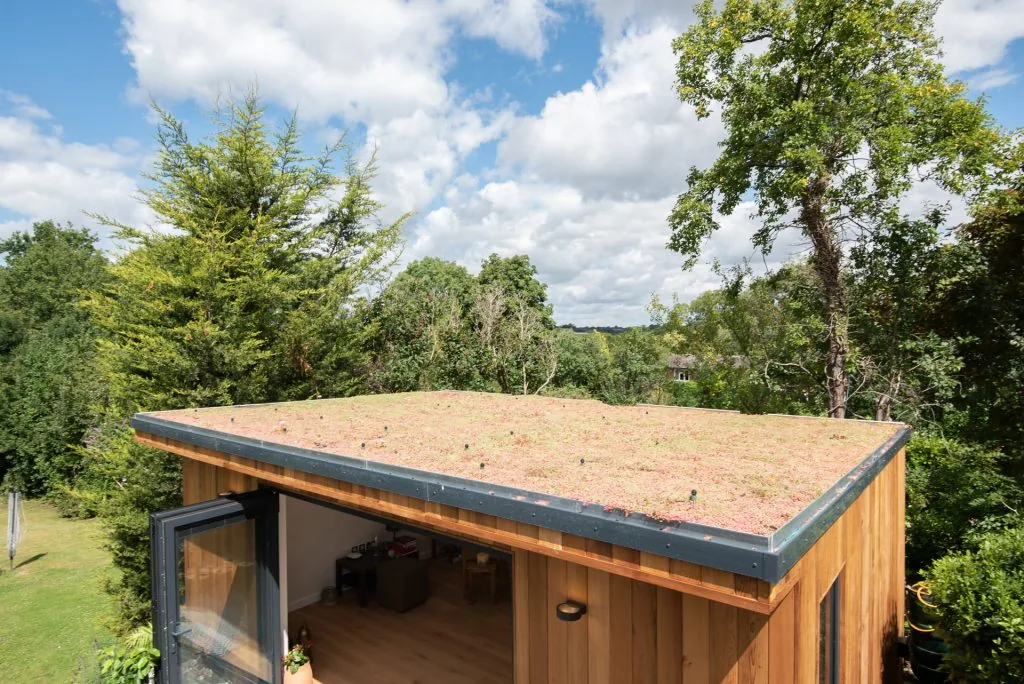
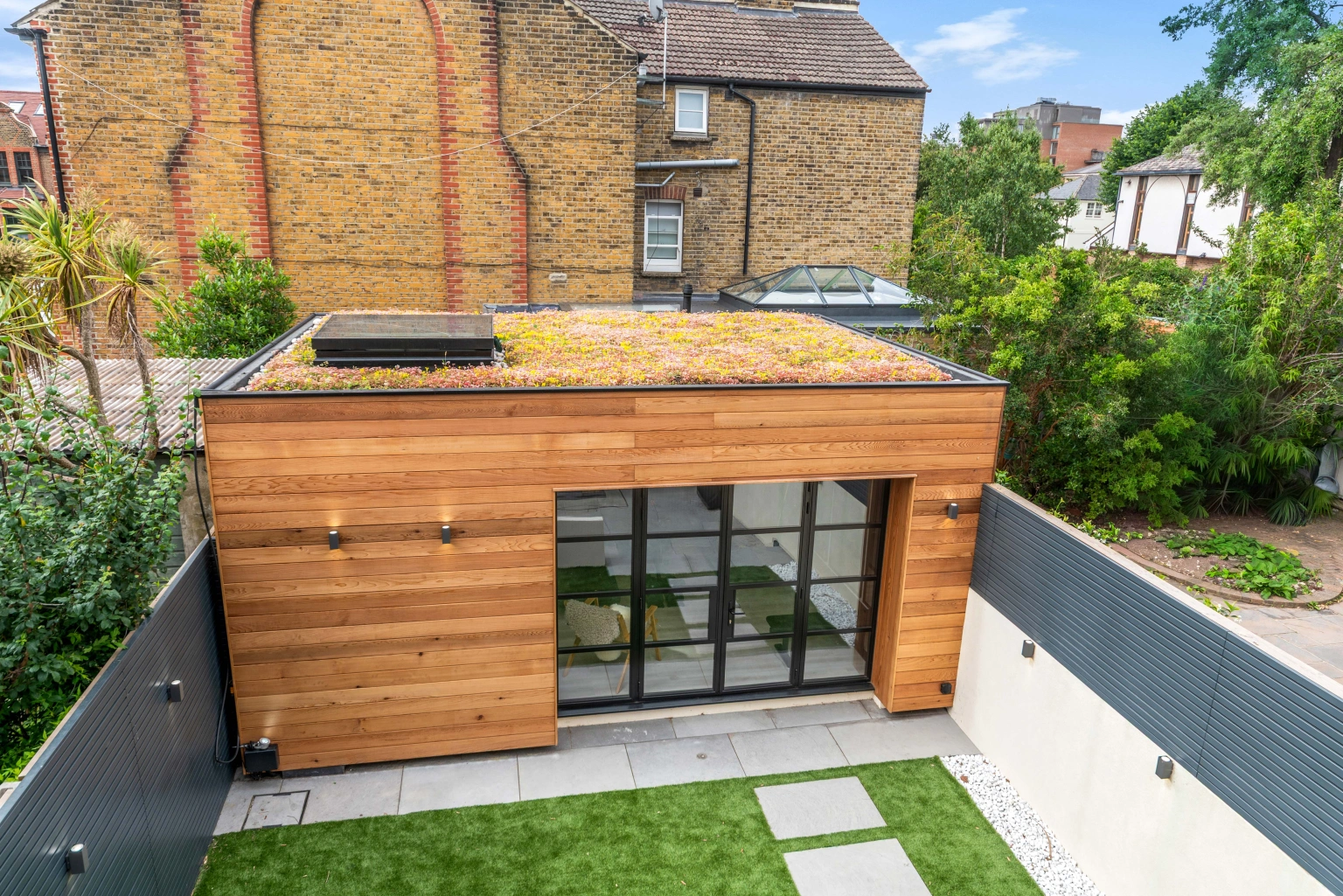
A green roof suits almost any cladding. A few combinations from our projects:
A sedum roof is straightforward when it’s part of the design from the start. These are the points we work through with you.
A planted roof is heavier than a standard one, especially after rain, so the roof structure is designed to carry it from the outset rather than adapted later.
The sedum and the layers beneath it add depth to the roof, and that counts towards the building’s overall height. Under permitted development, a garden room within 2 metres of a boundary is limited to 2.5 metres, so we allow for the roof build-up when we set the height.
Water still needs a way off. The edges, outlets and guttering are detailed so the roof drains properly while the planting holds back some of the rain.
Green roofs and roof lights sit happily together. Twickenham’s gym has a large skylight and the Hampstead Heath room has 4 metres of ceiling roof lights, both under sedum roofs.
Sedum needs very little attention, but it’s worth knowing how you’ll reach the roof for an occasional check, ideally from the side or back rather than over the glazing.
Like the idea of a living roof? We can design a sedum roof into your garden room from the very first drawings.
Talk to UsA sedum roof doesn’t need permission in its own right. The garden room is assessed under the usual permitted development rules, and height is the one to watch, as above. In conservation areas, and where an Article 4 Direction applies, the rules can be tighter, so it’s worth raising early.
As with any of our garden rooms, we’d suggest applying for a Lawful Development Certificate; our architects draw up the plans and submit it on your behalf. If your design does need planning permission, we offer a full planning service. Our guide to permitted development rights sets out the rules.
An office during the week and a playroom at weekends, with a bike store and an Irish sedum living roof.
View project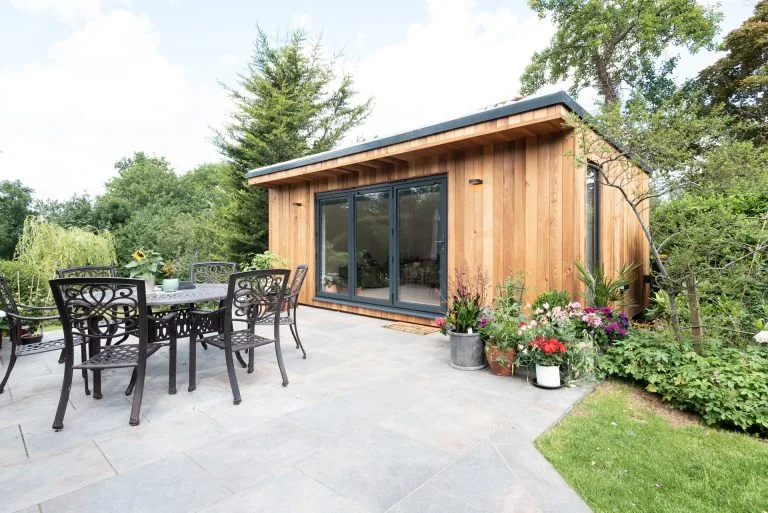
A 24sqm room for teaching and family time, with a sedum roof, a half-metre overhang and an outside tap.
View project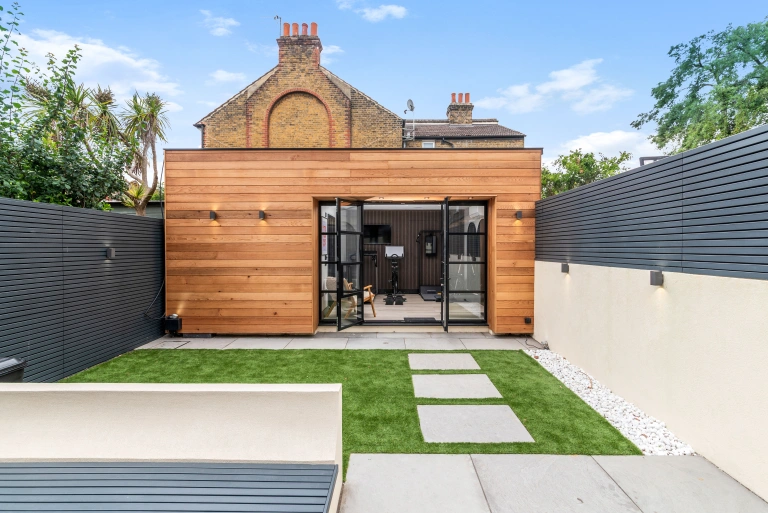
A 24sqm wellness space with a gym, sauna and wet room under a living sedum roof.
View project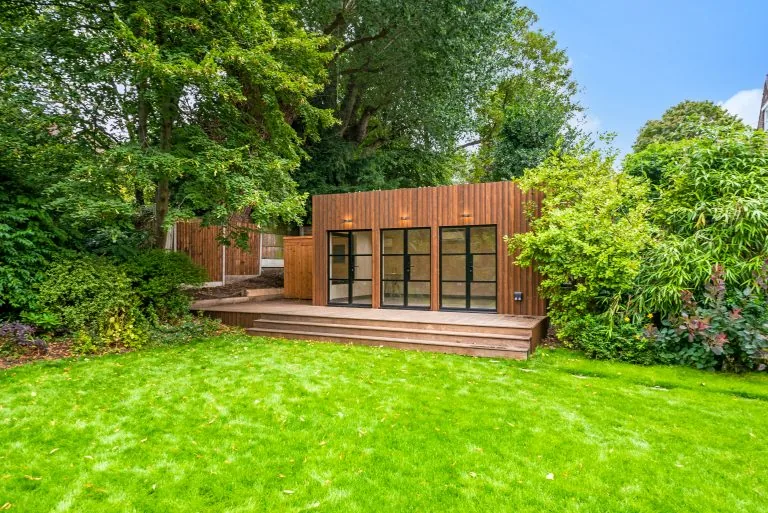
Shou Sugi Ban cladding, a two-height sedum roof and a ply-lined interior.
View project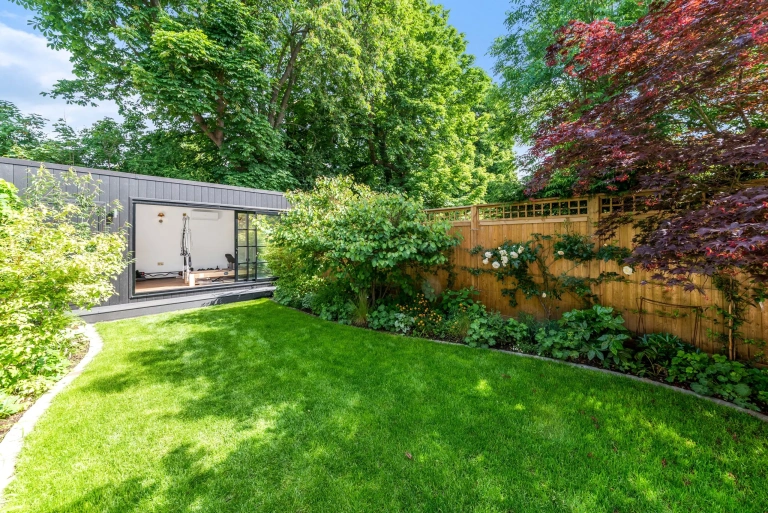
A 21sqm Classic range gym that doubles as an office, topped with a sedum roof.
View project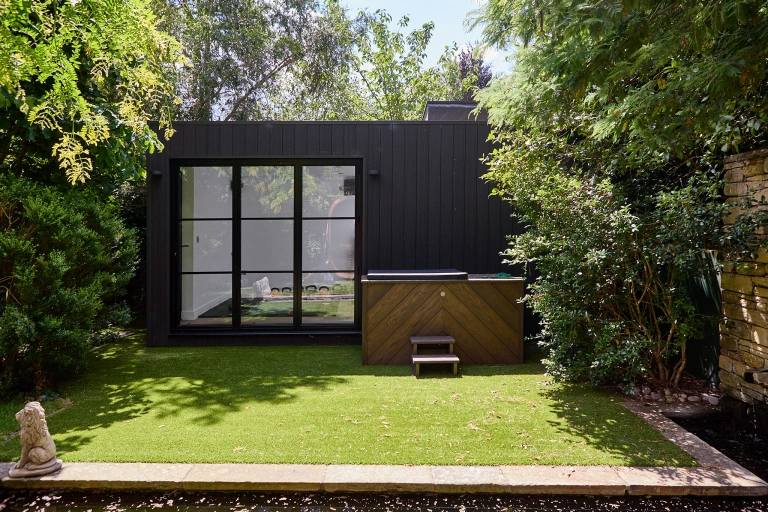
Black composite cladding, a sedum roof and a large skylight over the gym.
View projectA shallow green roof planted with sedum, a family of low-growing succulents that store water in their leaves. They cope with thin growing layers, wind and dry spells, which makes them well suited to a garden room roof. Many varieties flower in summer, like the Wimbledon roof at the top of this page.
Very little compared with a lawn or border. Expect to pull out the odd weed or tree seedling and check the outlets are clear once or twice a year, and to water during a long dry spell while the roof is establishing.
Sedum is best suited to flat and gently sloping roofs, which is why it pairs so well with our flat-roofed Classic and Modern designs. Our pitched Heritage range roofs are usually finished in slate or tiles.
The planted layer adds to the roof’s thermal performance, which helps on hot days as well as cold ones. For a room you’ll use hard in summer, such as a gym, we’d still recommend air conditioning alongside it.
Sedum stays on the roof all year, though its colour shifts with the seasons and it’s at its most striking when it flowers. From an upstairs window, even a winter sedum roof is a softer view than a membrane or felt.
If a planted roof appeals, you might also like our ideas for a garden retreat, a meditation room or an orchid and plant room, and our guide to a garden room with a canopy for covered outdoor space. Explore more garden room ideas, or browse every garden room use.
Talk to us about a sedum roof for your garden room, and we’ll design the structure, height and drainage around it.